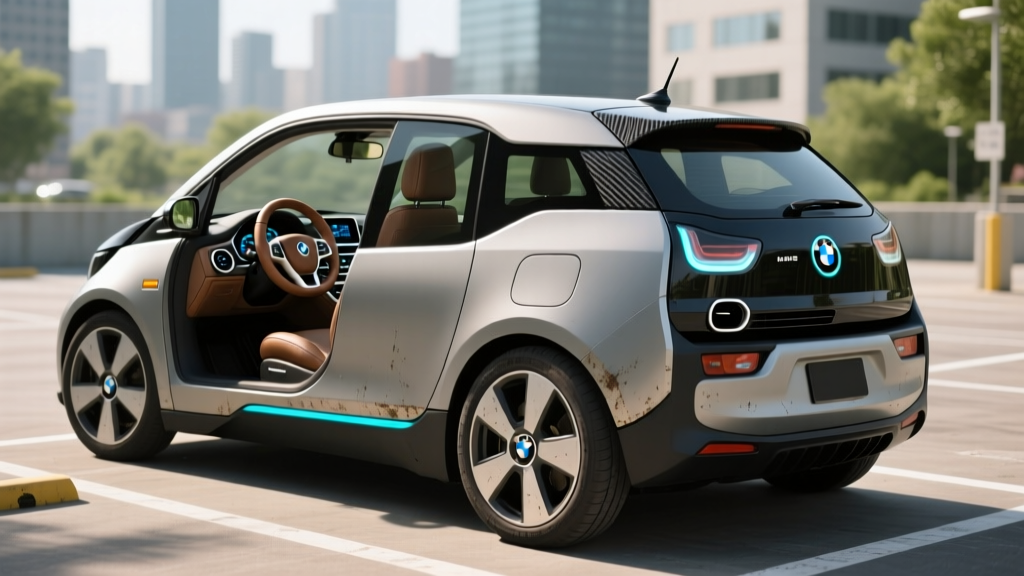
If you're searching for a "BMW 2015 electric" vehicle, you're looking at the BMW i3 — the brand's first mass-production battery-electric car. In 2026, a used 2015 i3 typically sells for $7,500–$12,000 depending on mileage, battery health, and whether it's the pure BEV or the Range Extender (REx) variant. With an EPA-rated 81 miles of range from its 22 kWh battery (18.8 kWh usable), the 2015 i3 is best suited as a city commuter or second car, not a primary long-distance vehicle. Expect real-world range of 60–75 miles in mixed driving, dropping to 45–55 miles in cold weather. It does not qualify for the federal §30D new EV tax credit, and the used EV credit (up to $4,000) has strict income and dealer requirements.
2015 BMW i3 Specifications: What You're Actually Buying
The 2015 i3 was an engineering oddity — a carbon-fiber-reinforced plastic (CFRP) passenger cell on an aluminum chassis, powered by a rear-mounted electric motor. It remains one of the lightest production EVs ever sold in the US, at roughly 2,800 lbs for the BEV model.
| Spec | Value |
|---|---|
| Battery (total / usable) | 22 kWh / 18.8 kWh (Samsung SDI NMC cells) |
| EPA Range | 81 miles |
| Real-World Range (mixed) | 60–75 miles |
| Real-World Range (cold, <32°F) | 45–55 miles |
| Efficiency | 137 MPGe combined / 27 kWh/100 mi |
| Motor Output | 170 hp (125 kW) / 184 lb-ft torque |
| 0–60 mph | 7.0 seconds |
| DC Fast Charge (CCS) | 50 kW peak (optional on 2015) |
| 10–80% DC Fast Charge | ~25 minutes (if CCS equipped) |
| Level 2 Charge Rate | 7.4 kW (full charge in ~3 hours) |
| Level 1 (120V) Charge | ~2.5 kW (~8 miles/hour) |
| Curb Weight | 2,799 lbs (BEV) |
Critical note for buyers: Not all 2015 i3s have DC fast charging. The CCS port was a $750 option when new. Before purchasing, physically inspect the charge port — if there's only a J1772 inlet and no CCS pins below it, the car is limited to Level 2 (7.4 kW) and Level 1 charging. This matters enormously for road trips or if you lack home charging.
Battery Health and Degradation: The 10-Year Reality
A 2015 i3 is now 11 years old in 2026. The lithium-ion NMC battery has aged, and capacity loss is the single biggest variable in a used i3 purchase.
BMW originally warranted the i3 battery for 8 years / 100,000 miles against defects and capacity loss below 70% of original. For a 2015 model, that warranty expired in 2023. You are buying the battery as-is.
Typical degradation for a 2015 i3 in 2026:
- Mild climate, garage-kept: 85–90% State of Health (SoH) — roughly 69–73 miles of real range
- Hot climate (AZ, TX), frequent DC fast charging: 75–82% SoH — roughly 55–65 miles real range
- High-mileage examples (100k+ miles): 70–78% SoH, potentially lower
Real-World Ownership Costs: 2015 i3 vs. Comparable Gas Car
The financial case for a used 2015 i3 hinges on low purchase price, cheap electricity, and minimal maintenance. Here's how it stacks up against a common alternative: a used 2015 Honda Civic (roughly $9,000–$12,000 in 2026).
| Category | 2015 BMW i3 BEV | 2015 Gas Compact (30 MPG) |
|---|---|---|
| Purchase Price (avg) | $9,500 | $10,500 |
| Fuel/Energy (5 yrs, 60k mi) | $2,700 (home charging at $0.14/kWh) | $7,000 ($3.50/gal avg) |
| Maintenance (5 yrs) | $1,200 (tires, cabin filter, brake fluid) | $3,500 (oil, filters, brakes, belts) |
| Insurance (5 yrs, avg) | $5,500 | $4,500 |
| Estimated Repairs | $800–$2,000* | $1,000–$2,500 |
| Total 5-Year Cost | $19,700–$20,900 | $26,500–$28,000 |
| Savings vs Gas | $5,600–$9,100 | — |
*The i3's unique narrow tires (155/70R19) cost ~$200–$280 each and wear faster than standard tires due to instant torque. Budget for a tire set every 25,000–30,000 miles.
The i3 wins on energy and maintenance costs decisively. Even at public DC fast-charging rates ($0.35–$0.50/kWh), the i3's tiny battery keeps costs low — a full charge from 10–100% costs roughly $6–$9 at public rates.
Charging the 2015 i3: Home Setup and Public Network Reality
The 2015 i3's small battery is a double-edged sword for charging: it fills up quickly, but the car's limited DC charge rate (50 kW peak, sustained closer to 35–40 kW) means you won't see the blazing 10–80% times of modern EVs.
- Level 1 (120V household outlet): ~2.5 kW, adds ~8 miles/hour. Full charge: ~7.5 hours. Adequate for overnight top-ups if you drive under 40 miles/day.
- Level 2 (240V, home wallbox): 7.4 kW, adds ~25 miles/hour. Full charge: ~3 hours. This is the recommended home setup.
- DC Fast Charge (CCS, 50 kW): 10–80% in ~25 minutes. 80–100% slows dramatically. Only available if the car has the CCS option.
Home charging installation for a Level 2 setup typically costs $500–$1,500 if your electrical panel has capacity for a 40-amp circuit (the i3 only draws 32 amps, so a 32A or 40A charger is ideal). If you need a panel upgrade from 100A to 200A service, add $1,500–$3,000. Consult a licensed electrician for your specific situation.
Public charging caveat: The 2015 i3 uses the CCS1 connector for DC fast charging. As of 2026, the US charging network is transitioning toward NACS (Tesla's standard). Most Electrify America and EVgo stations still support CCS1, but verify PlugShare or your car's nav before relying on public DC charging for trips. The i3's 50 kW max rate also means you'll occupy a stall longer than a modern 150+ kW EV, which can be awkward at busy stations.
The Range Extender (REx) Variant: What It Is and Whether to Choose It
BMW offered the 2015 i3 with an optional Range Extender (REx) — a 647cc two-cylinder gasoline engine from a BMW scooter that acts as a generator. It does not drive the wheels. When the battery drops to ~6% State of Charge, the engine kicks in to maintain that level, extending total range to roughly 150 miles (81 electric + ~70 gas-generated).
| Factor | BEV (Pure Electric) | REx (Range Extender) |
|---|---|---|
| Electric Range | 81 mi (EPA) | 72 mi (EPA, added weight) |
| Total Range | 81 mi | ~150 mi |
| Curb Weight | 2,799 lbs | 3,130 lbs |
| Maintenance | EV only | EV + small gas engine (oil, filter, spark plugs) |
| Used Price Premium (2026) | Baseline | +$800–$1,500 |
| HOV Lane Access (CA) | Yes (white sticker, expired) | Yes (white sticker, expired) |
The REx eliminates range anxiety for occasional longer trips, but adds mechanical complexity and weight. The tiny gas engine is loud under load, and the REx adds ~330 lbs, slightly reducing electric range and handling agility. If your commute is under 40 miles round-trip and you have home charging, the pure BEV is simpler and cheaper. If you occasionally drive 80–120 miles without reliable en-route charging, the REx is worth the premium.
Decision Framework: Should You Buy a 2015 BMW i3?
Choose the 2015 i3 if:
- Your daily round-trip commute is under 50 miles (leaving a safety buffer)
- You have home charging access (garage, driveway, or dedicated Level 2 outlet)
- You want a sub-$10,000 EV with low running costs
- You value a fun, nimble city car with excellent visibility and tight turning radius
- You're buying it as a second car alongside a gas/hybrid vehicle for longer trips
- You live in a mild climate (CA, OR, Southeast) or have garage parking in cold regions
Skip the 2015 i3 if:
- Your daily driving regularly exceeds 60 miles
- You rely on street parking with no charging access
- You live in a region with harsh winters (Upper Midwest, Northeast) and park outdoors — expect 40%+ range loss
- You need to carry more than 3 passengers or significant cargo regularly
- You want modern infotainment (the 2015 i3's iDrive is dated, with no wireless CarPlay — wired CarPlay was not available until later model years; you get basic Bluetooth audio)
- You want DC fast charging and cannot confirm the car has the CCS option
Common Misconceptions About the 2015 BMW i3
| Myth | Fact |
|---|---|
| "The battery will need a $20,000 replacement soon." | While BMW quoted ~$16,000–$20,000 for new battery replacement, the i3's battery was over-engineered with conservative buffers. Most 2015 units retain 75–90% capacity at 11 years old. Third-party refurbished replacements are emerging at $5,000–$8,000. Catastrophic failure is rare. |
| "81 miles of range is useless." | The average US one-way commute is 16 miles (FHWA data). For city dwellers and suburban commuters with home charging, 60–75 real-world miles covers daily needs. The i3's efficiency (27 kWh/100 mi) means cheap "fueling." |
| "It qualifies for the $4,000 used EV tax credit." | The §25E used clean vehicle credit requires purchase from a licensed dealer (not private party), buyer income below $75k single/$150k joint, and the vehicle's MSRP when new must have been under $25,000 — the i3's original MSRP was $42,275, making it ineligible for the used credit. Verify current rules at IRS.gov. |
| "The carbon fiber body makes repairs impossibly expensive." | The CFRP passenger cell is exceptionally strong and rarely damaged in typical collisions. Most accident repairs involve the aluminum chassis, plastic body panels, or suspension — conventional work. However, structural CFRP damage requires specialized BMW i-certified body shops, which are limited. |
| "It can't use Tesla Superchargers." | Correct — the 2015 i3 uses CCS1 (or J1772 only). No NACS adapter is available. You'll rely on Electrify America, EVgo, ChargePoint, and other CCS networks. Coverage is decent in metro areas but spotty in rural corridors. |
What a First-Time EV Buyer Should Know About the 2015 i3
If this is your first EV, the 2015 i3 is a low-risk entry point — but only if you go in with eyes open:
- Get a pre-purchase battery health check. This is non-negotiable. A BMW dealer or qualified EV shop can pull the SoH via diagnostics. Budget $100–$200 for this inspection.
- Confirm CCS DC fast charging is present. Check the charge port physically. No CCS pins = no road-trip fast charging.
- Plan your charging before you buy. If you can install a 240V Level 2 outlet (NEMA 14-50 or hardwired wallbox), the i3 is a joy. If you're relying on Level 1 (120V), it works but is slow — budget 7–8 hours for a full charge.
- Understand the tire situation. The i3 uses 155/70R19 tires — a rare, expensive size. Budget $800–$1,100 for a set of four. They wear faster than typical tires due to the car's instant torque and low rolling-resistance compound.
- Test the regenerative braking. The i3 has aggressive one-pedal driving — lifting off the accelerator slows the car significantly. Most owners love it, but it takes 1–2 days of adjustment.
- Check for software updates. Early i3s had some software bugs related to battery management and range estimation. A BMW dealer can flash the latest available firmware (though 2015 models won't receive new updates in 2026).
Frequently Asked Questions
What is the real-world range of a 2015 BMW i3 in 2026?
With typical battery degradation (80–90% SoH at age 11), expect 60–75 miles in mild weather with mixed city/highway driving. In cold weather (below 32°F), range drops to 45–55 miles due to battery chemistry limitations and cabin heating draw. Highway driving at 70+ mph reduces range by 15–20% compared to city use, because the i3's tall, narrow shape creates more aerodynamic drag at speed.
How much does it cost to charge a 2015 i3 at home?
The usable battery capacity is 18.8 kWh. At the US average residential electricity rate of ~$0.16/kWh (2026), a full charge costs approximately $3.00. Over a year of 12,000 miles of driving at the i3's efficiency of 27 kWh/100 mi, annual home charging costs roughly $520. Compare that to ~$1,400/year in gasoline for a 30 MPG compact.
Can I install a home charger for the i3 myself?
You can plug into any standard 120V outlet (Level 1) using the included BMW charge cable. For Level 2 (240V), you need a licensed electrician to install either a NEMA 14-50 outlet or a hardwired wallbox on a dedicated 40-amp circuit. Expect $500–$1,500 for installation if your panel has capacity. The i3 only accepts 7.4 kW on Level 2, so a 32-amp charger is sufficient — no need to overspend on a 48-amp unit.
Is the 2015 BMW i3 safe?
The i3 received a 4-star overall NHTSA rating and performed well in IIHS testing for its era. The carbon-fiber passenger cell is extremely rigid. However, it lacks modern ADAS features — no automatic emergency braking, no lane-keeping assist, no adaptive cruise control. By 2026 safety standards, it's basic. It includes standard stability control, 6 airbags, and BMW's Dynamic Brake Control.
Should I buy the BEV or the REx version?
Choose the BEV if your commute is under 50 miles round-trip, you have reliable home charging, and you want the simplest, lightest, cheapest-to-maintain option. Choose the REx if you occasionally need 100–150 miles of range, lack DC fast-charging options on your routes, or want a psychological safety net. The REx adds ~$1,000 to the purchase price and requires occasional engine maintenance (oil change every ~6,000 miles of generator use).
What are the most common problems with the 2015 i3?
The most reported issues include: (1) 12V battery drain — the i3's auxiliary 12V battery can die if the car sits unplugged for extended periods, bricking the car until jump-started; (2) AC compressor failure — replacement costs $1,500–$2,500; (3) motor mount wear — the rubber mounts can degrade, causing a clunk under acceleration (~$400–$600 repair); (4) door handle mechanism — the unique i3 door handles can break internally (~$300 per side). None are dealbreakers, but a pre-purchase inspection should check for these.