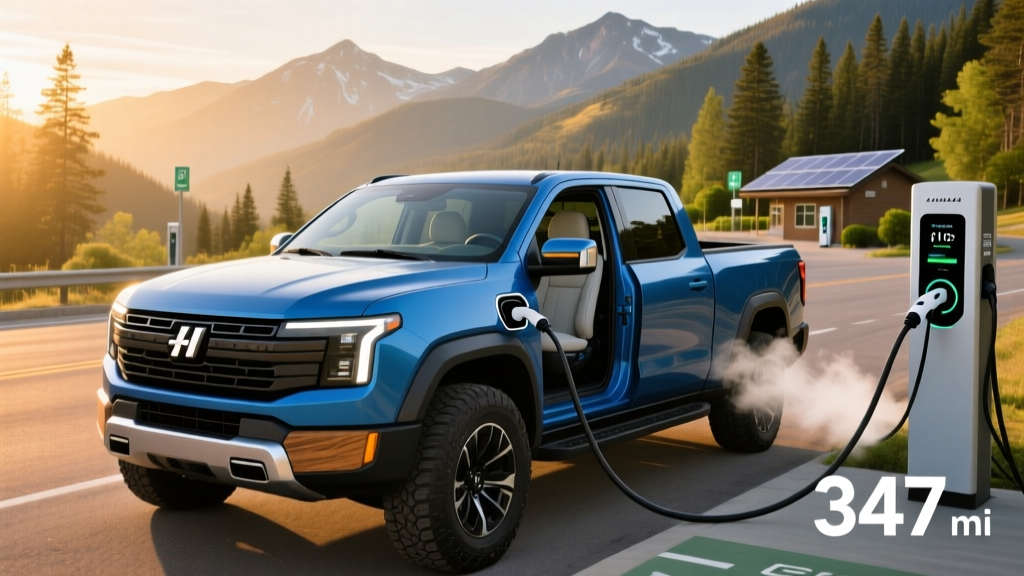
If you've been searching for a blue Rivian truck — specifically the R1T Dual-Motor or Tri-Motor in Rivian's signature Electric Ocean or Forest Green hue — you're looking at one of the most capable electric pickups on the market for 2026. The R1T continues to blend genuine off-road credibility with daily-driver refinement, but the real question for buyers is whether its range, charging speed, and pricing hold up against the Ford F-150 Lightning, Chevrolet Silverado EV, and Tesla Cybertruck.
We've spent extended seat time in the R1T across multiple model years, including highway road trips, cold-weather commutes, and DC fast-charging stops on Electrify America and Tesla Supercharger networks (via NACS adapter). Here's everything you need to know before ordering.
2026 Rivian R1T: Quick Verdict
The R1T earns its place as the enthusiast's electric truck. It's not the cheapest, nor the longest-range pickup available, but it delivers the best combination of on-road dynamics, off-road capability, and software-defined features in the segment. The 2026 model year brings incremental battery-pack updates and expanded NACS native charging, solidifying its daily usability.
- Choose the R1T if: You want a lifestyle/adventure truck with genuine off-road chops, best-in-class software, and don't need class-leading towing or maximum bed length.
- Look elsewhere if: You need a work truck with 10,000+ lb towing (consider Silverado EV), or the lowest entry price (F-150 Lightning starts lower).
Range, Battery & Efficiency
| Spec | Dual-Motor (Standard Pack) | Dual-Motor (Large Pack) | Tri-Motor (Max Pack) |
|---|---|---|---|
| EPA Range | 270 miles | 352 miles | 420 miles |
| Battery Capacity (usable) | ~95 kWh (LFP) | ~128 kWh (NMC) | ~149 kWh (NMC) |
| Chemistry | LFP (lithium iron phosphate) | NMC (nickel manganese cobalt) | NMC |
| Efficiency (MPGe) | 70 MPGe combined | 73 MPGe combined | 68 MPGe combined |
| kWh/100 mi | 48 kWh | 46 kWh | 49 kWh |
The EPA sticker says 352 miles for the Large Pack Dual-Motor, but plan for ~280–300 miles on highway road trips at 70–75 mph, and ~240–260 miles in sub-freezing winter conditions (30°F and below). The R1T's boxy aerodynamics and 6,800+ lb curb weight penalize highway efficiency more than sleeker EVs. City and suburban driving with regenerative braking gets you closer to the EPA number, sometimes exceeding it in mild weather.
The Max Pack's 420-mile EPA rating translates to roughly 330–350 real-world highway miles — genuinely road-trip capable with fewer stops.
The Standard Pack's shift to LFP chemistry is noteworthy: LFP batteries tolerate daily 100% charging better than NMC, making the base R1T a practical daily driver even though its range is lower. For buyers who frequently tow or road-trip, the Large or Max Pack (NMC) offers more buffer.
Charging Speed: DC Fast & Home Level 2
| Charging Level | Power / Rate | What You Get |
|---|---|---|
| Level 1 (120V household) | ~1.4 kW | ~3–4 miles per hour |
| Level 2 (240V home, 48A) | 11.5 kW | ~25–30 miles per hour; full charge in 10–14 hrs |
| DC Fast Charge (Large/Max Pack) | Peak 220 kW | 10–80% in ~30 minutes (Large); ~35 min (Max) |
| DC Fast Charge (Standard LFP) | Peak 190 kW | 10–80% in ~28 minutes |
Rivian adopted the NACS (Tesla-style) charge port natively on 2025+ models, giving R1T owners direct access to Tesla Supercharger V3/V4 stalls (up to 250 kW available, though the R1T peaks around 220 kW). For older CCS-equipped R1Ts, Rivian provides a NACS adapter.
Charging curve reality: The R1T sustains peak kW only between roughly 15–40% state of charge. Above 60%, the curve tapers noticeably — expect ~100 kW by 70% and ~50 kW above 85%. This is typical for large NMC packs with thermal management, but it means your last 10% takes nearly as long as the first 30%. Plan road-trip stops to charge to 80% and move on for fastest average speed.
Home charging at 11.5 kW (48 amps on a 60-amp circuit) is adequate for overnight replenishment. Most owners driving 40–60 miles daily will wake up fully charged. A home Wall Connector installation typically runs $500–$1,500 depending on panel proximity and local permit requirements — budget for a licensed electrician to assess your 200-amp panel capacity.
Performance & Drivetrain
| Metric | Dual-Motor | Tri-Motor |
|---|---|---|
| Horsepower | 533 hp | 850 hp |
| Torque | 610 lb-ft | 1,103 lb-ft |
| 0–60 mph | 4.5 seconds | 2.9 seconds |
| Drivetrain | AWD (dual motor) | AWD (tri motor) |
| Max Towing | 11,000 lbs | 11,000 lbs |
| Payload | ~1,760 lbs | ~1,760 lbs |
The Dual-Motor R1T is quick by any truck standard — 4.5 seconds to 60 mph feels effortless merging onto highways. The Tri-Motor's 2.9-second sprint is supercar territory and genuinely startling in a 6,800-pound vehicle, though it's more a party trick than a daily necessity.
Where the R1T shines is ride quality. Rivian's adaptive air suspension (standard on most trims) delivers a compliant highway ride while offering up to 14.4 inches of ground clearance off-road. The quad-motor tank-turn feature remains exclusive to certain configurations, and hydraulic roll control eliminates body lean without sacrificing articulation.
Towing note: While rated for 11,000 lbs, towing at max capacity will cut range roughly in half. Expect ~150–170 highway miles from the Large Pack when pulling a 7,000+ lb trailer. The integrated trailer brake controller and tow-assist cameras are well-executed.
Pricing, Trims & Federal Tax Credit
| Trim / Config | Base MSRP | Est. After §30D Credit |
|---|---|---|
| Dual-Motor Standard Pack (Adventure) | $69,900 | $62,400* |
| Dual-Motor Large Pack (Adventure) | $75,900 | $68,400* |
| Tri-Motor Max Pack (Adventure) | $99,900 | $92,400* (credit may not apply) |
| Dual-Motor Ascend Edition | $82,500 | $75,000* |
*Tax credit estimates assume buyer meets all IRS §30D requirements. Actual eligibility varies.
- MSRP cap: Trucks/vans/SUVs must be under $80,000 MSRP. The Tri-Motor Max Pack ($99,900) does NOT qualify. Dual-Motor trims under $80K do qualify.
- Buyer income cap: AGI must not exceed $150,000 (single), $225,000 (head of household), or $300,000 (joint filers).
- Battery sourcing: Critical minerals and battery components must meet phased-in domestic/free-trade sourcing thresholds. Rivian's supply chain has progressively qualified, but confirm VIN eligibility on fueleconomy.gov before purchasing.
- Point-of-sale transfer: You can transfer the credit to the dealer at purchase for an immediate price reduction rather than waiting for tax filing.
Destination charges, premium paint colors (including the sought-after Electric Ocean blue at $1,000–$2,500 extra), and the off-road/camp kitchen packages can push a Dual-Motor Large Pack above $80,000 — at which point it loses tax credit eligibility. Configure carefully and verify the final MSRP before committing.
Interior, Cargo & Technology
The R1T's cabin is genuinely premium — think Volvo-meets-Patagonia. Sustainable materials (vegan leather, natural wood trim) feel durable and upscale. The 15.6-inch center touchscreen runs Rivian's proprietary OS, which receives regular OTA updates and includes built-in trail maps, campsite locators, and a gear-tunnel pass-through camera.
| Dimension | Measurement |
|---|---|
| Bed Length | 54.0 inches (4.5 ft) |
| Bed Volume | ~29.5 cu ft |
| Gear Tunnel (lockable) | 11.7 cu ft |
| Frunk (front trunk) | 11.1 cu ft |
| Rear Legroom | 38.6 inches |
| Front Headroom | 41.2 inches |
The 4.5-foot bed is the R1T's most debated compromise. It's shorter than any full-size truck bed and shorter than even some midsize competitors. For hauling lumber or fitting a full-size dirt bike, you'll need the bed extender accessory. The lockable gear tunnel (behind the rear seats, accessible from either side) is a clever solution for storing camping gear, tools, or groceries out of sight.
Driver assistance: Rivian's Driver+ system is an SAE Level 2 hands-on assist — adaptive cruise, lane centering, and automatic lane changes on highways. It's competent but requires hands-on-wheel supervision at all times. This is not a self-driving system and should not be compared to Level 4 robotaxi services.
Warranty & Ownership Costs
| Coverage | Terms |
|---|---|
| Basic Vehicle Warranty | 5 years / 60,000 miles |
| Battery & Powertrain | 8 years / 175,000 miles |
| Battery Capacity Retention | ≥70% within warranty period |
| Roadside Assistance | 5 years / 60,000 miles |
Rivian's 8-year/175,000-mile battery warranty is competitive and exceeds the industry-standard 100,000-mile threshold. The 70% capacity retention guarantee is standard for the segment. Real-world degradation data from early R1T owners (2022–2023 models) suggests ~5–7% loss at 50,000 miles, tracking well within warranty limits.
Insurance premiums for the R1T run higher than comparable gas trucks — expect $2,500–$3,800 annually depending on your state, driving record, and trim. Get a quote before ordering; some insurers price the Tri-Motor significantly higher.
- Best-in-class software and OTA updates
- Genuine off-road capability (air suspension, 14.4" clearance)
- Unique gear tunnel + frunk storage
- Strong NACS Supercharger access
- Premium interior with sustainable materials
- LFP option for daily 100% charging convenience
- Short 4.5-foot bed limits utility
- High entry price ($69,900+ before options)
- Heavy weight hurts highway efficiency
- Service center network still expanding
- Towing cuts range dramatically
- Driver+ is Level 2 only — no hands-free
Blue Rivian Truck vs. Key Competitors
| Spec | Rivian R1T (Dual-Motor Large) | Ford F-150 Lightning (Ext. Range) | Chevy Silverado EV (4WT) |
|---|---|---|---|
| EPA Range | 352 mi | 320 mi | 440 mi |
| Starting MSRP | $75,900 | $59,995 | $74,800 |
| 0–60 mph | 4.5 sec | 3.8 sec | 4.5 sec |
| Bed Length | 54 in | 67 in | 72 in |
| Max Tow | 11,000 lbs | 10,000 lbs | 12,500 lbs |
| DC Fast Charge Peak | 220 kW | 150 kW | 350 kW |
The F-150 Lightning wins on price and bed utility. The Silverado EV wins on range and towing. The R1T wins on driving dynamics, technology, and adventure lifestyle features. None of these trucks is universally "best" — it depends on whether you prioritize work capability (Silverado/Lightning) or lifestyle/performance (R1T).
Frequently Asked Questions
What is the real-world range of the blue Rivian truck?
Expect approximately 280–300 highway miles from the Large Pack Dual-Motor in mild weather, dropping to 240–260 miles in freezing temperatures. The Standard Pack (270 EPA) delivers roughly 210–230 real-world highway miles.
How fast does the R1T charge at home and on the road?
At home on a 240V/48A Level 2 charger, the R1T adds about 25–30 miles of range per hour (11.5 kW). On DC fast chargers, the Large/Max Pack peaks at 220 kW, reaching 10–80% in approximately 30–35 minutes. Above 80%, charging slows significantly.
Does the blue Rivian R1T qualify for the $7,500 federal tax credit?
Dual-Motor trims with an MSRP under $80,000 can qualify for up to $7,500 under IRS §30D, provided the buyer meets income caps ($150K single / $300K joint) and the vehicle's battery meets critical-mineral sourcing requirements. The Tri-Motor Max Pack at $99,900 exceeds the MSRP cap and does not qualify. Always verify current eligibility at fueleconomy.gov and consult a tax professional.
Is the Rivian R1T worth buying over the F-150 Lightning?
If you need a longer bed, lower price, or maximum work-truck utility, the Lightning is the better choice. If you prioritize driving refinement, off-road capability, software quality, and adventure features, the R1T justifies its premium. They serve different buyer profiles.
Can I get the R1T in blue?
Yes. Rivian offers "Electric Ocean" (a deep metallic blue) and periodically introduces limited-run colors. Electric Ocean typically adds $1,000–$2,500 to the build price depending on the model year. Check Rivian's current configurator for availability, as color options rotate seasonally.
How does cold weather affect the R1T's range?
In temperatures below 30°F, expect a 20–30% range reduction due to battery chemistry limitations and cabin heating demands. The R1T's heat pump (standard on 2025+ models) helps mitigate this compared to resistive heating, but cold-weather range loss is unavoidable in all EVs. Preconditioning while plugged in recovers some efficiency.
What's the biggest drawback of owning a Rivian R1T?
The short 4.5-foot bed is the most common owner complaint for utility tasks. Service center availability, while expanding, remains limited in rural areas compared to legacy automakers. Insurance costs also run higher than expected for many buyers.
Sources: EPA Fuel Economy, Rivian R1T Official Specs, IRS §30D Clean Vehicle Credits.