The Bottom Line on the Blue Bird Vision Electric
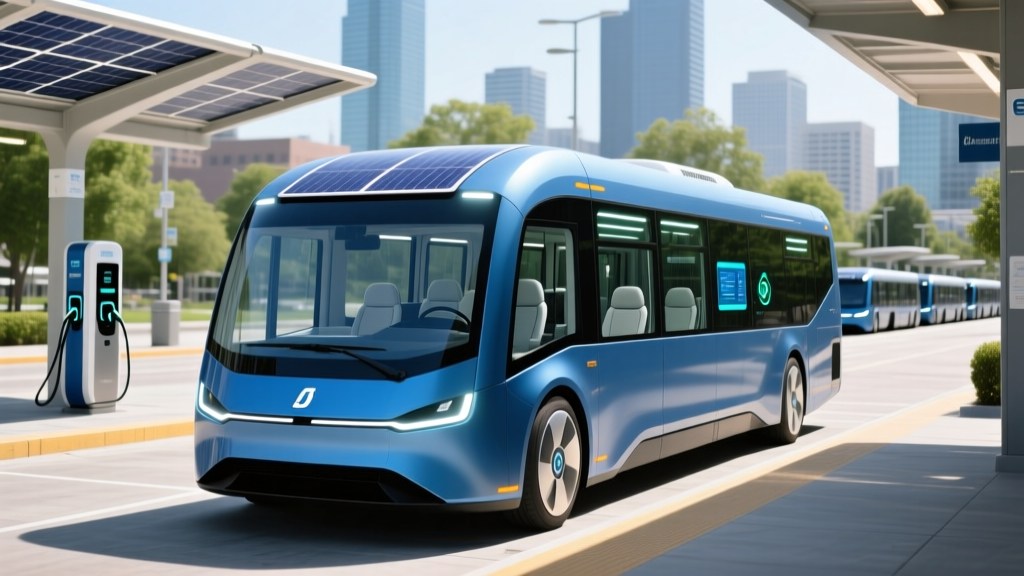
The Blue Bird Vision Electric is a battery-electric Type C school bus built on the Ford F-Series chassis, offering an EPA-estimated range of up to 150 miles from a 155 kWh lithium iron phosphate (LFP) battery pack. As of 2026, base pricing starts around $265,000 before federal and state incentives — roughly 2.5× the cost of a comparable diesel Vision. However, per-mile energy costs run approximately $0.14–$0.18/mile on commercial electricity versus $0.40–$0.55/mile for diesel, and maintenance savings can reach $4,000–$6,000 per bus per year. Payback timelines range from 5 to 9 years depending on route length, utility rates, depot charging infrastructure, and available grant funding (EPA Clean School Bus Program, state voucher programs). The Vision Electric fits routes under 120 miles round-trip with overnight Level 2 depot charging and access to DC fast charging for mid-day top-ups.
Specs, Range, and Battery: What Fleet Managers Need to Know
The Blue Bird Vision Electric has matured considerably since its initial limited deployments. The 2026 model year carries forward the Cummins-powered electric drivetrain paired with an LFP battery — a chemistry chosen specifically for its thermal stability, long cycle life (typically 3,000–5,000 full cycles before reaching 80% state of health), and cobalt-free supply chain. LFP sacrifices some energy density versus NMC chemistry, but for a vehicle that returns to a depot nightly, the weight penalty is acceptable.
| Specification | Value |
|---|---|
| Battery Capacity | 155 kWh (usable), LFP chemistry |
| EPA-Estimated Range | Up to 150 miles |
| Real-World Range (loaded, mixed) | ~110–130 miles |
| Real-World Range (cold, <32°F) | ~85–105 miles |
| Motor Output | 250 kW (335 hp), 590 lb-ft torque |
| DC Fast Charging (Peak) | Up to 60 kW (CCS1) |
| DC Charge Time (10–80%) | ~2.5 hours at 60 kW |
| Level 2 AC Charging | 19.2 kW (SAE J1772 / CCS1) |
| Level 2 Full Charge Time | ~8 hours (overnight depot) |
| GVWR | 33,000 lbs |
| Passenger Capacity | Up to 72 (standard), up to 83 (max config) |
| Base MSRP (2026) | ~$265,000 (before incentives) |
| Battery Warranty | 8 years / unlimited miles (80% SoH retention) |
| Vehicle Warranty | 5 years / 100,000 miles |
Real-World Range Reality Check
The 150-mile EPA figure assumes ideal conditions. In actual fleet operations, expect 110–130 miles on a typical mixed suburban route with a loaded bus (60+ students, stop-and-go, HVAC running). In cold climates (sustained temps below 32°F with cabin heat), range drops to 85–105 miles. LFP batteries also experience greater cold-weather impedance than NMC, so preconditioning while plugged in at the depot is essential. Plan routes at no more than 75% of rated range to maintain a safety buffer.
Diesel vs. Electric: Operating Cost Comparison
The purchase-price gap between the Vision Electric and a diesel Vision is substantial, but school buses are long-hold assets (12–15 year service life). The real financial comparison lies in total cost of ownership (TCO).
| Cost Category | Vision Electric | Diesel Vision |
|---|---|---|
| Fuel / Energy (12,000 mi/yr) | $1,680–$2,160 | $4,800–$6,600 |
| Maintenance (oil, filters, DEF, brakes) | $800–$1,200 | $4,500–$6,000 |
| Depot Charging Infrastructure (amortized) | $1,500–$3,000 | $0 |
| Insurance | $2,800–$3,500 | $2,200–$2,800 |
| Total Annual Operating | $6,780–$9,860 | $11,500–$15,400 |
Energy cost assumptions: $0.14–$0.18/kWh commercial rate, 2.0–2.2 kWh/mile consumption. Diesel assumptions: $3.80–$4.20/gallon, 5.5–6.5 mpg. Regenerative braking on the Vision Electric significantly reduces brake wear — a meaningful line item on stop-heavy school routes.
Over a 12-year service life, the electric bus can save $55,000–$75,000 in operating costs, partially offsetting the higher purchase price. Factor in EPA Clean School Bus Program rebates (up to $345,000 for qualifying zero-emission buses in priority districts, per epa.gov/cleanschoolbus) and state-level vouchers, and the effective acquisition cost can drop below that of a diesel.
Charging Infrastructure: What Depot Setup Actually Costs
No electric school bus discussion is complete without depot charging reality. The Vision Electric relies primarily on overnight Level 2 AC charging at 19.2 kW, which replenishes the full 155 kWh battery in roughly 8 hours — perfectly suited for buses that return to a yard by 4 PM and depart at 6 AM.
| Component | Cost Range |
|---|---|
| Level 2 EVSE (19.2 kW, dual-port capable) | $4,000–$8,000 |
| DC Fast Charger (60 kW standalone) | $35,000–$55,000 |
| Electrical panel upgrade / transformer | $5,000–$25,000 |
| Trenching, conduit, wiring (per stall) | $3,000–$12,000 |
| Permitting & utility interconnection | $2,000–$8,000 |
| Software / fleet management platform | $500–$1,500/yr |
| Total per Level 2 stall | $14,000–$54,500 |
| Total per DC fast stall | $45,000–$101,500 |
Utility demand charges are a hidden cost that catches many fleet managers off guard. If you're charging 10 buses simultaneously at 19.2 kW, that's 192 kW of added load — which can trigger commercial demand charges of $10–$25/kW/month in some utility territories. Smart charging software that staggers charge sessions and avoids peak demand windows is not optional; it's a cost-control necessity.
Many districts qualify for utility make-ready programs that cover the infrastructure cost from the transformer to the charger pad. Check with your local utility — programs from ConEdison, PG&E, National Grid, and others can cover $10,000–$50,000+ per site.
Incentives and Grants: Bringing the Price Down
The Blue Bird Vision Electric is positioned to benefit from multiple layers of incentive funding:
- EPA Clean School Bus Program: Up to $345,000 per zero-emission bus for qualifying districts (prioritized: low-income, rural, tribal). Awards are competitive and distributed via lottery/application cycles. Details at epa.gov/cleanschoolbus.
- State Voucher Programs: California's HVIP, New York's Truck Voucher Incentive, Colorado's ALT Fuels Colorado, and others offer $50,000–$200,000+ per bus. Availability varies significantly by state and funding year.
- IRS §30D / §45W Commercial Credit: The §45W Qualified Commercial Clean Vehicle credit provides up to $40,000 for vehicles over 14,000 lbs GVWR (the Vision Electric qualifies at 33,000 lbs GVWR). Eligibility depends on battery sourcing requirements and tax liability. Consult a tax professional and see irs.gov for current rules.
- Utility Rebates: Many utilities offer $3,000–$10,000 per EVSE installation for commercial fleet customers.
A district stacking EPA + state voucher + utility rebate can realistically bring the net acquisition cost of a Vision Electric to $50,000–$100,000 — competitive with or below a new diesel bus.
Common Misconceptions About Electric School Buses
| Myth | Fact |
|---|---|
| "The battery won't last the life of the bus." | LFP batteries are rated for 3,000–5,000 cycles. At one full cycle per day, 250 school days/year, that's 12–20 years before reaching 80% SoH. Blue Bird warranties 8 years at 80% retention. |
| "Electric buses can't handle cold weather." | Range drops 25–40% in sustained sub-freezing temps. This is real and must be planned for — but most routes under 90 miles still complete safely. Depot preconditioning while plugged in mitigates much of the loss. |
| "Charging takes too long for mid-day routes." | At 60 kW DC, a 10–80% charge takes ~2.5 hours. For split-shift operations, a 30–45 minute top-up can add 25–35 miles — enough for an afternoon run. Not ideal for back-to-back long routes, but workable for most schedules. |
| "Electric buses are less safe in a crash." | The Vision Electric meets all FMVSS school bus safety standards. The LFP battery is mounted in a reinforced enclosure and has passed crush, penetration, and thermal runaway testing. LFP chemistry is inherently more thermally stable than NMC. |
| "The grid can't handle a fleet of electric buses." | Overnight depot charging at 19.2 kW per bus is equivalent to running ~8 central AC units. For a 20-bus fleet, that's ~384 kW — manageable on most commercial feeders with utility coordination. The grid concern is real for very large fleets without utility partnership, but solvable with planning. |
Decision Framework: Is the Vision Electric Right for Your Fleet?
Choose the Blue Bird Vision Electric If:
- Your routes are under 120 miles round-trip (or under 90 miles in cold climates)
- You have depot space for overnight Level 2 charging with utility cooperation
- Your district qualifies for EPA Clean School Bus or state voucher funding
- You plan to hold buses 10+ years (maximizing TCO advantage)
- You operate in an area with moderate-to-low electricity rates (<$0.20/kWh commercial)
- Your community values zero tailpipe emissions near schools and neighborhoods
Stick with Diesel or Consider a Hybrid If:
- Your routes regularly exceed 150 miles without mid-day depot return
- You operate in extreme cold (<0°F sustained) with routes over 80 miles
- Your depot lacks electrical capacity and utility upgrades are cost-prohibitive
- You have no access to grant funding and need lowest upfront cost
- Your fleet turnover cycle is under 7 years (insufficient time to recoup purchase premium)
For districts on the fence, a phased approach makes sense: deploy 2–5 Vision Electric buses on shorter, predictable routes while retaining diesel for long-haul and field-trip duty. This builds charging infrastructure, driver familiarity, and maintenance staff training without committing the entire fleet.
What First-Time Electric Bus Buyers Should Know
Plan charging infrastructure before ordering buses. Lead times for utility transformer upgrades can run 6–18 months. Engage your utility on day one of the planning process.
Train maintenance staff early. High-voltage system safety training is non-negotiable. Blue Bird offers factory training, and your technicians need it before the first bus arrives. The skill set is fundamentally different from diesel — fewer moving parts, but high-voltage protocols require certification.
Budget for software. Fleet charge management software (e.g., Lightning Energy, Amply, ChargePoint fleet) is essential for controlling demand charges and monitoring battery state of health across your fleet. Expect $500–$1,500 per bus per year.
Monitor battery state of health (SoH). The BMS (battery management system) provides SoH data. Track it quarterly. If a pack degrades faster than the warranty curve, you'll need documentation for a warranty claim.
Understand the charge curve. The 60 kW peak DC charge rate applies only up to roughly 50–60% state of charge. Above 80%, charging slows dramatically to protect the LFP cells — a 60–100% top-up can take as long as 10–80%. This is normal battery physics, not a defect.
How long does a Blue Bird Vision Electric battery last?
Blue Bird warranties the LFP battery for 8 years with 80% state-of-health retention. In practice, LFP chemistry typically delivers 3,000–5,000 full charge cycles before reaching 80% capacity. At one cycle per school day over a 250-day year, that equates to 12–20 years of service before significant range reduction.
Can the Vision Electric do field trips or long routes?
With a real-world range of 110–130 miles (loaded, mixed driving), the Vision Electric can handle some longer routes — but it's not ideal for 200-mile field trips without a planned charging stop. Most districts retain a subset of diesel buses for these use cases.
What happens if the battery needs replacement?
Out-of-warranty LFP battery replacement for a bus of this capacity is estimated at $45,000–$70,000 (2026 pricing). However, the 8-year warranty and LFP longevity make this unlikely during typical first-owner service life. Some districts negotiate extended battery coverage at purchase.
Does the Vision Electric qualify for the federal tax credit?
The Vision Electric (33,000 lb GVWR) qualifies for the IRS §45W Qualified Commercial Clean Vehicle credit — up to $40,000 for heavy commercial vehicles. Eligibility depends on battery component and critical mineral sourcing requirements, which are subject to change. Always verify current rules at irs.gov and consult a tax professional for your specific situation.
How does regenerative braking affect maintenance?
Regenerative braking on the Vision Electric handles the majority of deceleration, dramatically reducing friction brake wear. Many electric bus operators report brake service intervals extending from 25,000 miles (diesel) to 80,000–100,000+ miles — a significant maintenance cost reduction on stop-heavy school routes.