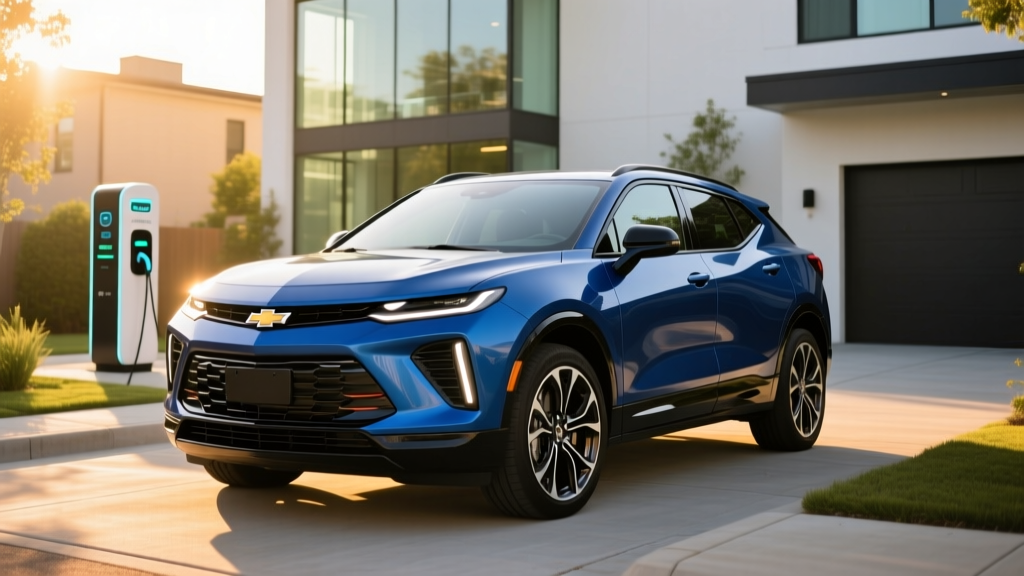
Quick Verdict: The 2026 Chevrolet Blazer RS EV (officially the Blazer EV RS trim) delivers an EPA-estimated 324 miles of range on its 102 kWh usable Ultium battery, supports peak DC fast charging at 190 kW (10–80% in roughly 30 minutes), and starts at $50,195 before destination. Federal §30D tax credit eligibility depends on current-year battery sourcing and income rules — the Blazer EV RS may qualify for up to $7,500, potentially bringing effective cost below $43,000. Real-world highway range drops to roughly 260–280 miles, and cold weather can shave another 15–25%. If you can charge at home and your daily driving stays under 100 miles, this is one of the most practical midsize electric crossovers on the market.
Blazer EV RS Specs at a Glance
| Specification | 2026 Blazer EV RS (AWD) |
|---|---|
| EPA Range | 324 miles |
| Battery (usable) | ~102 kWh, NMC (Ultium) |
| Peak DC Fast Charge | 190 kW |
| 10–80% DC Charge Time | ~30 minutes |
| Level 2 AC Charge Rate | 11.5 kW (~31 mi/hr) |
| Horsepower | 293 hp (AWD) |
| 0–60 mph | ~5.9 seconds |
| EPA Efficiency | ~88 MPGe combined |
| Base MSRP | $50,195 (+ $1,395 destination) |
| Battery/Powertrain Warranty | 8 years / 100,000 miles |
Real-World Range Reality: The EPA 324-mile sticker assumes a mix of city and highway driving at moderate temperatures. In sustained 75 mph highway testing, expect roughly 260–280 miles. In freezing weather (below 30°F), range can drop to 240–270 miles due to cabin heating demands and reduced battery efficiency. The Blazer EV's heat pump (standard on RS) helps mitigate cold-weather losses compared to resistance-heater EVs, but plan conservatively for road trips.
How the Blazer RS EV Compares to a Gas Blazer
The most common cross-shopping question: does the electric Blazer RS make financial sense against the gas-powered Blazer? Here's a data-driven comparison based on 15,000 miles driven annually over five years.
| Factor | 2026 Blazer EV RS (AWD) | 2026 Blazer Gas RS (AWD, 2.0T) |
|---|---|---|
| Base MSRP | $50,195 | $43,400 |
| Potential Federal Credit (§30D) | Up to $7,500 | $0 |
| Effective Purchase Price | ~$42,695 | $43,400 |
| Fuel/Energy Cost (5 yr) | ~$3,750 (home charging at $0.14/kWh) | ~$10,500 (22 MPG avg, $3.50/gal) |
| Maintenance (5 yr est.) | ~$1,500 | ~$3,500 |
| 5-Year Total (purchase + energy + maint.) | ~$47,945 | ~$57,400 |
The Blazer EV RS breaks even or beats the gas Blazer on total cost within the first 3–4 years when the federal credit applies and home charging is your primary energy source. The gap widens further if your utility offers off-peak EV rates (often $0.08–$0.11/kWh), which would drop 5-year energy costs to roughly $2,400. However, public DC fast charging at $0.35–$0.48/kWh erases much of the savings — this math only works if you charge at home most of the time.
Charging the Blazer EV RS: What You Need to Know
The Blazer EV RS uses the NACS (North American Charging Standard) connector, meaning it has native access to Tesla Supercharger stations — over 20,000 stalls nationwide as of 2026 — in addition to Electrify America, EVgo, and other networks. This is a significant practical advantage over CCS-only vehicles.
| Charging Level | Power | Miles Added per Hour | Typical Use Case |
|---|---|---|---|
| Level 1 (120V outlet) | ~1.4 kW | ~3–4 mi/hr | Emergency/overnight top-off |
| Level 2 (240V home) | 11.5 kW | ~31 mi/hr | Daily home charging |
| DC Fast Charge | Up to 190 kW | ~570 mi/hr (peak) | Road trips |
Home Charging Setup & Costs
For daily use, a Level 2 home charger is essential. The Blazer EV RS's 11.5 kW onboard charger means a full charge from 10% takes roughly 9 hours — easily accomplished overnight.
| Item | Estimated Cost |
|---|---|
| Level 2 charger hardware (48A, NACS) | $400–$700 |
| Electrician labor (50-ft run, 60A circuit) | $800–$2,000 |
| Permit & inspection | $100–$300 |
| Panel upgrade (if 200A panel is full or undersized) | $1,500–$3,500 |
| Total (no panel upgrade) | $1,300–$3,000 |
Have a licensed electrician evaluate your panel before purchasing. Many homes built after 2000 with 200-amp service can accommodate a 60A EV circuit without an upgrade, but older homes or those with heavy existing loads (electric range, dryer, HVAC) may need a panel upgrade or a load-management device like the Emporia V2H hub.
DC Fast Charging Curve Reality
The 190 kW peak charge rate is not sustained across the entire session. Based on Ultium-platform testing, the Blazer EV RS holds roughly 150–190 kW between 10–40% state of charge, then tapers to ~120 kW through 60%, and drops further to ~60 kW above 80%. A 10–80% session takes approximately 30 minutes at a capable charger. For road-trip planning, budget 35 minutes per stop to account for connector handshake time and taper.
Federal Tax Credit: Does the Blazer EV RS Qualify?
The IRS §30D clean vehicle credit offers up to $7,500 for qualifying new EVs, but eligibility hinges on several factors that change annually. Here is the 2026 checklist:
- MSRP cap: SUVs/crossovers must be at or below $80,000 — the Blazer EV RS at $50,195 qualifies.
- Buyer income cap: Modified AGI must not exceed $150,000 (single), $225,000 (head of household), or $300,000 (joint).
- Battery sourcing: A percentage of critical minerals and battery components must be sourced from the US or free-trade-agreement countries. This threshold increases each year. Verify the Blazer EV's current compliance on fueleconomy.gov.
- Point-of-sale transfer: You can transfer the credit to the dealer at purchase for an immediate price reduction rather than waiting to claim it on your tax return.
- Final assembly: Must occur in North America — the Blazer EV is assembled in Ramos Arizpe, Mexico. Note: Mexico-assembled vehicles may not qualify for §30D; verify current status with your dealer and a tax professional.
Critical caveat: The Mexico assembly location is the Blazer EV's biggest tax-credit vulnerability. While GM has structured battery and component sourcing to maximize eligibility, final assembly outside the US can disqualify a vehicle. Always confirm eligibility at point of sale using the IRS VIN-check tool before committing. Consult a tax professional for your specific situation.
Ownership Costs: Insurance, Maintenance, and Depreciation
| Annual Cost Factor | Blazer EV RS | Gas Blazer RS |
|---|---|---|
| Insurance (national avg.) | $2,100–$2,600 | $1,700–$2,100 |
| Maintenance | ~$300/yr (tire rotation, cabin filter, fluid top-off) | ~$700/yr (oil, filters, brakes, belts) |
| Tires (replacement every 35–45K mi) | $1,200–$1,600 (heavier vehicle, EV-specific tires) | $900–$1,200 |
| Registration (varies by state) | $150–$400 (some states add EV fees of $50–$200) | $100–$250 |
EV insurance premiums run 15–30% higher than comparable gas vehicles due to higher repair costs and battery replacement risk. Shop quotes from GEICO, Progressive, State Farm, and EV-specialty insurers like Lemonade before purchasing — premiums vary wildly by zip code and driving record.
The Blazer EV's 8-year/100,000-mile battery warranty covers defects and capacity loss below 60% of original capacity. Based on Ultium-platform degradation data from the Cadillac Lyriq and GMC Hummer EV, expect roughly 5–8% capacity loss over the first 100,000 miles under normal use — meaning your 324-mile range might become ~298–308 miles by year 5. That's well within warranty thresholds and unlikely to affect daily usability.
Common Misconceptions About the Blazer EV RS
| Myth | Fact |
|---|---|
| "324 miles means I'll get 324 miles." | EPA is a mixed-cycle estimate. Highway-only driving at 75 mph yields ~260–280 miles. Cold weather reduces this further. |
| "DC charging at 190 kW means 190 kW the whole time." | Peak rate applies only at low SoC. Average rate over a 10–80% session is closer to 110–130 kW. |
| "I need to charge every night." | At 31 mi/hr on Level 2, a 20–80% charge (the recommended daily range for NMC batteries) takes ~5 hours. Most owners plug in every 2–3 nights. |
| "The battery will need a $20,000 replacement." | Ultium batteries are designed for 15–20 year service life. Out-of-warranty module-level repairs (not full pack replacement) are the more likely scenario, typically $2,000–$5,000 per module. |
| "It charges on Tesla Superchargers out of the box." | The Blazer EV RS has a native NACS port, so yes — no adapter needed. This is a major advantage over older CCS-equipped EVs. |
Decision Framework: Is the Blazer EV RS Right for You?
Choose the Blazer EV RS if:
- You have access to Level 2 home charging (garage or driveway with 240V circuit).
- Your daily round-trip commute is under 100 miles (covers 90%+ of US drivers).
- You take 2–4 road trips per year of 200–400 miles and can plan around Supercharger/Electrify America stops.
- You want a midsize crossover with a comfortable ride, quiet cabin, and modern tech without paying luxury-brand pricing.
- You qualify for the §30D credit or your state offers additional EV incentives.
Look elsewhere (or consider a PHEV) if:
- You live in an apartment or lack any access to home or workplace charging.
- You regularly tow more than 1,500 lbs (the Blazer EV is rated for 1,500 lbs max; gas Blazer handles 4,500 lbs).
- You drive in extreme cold (below 0°F) for extended periods and cannot garage the vehicle.
- You need a third row — the Blazer EV is strictly a two-row, five-passenger crossover.
- Your budget is firm below $40,000 and you don't qualify for the federal credit.
Frequently Asked Questions
What is the real-world range of the Blazer EV RS?
EPA-rated at 324 miles, real-world highway range settles around 260–280 miles at 70–75 mph in moderate temperatures. In winter conditions (20–35°F), expect 240–270 miles. The standard heat pump helps, but resistive cabin heating at very low temperatures still draws significantly from the 102 kWh battery.
How long does it take to charge the Blazer EV RS at home?
On a Level 2 (240V) charger at 11.5 kW, a full 0–100% charge takes roughly 9 hours. A typical daily charge from 20–80% (recommended for NMC battery longevity) takes about 5 hours. Level 1 (120V) adds only 3–4 miles per hour and is suitable only for emergencies or very low-mileage drivers.
Does the Blazer EV RS qualify for the $7,500 federal tax credit?
Eligibility depends on current-year IRS §30D rules, including battery critical-mineral sourcing, buyer income limits, and final assembly location. The Blazer EV is assembled in Mexico, which may affect eligibility. Verify using the fueleconomy.gov tax credit lookup and consult a tax professional before purchasing.
How does the Blazer EV RS compare to the Tesla Model Y or Hyundai Ioniq 5?
The Model Y Long Range offers ~330 miles EPA range and faster 250 kW Supercharging, with a more mature software ecosystem but a firmer ride. The Ioniq 5 charges faster (up to 350 kW on capable chargers, 10–80% in ~18 min) but has less range (~305 mi). The Blazer EV RS trades peak charge speed for a more traditional crossover driving feel, native Supercharger access via NACS, and competitive range at a mid-$50K price point.
What does maintenance look like on the Blazer EV RS?
Routine maintenance is minimal: tire rotation every 7,500 miles, cabin air filter replacement annually, brake fluid check every 2 years, and windshield washer fluid. Regenerative braking significantly extends brake pad life — many EV owners go 80,000+ miles on original pads. No oil changes, no spark plugs, no transmission fluid.