Quick Verdict: 615 HP of Electric Muscle With Real-World Trade-Offs
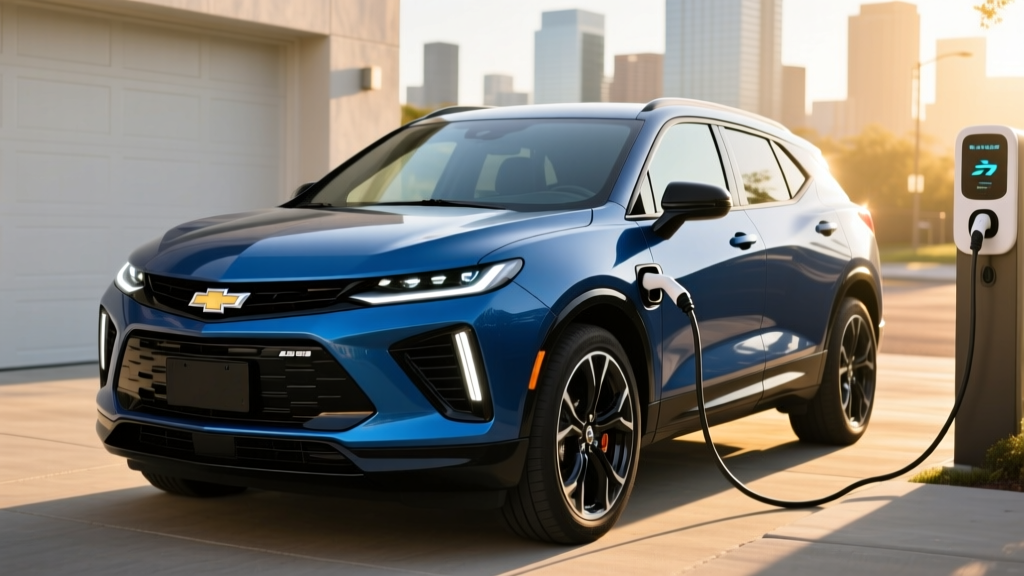
The 2026 Chevrolet Blazer EV SS is GM's answer to the performance-SUV buyer who wants Corvette-adjacent acceleration without sacrificing cargo space. With 615 horsepower and 655 lb-ft of torque from its dual-motor AWD powertrain, the SS trim rockets to 60 mph in a manufacturer-claimed 3.4 seconds — figures that would have been supercar territory a decade ago. But the Blazer EV SS is more than a straight-line dragster. It's a practical midsize crossover with usable range, competitive charging speeds, and a starting price that undercuts rivals like the Tesla Model Y Performance and Ford Mustang Mach-E GT.
That said, the SS trim demands compromises. Its larger battery and performance tuning reduce efficiency compared to lower trims, and real-world highway range falls noticeably short of the EPA sticker. If you're shopping the Blazer EV SS primarily for the horsepower badge, you'll get exactly what you pay for — thrilling acceleration wrapped in a family-friendly package. But buyers prioritizing maximum range or lowest cost-per-mile should look at the 2LT or RS trims instead.
2026 Blazer EV SS Full Spec Sheet
| Specification | Value |
|---|---|
| Base MSRP (SS AWD) | $61,695 (including destination) |
| As-Tested Price (loaded) | ~$64,890 |
| EPA Estimated Range | 293 miles |
| Battery Capacity (usable) | 102 kWh (NMC chemistry) |
| Powertrain | Dual-motor AWD (eAWD) |
| Horsepower | 615 hp (Wide Open Watts mode) |
| Torque | 655 lb-ft |
| 0–60 mph | 3.4 seconds (est.) |
| Peak DC Fast-Charge Rate | 190 kW |
| 10–80% DC Charge Time | ~32 minutes |
| Level 2 Home Charge Rate | 11.5 kW (~31 mi/hr) |
| MPGe (combined) | 87 MPGe |
| Efficiency | 39 kWh/100 mi |
| Cargo Volume (rear seats up) | 25.4 cu ft |
| Cargo Volume (rear seats folded) | 55.1 cu ft |
| Battery Warranty | 8 years / 100,000 miles |
| Bumper-to-Bumper Warranty | 3 years / 36,000 miles |
| Federal Tax Credit (§30D) | Up to $7,500 (eligibility varies) |
Range & Efficiency: The Real Story Behind 293 EPA Miles
The Blazer EV SS carries a 102 kWh usable battery pack using nickel-manganese-cobalt (NMC) chemistry — GM's Ultium platform architecture shared with the Cadillac Lyriq and GMC Hummer EV. The EPA rates the SS AWD at 293 miles of combined range, which places it squarely in the midsize performance-SUV segment.
EPA sticker: 293 miles (combined)
Real-world highway (70 mph, 72°F): ~245–260 miles
Cold weather (30°F, mixed driving): ~210–235 miles
City/regenerative driving: ~275–290 miles
The SS trim's performance-oriented tuning, wider 21-inch wheels, and heavier dual-motor setup reduce efficiency versus the 2LT RWD (which achieves up to 324 EPA miles). Expect highway range to drop 10–15% below the EPA figure at sustained speeds above 70 mph, and cold-weather losses of 20–25% are typical for NMC packs without aggressive preconditioning.
Efficiency comes in at 39 kWh per 100 miles (87 MPGe combined), according to fueleconomy.gov. That's thirstier than the Model Y Performance (33 kWh/100 mi) but comparable to the Mach-E GT. For a 615-hp vehicle weighing over 5,500 pounds, it's defensible — but it does mean higher per-mile charging costs on road trips.
Charging Speed: DC Fast and Home Level 2
The Blazer EV SS supports a peak DC fast-charge rate of 190 kW via its CCS1 connector (NACS adapter available for Tesla Supercharger access). That peak rate is competitive but not class-leading — the Hyundai Ioniq 5 peaks at 240 kW, for instance. More importantly, the charge curve matters.
| Charging Level | Power / Rate | Miles Added per Hour | Notes |
|---|---|---|---|
| Level 1 (120V household) | 1.4 kW | ~3–4 mi/hr | Emergency/top-up only |
| Level 2 (240V home, 48A) | 11.5 kW | ~31 mi/hr | Full charge in ~9 hours |
| DC Fast Charge (peak) | 190 kW | ~480 mi/hr (at peak) | Sustained 10–80%: ~32 min |
| DC Fast Charge (tapered >80%) | ~50–80 kW | Varies | 80–100% adds ~20+ min |
In practice, the Blazer EV SS charges from 10% to 80% in roughly 32 minutes at a compatible 190+ kW DC fast charger (Electrify America, EVgo, or Tesla Supercharger with NACS adapter). The charge curve is relatively flat between 10–50% SoC, holding near peak rate, but tapers noticeably above 80% — standard behavior for NMC chemistry to protect long-term cell health.
For home charging, a 48-amp Level 2 wallbox on a 60-amp circuit delivers a full overnight charge in about 9 hours. Installation costs for a Level 2 home setup typically range from $800 to $2,500 depending on panel capacity and run length — budget for a potential panel upgrade if your home has a 100-amp service.
Performance: Where 615 Horsepower Meets the Road
The Blazer EV SS earns its badge through GM's Wide Open Watts (WOW) mode — a performance setting that unlocks the full 615 hp and 655 lb-ft from both electric motors. This isn't a detuned comfort cruiser with a sporty badge; the SS genuinely delivers supercar-rivaling acceleration in a 5,500-pound crossover.
The dual-motor eAWD system provides torque vectoring to the rear axle, and the SS trim includes a sport-tuned adaptive suspension, larger Brembo brakes, and 21-inch wheels wrapped in performance rubber. The 0–60 mph sprint clocks in at 3.4 seconds (Chevrolet's estimate; independent testing has shown 3.3–3.6 seconds depending on surface and temperature).
Where the SS diverges from dedicated sports sedans is in sustained high-speed driving. Like most performance EVs, repeated hard launches will trigger thermal management intervention, reducing peak output to protect the battery and motors. For daily driving and occasional drag-strip fun, it's a non-issue. For track-day use, look elsewhere.
The regenerative braking system offers multiple levels, including a one-pedal driving mode that brings the vehicle to a complete stop. The steering is well-weighted if slightly numb, and the low center of gravity from the underfloor battery pack keeps body roll surprisingly controlled for a vehicle this tall.
Interior, Tech, and Cargo Space
Inside, the Blazer EV SS features a 17.7-inch diagonal infotainment touchscreen running Google Built-In (Google Maps, Google Assistant, Play Store) — the same system found in the Silverado EV and Equinox EV. A 11-inch digital instrument cluster sits behind the flat-bottom steering wheel. Physical climate controls are retained below the screen, a welcome choice in an era of touchscreen-only frustration.
Standard tech on the SS includes:
- Wireless Apple CarPlay and Android Auto
- Wireless phone charging pad
- Heads-up display
- Super Cruise hands-free driving assistance (on compatible highways)
- 19-speaker Bose premium audio
- Heated and ventilated front seats, heated steering wheel
- Power liftgate
Super Cruise is GM's Level 2 driver-assistance system — it handles steering, acceleration, and braking on pre-mapped divided highways (over 750,000 miles of compatible roads in North America). The driver must remain attentive; an infrared camera monitors eye gaze. This is not autonomous driving (that requires SAE Level 4+), but it significantly reduces fatigue on long highway stretches.
Cargo space measures 25.4 cubic feet behind the second row and 55.1 cubic feet with the rear seats folded. Front legroom is generous at 42.2 inches, while rear legroom comes in at 37.8 inches — competitive with the Model Y but tighter than the Hyundai Ioniq 5's rear seat. Notably, the Blazer EV does not offer a front trunk (frunk), as GM allocated that space to HVAC and power electronics.
Pricing, Trims, and Federal Tax Credit Eligibility
The 2026 Blazer EV SS starts at $61,695 including destination. Our loaded test vehicle, equipped with the $995 Redline Edition appearance package and $1,200 panoramic sunroof, came to approximately $64,890.
| Trim | Drivetrain | Base MSRP | EPA Range |
|---|---|---|---|
| 2LT | RWD | $44,595 | 324 mi |
| 2LT | AWD | $47,595 | 307 mi |
| RS | AWD | $51,995 | 297 mi |
| SS | AWD | $61,695 | 293 mi |
The Blazer EV may qualify for up to $7,500 under the IRS §30D Clean Vehicle Credit, but eligibility depends on multiple factors:
- MSRP cap: SUVs must be under $80,000 — the SS qualifies at $61,695.
- Buyer income cap: AGI must not exceed $150,000 (single), $225,000 (head of household), or $300,000 (joint).
- Battery sourcing: Critical minerals and battery components must meet phased-in thresholds that tighten annually. GM's Ultium batteries are manufactured in the U.S., but critical-mineral sourcing requirements may reduce the credit to $3,750 for some build dates.
- Point-of-sale transfer: Eligible buyers can apply the credit as an immediate dealer discount rather than waiting for tax filing.
Always verify current eligibility at irs.gov and consult a tax professional before purchasing. Rules and sourcing compliance change throughout the model year.
Ownership Costs, Warranty, and Long-Term Outlook
GM backs the Blazer EV's battery and propulsion components with an 8-year/100,000-mile warranty, covering defects and capacity loss below 70% of original capacity. The limited bumper-to-bumper warranty is 3 years/36,000 miles — average for the segment but shorter than Hyundai/Kia's 5-year/60,000-mile coverage.
Based on current national electricity averages ($0.16/kWh) and the SS's 39 kWh/100 mi efficiency, expect to spend roughly $6.24 per 100 miles on home charging. That compares to approximately $12–14 per 100 miles for a comparable gas-powered Blazer at 22 mpg combined and $3.30/gallon fuel. Over five years and 75,000 miles, the fuel savings alone approach $4,500–$5,500.
Insurance costs for the SS trim tend to run 15–25% higher than the 2LT due to the performance rating and higher repair costs for the dual-motor powertrain. Get quotes before committing — some insurers weight EV performance trims heavily.
Pros, Cons, and Who Should Buy the Blazer EV SS
Pros
- 615 hp delivers genuine supercar-rivaling acceleration
- Super Cruise is one of the best Level 2 systems available
- 102 kWh battery provides solid range for a performance SUV
- Google Built-In infotainment is responsive and feature-rich
- Physical climate controls retained
- Undercuts Model Y Performance and Mach-E GT on price
Cons
- No front trunk (frunk) — lost cargo utility
- 190 kW peak charge rate trails Hyundai/Kia 800V rivals
- Real-world highway range drops to ~250 mi
- Heavy at 5,500+ lbs — affects tire wear and efficiency
- Rear legroom tighter than some competitors
- Insurance premiums higher on SS trim
Who the Blazer EV SS Is For
Buy it if: You want a daily-drivable performance SUV with 600+ hp, a comfortable highway cruiser with Super Cruise, and enough range for weekend road trips with DC fast-charging stops. It's ideal for the enthusiast parent who wants excitement without switching to a two-seat sports car.
Skip it if: Maximum range is your priority (choose the 2LT RWD at 324 miles), you need a frunk for gear storage, you frequently drive in extreme cold without garage charging, or you want the fastest possible DC charging (look at 800V architectures like the Ioniq 5 or Porsche Macan EV).
Frequently Asked Questions
What is the real-world range of the Blazer EV SS?
The EPA rates it at 293 miles combined. In real-world highway driving at 70+ mph in mild temperatures, expect 245–260 miles. In cold weather (below freezing), that drops to roughly 210–235 miles due to battery heating demands and reduced regenerative braking efficiency.
How fast does the Blazer EV SS charge at home and on the road?
At home on a 48-amp Level 2 charger (11.5 kW), you'll add about 31 miles per hour, fully recharging overnight in ~9 hours. On a DC fast charger, the SS peaks at 190 kW and charges from 10–80% in approximately 32 minutes. Above 80%, charging slows significantly to protect battery health.
Does the Blazer EV SS qualify for the $7,500 federal tax credit?
It can, but eligibility depends on your income (AGI caps apply), the specific vehicle's battery-sourcing compliance at time of manufacture, and MSRP limits. The SS's $61,695 price is well under the $80,000 SUV cap. Check current sourcing compliance on fueleconomy.gov and review IRS §30D guidelines before purchasing.
Is the Blazer EV SS worth buying over the Tesla Model Y Performance?
The Model Y Performance offers better efficiency (33 vs. 39 kWh/100 mi), access to the Supercharger network natively, and more cargo space — but the Blazer EV SS counters with a more comfortable ride, Super Cruise, physical buttons, and a lower starting price. If you prioritize driving refinement and highway comfort over raw efficiency, the Blazer SS is the stronger pick. If you road-trip frequently and value charging infrastructure, the Model Y still holds an edge.
How much horsepower does the Blazer EV SS actually have?
The Blazer EV SS produces 615 horsepower and 655 lb-ft of torque when Wide Open Watts mode is engaged. This is the combined output of both front and rear electric motors. In normal driving modes, output is reduced for efficiency and comfort.
Does the Blazer EV SS have a frunk?
No. GM uses the under-hood space for power electronics and HVAC components. All cargo capacity (25.4 cu ft rear seats up, 55.1 cu ft folded) is in the rear cargo area.