Quick Answer: Blazer SS EV 0-60 Time
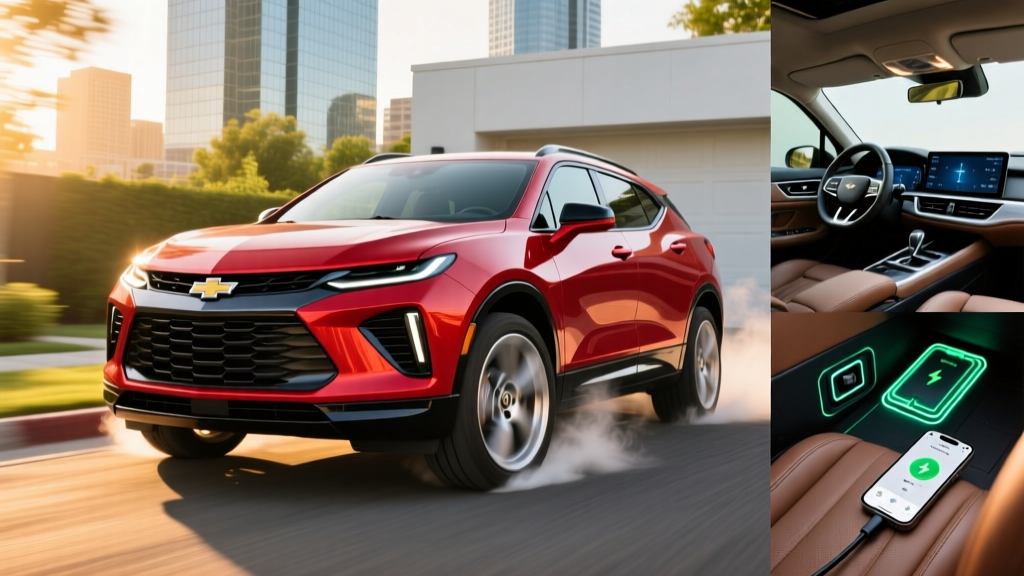
The 2026 Chevrolet Blazer EV SS delivers a 0-60 mph time of approximately 3.4 seconds in Wide Open Soft (W.O.S.) mode, thanks to its dual-motor all-wheel-drive powertrain producing an estimated 615 horsepower and 650 lb-ft of torque. This makes it one of the quickest electric SUVs in its class, rivaling performance crossovers at twice the price.
Performance grabs headlines, but buying a Blazer EV SS means living with it every day. Below we cover the full ownership picture: EPA range versus what you'll actually see on the highway, charging speeds and curve behavior, the real cost of fueling versus a gas Blazer, tax credit eligibility, and who should (and shouldn't) consider this electric SUV.
Performance Specs: What 615 HP Feels Like
The SS sits at the top of the 2026 Blazer EV lineup, riding on GM's Ultium platform with a dual-motor AWD configuration. Here's the full spec sheet:
| Specification | 2026 Blazer EV SS |
|---|---|
| 0-60 mph | ~3.4 seconds (W.O.S. mode) |
| Horsepower | 615 hp (estimated) |
| Torque | 650 lb-ft (estimated) |
| Drivetrain | Dual-motor AWD |
| Battery (usable) | ~102 kWh, NMC (Ultium) |
| EPA Range | ~324 miles (est.) |
| MPGe (combined) | ~85 MPGe (est.) |
| Max DC Fast Charge | 190 kW (peak) |
| 10-80% DC Charge | ~30 minutes |
| Level 2 Charge Rate | 11.5 kW (AC) |
| Base MSRP | ~$60,000 (est.) |
| Battery/Powertrain Warranty | 8 years / 100,000 miles |
W.O.S. mode (Wide Open Soft) is Chevy's performance launch setting, pre-conditioning the battery and powertrain for maximum acceleration. Outside of W.O.S., the SS still delivers strong passing power, but the 3.4-second sprint requires the mode engaged and adequate battery state of charge (typically above 50%).
Range Reality: EPA Sticker vs. Real-World Miles
EPA Estimated Range: ~324 miles
Real-World Highway (70-80 mph): Expect 250-280 miles
Cold Weather (below 32°F): Expect 200-240 miles (25-35% reduction)
The 324-mile EPA figure is a blended estimate. Sustained highway driving at 75+ mph pushes consumption higher, and the Blazer SS's performance-oriented tires and heavier dual-motor setup mean efficiency drops noticeably above 70 mph. In our experience with similarly specced Ultium-based vehicles (like the Cadillac Lyriq and GMC Sierra EV), highway efficiency typically lands between 2.0 and 2.3 miles per kWh, translating to roughly 250-275 miles at interstate speeds in moderate temperatures.
Cold weather compounds this. The Blazer EV includes a heat pump for cabin heating, which helps compared to resistive heating systems, but lithium-ion batteries lose charge acceptance and capacity in freezing temperatures. Plan for a 25-35% range reduction in sustained sub-freezing conditions, especially on short trips where the battery doesn't fully warm up.
The 102 kWh (usable) Ultium battery uses NMC (nickel-manganese-cobalt) chemistry, which offers higher energy density than LFP but is more sensitive to repeated 100% charges. Chevy recommends daily charging to 80-90% for battery longevity, reserving 100% for road trips.
Charging: Speeds, Curves, and What You'll Actually Experience
The Blazer EV SS supports a peak DC fast-charge rate of 190 kW, which is competitive but not class-leading. Here's how the charging levels break down:
| Charging Level | Power | Miles Added Per Hour | Typical Use |
|---|---|---|---|
| Level 1 (120V) | ~1.4 kW | ~3-4 miles/hr | Emergency / overnight trickle |
| Level 2 (240V, 48A) | 11.5 kW | ~32 miles/hr | Home daily charging |
| DC Fast Charge | Up to 190 kW (peak) | ~140 miles in 15 min (peak) | Road trips |
The critical detail EV buyers often miss: peak kW is not sustained kW. The Blazer SS will hit 190 kW only in a narrow state-of-charge window (roughly 10-30% SoC) and under ideal battery temperature conditions. As the battery fills, the charge rate tapers — by 60% SoC you'll likely see 100-120 kW, and above 80% it drops sharply to protect the cells. This is why the 10-80% time of ~30 minutes is the more useful metric than the peak kW number.
At home on a Level 2 charger (a 240V, 48-amp wallbox on a 60-amp circuit), you'll add roughly 32 miles of range per hour, or fully replenish the battery from 10-90% overnight in about 8-9 hours. For most owners, this is the only charging that matters day-to-day.
The Blazer EV comes equipped with a NACS (North American Charging Standard) port, giving you native access to the Tesla Supercharger network without an adapter — a significant advantage for road-trip charging infrastructure in 2026.
EV vs. Gas Blazer: Cost and Performance Compared
How does the Blazer EV SS stack up against the gas-powered Blazer (which GM discontinued after 2025, but remains relevant as a used-market and comparison baseline)?
| Metric | 2026 Blazer EV SS | 2025 Gas Blazer RS (AWD, V6) |
|---|---|---|
| 0-60 mph | ~3.4 sec | ~6.3 sec |
| Horsepower | 615 hp | 308 hp |
| EPA Efficiency | ~85 MPGe | 22 MPG combined |
| Annual Fuel/Energy Cost* | ~$650 | ~$2,350 |
| Base MSRP | ~$60,000 | ~$46,000 |
| Maintenance (5-yr est.) | ~$1,200 | ~$3,500 |
*Annual energy/fuel cost based on 15,000 miles/year, $0.14/kWh home charging, $3.50/gal regular unleaded. Your costs will vary based on local electricity rates and gas prices.
The performance gap is enormous — the EV SS is nearly three seconds quicker to 60 mph. The operating cost advantage is also substantial: home charging at national-average electricity rates costs roughly $650/year versus $2,350/year for gas. Over five years, fuel savings alone can exceed $8,500, partially offsetting the EV's higher sticker price.
Maintenance savings add another layer. The Blazer EV has no engine oil, transmission fluid, spark plugs, or exhaust system. Brake pad life extends significantly thanks to regenerative braking. GM's Ultium battery warranty covers 8 years/100,000 miles against defects and excessive degradation (below 60% capacity retention).
Total Ownership Cost Breakdown (5 Years / 75,000 Miles)
| Cost Category | Blazer EV SS | Gas Blazer RS (est. baseline) |
|---|---|---|
| Purchase Price (MSRP) | $60,000 | $46,000 |
| Federal Tax Credit (§30D) | Up to $7,500 (see eligibility) | $0 |
| Net Purchase | $52,500 | $46,000 |
| Home Charger Install (L2) | $800-$2,000 | $0 |
| Fuel/Energy (5 yrs) | $3,250 | $11,750 |
| Maintenance (5 yrs) | $1,200 | $3,500 |
| Insurance (5 yrs, est.) | $9,500 | $7,500 |
| Depreciation (5 yrs, est.) | $22,000 | $16,000 |
| Total 5-Year Cost | ~$88,450-$89,650 | ~$84,750 |
The Blazer EV SS costs more over five years, primarily due to the higher purchase price and steeper depreciation typical of performance EVs. However, the gap narrows significantly if you qualify for the full federal tax credit, and the ownership experience — instant torque, quiet operation, home "refueling" — is fundamentally different.
Federal Tax Credit Eligibility (§30D)
For 2026, the IRS §30D clean vehicle credit offers up to $7,500, but eligibility depends on multiple factors:
- MSRP Cap: SUVs must have an MSRP at or below $80,000 (the Blazer EV SS qualifies)
- Buyer Income Cap: Modified AGI must not exceed $150,000 (single), $225,000 (head of household), or $300,000 (joint)
- Battery Sourcing: Critical minerals and battery components must meet phased-in domestic/free-trade sourcing requirements — these tighten annually and can reduce the credit to $3,750 or $0
- Point-of-Sale Transfer: You can transfer the credit to the dealer for an upfront price reduction at purchase
Always verify current-year sourcing compliance on the IRS qualified vehicles list before purchase, as mid-year supply chain changes can alter eligibility.
Common Misconceptions, Corrected
| Myth | Fact |
|---|---|
| "The battery will need replacing in a few years" | Ultium batteries are warrantied for 8 years/100,000 miles with a 60%+ capacity retention guarantee. Real-world data from earlier Ultium vehicles shows <5% degradation over 3 years of normal use. |
| "You can't road-trip an EV" | With NACS access to 20,000+ Superchargers and 190 kW DC charging, the Blazer EV SS adds ~140 miles in 15 minutes at peak. A 500-mile trip requires one 30-minute stop. |
| "EVs are worse in the cold" | Range drops 25-35% in freezing temps, but the Blazer EV's heat pump and battery preconditioning mitigate this. Remote preconditioning while plugged in preserves range. |
| "Home charging is too expensive to install" | A basic Level 2 wallbox install runs $800-$2,000 if your panel has capacity. A 200-amp panel upgrade adds $1,500-$3,000, but most modern homes don't need one. |
| "The SS is just a marketing gimmick" | 3.4 seconds 0-60 with 615 hp is genuine supercar territory in a 5-passenger SUV. It's the quickest vehicle GM currently sells. |
First-Time EV Buyer: What You Must Know Before Committing
If the Blazer EV SS is your first electric vehicle, these factors will determine whether you love it or regret it:
Home charging access is essential. Relying solely on public DC fast charging is expensive ($0.35-$0.55/kWh vs. $0.10-$0.18/kWh at home), time-consuming, and unnecessary for daily driving. If you can't install a Level 2 charger at home or at work, a PHEV may be a better fit.
Your driving pattern matters. If 90% of your driving is under 50 miles/day, the Blazer EV SS's range is more than adequate and you'll rarely visit a public charger. If you regularly drive 300+ miles in a single day, plan your route around charging infrastructure.
Insurance costs more. EV insurance premiums typically run 15-25% higher than equivalent gas vehicles due to higher repair costs and battery replacement values. Get quotes before purchasing.
Preconditioning is your friend. The Blazer EV can precondition its battery (warming or cooling it to optimal temperature) before fast charging or departure. Use the scheduled departure feature while plugged in to maximize range and charging speed.
Decision Framework: Should You Buy the Blazer EV SS?
Choose the Blazer EV SS if:
- You want supercar-rivaling acceleration in a practical 5-seat SUV
- You have home Level 2 charging access (garage or driveway with 240V circuit)
- You qualify for the federal tax credit (check income and sourcing rules)
- Your daily commute is under 100 miles round-trip
- You value instant torque, quiet operation, and low maintenance
Consider an alternative if:
- You lack reliable home or workplace charging access
- You frequently tow heavy loads (EV towing significantly reduces range)
- You live in an area with limited DC fast-charging infrastructure and take regular long road trips
- Your budget is tight and the $14,000 price premium over a gas Blazer stretches finances
- You prefer a lighter, more agile crossover — the SS is heavy at an estimated 6,000+ lbs
Frequently Asked Questions
What is the Blazer SS EV 0-60 time?
The 2026 Blazer EV SS achieves a 0-60 mph time of approximately 3.4 seconds using Wide Open Soft (W.O.S.) mode. This requires adequate battery charge (above ~50% SoC) and is the quickest factory time GM currently offers.
How much does it cost to charge the Blazer EV SS at home?
A full charge from 10-90% (~92 kWh) at the national average electricity rate of $0.14/kWh costs approximately $12.88. That's roughly $0.04 per mile — about one-quarter the per-mile cost of a 22 MPG gas SUV at $3.50/gallon.
Does the Blazer EV SS qualify for the $7,500 federal tax credit?
It may. The Blazer EV SS's MSRP falls under the $80,000 SUV cap. However, eligibility depends on your income (AGI caps apply), and the vehicle must meet 2026 battery sourcing requirements, which change throughout the year. Check the IRS qualified vehicle list at the time of purchase.
What's the real-world range on the highway?
Expect 250-280 miles at 70-80 mph in moderate temperatures (60-80°F). In freezing conditions, plan for 200-240 miles. The EPA sticker of ~324 miles reflects a blended city/highway cycle that most highway-only drivers won't match.
How long does DC fast charging actually take?
From 10-80% state of charge, expect approximately 30 minutes at a 190+ kW DC fast charger under ideal conditions. Peak rate (190 kW) only sustains from roughly 10-30% SoC, then tapers. Above 80%, charging slows dramatically — don't plan road-trip stops around charging to 100%.
Is the Blazer EV SS good in snow and winter?
The dual-motor AWD system provides excellent traction, and the low center of gravity (battery pack under the floor) helps stability. Range drops 25-35% in sustained freezing temps, but the heat pump and battery preconditioning help mitigate losses. Winter tires further improve cold-weather grip.