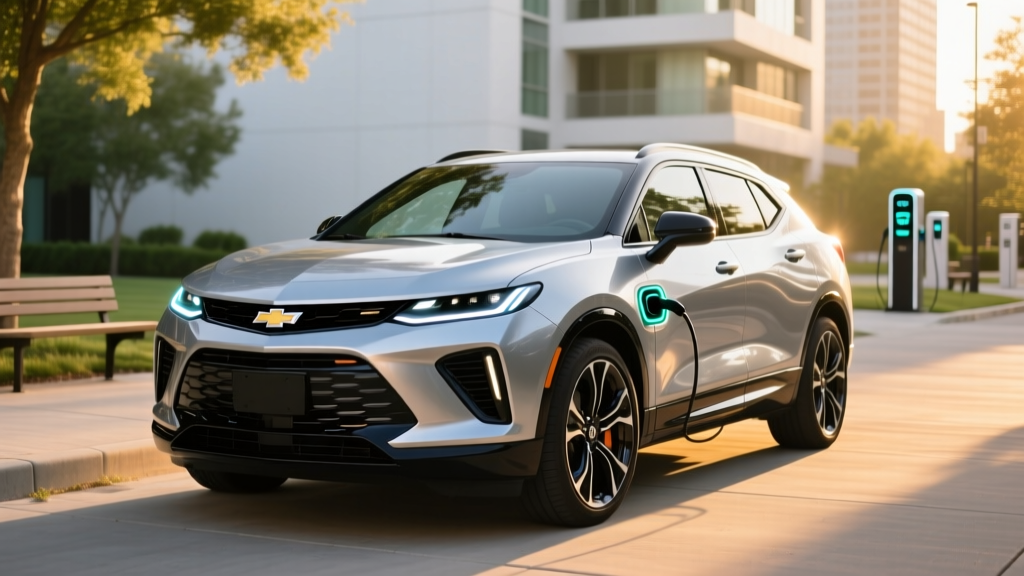
The 2026 Chevrolet Blazer EV RS occupies a specific niche in the midsize electric crossover segment: it's a design-forward, tech-loaded family hauler that prioritizes comfort and straight-line punch over maximum efficiency. After spending time with the RS trim — the sportiest variant in the Blazer EV lineup — we've collected the real-world data that spec sheets leave out, from highway range degradation to DC fast-charging curve behavior.
If you're cross-shopping the Blazer EV RS against the Tesla Model Y, Hyundai Ioniq 5, or Ford Mustang Mach-E, this review gives you the exact numbers and ownership realities you need to decide.
Quick Verdict: Who the Blazer EV RS Is For
The Blazer EV RS suits buyers who want a spacious, visually aggressive electric SUV with strong passing power, a compliant ride, and GM's latest infotainment and driver-assistance tech. It's best for suburban families and commuters with home charging access who take occasional road trips but don't need class-leading efficiency or the fastest DC charging in the segment. If you prioritize cargo optimization or the lowest cost-per-mile, look at the Model Y. If you want the fastest charging, the Ioniq 5 still leads. But for a balance of presence, comfort, and range, the Blazer EV RS makes a compelling case.
Range, Battery & Efficiency
| Spec | Value |
|---|---|
| EPA Range (RS AWD) | 324 miles |
| Battery Usable Capacity | 102 kWh (NMC lithium-ion) |
| EPA Efficiency | 87 MPGe combined (39 kWh/100 mi) |
| Drivetrain | Dual-motor AWD |
The 102 kWh usable battery pack uses NMC (nickel manganese cobalt) chemistry, which offers higher energy density than LFP but requires more careful state-of-charge management for long-term longevity. GM recommends daily charging to 80-90% and reserving 100% fills for road trips. The pack sits low in the Ultium platform skateboard, contributing to a planted ride feel despite the Blazer's crossover ride height.
At 39 kWh per 100 miles, the Blazer EV RS is less efficient than the Tesla Model Y Long Range (roughly 28 kWh/100 mi) but competitive with the Ford Mustang Mach-E GT and slightly better than the Rivian R1S. The trade-off for that efficiency is the Blazer's bolder styling, heavier curb weight (~5,800 lbs), and larger frontal area.
Charging Speed: DC Fast, Level 2 & Home Setup
| Charging Level | Power | Speed / Time |
|---|---|---|
| Level 1 (120V outlet) | ~1.4 kW | ~4 miles per hour |
| Level 2 (240V home) | 11.5 kW (48A) | ~32 miles per hour; 0-100% in ~9.5 hours |
| DC Fast Charge | Peak 190 kW | 10-80% in ~34 minutes |
The Blazer EV RS peaks at 190 kW on DC fast chargers. However, like most EVs, it doesn't sustain that peak. The charge curve holds roughly 170-190 kW from 10% to about 40% state of charge, then tapers progressively. From 60% to 80%, expect speeds closer to 90-110 kW. This means the 10-80% session takes around 34 minutes at a 350 kW-capable station — respectable but not class-leading.
For comparison, the Hyundai Ioniq 5 with its 800V architecture can do 10-80% in about 18 minutes at a 350 kW charger. The Blazer's 400V architecture limits its peak charge rate, which is worth factoring in if you road-trip frequently.
At home on a Level 2 charger (240V, 48-amp circuit), the onboard 11.5 kW charger replenishes about 32 miles of range per hour. A full overnight charge from 20% to 100% takes roughly 8-9 hours — easily achievable with a standard overnight schedule. Installation of a 240V/48A hardwired home charger typically runs $800-$2,000 depending on your electrical panel capacity and run length. Homes with 200-amp service usually accommodate this without a panel upgrade.
The Blazer EV uses the NACS (North American Charging Standard) connector natively, giving you direct access to Tesla Supercharger stations — a significant practical advantage over CCS-equipped rivals that still require adapters. Access to the Supercharger network, which now numbers over 25,000 stalls in North America, dramatically simplifies road-trip planning.
Performance & Driving Dynamics
| Spec | Blazer EV RS AWD |
|---|---|
| Horsepower | 557 hp (combined) |
| Torque | 648 lb-ft |
| 0-60 mph | ~3.9 seconds (with Velocity Package) |
| Drivetrain | Dual-motor eAWD |
| Towing Capacity | Up to 1,500 lbs |
The RS trim with the available Velocity Package delivers 557 horsepower and 648 lb-ft of torque from its dual-motor setup, launching to 60 mph in approximately 3.9 seconds. That puts it in the same acceleration territory as the Ford Mustang Mach-E GT and well ahead of most gas-powered midsize SUVs.
Without the Velocity Package, the RS AWD still produces a healthy ~340 hp and reaches 60 mph in roughly 5.5 seconds — plenty quick for merging and passing. The instant torque delivery makes the Blazer feel even quicker than its numbers suggest in around-town driving.
Ride quality is a genuine strength. The Blazer EV RS uses a five-link rear suspension that soaks up highway expansion joints and potholes with composure. The steering is precise if slightly numb, and the low center of gravity from the Ultium battery pack keeps body roll well-controlled in corners. This is a comfortable cruiser first, a performance SUV second — which is exactly the right tuning for its target buyer.
Regenerative braking offers multiple modes, including a one-pedal driving option that brings the vehicle to a complete stop. The brake pedal feel is progressive and natural — a common pain point in EVs that GM has largely solved here.
Interior, Cargo & Technology
The Blazer EV RS cabin features a 17.7-inch diagonal infotainment touchscreen paired with an 11-inch digital instrument cluster, both running GM's Google Built-In platform. That means native Google Maps navigation, Google Assistant voice control, and access to the Play Store for apps — all without needing to plug in your phone. Wireless Apple CarPlay and Android Auto are also included.
Interior materials in the RS trim include perforated leather-appointed seats, a flat-bottom steering wheel, and RS-specific contrast stitching. The front seats are heated and ventilated, and the heated steering wheel is standard. Ambient lighting and a panoramic sunroof add to the premium feel.
| Dimension | Measurement |
|---|---|
| Cargo (behind 2nd row) | 25.5 cu ft |
| Cargo (2nd row folded) | 57.2 cu ft |
| Front Legroom | 42.5 inches |
| Rear Legroom | 38.2 inches |
| Front Headroom | 40.1 inches |
| Frunk (front trunk) | Not available |
Notably, the Blazer EV does not have a frunk (front trunk). That cargo space is consumed by power electronics and HVAC components. The 25.5 cu ft behind the second row is adequate for weekly groceries and a couple of suitcases, but the 57.2 cu ft maximum trails the Tesla Model Y (76 cu ft) and Hyundai Ioniq 5 (59 cu ft with seats folded). If maximum cargo volume is a priority, this is a real trade-off.
On the technology front, the Blazer EV RS comes equipped with Super Cruise availability (subscription-based), GM's hands-free highway driving assistant. Super Cruise operates on over 750,000 miles of compatible roads in North America, using a combination of LiDAR-mapped road data, cameras, and radar. It's an SAE Level 2 system — meaning the driver must remain attentive, and an infrared camera monitors your eyes to confirm engagement. When active, it handles steering, acceleration, and braking on divided highways with impressive smoothness. Just don't confuse it with autonomous driving: you're still the driver.
Standard driver-assistance features under the Chevy Safety Assist suite include automatic emergency braking with pedestrian detection, lane keep assist with lane departure warning, following distance indicator, adaptive cruise control, and rear cross-traffic alert.
Pricing, Trims & Federal Tax Credit
| Trim | MSRP | Est. After §30D Credit* |
|---|---|---|
| Blazer EV LT (RWD) | $44,600 | ~$37,100 |
| Blazer EV RS (RWD) | $49,100 | ~$41,600 |
| Blazer EV RS (AWD) | $52,100 | ~$44,600 |
| Blazer EV SS (AWD) | $60,600 | Not eligible (MSRP cap) |
*Federal tax credit estimates assume buyer eligibility under IRS §30D rules. Actual credit depends on income, battery sourcing, and MSRP caps. Verify at irs.gov.
The 2026 Blazer EV RS AWD starts at $52,100 including destination. Adding the Velocity Package ($2,995), Super Cruise subscription, and premium paint can push the as-tested price to $57,000-$59,000.
- MSRP Cap: SUVs must be priced at or below $80,000 to qualify. The Blazer EV RS AWD clears this easily; the SS trim may not depending on options.
- Income Cap: Modified adjusted gross income must not exceed $150,000 (single), $225,000 (head of household), or $300,000 (joint filing).
- Battery Sourcing: The credit is split into two halves ($3,750 each) — one for critical minerals and one for battery components. Sourcing requirements tighten annually. Check the latest DOE/Fueleconomy.gov eligibility list before purchasing.
- Point-of-Sale Transfer: Eligible buyers can transfer the credit to the dealer at purchase, reducing the upfront price rather than waiting for a tax refund.
Confirm current eligibility at fueleconomy.gov and consult a tax professional for your specific situation.
Warranty & Long-Term Ownership
| Coverage | Term |
|---|---|
| Battery & Powertrain | 8 years / 100,000 miles |
| Battery Capacity Retention | Warranted to retain ≥70% of original capacity during coverage period |
| Bumper-to-Bumper | 3 years / 36,000 miles |
| Roadside Assistance | 5 years / 60,000 miles |
| Corrosion | 3 years / 36,000 miles (surface); 6 years / 100,000 miles (perforation) |
GM's 8-year/100,000-mile battery warranty is standard for the industry, matching Ford, Hyundai, and Tesla. The 70% capacity retention threshold means if your battery degrades below that point within the warranty window, GM will repair or replace it. Based on data from earlier Ultium-platform vehicles and industry-wide NMC degradation curves, most owners can expect to retain 85-90% capacity at 100,000 miles with normal charging habits (avoiding frequent 100% charges and DC fast-charging exclusively).
Insurance costs for the Blazer EV RS run approximately 15-25% higher than a comparably priced gas SUV, according to industry averages. Get quotes from your provider before purchasing — EV insurance premiums vary significantly by state and driving record.
Blazer EV RS vs. Key Competitors
| Spec | Blazer EV RS AWD | Tesla Model Y LR | Hyundai Ioniq 5 Limited |
|---|---|---|---|
| EPA Range | 324 mi | 330 mi | 305 mi |
| Battery (kWh) | 102 | ~82 | 84 |
| Peak DC Charge | 190 kW | ~250 kW | ~240 kW |
| 10-80% Time | ~34 min | ~25 min | ~18 min |
| 0-60 mph | 3.9 sec | 4.8 sec | 5.1 sec |
| Cargo (max) | 57.2 cu ft | 76 cu ft | 59 cu ft |
| Starting MSRP | $52,100 | ~$48,000 | ~$52,500 |
| NACS Native | Yes | Yes | No (CCS) |
The Blazer EV RS trades blows with the segment leaders but wins and loses in different categories. It accelerates harder than both the Model Y Long Range and Ioniq 5 Limited, and its NACS connector gives it native Supercharger access without an adapter. Its ride quality and cabin quietness arguably surpass both competitors.
Where it falls short: the Model Y offers significantly more cargo space (76 vs. 57.2 cu ft), better efficiency (fewer kWh per mile means cheaper charging), and faster DC charging. The Ioniq 5 charges even faster thanks to its 800V architecture. If road-trip charging speed is your top priority, the Ioniq 5 is the clear pick. If cargo and efficiency matter most, the Model Y wins.
- Strong acceleration (3.9 sec 0-60 with Velocity Package)
- NACS native — direct Supercharger access
- Comfortable, quiet ride quality
- 324-mile EPA range is competitive
- Large 17.7" infotainment screen with Google Built-In
- Super Cruise hands-free driving available
- Distinctive, aggressive RS styling
- No frunk (front trunk)
- DC charging slower than Ioniq 5 and Model Y
- Cargo space trails Model Y significantly
- Efficiency (39 kWh/100 mi) means higher charging costs
- Towing limited to 1,500 lbs
- Super Cruise requires paid subscription
- Software still maturing post-launch
Frequently Asked Questions
What is the real-world range of the 2026 Blazer EV RS?
The EPA rates it at 324 miles, but real-world highway driving at 70+ mph yields approximately 265-285 miles in moderate temperatures. Cold weather (below 32°F) reduces that to roughly 230-250 miles. City driving with regenerative braking can approach or slightly exceed the EPA figure.
How fast does the Blazer EV RS charge?
On a DC fast charger, it peaks at 190 kW and charges from 10-80% in approximately 34 minutes. At home on a Level 2 (240V, 48A) charger, it adds about 32 miles of range per hour, fully charging overnight in roughly 9.5 hours.
Does the Blazer EV RS qualify for the federal EV tax credit?
The Blazer EV RS AWD at $52,100 MSRP falls under the $80,000 SUV cap for the §30D credit. Eligibility depends on your income (under $150K single / $300K joint), battery component and critical mineral sourcing requirements, and purchasing before credit phase-out. Check fueleconomy.gov for the latest eligibility list and consult a tax professional.
Is the Blazer EV RS worth buying over the Tesla Model Y or Hyundai Ioniq 5?
Choose the Blazer EV RS if you value ride comfort, aggressive styling, strong acceleration, and native Supercharger access without an adapter. Choose the Model Y for maximum cargo space and efficiency, or the Ioniq 5 for the fastest DC charging speeds. The Blazer is a strong all-rounder but doesn't lead in any single metric except acceleration.
What is the biggest drawback of the Blazer EV RS?
The lack of a frunk and below-average cargo volume (57.2 cu ft max) relative to competitors is the most practical limitation. The 190 kW peak charging speed also means longer road-trip stops compared to 800V rivals like the Ioniq 5.
Is Super Cruise on the Blazer EV self-driving?
No. Super Cruise is an SAE Level 2 driver-assistance system. It handles steering, acceleration, and braking on mapped divided highways, but you must remain attentive and keep your eyes on the road. An infrared camera monitors driver engagement. It is not autonomous driving.
What is the battery warranty on the Blazer EV?
GM covers the battery and powertrain for 8 years or 100,000 miles, warranting that the battery will retain at least 70% of its original capacity during that period.