Quick Verdict: The Blazer EV RS Delivers the Sprint, But Is It Enough?
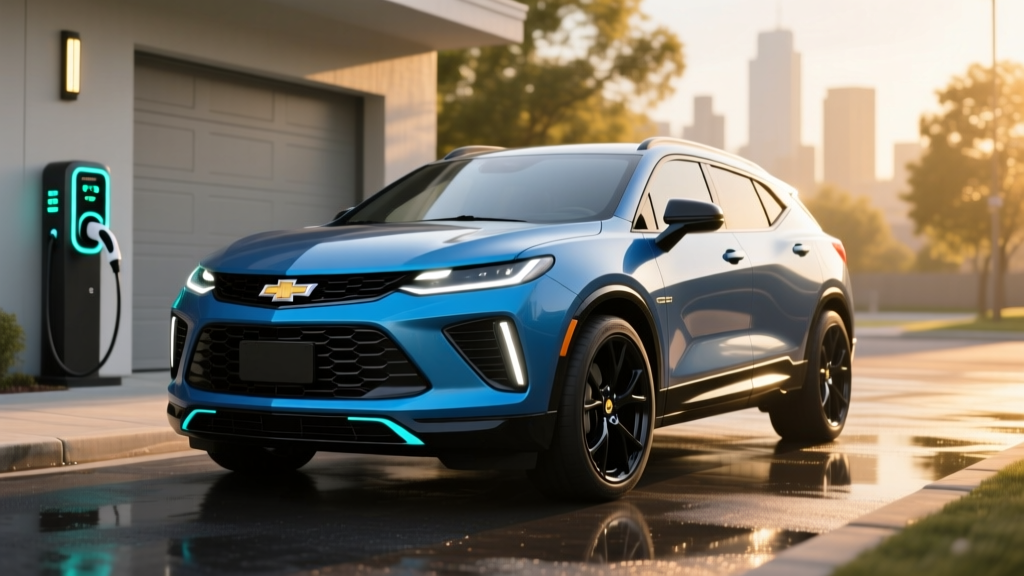
Chevrolet positioned the Blazer EV RS as the sporty flagship of its two-row electric crossover lineup, and the headline number is hard to ignore: a 0-60 mph time that puts it squarely in performance-SUV territory. But acceleration is just one piece of the ownership equation. After spending time with the specs, charging data, and real-world efficiency figures, the 2026 Blazer EV RS emerges as a compelling — if imperfect — package for buyers who want muscle-car thrust with daily-driver practicality. It charges reasonably fast, offers competitive range, and qualifies for partial federal incentives under current IRS rules. Here's everything you need to know before signing the paperwork.
Performance: Blazer EV RS 0-60, Horsepower, and Drivetrain
The RS trim is the performance-oriented variant of the Blazer EV, and Chevrolet equips it with a dual-motor all-wheel-drive powertrain (AWD is standard on the RS; a rear-wheel-drive configuration is available on lower trims). The dual-motor setup produces a combined output that Chevrolet rates at 288 horsepower and 343 lb-ft of torque in standard AWD form.
However, the RS also offers an available Super Sport (SS) performance package on certain model years that bumps output significantly. For the standard RS AWD, here's what the stopwatch shows:
| Specification | Value |
|---|---|
| 0-60 mph | ~5.8 seconds (AWD dual-motor) |
| Horsepower | 288 hp (combined) |
| Torque | 343 lb-ft |
| Drivetrain | Dual-motor AWD |
| Top Speed | Electronically limited ~118 mph |
| Drive Modes | Normal, Sport, Tow/Haul, My Mode |
The Blazer EV RS 0-60 time of approximately 5.8 seconds is respectable for a 5,000+ lb electric crossover. It won't embarrass itself at a stoplight next to a gas-powered V6 SUV, and the instant torque delivery characteristic of electric motors makes the acceleration feel even quicker than the number suggests. In Sport mode, throttle response sharpens and the regenerative braking profile adjusts for more aggressive one-pedal-style deceleration.
For context, the Hyundai Ioniq 5 AWD hits 60 mph in about 5.1 seconds, and the Ford Mustang Mach-E Premium AWD does it in roughly 5.0 seconds. The Blazer EV RS isn't the quickest in its segment, but it's firmly in the "quick enough to be fun" category without sacrificing ride comfort.
Range and Efficiency: EPA Estimates vs. Real-World Reality
The Blazer EV RS AWD is equipped with Chevrolet's Ultium battery platform, using a lithium-ion NMC (nickel manganese cobalt) chemistry pack. The usable battery capacity for the RS AWD configuration is approximately 102 kWh (gross capacity is slightly higher, with a buffer protecting the cells from deep discharge and overcharge).
EPA Estimated Range: 279 miles (AWD RS)
Real-World Highway (70-75 mph): Expect ~230–250 miles
Cold Weather (below 30°F): Expect ~200–220 miles (15–25% reduction typical for NMC packs without aggressive preconditioning)
City/Mixed Commuting: Closer to EPA sticker at ~265–279 miles thanks to regenerative braking
The EPA's 279-mile figure for the AWD RS is competitive within the midsize electric SUV class, though it trails the longest-range rivals. The rear-wheel-drive Blazer EV variants push past 300 miles, but the RS's dual-motor setup and sportier tuning trade some efficiency for grip and acceleration.
On the efficiency side, the EPA rates the Blazer EV AWD at approximately 87 MPGe combined, which translates to roughly 39 kWh per 100 miles. That's a middling efficiency score — heavier and less aerodynamic than the Ioniq 5 or Tesla Model Y, which both achieve closer to 100+ MPGe. If you primarily drive in stop-and-go city traffic, regen braking recovers energy and your effective efficiency improves. On sustained highway runs at 75 mph, expect consumption to climb toward 42–45 kWh/100mi.
Charging Speed: DC Fast Charging and Home Level 2
Charging speed is where the Blazer EV is adequate but not class-leading. The Ultium platform supports DC fast charging, but the peak rate and charge-curve behavior determine how quickly you'll actually get back on the road.
| Charging Level | Power / Rate | Speed / Time |
|---|---|---|
| Level 1 (120V household) | ~1.4 kW | ~3–4 miles of range per hour |
| Level 2 (240V home/public) | Up to 11.5 kW (48A) | ~29 miles of range per hour; full charge in ~10 hours |
| DC Fast Charge (peak) | Up to 190 kW | 10–80% in approximately 30 minutes |
The 190 kW peak DC fast-charge rate means the Blazer EV RS can add roughly 75–80 miles of range in 10 minutes at a compatible 200+ kW station (like Electrify America or EVgo's newest stalls). However, like most EVs, the charge curve tapers significantly above 80% state of charge. The 10-80% sprint takes about 30 minutes under ideal thermal conditions — meaning the battery is preconditioned and ambient temperatures are moderate (60–80°F).
Charge-curve reality check: Don't expect a sustained 190 kW pull for the entire session. The Blazer EV typically holds peak rate between roughly 10–40% SoC, then gradually steps down through 60%, and drops sharply above 80%. If you arrive at a charger with a cold battery (under 50°F) and haven't preconditioned via the vehicle's navigation-routed charging, your peak rate may be limited to 80–120 kW until the thermal management system warms the pack.
For home charging, the onboard charger's 11.5 kW acceptance rate is a strong point. On a properly installed 48-amp Level 2 circuit (requiring a 60-amp breaker), you'll add roughly 29 miles per hour of charging. Plug in when you get home at 6 PM, and the pack is full by morning. Installation note: A licensed electrician should verify your panel has capacity for a 60-amp dedicated circuit — older homes with 100-amp service may require a panel upgrade ($1,500–$3,000) before adding a Level 2 charger.
The Blazer EV RS uses the CCS1 (Combined Charging System) connector for DC fast charging and the J1772 connector for Level 2 AC charging. Chevrolet has announced NACS (Tesla-style) adoption for future models, but as of the 2026 model year, the Blazer EV ships with CCS. Tesla Supercharger access is available through adapters, though at reduced peak rates.
Pricing, Trims, and Federal Tax Credit Eligibility
The 2026 Blazer EV RS sits near the top of the Blazer EV lineup. Pricing has shifted since the model's launch, reflecting both market pressure and Chevrolet's incentive strategies.
| Trim | Drivetrain | Base MSRP | Est. Federal Credit | Effective Price |
|---|---|---|---|---|
| 2LT | RWD | ~$44,600 | Up to $7,500* | ~$37,100 |
| 2LT | AWD | ~$47,600 | Up to $7,500* | ~$40,100 |
| RS | AWD | ~$52,400 | Up to $7,500* | ~$44,900 |
| SS | AWD | ~$60,400 | Up to $7,500* | ~$52,900 |
*Federal tax credit eligibility under IRS §30D is not guaranteed. Eligibility depends on:
- MSRP Cap: SUVs must have an MSRP at or below $80,000 (all Blazer EV trims qualify).
- Buyer Income Cap: Modified AGI must not exceed $150,000 (single), $225,000 (head of household), or $300,000 (married filing jointly).
- Battery Sourcing: A percentage of critical minerals and battery components must be sourced from the U.S. or free-trade-agreement countries. The exact credit amount ($3,750 or $7,500) depends on whether the vehicle meets both the critical-minerals and battery-component requirements for the model year.
- Point-of-Sale Transfer: Eligible buyers can transfer the credit to the dealer at purchase, reducing the out-of-pocket price immediately rather than waiting for tax filing.
Always verify current eligibility on the IRS Clean Vehicle Credit page or consult a tax professional before relying on the credit in your purchase math. Sourcing requirements tighten annually, and a vehicle eligible in January may see its credit amount change if supply chains shift.
Interior, Cargo, and Technology
The Blazer EV's cabin is a significant step up from Chevrolet's earlier EV efforts. The RS trim features a 17.7-inch diagonal infotainment touchscreen running Google Built-In (Google Maps, Google Assistant, and Play Store apps natively integrated), paired with an 11-inch digital instrument cluster. Wireless Apple CarPlay and Android Auto are standard.
Passenger space is generous for a midsize two-row crossover:
- Front legroom: 43.1 inches
- Rear legroom: 38.4 inches
- Front headroom: 40.3 inches
- Rear headroom: 38.7 inches
Cargo capacity behind the second row is approximately 25.5 cubic feet, expanding to 58.2 cubic feet with the rear seats folded. There is no front trunk (frunk) on the Blazer EV — the space under the hood houses ancillary electronics and HVAC components, a missed opportunity for additional sealed storage that competitors like the Ford Mustang Mach-E and Hyundai Ioniq 5 offer.
Driver assistance: The Blazer EV RS comes equipped with Chevy's Super Cruise hands-free driving system on mapped divided highways (over 750,000 miles of compatible roads in the U.S. and Canada as of 2026). Super Cruise is an SAE Level 2 system — despite the hands-free capability, the driver must remain attentive, and the cabin camera monitors eye gaze. It is not autonomous driving. The system handles lane-keeping, adaptive cruise, and automatic lane changes on compatible roads, and it's one of the smoother Level 2 implementations available.
• Requires driver attention at all times (SAE Level 2, not self-driving)
• Only operates on pre-mapped divided highways — disengages on surface streets
• Performance degrades in heavy rain, construction zones, and faded lane markings
• Subscription required after the initial trial period (typically 3 years included)
Warranty and Long-Term Ownership
Chevrolet backs the Blazer EV with its standard new-vehicle warranty plus an extended battery and powertrain guarantee tied to the Ultium platform:
- Bumper-to-bumper: 3 years / 36,000 miles
- Powertrain: 5 years / 60,000 miles
- Battery pack: 8 years / 100,000 miles (covers defects and capacity loss below 70% of original capacity)
The 70% capacity-retention threshold over 8 years is industry-standard and matches what Ford, Hyundai, and Volkswagen offer. Based on current Ultium degradation data from early Bolt EUV and Cadillac Lyriq owners, NMC-based Ultium packs are tracking toward approximately 90–93% capacity retention at 50,000 miles under normal use — well above the warranty threshold. However, frequent DC fast charging (multiple times per week) and habitual 100% SoC storage can accelerate degradation. Chevrolet recommends daily charging to 80% for routine use and reserving 100% charges for road trips.
Pros, Cons, and Who Should Buy the Blazer EV RS
Pros
- Strong 0-60 mph acceleration (~5.8s) with instant electric torque
- Super Cruise hands-free Level 2 driving on 750,000+ miles of highways
- 11.5 kW Level 2 home charging — fast overnight replenishment
- Comfortable ride quality and quiet cabin at highway speeds
- Google Built-In infotainment is responsive and feature-rich
- Qualifies under the $80,000 SUV MSRP cap for §30D tax credit
Cons
- DC fast-charge peak of 190 kW trails rivals (Ioniq 5 at 240 kW, Model Y at ~250 kW)
- No front trunk (frunk) — lost cargo utility
- Efficiency of ~87 MPGe is below segment leaders
- Real-world highway range drops to ~230–250 miles on long trips
- CCS connector only — NACS adapter needed for Supercharger access
- Rear visibility is compromised by thick C-pillars; 360° camera helps but isn't standard on all trims
Who the Blazer EV RS Is For
Choose the Blazer EV RS if: You want a comfortable, quick-accelerating electric crossover for daily commuting and weekend road trips, you value Super Cruise for highway driving, and you have reliable Level 2 home charging. It's a strong fit for two-adult households who don't need third-row seating.
Look elsewhere if: You prioritize maximum charging speed for frequent long-distance travel (consider the Ioniq 5 or Kia EV6), you need a frunk for gear storage, or you want the most efficient kWh/mi rating to minimize electricity costs. Budget-conscious buyers may find the 2LT trim offers 90% of the experience at a lower price.
Frequently Asked Questions
What is the real-world range of the Blazer EV RS?
The EPA rates the Blazer EV RS AWD at 279 miles. In real-world highway driving at 70–75 mph, expect 230–250 miles before needing to charge. In cold weather below 30°F, range can drop to 200–220 miles due to battery chemistry limitations and cabin heating demands. City driving with regenerative braking gets you closer to the EPA sticker.
How fast does the Blazer EV RS charge at home and on the road?
At home on a 240V Level 2 charger (48 amps), the Blazer EV accepts up to 11.5 kW, adding roughly 29 miles of range per hour — a full charge takes about 10 hours. On DC fast chargers, it peaks at 190 kW, with a 10–80% session taking approximately 30 minutes under ideal conditions. Cold batteries and high states of charge slow the rate considerably.
Does the 2026 Blazer EV RS qualify for the $7,500 federal tax credit?
It can, but eligibility depends on IRS §30D rules. The Blazer EV RS's MSRP is well under the $80,000 SUV cap. Your modified adjusted gross income must fall below IRS thresholds ($300,000 joint / $150,000 single). Additionally, the credit amount ($3,750 or $7,500) depends on whether the battery meets critical-mineral and component-sourcing requirements for the model year. Verify on IRS.gov or with a tax professional before purchasing.
How does the Blazer EV RS 0-60 compare to competitors?
The Blazer EV RS AWD does 0-60 mph in approximately 5.8 seconds. The Hyundai Ioniq 5 AWD is quicker at ~5.1 seconds, the Ford Mustang Mach-E Premium AWD hits ~5.0 seconds, and the Tesla Model Y Long Range AWD does ~4.8 seconds. The Blazer EV RS isn't the quickest, but its acceleration is more than adequate for merging, passing, and spirited driving.
Is the Blazer EV RS worth buying over a Tesla Model Y or Hyundai Ioniq 5?
It depends on priorities. The Blazer EV RS wins on Super Cruise hands-free driving and traditional SUV styling. The Ioniq 5 charges faster (240 kW peak) and offers a frunk. The Model Y has superior efficiency, Supercharger network access, and more cargo space. If Super Cruise and Chevrolet's dealer network matter to you, the RS is compelling. If charging speed and efficiency are paramount, the Ioniq 5 or Model Y may serve you better.
Does the Blazer EV have a front trunk (frunk)?
No. The Blazer EV does not offer a front trunk. The under-hood area is occupied by power electronics and HVAC components. If sealed front storage is important to you, the Ford Mustang Mach-E (4.7 cu ft frunk) and Hyundai Ioniq 5 (0.85 cu ft frunk on AWD) offer this feature.