Quick Verdict: The Blazer EV PPV Brings Electrified Pursuit to Fleet Garages
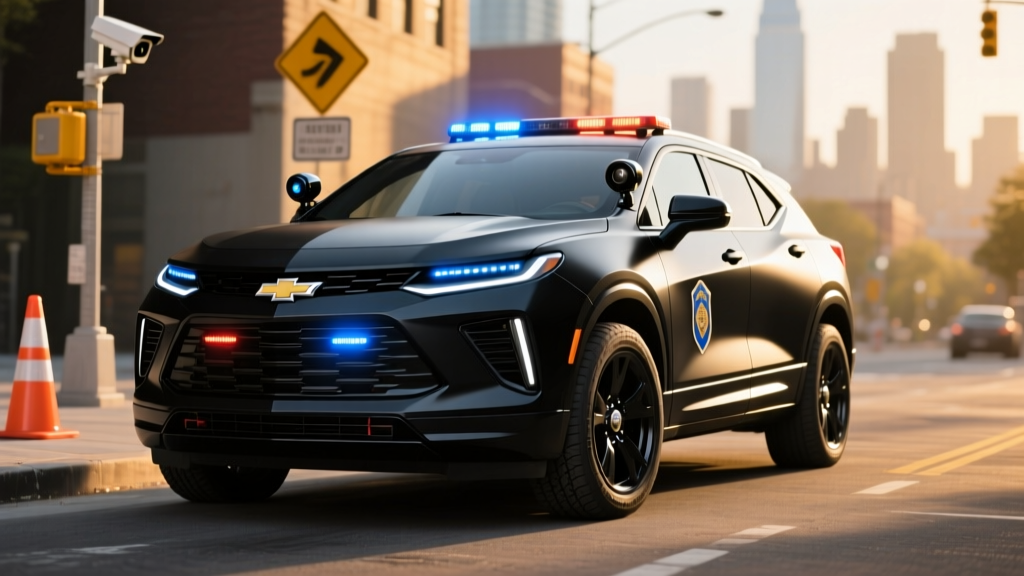
The Chevrolet Blazer EV PPV (Pursuit Police Vehicle) is GM's first battery-electric entry aimed squarely at law-enforcement fleets. Built on the Ultium platform shared with the civilian Blazer EV, the PPV variant swaps consumer comforts for upfitter-friendly wiring, reinforced suspension, and a pursuit-rated drivetrain. For fleet managers evaluating whether to add electric pursuit vehicles, the numbers matter more than the badge — and the numbers tell a nuanced story of capable range, respectable charging, and a purchase price that only works with the right incentives.
This review breaks down every spec that matters for procurement decisions: real-world range under patrol and pursuit loads, DC fast-charging reality, battery chemistry trade-offs, and the total-cost-of-ownership math that determines whether the Blazer EV PPV earns a spot in your motor pool.
Blazer EV PPV Specifications at a Glance
| Specification | 2026 Blazer EV PPV (AWD) |
|---|---|
| EPA Estimated Range | 279 miles (RS/eAWD-based platform) |
| Battery Capacity (Usable) | 102 kWh, NMC (Ultium) |
| Max DC Fast Charge | 190 kW peak |
| 10–80% DC Fast Charge | ~30 minutes |
| Level 2 Home/Depot Charging | 11.5 kW (~34 miles/hr) |
| Drivetrain | Dual-motor eAWD |
| Horsepower | 288 hp (combined) |
| Torque | 343 lb-ft |
| 0–60 mph | ~6.8 seconds (estimated, pursuit equipment adds weight) |
| Efficiency | 87 MPGe combined / 39 kWh/100 mi |
| Cargo Volume (behind 2nd row) | ~42 cu ft (reduced w/ equipment cage) |
| Base MSRP (Fleet Est.) | ~$52,000 (before upfit) |
| Battery Warranty | 8 years / 100,000 miles |
Note: PPV specs are derived from the civilian Blazer EV eAWD platform. GM has not published a separate EPA sticker for the pursuit upfit; fleet buyers should expect marginal range reduction from added equipment weight and auxiliary power draw.
Real-World Range: What the EPA Sticker Doesn't Tell Fleet Managers
Real-World Patrol Expectation: 210–240 miles per charge
Highway Pursuit/Idling-Heavy Shifts: 170–200 miles effective
The EPA's test cycle doesn't simulate a 10-hour patrol shift with rooftop lights, a laptop, a radio stack, and HVAC running at full blast while idling at a scene. The Blazer EV PPV's 102-kWh Ultium pack (NMC chemistry) provides a strong baseline, but real fleet deployment tells a different story.
In typical patrol duty — mixed city driving at 25–45 mph with periodic stops, climate control active, and moderate auxiliary electronics — expect roughly 210 to 240 miles of usable range before needing to return to a depot charger. That's enough for most single-shift urban and suburban patrol assignments (typical shifts log 80–140 miles), but it leaves little margin for extended pursuits, rural coverage areas, or multi-shift operations without mid-shift charging.
Cold weather compounds the issue. In sub-40°F conditions, NMC packs lose roughly 15–25% of effective capacity due to increased internal resistance and cabin-heating demand. The Blazer EV does include a heat pump (standard on most Ultium-platform vehicles), which mitigates but doesn't eliminate cold-weather range loss. Fleet managers in northern climates should budget for 170–200 miles of real winter range under full patrol load.
The critical advantage over ICE patrol vehicles: regenerative braking in stop-and-go city patrol recovers meaningful energy. Where a gas-powered Explorer Police Interceptor burns fuel at idle and in low-speed pursuit, the Blazer EV PPV's regen system extends effective range in exactly the driving conditions that dominate urban policing.
Charging Speed: Depot Level 2 and DC Fast Reality
| Charging Level | Power | Speed | Best Use Case |
|---|---|---|---|
| Level 1 (120V) | 1.4 kW | ~4 miles/hr | Emergency trickle only |
| Level 2 (240V depot) | 11.5 kW | ~34 miles/hr | Overnight shift-end charging |
| DC Fast Charge | 190 kW peak | 10–80% in ~30 min | Mid-shift top-up, inter-agency travel |
For fleet operations, Level 2 depot charging is the backbone. At 11.5 kW, the Blazer EV PPV's onboard charger adds roughly 34 miles of range per hour. A full 10-hour off-shift window recovers approximately 340 miles of rated range — more than enough to fully replenish the pack from a 20% state of charge. Fleet depots will need to install multiple Level 2 stations (budget $2,500–$5,000 per station including electrical work and a commercial-grade EVSE) and consider load-management software to avoid demand charges from the utility.
The 190 kW peak DC fast-charge capability is respectable but not class-leading. The charge curve — the way charging speed tapers as the battery fills — matters more than the peak number. The Blazer EV PPV sustains close to peak power from roughly 10% to 50% SoC, then tapers progressively through 80%. A 10–80% session takes approximately 30 minutes at a capable 350 kW station (like Electrify America or EVgo units). Above 80%, charging slows dramatically to protect the NMC cells — expect 80–100% to take an additional 25–30 minutes.
For mid-shift top-ups, a 15-minute DC session at a public fast charger can add roughly 80–100 miles of range — enough to extend a shift or cover an unexpected call across jurisdiction. Fleet managers should map DC fast-charger locations along common patrol routes and inter-agency corridors.
Performance and Pursuit Capability
The dual-motor eAWD powertrain delivers 288 hp and 343 lb-ft of torque to all four wheels. Electric torque delivery is instantaneous — there's no turbo lag, no transmission downshift delay. When an officer hits the accelerator from a stoplight, the response is immediate. The estimated 0–60 mph time of 6.8 seconds accounts for the added weight of pursuit-rated suspension, equipment cages, and upfit hardware. A stock civilian Blazer EV eAWD hits 60 in roughly 6.2 seconds.
For pursuit contexts, the Blazer EV PPV's low center of gravity (battery pack mounted under the floor) provides stable cornering that outperforms comparable ICE SUVs. The eAWD system can vector torque front-to-rear in milliseconds, which matters in wet or low-traction pursuit conditions. GM rates the platform for sustained high-speed operation, though fleet buyers should note that extended pursuit driving at 100+ mph will drain the battery significantly faster than the EPA cycle suggests.
The PPV variant includes pursuit-rated brake components, reinforced front and rear suspensions, and a specific calibration for the stability control system. It does not include the SS performance package's 557-hp motor — this is a pursuit utility vehicle, not a drag racer.
Pricing, Fleet Procurement, and Federal Tax Credit Eligibility
| Cost Factor | Amount |
|---|---|
| Estimated Base MSRP (PPV, pre-upfit) | ~$52,000 |
| Typical Pursuit Upfit Package | $8,000–$15,000 |
| Fleet Acquisition Cost (as-equipped) | $60,000–$67,000 |
| Federal §30D Tax Credit (if eligible) | Up to $7,500 |
| Effective Net Cost (with max credit) | ~$52,500–$59,500 |
The Blazer EV PPV is sold through GM's fleet and commercial channels, not consumer dealerships. Pricing is negotiated through fleet procurement contracts, and the base estimate of ~$52,000 reflects the eAWD platform before pursuit-specific upfitting (light bars, cages, radio installations, laptop mounts, prisoner partitions).
Federal tax credit eligibility for fleet purchases is complex. Under IRS §30D rules, the Blazer EV PPV must meet several criteria:
- MSRP Cap: SUVs must have an MSRP at or below $80,000. The PPV, even fully upfitted, should clear this threshold.
- Buyer Income Cap: For government fleets and municipalities, income caps generally don't apply in the same way they do for individual buyers — but tax-exempt entities may need to use the elective pay (direct pay) mechanism to receive the credit as a payment rather than a tax offset.
- Battery Sourcing: Critical minerals and battery components must meet phased domestic-content thresholds that tighten annually. For 2026, the critical-minerals threshold requires 80% of mineral value from the US or FTA partners; battery components require 100% North American manufacture. GM's Ultium cells are manufactured in Ohio and Tennessee, but critical-mineral sourcing may vary by production batch.
- Final Assembly: Must occur in North America. The Blazer EV is assembled at GM's Ramos Arizpe plant in Mexico — which has been a point of contention for §30D eligibility. Fleet buyers should verify current VIN eligibility on fueleconomy.gov before committing to purchase orders.
Critical note: Tax credit eligibility changes frequently. Always verify the specific VIN on the DOE's qualified-vehicle list and consult a tax professional familiar with municipal or fleet elective-pay provisions before finalizing procurement.
Interior, Tech, and Officer-Facing Features
The PPV interior is stripped of civilian luxuries and configured for duty use. The 17.7-inch infotainment touchscreen remains (useful for CAD/RMS software and mapping), but the passenger screen is deleted. Vinyl rear seating and rubberized flooring replace the civilian cloth and carpet for easier decontamination.
Standard driver-assist features include:
- Chevy Safety Assist suite (automatic emergency braking, forward collision alert, lane keep assist, following distance indicator)
- HD Surround Vision camera system (useful for scene documentation and low-speed maneuvering)
- Super Cruise availability (SAE Level 2 hands-free highway driving on compatible mapped roads — driver supervision required at all times)
Unique PPV features include an upfitter integration module that provides pre-wired circuits for emergency lighting, sirens, radios, and data equipment. The Ultium platform's high-voltage architecture can support auxiliary power draw without the idling fuel consumption of an ICE patrol vehicle — a meaningful operational advantage during extended scene presence or checkpoint operations.
Pros, Cons, and Competitive Positioning
Pros
- Instant electric torque for rapid pursuit acceleration from stop
- Zero fuel consumption at idle — major savings for scene and checkpoint duty
- Low center of gravity improves handling stability vs. ICE SUVs
- 102 kWh pack provides sufficient range for most single-shift urban patrol
- Regenerative braking recovers energy in stop-and-go patrol patterns
- Reduced maintenance (no oil, spark plugs, transmission fluid, exhaust)
- Quiet operation advantageous for certain tactical approaches
Cons
- Real-world range drops significantly under pursuit load and in cold weather
- 190 kW peak DC charging is slower than some competitors (Hyundai Ioniq 5 at 240+ kW)
- Ramos Arizpe (Mexico) assembly complicates §30D tax credit eligibility
- Requires significant depot charging infrastructure investment
- Added pursuit equipment weight reduces range below civilian EPA sticker
- No extended-range or larger battery option for rural/multi-shift coverage
- Limited long-term fleet data on Ultium pack degradation under pursuit duty cycles
Against the Ford Police Interceptor Utility (hybrid), the Blazer EV PPV offers zero-idle fuel burn and lower per-mile energy costs, but the Ford hybrid delivers unlimited range with quick gas-station refueling — a decisive advantage for rural agencies or multi-shift operations. The Ford hybrid averages 24 MPG combined in patrol use versus the Blazer EV PPV's 39 kWh/100 mi. At national average electricity rates of $0.16/kWh, the Blazer costs roughly $0.06/mile to "fuel" versus $0.15/mile for the Ford hybrid — a $0.09/mile advantage that adds up across a 50-vehicle fleet logging 30,000 miles each annually.
Who Should Buy the Blazer EV PPV?
Choose the Blazer EV PPV if:
- Your agency operates primarily in urban or suburban environments with predictable shift mileage (under 150 miles/shift)
- You have depot charging infrastructure or budget to install it
- Idle-heavy duty (scene response, checkpoints, community policing) dominates your use pattern
- Your jurisdiction has sustainability mandates or EV procurement targets
- You can verify §30D credit eligibility for your specific purchase structure
Look elsewhere if:
- Your officers regularly exceed 200 miles per shift or cover rural territory
- You lack charging infrastructure and cannot fund depot upgrades
- Cold-climate operation (sustained sub-20°F) is routine and range loss is unacceptable
- You need multi-shift, hot-swap vehicle capability without charging downtime
Frequently Asked Questions
What is the real-world range of the Blazer EV PPV during a patrol shift?
Expect 210–240 miles under typical urban patrol conditions with auxiliary equipment active. In cold weather or pursuit-heavy shifts, effective range drops to 170–200 miles. Most single urban shifts log 80–140 miles, so the pack provides adequate margin for standard duty.
How fast does the Blazer EV PPV charge at a depot and on DC fast chargers?
At a Level 2 depot charger (11.5 kW), the Blazer EV PPV gains approximately 34 miles of range per hour — enough for a full overnight replenishment. On a DC fast charger, it peaks at 190 kW and charges from 10–80% in about 30 minutes, adding roughly 150+ miles in that window.
Does the Blazer EV PPV qualify for the $7,500 federal EV tax credit?
Eligibility is uncertain and VIN-dependent. The Blazer EV is assembled in Mexico, which may disqualify it under §30D's North American final-assembly requirement. Government and tax-exempt fleets can use the elective-pay (direct pay) provision if the vehicle otherwise qualifies. Always check the specific VIN on fueleconomy.gov and consult a tax professional before procurement.
How does the Blazer EV PPV compare to the Ford Police Interceptor Utility Hybrid?
The Blazer EV PPV wins on per-mile energy cost (~$0.06/mi vs. ~$0.15/mi), idle efficiency, and instant torque. The Ford hybrid wins on unlimited range, fast refueling, established fleet service networks, and decades of pursuit-proven data. The right choice depends on your agency's duty cycle, infrastructure, and coverage area.
What is the battery warranty on the Blazer EV PPV?
GM covers the Ultium battery pack for 8 years or 100,000 miles, whichever comes first. The warranty guarantees the pack will retain a minimum capacity threshold (typically 60–70% of original capacity, per GM's published terms). Fleet buyers should negotiate extended or fleet-specific warranty terms through their procurement contract.
Can the Blazer EV PPV be used for high-speed pursuits?
Yes — it is pursuit-rated by GM with reinforced suspension, pursuit-calibrated stability control, and dual-motor eAWD. However, sustained high-speed operation (100+ mph) will deplete the battery faster than the EPA cycle suggests. Agencies should develop pursuit and post-pursuit charging protocols.