Why the Blazer EV Is Drawing Lease Shoppers Near Hickory
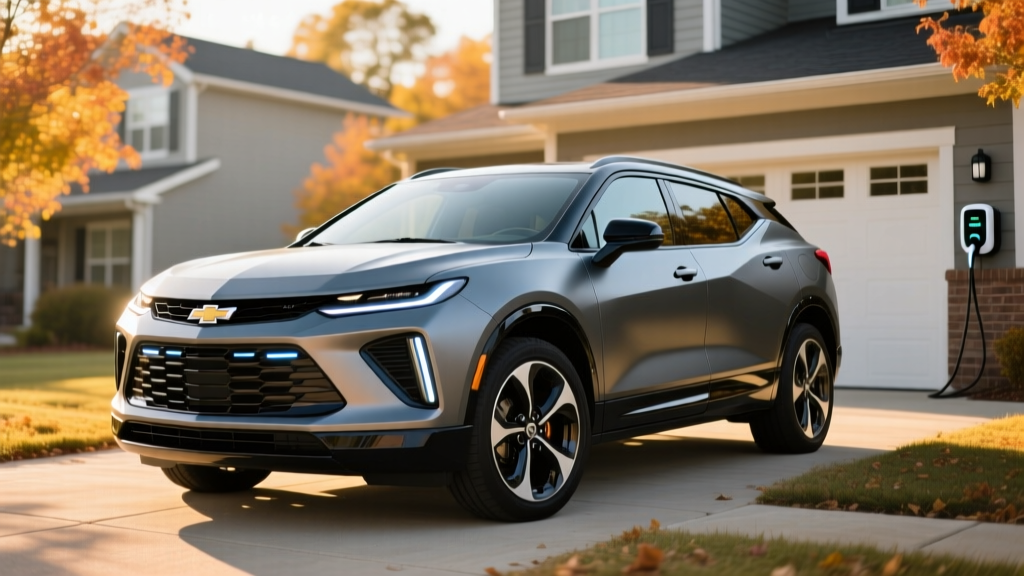
If you've been searching for Blazer EV SUV leases near Hickory, you're not alone. The 2026 Chevrolet Blazer EV has become one of the most lease-competitive electric midsize SUVs in the Carolinas, thanks to aggressive manufacturer incentives, a sub-$50,000 starting MSRP on key trims, and falling battery costs that have reshaped monthly payments. But a low lease payment only tells part of the story.
This guide breaks down the real 5-year cost of owning or leasing a 2026 Blazer EV in the Hickory, North Carolina region — including federal tax credit eligibility under current IRS §30D rules, home charging economics in Duke Energy territory, insurance premiums, maintenance savings, and depreciation trends. Every number below is sourced from EPA data, manufacturer specs, or IRS guidance so you can make a decision based on math, not marketing.
2026 Blazer EV: Key Specs at a Glance
Before we get to ownership costs, here's the hardware you're paying for. The 2026 Blazer EV rides on GM's Ultium platform and is available in multiple configurations:
| Spec | 2LT (RWD) | RS (AWD) | SS (AWD) |
|---|---|---|---|
| Base MSRP | $47,295 | $52,395 | $60,295 |
| Usable Battery (kWh) | 85 kWh (NMC) | 102 kWh (NMC) | 102 kWh (NMC) |
| EPA Range | 293 mi | 279 mi | 279 mi |
| Real-World Range (highway/cold) | ~240–260 mi | ~230–250 mi | ~225–245 mi |
| Peak DC Fast Charge | 190 kW | 190 kW | 190 kW |
| 10–80% DC Charge Time | ~30 min | ~34 min | ~34 min |
| Level 2 (AC) Charge Rate | 11.5 kW | 11.5 kW | 11.5 kW |
| Horsepower | 340 hp | 293 hp | 557 hp |
| 0–60 mph | ~6.2 sec | ~6.8 sec | ~4.0 sec |
| Battery/Powertrain Warranty | 8 years / 100,000 miles | ||
5-Year Total Cost of Ownership Breakdown
Here's what owning a 2026 Blazer EV 2LT (RWD) actually costs over 60 months in the Hickory area, assuming 12,000 miles/year and primarily home Level 2 charging on Duke Energy's residential rate:
| Cost Category | Blazer EV 2LT (RWD) | Comparable Gas SUV (e.g., Blazer LT AWD) |
|---|---|---|
| Purchase Price (MSRP) | $47,295 | $40,195 |
| Fed. Tax Credit (§30D) | –$0 to $7,500* | $0 |
| Effective Purchase Price | $39,795–$47,295 | $40,195 |
| Fuel/Energy (5 yr, 60k mi) | $4,320 | $9,450 |
| Maintenance (5 yr) | $1,800 | $4,200 |
| Insurance (5 yr avg) | $11,400 | $9,000 |
| Depreciation (est. 5 yr) | $22,500 | $17,800 |
| Total 5-Year Cost | $79,815–$87,315 | $80,645 |
*Tax credit eligibility depends on income, MSRP caps, and battery sourcing — details below. If the credit applies, the Blazer EV's 5-year cost falls below the gas alternative. If not, the gas SUV retains a narrow cost advantage driven mainly by lower insurance and depreciation.
Federal Tax Credit: Do You Qualify Under Current §30D Rules?
The 2026 Blazer EV's eligibility for the full $7,500 federal tax credit under IRS §30D hinges on three moving targets that change frequently. Here's the current checklist:
- MSRP Cap: SUVs must be under $80,000 — all 2026 Blazer EV trims qualify.
- Buyer Income Limits: Modified AGI must not exceed $150,000 (single), $225,000 (head of household), or $300,000 (joint). Income is tested in the year of delivery or the prior year — whichever is lower.
- Battery Sourcing (Critical Minerals): A percentage of critical minerals must be sourced from the U.S. or FTA partners. GM has been progressively re-shoring Ultium battery supply chains, but the exact credit amount ($3,750 for minerals + $3,750 for component assembly) depends on the specific build month and battery cell batch.
- Point-of-Sale Transfer: As of 2024, you can transfer the credit to the dealer at purchase, reducing your out-of-pocket cost immediately — you don't have to wait until tax filing.
- Lease Loophole: If you lease rather than buy, the credit technically goes to the lessor (GM Financial). However, most manufacturers pass this through as a "lease cash" incentive that reduces your monthly payment. This is why Blazer EV lease deals near Hickory can appear aggressively priced even for buyers who don't meet the income cap.
Charging vs. Gas: The Per-Mile Math in Hickory
Hickory sits in Duke Energy Carolinas territory, where the residential electricity rate averages roughly $0.13/kWh as of early 2026. The Blazer EV 2LT (RWD) achieves an EPA-rated 3.0 mi/kWh (roughly 101 MPGe combined, per fueleconomy.gov). Here's the per-mile comparison:
| Metric | Blazer EV (Home L2) | Blazer EV (DC Fast) | Gas Blazer (24 MPG) |
|---|---|---|---|
| Energy Cost | $0.13/kWh | $0.38/kWh (avg) | $3.15/gal |
| Efficiency | 3.0 mi/kWh | 3.0 mi/kWh | 24 mi/gal |
| Cost Per Mile | $0.043 | $0.127 | $0.131 |
| Annual Cost (12k mi) | $516 | $1,524 | $1,572 |
Key takeaway: If you charge at home 90% of the time (typical for EV owners with Level 2 access), your annual energy cost drops to roughly $568/year — a savings of about $1,000 annually versus gasoline. If you rely exclusively on public DC fast charging, the cost advantage essentially disappears. This is why a home Level 2 installation is the single highest-ROI decision for any Blazer EV owner in the Hickory area.
For reference, a full home Level 2 install (240V/48A hardwired charger, ~60 ft run, panel with capacity) typically costs $1,200–$2,500 in the Catawba County region, including permits. Some Duke Energy programs offer rebates of up to $400 for smart charger installations — check with your utility directly as programs change quarterly.
Maintenance Savings: Fewer Parts, Less Spending
EVs eliminate the most common recurring maintenance items on internal-combustion vehicles. Over 5 years / 60,000 miles, the Blazer EV avoids:
| Maintenance Item | Gas SUV (5-yr Cost) | Blazer EV (5-yr Cost) |
|---|---|---|
| Oil Changes (6–8 over 5 yr) | $480–$720 | $0 |
| Transmission Fluid | $150–$300 | $0 (no multi-speed trans) |
| Brake Pads/Rotors | $600–$1,200 | $0–$300 (regen extends life 2–3x) |
| Spark Plugs | $200–$400 | $0 |
| Air Filters (engine) | $100–$200 | $0 (cabin filter only) |
| Coolant Flush | $150–$250 | $0 (sealed thermal loop, 150k+ mi) |
| Tire Rotation (both need) | $250–$400 | $250–$400 |
| Cabin Air Filter (both need) | $100–$200 | $100–$200 |
| Total Maintenance | $2,030–$3,670 | $350–$900 |
The Blazer EV's regenerative braking system recovers kinetic energy during deceleration, dramatically reducing friction brake wear. Many EV owners report original brake pads lasting 100,000+ miles. The main maintenance items are tire rotations (EVs are heavier and can wear tires faster), cabin air filter replacement, and windshield washer fluid. Budget roughly $1,800 over 5 years to be conservative — that's still $2,000+ less than a comparable gas SUV.
Insurance Costs: The EV Premium Is Real
This is where the math turns against EVs. Insurance for the 2026 Blazer EV typically runs 15–30% higher than a gas-powered Blazer. In the Hickory/Catawba County area, expect annual premiums in the range of $2,100–$2,500 for a driver with a clean record, compared to roughly $1,600–$1,900 for the gas version.
Why the premium?
- Higher repair costs: EV battery packs and power electronics are expensive to replace after collision damage. Even minor rear-end impacts can total an EV if the battery enclosure is compromised.
- Specialized labor: High-voltage system repairs require certified technicians, and fewer body shops in rural NC have this certification.
- Higher MSRP: Insurers factor in replacement value. The Blazer EV starts ~$7,000 higher than a comparable gas Blazer.
- Parts availability: Ultium-specific components may have longer lead times, increasing rental-car payouts for insurers.
To minimize your premium: bundle home+auto, maintain a clean driving record, ask about EV-specific discounts (some carriers like Liberty Mutual and State Farm offer them), and consider raising your deductible if you have savings to cover it. Always get quotes from at least three carriers before signing a lease or purchase agreement.
Depreciation and Resale Value: What to Expect
EV depreciation has been volatile. According to data from iSeeCars and Kelley Blue Book, electric vehicles depreciated an average of 45–50% over 5 years through 2025, compared to roughly 38–42% for mainstream gas SUVs. The Blazer EV, being a relatively new nameplate, has limited long-term resale data.
For the 5-year cost estimate above, we've modeled the Blazer EV 2LT at ~48% depreciation ($22,500 lost value on a $47,295 MSRP). Factors working against EV resale:
- Battery degradation concerns: Even though GM warrants the Ultium pack for 8 years/100,000 miles (minimum 70% capacity retention), used buyers remain cautious.
- Rapid tech obsolescence: Newer EVs with faster charging, longer range, and NACS connectors depress prices on older models.
- Tesla price wars: Aggressive Tesla pricing since 2023 has reset expectations for the entire EV segment, pulling down used values across brands.
- Lease returns: High lease volumes create a flood of 3-year-old off-lease EVs, increasing supply and depressing prices.
If resale value is a primary concern, leasing shifts depreciation risk to GM Financial — which is precisely why Blazer EV lease deals near Hickory often make more financial sense than purchasing outright, especially if you plan to swap vehicles every 3 years.
Leasing vs. Buying the Blazer EV Near Hickory
For buyers specifically searching for Blazer EV SUV leases near Hickory, here's how the two paths compare in 2026:
Choose a Lease If:
- You want the lowest monthly payment (lease cash incentives often stack)
- You're uncertain about long-term EV reliability or resale value
- Your income exceeds the §30D credit cap but you still want the incentive passed through as lease cash
- You drive under 12,000–15,000 miles/year (standard lease limits)
- You plan to upgrade to newer EV tech in 3 years
Choose to Buy If:
- You qualify for the full $7,500 §30D credit (point-of-sale transfer)
- You drive high annual miles (no lease penalties)
- You plan to keep the vehicle 5+ years
- You want to build equity and avoid perpetual car payments
- You can charge at home and want to maximize fuel savings over time
Typical 2026 Blazer EV 2LT lease terms in the Carolinas region: $349–$429/month for 36 months with $3,500–$4,500 due at signing (before any state incentives). Always confirm whether the dealer's quoted payment includes the manufacturer's lease cash credit, which effectively passes through the federal incentive.
State and Local Incentives in North Carolina
- Duke Energy Smart Saver Program: Periodic rebates of $300–$500 for Level 2 home charger installation. Availability varies — check Duke Energy's EV program page directly.
- Federal §30D Credit: Up to $7,500 as detailed above.
- HOV Lane Access: North Carolina no longer provides single-occupant HOV lane stickers for EVs (program ended).
- Local utility TOU rates: Duke Energy offers time-of-use plans that can reduce overnight charging costs to ~$0.09/kWh, further improving the per-mile economics.
Frequently Asked Questions
How much does it really cost to own a Blazer EV over 5 years?
Between $79,815 and $87,315 depending on federal tax credit eligibility. That includes purchase price, energy, insurance, maintenance, and depreciation over 60,000 miles. With the full $7,500 credit, total cost drops below a comparable gas Blazer. Without it, the gas version holds a narrow ~$500–$1,500 advantage driven by lower insurance and depreciation.
Do I qualify for the federal EV tax credit on the Blazer EV?
You qualify for up to $7,500 if: (1) the vehicle MSRP is under $80,000 — all Blazer EV trims qualify; (2) your modified AGI is under $150k single / $300k joint; and (3) the battery meets current-year critical mineral and component sourcing thresholds. The credit can be transferred to the dealer at point of sale. If you lease, the credit goes to the lessor but is typically passed through as reduced monthly payments. Always verify on IRS.gov before purchasing.
How much do I save on fuel and maintenance?
With home Level 2 charging at Duke Energy's ~$0.13/kWh rate, you'll spend roughly $516/year on electricity versus $1,572/year on gasoline — a savings of about $1,056 annually or $5,280 over 5 years. Maintenance savings add another $2,000–$2,800 over the same period, primarily from eliminated oil changes, reduced brake wear, and fewer fluid services.
Are EVs more expensive to insure?
Yes. Expect to pay 15–30% more for insurance on the Blazer EV compared to the gas Blazer — roughly $2,100–$2,500/year versus $1,600–$1,900/year in the Hickory area. Higher repair costs, specialized labor requirements, and elevated replacement values drive the premium. Shop at least three carriers and ask about EV-specific discounts.
How well does the Blazer EV hold its value?
EVs currently depreciate faster than gas vehicles — roughly 45–50% over 5 years versus 38–42% for gas SUVs. Battery degradation concerns, rapid technology advances, and high lease-return volumes all pressure used EV prices. If resale value is a priority, leasing transfers this risk to the manufacturer. GM's 8-year/100,000-mile battery warranty (70% capacity retention minimum) provides some protection for long-term owners.
Is the Blazer EV a good lease deal near Hickory compared to competitors?
At current lease rates ($349–$429/month for the 2LT), the Blazer EV competes favorably with the Hyundai Ioniq 5 (~$379–$449/month), Ford Mustang Mach-E (~$399–$469/month), and Tesla Model Y (~$449–$529/month before incentives). The Blazer EV's advantage is its traditional SUV styling, GM Super Cruise availability (a strong Level 2 highway system), and competitive interior space. Its disadvantage is slower DC charging (190 kW peak vs. 240+ kW on the Ioniq 5) and less established public charging reliability compared to Tesla's Supercharger network.