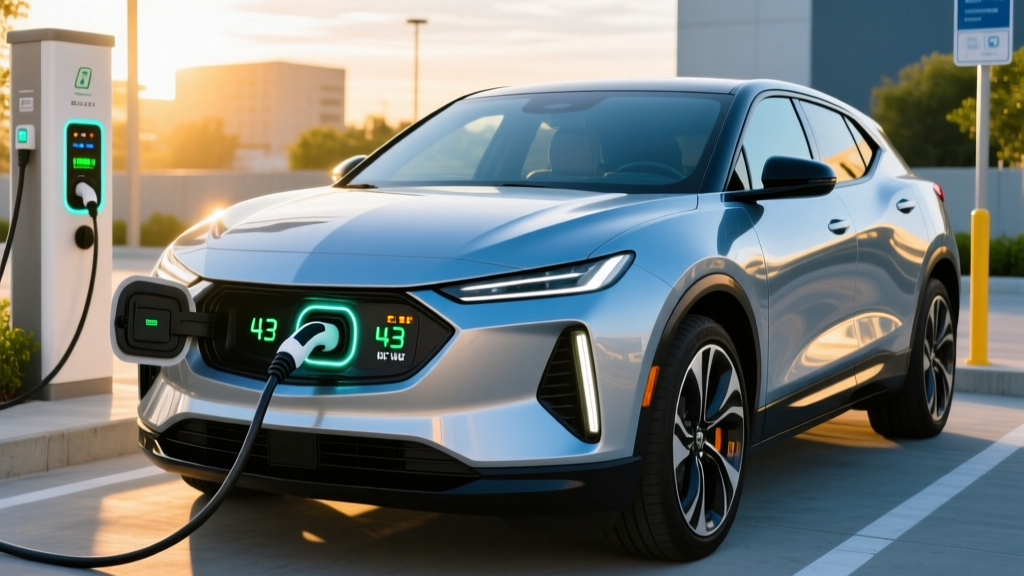
When the Chevrolet Blazer EV launched for the 2024 model year, early adopters hit a frustrating wall: DC fast charging capped near 43 kW on some vehicles — far below the advertised peak rate of 190 kW. The so-called Blazer EV 43 kW charging issue became one of the most discussed EV rollouts in recent memory, prompting GM to pause sales temporarily and push a series of over-the-air (OTA) software updates. By the 2025 and 2026 model years, GM has addressed the core problem, but the episode remains a masterclass in why understanding EV charging — hardware, software, and infrastructure — matters before you buy.
This guide breaks down what caused the Blazer EV's 43 kW charging bottleneck, what the current state of charging is for the 2026 Blazer EV, and how to set up the optimal charging ecosystem at home and on the road. We'll cover charging levels, home installation costs, connector standards, per-mile costs, and equipment picks — all with the exact numbers you need.
What Caused the Blazer EV 43 kW Charging Issue?
The Blazer EV is built on GM's Ultium platform, which supports DC fast charging at up to 190 kW (for the larger 102 kWh usable battery pack). However, in late 2023 and early 2024, numerous owners reported that their vehicles would not charge above approximately 43 kW at public DC fast chargers — a rate more typical of older EVs or Level 2 home charging than a modern fast-charging system.
The root cause was primarily software-related: the battery management system (BMS) was overly conservative in its charging protocol, severely limiting the charge curve to protect battery health. GM acknowledged the issue, issued a sales pause, and rolled out multiple OTA updates through 2024 and 2025 that progressively unlocked the full charging capability.
For the 2026 Chevrolet Blazer EV, GM has confirmed that the charging software has been fully revised. The current-model Blazer EV with the 102 kWh battery (LT and RS trims with AWD or the SS performance variant) can now sustain a peak of 190 kW on compatible DC fast chargers, achieving a 10–80% charge in approximately 30 minutes under ideal conditions. The smaller 85 kWh pack (standard-range RWD) peaks at around 150 kW.
Charging Levels Explained: kW, Speeds, and Miles Per Hour
Understanding the three charging levels is essential — and the single most important distinction is between kW (power, or how fast energy flows) and kWh (energy, or how much the battery holds). Think of kW as the width of a pipe and kWh as the size of the tank. The Blazer EV's 102 kWh battery needs a wide pipe (high kW) to fill quickly.
| Level | Voltage / Phase | Power (kW) | Miles of Range Added Per Hour | Typical Use Case |
|---|---|---|---|---|
| Level 1 | 120V AC (single-phase) | 1.0–1.4 kW | 3–5 mi/hr | Emergency top-up, overnight trickle |
| Level 2 | 240V AC (single-phase) | 3.3–19.2 kW | 12–60+ mi/hr | Home daily charging, workplace, public L2 |
| DC Fast Charge | 200–800V DC | 50–350 kW | 150–800+ mi/hr (peak) | Road trips, rapid top-ups |
For the 2026 Blazer EV with the 102 kWh pack and an EPA-estimated 324 miles of range (2LT AWD), here's what charging times look like in practice:
- Level 1 (120V, 1.4 kW): 0–100% in roughly 73+ hours — impractical for daily use; adds ~4 miles per hour.
- Level 2 (240V, 48A / 11.5 kW): 0–100% in approximately 9–10 hours. Ideal overnight solution.
- Level 2 (240V, 80A / 19.2 kW): 0–100% in roughly 5.5–6 hours — requires a hardwired charger and a 100A circuit.
- DC Fast Charge (190 kW peak): 10–80% in ~30 minutes (preconditioned battery, compatible charger).
The Blazer EV's onboard AC charger is rated at 19.2 kW (80 amps), one of the most capable in its class. This means a properly provisioned home Level 2 setup can replenish the battery faster than most competitors, which typically max out at 11.5 kW (48A).
Home Charger Installation: Costs, Electrical Requirements, and Gotchas
Most Blazer EV owners will want a Level 2 home charger. The 19.2 kW onboard charger means you can take advantage of high-amperage circuits — but that also means your electrical panel needs to support it.
Electrical Requirements
For a 48-amp charger (11.5 kW), the National Electrical Code (NEC) requires a dedicated 60-amp circuit (EV chargers are considered continuous loads, so the circuit must be rated 125% above the charger's max draw). This requires a 240V outlet (NEMA 14-60 or hardwired connection) and sufficient panel capacity.
For the full 80-amp charger (19.2 kW), you'll need a dedicated 100-amp circuit — which typically demands a 200-amp or larger main electrical panel. Many older homes with 100-amp or 150-amp panels will need a panel upgrade, which is the single biggest variable in installation cost.
Installation Cost Breakdown
| Component | Typical Cost Range | Notes |
|---|---|---|
| Level 2 Charger (Equipment) | $400–$1,200 | Depends on brand, amperage, smart features |
| Electrician Labor | $500–$2,500 | Varies by run length, conduit, wall type |
| Electrical Permit | $50–$300 | Required in most jurisdictions; varies by locality |
| Panel Upgrade (if needed) | $1,500–$4,000 | 100A → 200A service upgrade; not always required |
| Outlet Installation (NEMA 14-60) | $150–$500 | If using a plug-in charger vs. hardwired |
| Total (no panel upgrade) | $950–$4,000 | Most common scenario for newer homes |
| Total (with panel upgrade) | $2,500–$7,500 | Older homes or high-amp (80A) installations |
Safety and Code Considerations
- Dedicated circuit: EV chargers must be on their own dedicated breaker — never shared with other appliances.
- GFCI protection: NEC 2020 and later requires GFCI protection for outdoor outlets; some jurisdictions also require it for garages. Hardwired chargers often have built-in GFCI.
- Outdoor rating: If your charger is mounted outside, ensure it carries a NEMA 4 or IP56+ rating for weather resistance.
- Cable management: Choose a cable length (18–25 feet is standard) that reaches your charge port without stretching across walkways.
- Permit and inspection: Always pull a permit. An unpermitted install can void homeowner's insurance and cause issues at resale.
Connector Compatibility: NACS, CCS1, and the 2026 Landscape
The connector landscape has shifted dramatically. GM was one of the first automakers to adopt the North American Charging Standard (NACS) — originally Tesla's proprietary connector — for its EVs. The 2025 and 2026 Blazer EV ships with a NACS charge port natively, which is a significant advantage for public charging access.
| Connector | Type | Compatible Networks | Vehicles Using It (2026) |
|---|---|---|---|
| NACS (J3400) | AC + DC combo | Tesla Supercharger, Electrify America (select), EVgo, many new networks | Tesla (all), GM (2025+), Ford (2025+), Rivian, Hyundai/Kia (2025+), others |
| CCS1 | AC + DC combo | Electrify America, EVgo, ChargePoint, Ionity (EU) | Older GM, VW ID.4, BMW iX, Hyundai/Kia (pre-2025), most legacy EVs |
| CHAdeMO | DC only | Limited; legacy stations | Nissan Leaf (discontinued in US), Mitsubishi Outlander PHEV |
For the 2026 Blazer EV owner: Your NACS port gives you direct access to the Tesla Supercharger network — over 25,000 stalls in North America — without an adapter. This is currently the most reliable and widespread DC fast-charging network. For older CCS1-only stations, you may need a NACS-to-CCS adapter (approximately $150–$250), though CCS1 stations are increasingly being retrofitted with NACS cables.
If you own a 2024 Blazer EV (which shipped with CCS1 before GM's switch), a CCS-to-NACS adapter from Tesla or a third-party supplier like Lectron will grant Supercharger access. Check your vehicle's software version to confirm adapter compatibility — GM pushed OTA updates enabling adapter support on CCS1-equipped Blazer EVs.
Charging Cost Per Mile: Home vs. Public vs. Gas
One of the strongest economic arguments for the Blazer EV is the cost-per-mile advantage over gasoline — but it depends heavily on where you charge.
| Scenario | Cost per kWh | Cost for Full Charge (102 kWh) | Cost Per Mile (324 mi range) |
|---|---|---|---|
| Home (off-peak utility rate) | $0.08–$0.14 | $8.16–$14.28 | $0.025–$0.044 |
| Home (national avg. residential) | $0.17 | $17.34 | $0.054 |
| Public Level 2 (network pricing) | $0.25–$0.49 | $25.50–$49.98 | $0.079–$0.154 |
| DC Fast Charge (public, peak) | $0.35–$0.61 | $35.70–$62.22 (partial session) | $0.11–$0.19 |
| Gas equivalent (25 MPG, $3.40/gal) | — | — | $0.136 |
At a national average residential electricity rate of $0.17/kWh (EIA data), charging the Blazer EV at home costs roughly $0.054 per mile. Compare that to a gas-powered Chevy Blazer (which no longer exists for 2026, but a comparable gas SUV at ~25 MPG combined) at $0.136 per mile with gas at $3.40/gallon. Home charging saves approximately 60% per mile versus gasoline.
However, frequent DC fast charging at public rates of $0.48–$0.61/kWh (common on Electrify America and EVgo in urban areas) narrows that gap considerably — and in some cases, exceeds the per-mile cost of a fuel-efficient gas car. The economics strongly favor home charging.
Tax credit note: The Alternative Fuel Vehicle Refueling Property Credit (IRC §30C) offers up to $1,000 for home EV charger installation, but it's subject to census-tract eligibility requirements. Check the IRS tool for your ZIP code before assuming qualification.
Best Home Level 2 Chargers for the Blazer EV (2026 Picks)
Given the Blazer EV's 19.2 kW / 80A onboard charger capability, you have the option to install a higher-powered Level 2 unit than most EVs can utilize. Here are top picks across budgets:
Emporia Vue + EV Charger
- Power: 48A / 11.5 kW (hardwired)
- Connector: NACS (J3400)
- Cable length: 24 ft
- Smart features: Energy monitoring, solar integration, scheduling via app
- Price: ~$549
- Best for: Budget-conscious owners who want energy data
ChargePoint Home Flex (2026 NACS model)
- Power: Up to 80A / 19.2 kW (hardwired, adjustable)
- Connector: NACS
- Cable length: 23 ft
- Smart features: Wi-Fi, Alexa, scheduling, amperage dial adjustment
- Price: ~$699
- Best for: Owners who want to max out the Blazer's 19.2 kW onboard charger
Tesla Wall Connector (NACS native)
- Power: Up to 48A / 11.5 kW (60A circuit)
- Connector: NACS
- Cable length: 24 ft
- Smart features: Wi-Fi firmware updates, power sharing (multi-unit), load management
- Price: ~$420
- Best for: Reliable, no-frills charging; excellent value
Editor's pick for the Blazer EV: The ChargePoint Home Flex at 80A is the only mainstream charger that fully utilizes the Blazer's 19.2 kW onboard charger. If your panel supports a 100A dedicated circuit, this setup adds roughly 60 miles of range per hour of charging — meaning a full overnight session easily replenishes a day's worth of driving and then some. If a 100A circuit isn't feasible, the Tesla Wall Connector at 48A still delivers a very capable ~37 miles of range per hour at a lower price point.
Public Charging Tips: Avoiding the 43 kW Problem and Maximizing Speed
If you're driving a 2024 Blazer EV that hasn't received the latest OTA updates, you may still experience throttled DC fast-charging speeds. Here's how to verify and resolve it:
- Check your software version: Navigate to Settings → Software → Software Update on the infotainment screen. Ensure you're on the latest build. GM released critical charging-protocol updates in mid-2024 and again in early 2025.
- Use battery preconditioning: When navigating to a DC fast charger via the built-in navigation system, the Blazer EV will automatically precondition the battery. If you're using a third-party app (like PlugShare) to find chargers, manually enable preconditioning in the vehicle settings before arrival.
- Choose chargers rated ≥150 kW: The Blazer EV can't pull more than a charger can deliver. A 50 kW CHAdeMO stall will always cap you at 50 kW regardless of the vehicle's capability.
- Monitor the charge curve: On the Blazer's infotainment screen, watch the kW readout during the session. A healthy, updated Blazer EV should ramp to 150–190 kW within the first 5 minutes of a session starting below 20% SoC. If it plateaus at 43 kW after an update, contact your Chevy dealer for a diagnostic — there may be a BMS fault requiring a module-level software reflash.
For 2025 and 2026 Blazer EV owners, the 43 kW issue has been resolved at the factory. These vehicles ship with the corrected BMS software and NACS native port. If you experience abnormally slow DC charging, it's more likely a station-side issue (a faulty CCS stall, a shared-power cabinet splitting kW between two plugs) than a vehicle defect.
2026 Blazer EV Quick-Charge Spec Sheet
| Specification | 2LT / RS (AWD, 102 kWh) | SS (AWD, 102 kWh) |
|---|---|---|
| Battery (usable) | 102 kWh (NMC) | 102 kWh (NMC) |
| EPA Range | ~324 mi | ~294 mi |
| Onboard AC Charger | 19.2 kW (80A) | 19.2 kW (80A) |
| DC Fast Charge Peak | 190 kW | 190 kW |
| 10–80% DC Fast Charge | ~30 min | ~30 min |
| Charge Port | NACS (J3400) | NACS (J3400) |
| 0–60 mph | ~5.5 sec | ~3.4 sec (Wow Mode) |
| Horsepower | 288 hp | 557 hp |
| Battery Warranty | 8 yr / 100,000 mi | 8 yr / 100,000 mi |
| Starting MSRP | ~$48,800 | ~$56,500 |
Source: Chevrolet Blazer EV specs and fueleconomy.gov.
Frequently Asked Questions
How much does it cost to install a home EV charger for the Blazer EV?
Expect $950–$4,000 for a standard Level 2 installation (equipment + electrician + permit) if your panel has sufficient capacity. If a panel upgrade from 100A to 200A service is required, add $1,500–$4,000, bringing the total to $2,500–$7,500. A 48A charger on a 60A circuit is the most common and cost-effective setup; an 80A charger on a 100A circuit costs more but fully leverages the Blazer EV's 19.2 kW onboard charger.
How fast will each charging level add range to the Blazer EV?
Level 1 (120V): ~3–5 miles per hour. Level 2 at 48A (240V): ~37 miles per hour. Level 2 at 80A (240V): ~60 miles per hour. DC fast charging at 190 kW peak: ~200+ miles in 15 minutes under ideal conditions, tapering above 70% SoC.
Which connector and charger is compatible with the 2026 Blazer EV?
The 2026 Blazer EV uses a NACS (J3400) charge port natively. This is compatible with Tesla Superchargers, and an increasing number of Electrify America, EVgo, and ChargePoint stations. For CCS1-only public chargers, a NACS-to-CCS adapter is needed. Any NACS-equipped Level 2 home charger will work.
How much does charging cost per mile vs. gas?
Home charging at the national average rate of $0.17/kWh costs approximately $0.054/mile in the Blazer EV. Public DC fast charging at $0.48/kWh costs roughly $0.15/mile. A comparable gas SUV at 25 MPG with $3.40/gallon fuel costs $0.136/mile. Home charging delivers the best economics; exclusive reliance on public DC fast charging can exceed gas costs.
What electrical upgrades might I need for a home charger?
The most common upgrade is a panel capacity increase if your existing service can't support a new 60A or 100A dedicated circuit. Homes with 200A panels and gas appliances usually have enough headroom. All-electric homes with 100A or 150A panels often need an upgrade. Alternatives include smart load-management devices (like a SPAN smart panel or an Emporia load-balancer) that dynamically reduce charger amperage when other loads spike, potentially avoiding a full panel upgrade.
Has the Blazer EV 43 kW charging issue been fully fixed for 2026?
Yes. GM resolved the software-related charging bottleneck through OTA updates during 2024–2025. The 2026 Blazer EV ships from the factory with the corrected BMS software and achieves its rated 190 kW DC fast-charging peak. If you own a 2024 model, ensure all OTA updates are installed and contact your dealer if the issue persists after updating.