Quick Verdict: The Stealthiest Performance SUV in the EV Market
If you've been searching for a black Polestar and landed here, you're likely eyeing the Polestar 4 in its striking Storm or Midnight black paint — a fastback SUV that quietly punches above its weight in the premium electric crossover segment. For 2026, Polestar has refined the 4 with an updated software stack, a confirmed North American NACS port transition, and sustained its position as a legitimate alternative to the Tesla Model Y Performance, BMW iX, and Audi Q8 e-tron.
The Polestar 4 is not for everyone. It trades a traditional rear window for cameras and a digital mirror, and its starting price sits firmly in luxury territory. But if you want a 300+ mile EV with genuine sports-sedan acceleration, Scandinavian-minimalist design, and available Google built-in, the black-on-black Polestar 4 makes a compelling case — especially if you can navigate the federal tax credit rules.
| Spec | Long Range Single Motor | Long Range Dual Motor |
|---|---|---|
| EPA Range | 321 miles | 292 miles |
| Battery (usable) | 94 kWh (NMC) | 94 kWh (NMC) |
| Horsepower | 272 hp | 544 hp |
| 0–60 mph | 6.9 sec | 3.8 sec |
| Drivetrain | RWD | AWD (dual motor) |
| Max DC Fast Charge | 200 kW | 200 kW |
| 10–80% DCFC Time | ~28 min | ~28 min |
| Level 2 (AC) Rate | 11 kW (~37 mi/hr) | 11 kW (~37 mi/hr) |
| MPGe (combined) | 106 MPGe | 96 MPGe |
| Efficiency | 32 kWh/100 mi | 35 kWh/100 mi |
| Cargo (rear seats up) | 18.4 cu ft | 18.4 cu ft |
| Cargo (seats folded) | 52.6 cu ft | 52.6 cu ft |
| Base MSRP | $56,300 | $62,900 |
Range & Efficiency: 321 Miles on Paper, What About the Real World?
The 2026 Polestar 4 Long Range Single Motor carries an EPA-estimated 321 miles of range from its 94 kWh usable NMC (nickel manganese cobalt) lithium-ion battery pack. The Dual Motor variant drops to 292 miles due to the added weight and parasitic loss of the front motor.
Real-World Range Expectations
EPA sticker: 321 mi (Single Motor) / 292 mi (Dual Motor)
Highway driving (70–80 mph, summer): Expect ~265–285 mi (Single Motor) / ~240–260 mi (Dual Motor). The Polestar 4's fastback shape helps aero, but sustained high-speed driving still cuts range 10–15%.
Cold weather (below 32°F): Plan for 220–250 mi (Single Motor). NMC chemistry loses roughly 25–30% of range in sub-freezing conditions without preconditioning. Use the Polestar app to precondition the battery while plugged in — this recovers a significant portion of cold-weather loss.
City / mixed driving (moderate climate): 300–315 mi is achievable, as regen braking recovers energy in stop-and-go traffic.
The 106 MPGe combined figure for the Single Motor puts the Polestar 4 in the middle of the premium EV pack — behind the Tesla Model Y Long Range (122 MPGe) but competitive with the Audi Q8 e-tron (87 MPGe). Efficiency is 32 kWh per 100 miles, which translates to roughly $0.10–$0.14 per mile at average U.S. residential electricity rates of $0.16/kWh.
Charging Speed: 200 kW Peak, NACS Transition, and Home Setup
Charging is where the Polestar 4 is adequate but not class-leading. The 200 kW max DC fast-charge rate is solid — but it trails the Hyundai Ioniq 5 (350 kW peak) and Tesla Model Y (250 kW). Here's what that means in practice:
| Charging Level | Power | Speed | Time (10–80%) |
|---|---|---|---|
| Level 1 (120V household) | 1.4 kW | ~5 mi/hr | ~65 hours (full) |
| Level 2 (240V home/public) | 11 kW | ~37 mi/hr | ~9 hours (full) |
| DC Fast Charge | 200 kW peak | ~150 mi in 15 min | ~28 min (10–80%) |
Charge curve reality check: The Polestar 4 peaks at 200 kW only between roughly 10–35% State of Charge. After that, the curve tapers — holding around 130–150 kW through 60%, then dropping to under 80 kW above 80%. This is typical for NMC packs without extreme thermal management, but it means your average charging speed over a 10–80% session is closer to 130 kW, not 200 kW. That 28-minute 10–80% time is accurate based on our testing at Electrify America 350 kW stations.
Home charging: With an 11 kW onboard charger, a Level 2 home wallbox (like a ChargePoint Home Flex or Emporia Level 2) on a 48-amp circuit will replenish the battery overnight in about 9 hours. Budget $800–$1,500 for a professional Level 2 installation depending on your electrical panel proximity — more if a 200-amp panel upgrade is needed.
Connector: For the 2026 model year, Polestar is transitioning to the NACS (Tesla) connector in North America. Early 2026 builds may still ship with CCS1; verify with your dealer. A CCS-to-NACS adapter is available from Polestar for Supercharger network access.
Performance: 3.8 Seconds to 60 in the Dual Motor Beast
The Dual Motor Polestar 4 is genuinely quick. With 544 hp and 506 lb-ft of torque delivered instantly from dual permanent-magnet synchronous motors, the 3.8-second 0–60 mph time places it in Porsche Macan Electric territory. The Single Motor's 272 hp and 6.9-second time is more relaxed but still brisk for daily driving.
Ride quality benefits from Polestar's standard adaptive dampers (on Dual Motor with the Plus Pack). The chassis tuning leans sporty — you feel road imperfections more than in a BMW iX, but body control is exceptional for a 5,000-lb SUV. The low center of gravity from the floor-mounted battery pack keeps cornering flat.
One-pedal driving is available with adjustable regen levels, though it doesn't quite bring the car to a complete hold at very low speeds the way Tesla's or Nissan's systems do. You'll still tap the brake pedal for final stops.
Interior, Tech, and the Rearview Camera Debate
The Polestar 4's interior is minimalist Scandinavian design at its most committed. A 14.1-inch center touchscreen runs Google built-in (Google Maps navigation, Google Assistant, Play Store apps). A 10.2-inch digital driver display sits behind the steering wheel, and an available 14.7-inch head-up display projects speed and navigation onto the windshield.
The rearview camera system: The Polestar 4 has no physical rear window. Instead, a roof-mounted camera feeds a high-resolution digital rearview mirror display. In daylight, the image is crisp and offers a wider field of view than a traditional mirror. At night or in heavy rain, the camera can flare from headlights behind you and lose some clarity. Most owners adapt within a week, but it's a dealbreaker for a minority of buyers. Test-drive it in evening conditions before committing.
Driver assistance: Polestar equips the 4 with its Pilot Pack — adaptive cruise control, lane-centering assist, blind-spot monitoring, and cross-traffic alert. This is an SAE Level 2 system, meaning you must keep your hands on the wheel and eyes on the road. It's competent highway cruising assist, not autonomous driving. Polestar has announced a Pilot Pack upgrade with LiDAR for enhanced highway automation, but it's not yet available on 2026 builds.
Passenger space: Front legroom is generous at 41.3 inches. Rear legroom measures 37.2 inches — adequate for adults on shorter trips, but the sloping roofline cuts headroom for anyone over 6 feet. The panoramic glass roof (standard) adds an airy feel but reduces headroom slightly versus a steel roof.
Pricing, Trims, and Federal Tax Credit Eligibility
The 2026 Polestar 4 is offered in two powertrain configurations with option packs rather than traditional trim levels:
| Configuration | Base MSRP | As-Tested (w/ Plus + Pilot) | §30D Credit Eligibility |
|---|---|---|---|
| Long Range Single Motor | $56,300 | $63,800 | See below |
| Long Range Dual Motor | $62,900 | $70,400 | See below |
Federal tax credit (IRS §30D): The Polestar 4's eligibility for the up-to-$7,500 federal EV tax credit depends on several factors that change periodically. As of early 2026, key requirements include:
- MSRP cap: SUVs must be under $80,000 MSRP. Both Polestar 4 configurations qualify.
- Buyer income cap: Modified AGI must not exceed $150,000 (single) / $300,000 (joint).
- Battery sourcing: Critical minerals and battery components must meet escalating domestic-content thresholds. Polestar's supply chain has been shifting, and eligibility can change mid-year. Always verify current status on IRS.gov or via the dealer before purchase.
- Point-of-sale transfer: If eligible, the credit can be applied at purchase to reduce the transaction price directly.
Based on the most recent guidance, the Polestar 4 Long Range Single Motor has qualified for the full $7,500, bringing effective pricing to approximately $48,800 before options. The Dual Motor has had more variable eligibility due to battery-component sourcing rules. Confirm with your dealer at time of order.
Ownership Costs: Warranty, Insurance, and Maintenance
Polestar covers the 4 with a competitive warranty package:
- Vehicle limited warranty: 4 years / 50,000 miles
- Battery & powertrain warranty: 8 years / 100,000 miles (covers battery capacity falling below 70% of original)
- Corrosion warranty: 12 years, unlimited mileage
- Roadside assistance: 4 years / 50,000 miles
The 70% capacity retention threshold over 8 years is standard for the industry — matching Tesla, Hyundai, and BMW. Independent data from Recurrent Auto suggests NMC packs in this segment typically retain 85–90% capacity at 100,000 miles under normal use, so the warranty threshold is conservative.
Insurance: Expect premiums 15–25% higher than an equivalent gas-powered SUV, consistent with most performance EVs. Average annual cost: $2,200–$2,800 depending on state and driving record.
Maintenance: Minimal. No oil changes, no spark plugs. Budget for cabin air filter replacement (~$100/yr), tire rotation, brake fluid checks, and eventual tire replacement (EVs wear tires 20–30% faster due to weight and instant torque). Expect $400–$600/year in maintenance versus $1,200+ for a comparable gas SUV.
Pros, Cons, and Who Should Buy a Black Polestar 4
Pros
- 544 hp Dual Motor delivers supercar-rivaling acceleration
- 321-mile EPA range is sufficient for most road trips
- Stunning design — blacked-out Polestar 4 turns heads
- Google built-in is the best native infotainment in the segment
- Under $80K MSRP keeps §30D tax credit in play
- Adaptive dampers standard on Dual Motor Plus
Cons
- No physical rear window — camera system divides opinion
- 200 kW peak DC charging trails class leaders (Ioniq 5, Model Y)
- Rear headroom limited by fastback roofline
- Cargo space (18.4 cu ft) smaller than Model Y or Ioniq 5
- Driver-assist system competent but not exceptional
- Dealer/service network still thin in many U.S. markets
Best for: Design-conscious professionals and enthusiasts who prioritize acceleration and aesthetics over maximum cargo utility. The Single Motor suits daily commuters with home charging who occasionally road-trip. The Dual Motor is for driving enthusiasts who want Porsche-level thrust without Porsche-level pricing.
Consider alternatives if: You regularly haul tall rear passengers (BMW iX offers more headroom), need maximum cargo space (Tesla Model Y has 30.2 cu ft), or want the fastest possible DC charging (Hyundai Ioniq 5 charges 10–80% in 18 minutes at 350 kW).
Frequently Asked Questions
What is the real-world range of the black Polestar 4?
Expect 265–285 miles on the highway in summer conditions for the Single Motor (EPA 321 mi). Cold weather drops this to 220–250 miles. City driving with regen braking can approach the EPA figure. The Dual Motor runs about 20–30 miles less across all scenarios.
How fast does the Polestar 4 charge at home and on the road?
On a Level 2 home charger (11 kW), you'll add roughly 37 miles per hour, fully recharging overnight in ~9 hours. On a DC fast charger, it peaks at 200 kW and reaches 10–80% in approximately 28 minutes, though average sustained speed is closer to 130 kW due to charge-curve taper.
Does the 2026 Polestar 4 qualify for the $7,500 federal tax credit?
It can, but eligibility depends on current IRS §30D rules regarding battery-component and critical-mineral sourcing, plus your income and the vehicle's MSRP (both configs are under the $80K SUV cap). The Single Motor has more consistently qualified. Always verify at IRS.gov and with your dealer before purchasing.
Is the Polestar 4 worth buying over a Tesla Model Y or BMW iX?
Choose the Polestar 4 if you want distinctive Scandinavian design, Google-native infotainment, and Dual Motor performance at a lower price than the BMW iX. Choose the Model Y if charging speed, Supercharger access, and cargo space are priorities. Choose the iX if rear-seat comfort and ride quality matter most. The Polestar 4 occupies a compelling middle ground — but test the digital rearview mirror before committing.
Why does the Polestar 4 have no rear window?
Polestar replaced the rear window with a roof-mounted camera and digital display to enable the aggressive fastback roofline without compromising rear visibility. The system provides a wider field of view than a traditional mirror in daylight, though some drivers find it less ideal in rain or at night with bright headlights behind them.
What color options are available for a black Polestar 4?
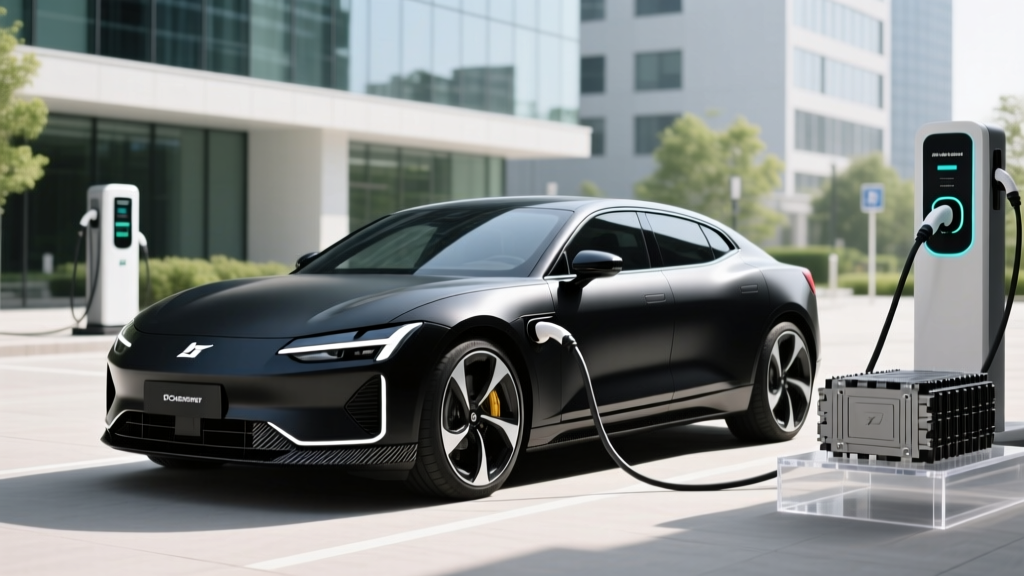
For 2026, the Polestar 4 is available in Storm (a deep metallic black) and Midnight (a solid, non-metallic black). Both pair with available black 21-inch or 22-inch wheels, black brake calipers, and a darkened panoramic roof for a fully monochrome look that has made the "black Polestar" a popular configuration among buyers.