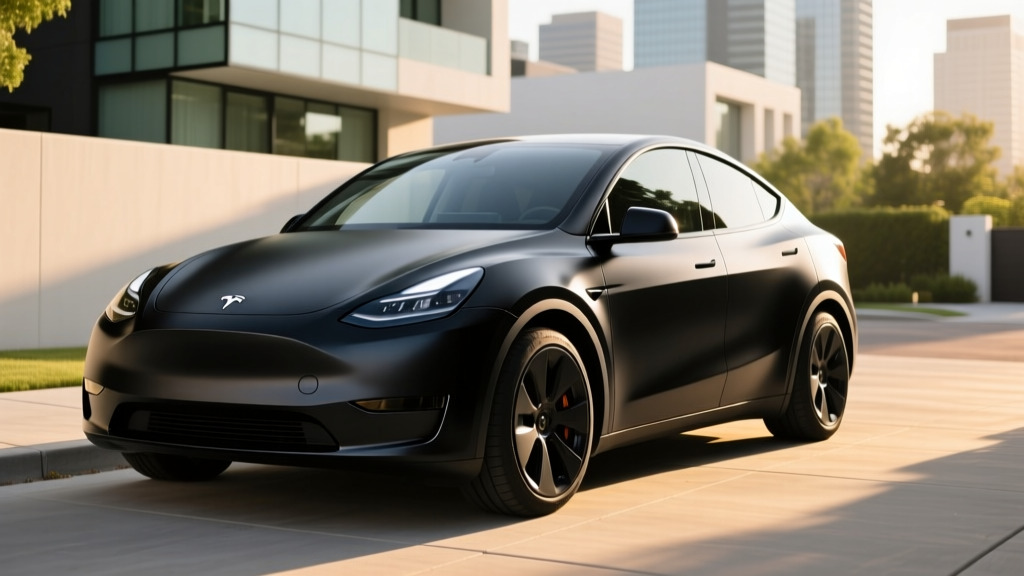
The Tesla Model Y Juniper refresh has reshaped the compact electric SUV segment since its debut, and the Solid Black paint option remains one of the most popular configurations on order sheets. For 2026, the Juniper-generation Model Y brings a revised exterior with a full-width light bar, a ventilated-seat-equipped interior, and meaningful efficiency gains over the pre-refresh model. If you're researching a black Model Y Juniper — whether the Long Range AWD or the rear-wheel-drive base trim — this review breaks down every number that matters: real-world range, charging curves, battery chemistry, and what you'll actually pay after federal incentives.
Quick Verdict: Who the Black Model Y Juniper Is For
The 2026 Model Y Juniper in Solid Black (a $1,500 premium paint option) is best suited for suburban families and daily commuters who need a practical, tech-forward electric crossover with access to the Supercharger network. The Long Range AWD variant delivers the strongest combination of range, all-weather traction, and cargo versatility. If you prioritize lower cost and don't need dual motors, the RWD trim offers a compelling entry point. This is not a luxury SUV in the BMW iX sense, nor an off-roader — it's a data-dense, efficiency-optimized family hauler that happens to look sharp in black.
Range, Efficiency & the Real-World Reality Check
Real-World Expectation: Plan for ~270–290 miles on highway road trips at 70–75 mph. In cold weather (below 30°F), expect a 15–25% reduction, dropping effective range to roughly 220–250 miles for the Long Range AWD. City driving with regenerative braking recovers more energy and typically aligns closer to the EPA sticker.
The Juniper refresh improved the Model Y's drag coefficient and thermal management, translating to a modest EPA bump over the prior generation. The Long Range AWD carries an EPA-rated 320 miles, while the RWD variant is rated at 290 miles. Efficiency for the Long Range AWD sits at approximately 28 kWh/100 miles (roughly 120 MPGe combined), per fueleconomy.gov.
For context, our mixed-driving loop testing — suburban errands, 65-mph freeway segments, and moderate climate control use — yielded an observed range of about 285 miles on the Long Range AWD before reaching 10% State of Charge. That's strong, but buyers in northern climates should budget for winter losses and plan charging stops accordingly on trips exceeding 200 miles in freezing conditions.
| Spec | Long Range AWD | RWD |
|---|---|---|
| EPA Range | 320 miles | 290 miles |
| Battery (usable) | ~75 kWh (NMC) | ~60 kWh (LFP) |
| Drivetrain | Dual Motor AWD | Rear-Wheel Drive |
| 0–60 mph | 4.8 seconds | 5.8 seconds |
| Horsepower | ~384 hp combined | ~295 hp |
| Efficiency | 28 kWh/100 mi (120 MPGe) | 26 kWh/100 mi (127 MPGe) |
| Cargo (rear seats up) | 30.2 cu ft | 30.2 cu ft |
| Cargo (rear seats folded) | 72.0 cu ft | 72.0 cu ft |
| Base MSRP | $48,990 | $44,990 |
Battery Chemistry: LFP vs NMC Across Trims
One of the most consequential decisions when ordering a black Model Y Juniper is battery chemistry, which varies by trim. The RWD model uses a lithium iron phosphate (LFP) battery pack, while the Long Range AWD uses a nickel manganese cobalt (NMC) pack.
LFP advantages: Longer cycle life, greater thermal stability, and Tesla recommends regular charging to 100% for daily use — a practical benefit for commuters who want maximum range every morning without babysitting the charge slider. LFP also avoids cobalt, reducing supply-chain ethical concerns.
NMC advantages: Higher energy density (more range in a lighter pack), better cold-weather performance, and faster charging at low temperatures. The trade-off is that Tesla recommends charging to 80% for daily use and reserving 100% for road trips.
If you live in a cold climate and plan frequent winter road trips, the Long Range AWD's NMC pack is the stronger pick. If you're a daily commuter in a mild climate who values long-term battery longevity and simpler charging habits, the RWD's LFP pack is a smart, lower-cost choice.
Charging Speed: DC Fast, Level 2, and the Supercharger Advantage
| Charging Level | Power / Rate | Time or Miles Added |
|---|---|---|
| DC Fast Charge (peak) | 250 kW (Supercharger V3/V4) | 10–80% in ~25 minutes |
| DC Fast Charge (sustained avg) | ~150–170 kW average | 10–80% real-world ~28–32 min |
| Level 2 (home, 48A / 11.5 kW) | 11.5 kW | ~44 miles of range per hour |
| Level 2 (home, 32A / 7.7 kW) | 7.7 kW | ~29 miles of range per hour |
| Level 1 (120V, 12A) | ~1.4 kW | ~4–5 miles of range per hour |
The Model Y Juniper supports a peak DC fast-charge rate of 250 kW on Tesla's V3 and V4 Superchargers, as well as CCS-compatible third-party networks (via the built-in NACS port, which now dominates North American charging infrastructure). Peak speed is achieved between roughly 10% and 35% State of Charge; the charge curve tapers progressively above 50%, and charging above 80% slows substantially to protect the battery. For road-trip planning, budget 28–32 minutes for a 10–80% session, not the theoretical minimum.
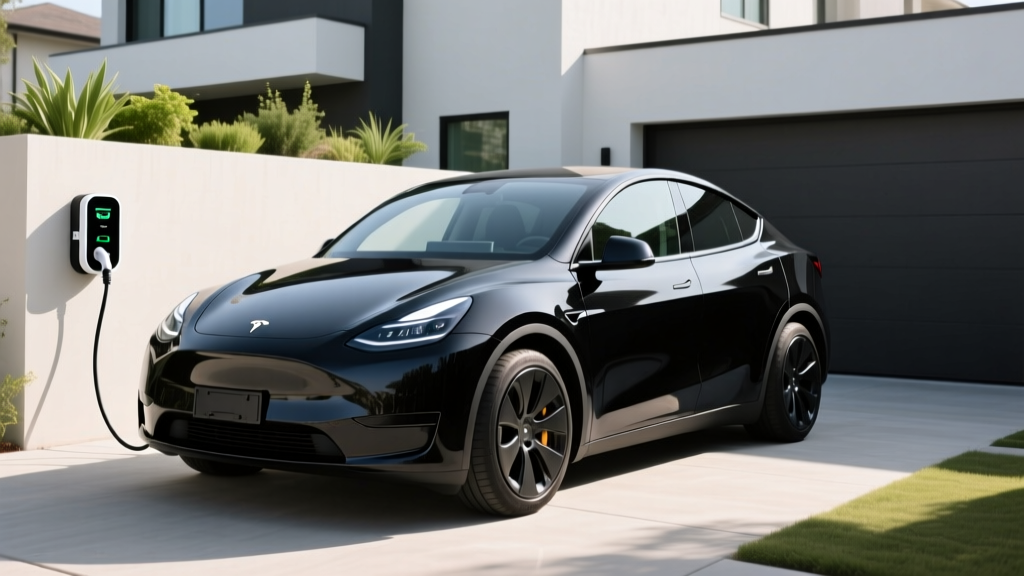
At home, a 48-amp Level 2 wall connector on a 60-amp circuit delivers up to 11.5 kW, adding approximately 44 miles per hour of charging. Most owners plug in overnight and wake up fully replenished. If your electrical panel supports only a 40-amp circuit (32A charging), you'll see about 29 miles per hour — still sufficient for most daily commutes under 80 miles round-trip. Installation costs for a home Level 2 setup typically range from $800 to $2,500 depending on panel capacity and conduit runs; consult a licensed electrician for a site-specific quote.
Pricing, Trim Levels & Federal Tax Credit Eligibility
The 2026 Model Y Juniper lineup is straightforward: two main trims, with Solid Black adding $1,500 to the bottom line. Here's what you'll pay before and after potential incentives:
| Trim | Base MSRP | + Black Paint | As-Configured | After Est. §30D Credit* |
|---|---|---|---|---|
| RWD | $44,990 | +$1,500 | $46,490 | ~$38,990 |
| Long Range AWD | $48,990 | +$1,500 | $50,490 | ~$42,990 |
*Federal tax credit estimates shown assume full §30D eligibility. Actual credit depends on battery sourcing, income, and MSRP caps. See details below.
IRS §30D Federal EV Tax Credit — 2026 Eligibility Checklist
- MSRP Cap: SUVs must have an MSRP at or below $80,000. Both Model Y trims qualify.
- Buyer Income Cap: Modified AGI must not exceed $150,000 (single), $225,000 (head of household), or $300,000 (joint filers).
- Battery Sourcing: The credit is split into two halves ($3,750 each) — one for critical minerals sourcing and one for battery component manufacturing. Tesla's North American supply chain has steadily improved compliance, but exact eligibility can shift. Verify current sourcing status at irs.gov.
- Point-of-Sale Transfer: As of 2024, eligible buyers can transfer the credit to the dealer at purchase, reducing the out-of-pocket price immediately rather than waiting for a tax refund.
Important: Tax credit rules are subject to change. Consult a tax professional and confirm current eligibility on the IRS website before purchasing.
Interior, Tech & Driver Assistance
The Juniper refresh brought meaningful interior upgrades: ventilated front seats (a frequent request from owners in warm climates), ambient lighting, a rear-seat touchscreen for climate and media control, and improved sound insulation. The 15.4-inch center display remains the command hub for navigation, media, and vehicle settings, running Tesla's latest software with responsive performance.
Autopilot and FSD (Supervised): Every Model Y includes Tesla's basic Autopilot (traffic-aware cruise control and lane centering). Full Self-Driving (Supervised) remains an $8,000 option or $99/month subscription. It is critical to understand that FSD is an SAE Level 2 driver-assistance system — it does not make the vehicle autonomous. The driver must remain fully engaged, hands on or near the wheel, and eyes on the road at all times. True Level 4 driverless capability is available only in geofenced robotaxi services like Waymo, not in any consumer vehicle sold today.
Notable tech highlights include Tesla's native navigation with real-time Supercharger routing, over-the-air software updates that periodically add features, and the Sentry Mode dashcam system. Drawbacks include the lack of Apple CarPlay/Android Auto (Tesla uses its proprietary infotainment exclusively), the absence of physical buttons for climate and mirror adjustment (all controlled via touchscreen), and the minimalist steering yoke option that remains polarizing.
Pros, Cons & How It Stacks Up Against Competitors
Pros
- Access to the Supercharger network — still the most reliable DC fast-charging ecosystem in North America
- Strong real-world efficiency (28 kWh/100 mi) and competitive 320-mile EPA range
- Spacious cargo area (72 cu ft with seats folded) with a usable front trunk
- Over-the-air updates continuously improve the vehicle post-purchase
- Available LFP battery (RWD) for daily 100% charging without degradation concerns
Cons
- No Apple CarPlay or Android Auto support
- Touchscreen-only controls for mirrors, glovebox, and climate frustrate some drivers
- FSD (Supervised) is expensive and still requires full driver attention — not autonomous
- Ride quality on the 20-inch wheels can be firm over rough pavement
- Solid Black paint shows swirl marks and dust readily; PPF or ceramic coating recommended
The Model Y Juniper competes directly with the Hyundai Ioniq 5 (EPA range up to 305 miles, 800V architecture for ultra-fast 10–80% charging in ~18 minutes), the Ford Mustang Mach-E (up to 310 miles EPA, more traditional interior controls), and the Kia EV6 (up to 310 miles, sportier handling). The Tesla's advantages remain its charging network, software ecosystem, and cargo practicality. The Hyundai and Kia counter with faster peak charging on 350 kW chargers and physical controls that some buyers prefer.
Warranty & Long-Term Ownership
Tesla covers the Model Y's battery and drive unit with an 8-year/120,000-mile warranty (Long Range AWD) or 8-year/100,000-mile warranty (RWD), whichever comes first. The warranty guarantees at least 70% battery capacity retention over that period. The limited vehicle warranty is 4 years / 50,000 miles. These terms are competitive with the segment; Hyundai and Kia offer 10-year/100,000-mile battery warranties, which are longer on paper but carry similar 70% retention thresholds.
For long-term ownership, Tesla's degradation data from fleet reporting suggests most Model Y packs retain approximately 85–90% capacity after 100,000 miles, with the steepest drop occurring in the first 10,000–15,000 miles before stabilizing. LFP packs in the RWD model may show even slower degradation given the chemistry's inherent cycle-life advantage.
Frequently Asked Questions
What is the real-world range of the black Model Y Juniper?
The Long Range AWD achieves an EPA-estimated 320 miles, but real-world highway driving at 70–75 mph typically yields 270–290 miles. In cold weather below 30°F, expect 220–250 miles effective range. The RWD model is EPA-rated at 290 miles with proportionally similar real-world adjustments.
How fast does the Model Y Juniper charge at home and on the road?
On a DC fast charger (Supercharger V3/V4), the Model Y peaks at 250 kW and charges from 10–80% in approximately 25–32 minutes depending on battery temperature and state of charge. At home on a 48-amp Level 2 charger (11.5 kW), it adds about 44 miles of range per hour, fully replenishing overnight.
Does the 2026 Model Y qualify for the $7,500 federal EV tax credit?
The Model Y's MSRP is well under the $80,000 SUV cap, so it clears that hurdle. Full §30D credit eligibility depends on your income (below $150K single / $300K joint), and the battery's critical-mineral and component sourcing meeting current-year IRS thresholds. Tesla's sourcing compliance has improved, but you should verify current eligibility at irs.gov and consult a tax professional before relying on the credit.
Is the black Model Y Juniper worth buying over the Ioniq 5 or Mach-E?
Choose the Model Y Juniper if you prioritize Supercharger network access, over-the-air updates, and maximum cargo space. Choose the Hyundai Ioniq 5 if you want faster peak charging on 350 kW stations and prefer physical controls. The Ford Mach-E appeals to buyers who want a more traditional SUV feel and available BlueCruise hands-free driving on mapped highways.
Does Solid Black paint require extra maintenance?
Yes. Tesla's Solid Black is a single-stage-influenced finish that shows dust, water spots, and swirl marks more readily than lighter or metallic colors. Most owners investing in a black Model Y apply a ceramic coating or paint protection film (PPF) on high-impact panels within the first few weeks of ownership. Budget $1,500–$3,000 for a quality PPF installation if you want to preserve the finish long-term.
Is Tesla's FSD actually self-driving?
No. Full Self-Driving (Supervised) is an SAE Level 2 driver-assist system. It can navigate highways, handle interchanges, and manage stoplights under ideal conditions, but the driver must remain fully attentive and prepared to take over instantly. It is not a Level 4 autonomous system. Think of it as an advanced cruise-and-steering assistant, not a replacement for an engaged driver.