Quick Verdict: The Three-Row EV Benchmark Gets a Blackout Treatment
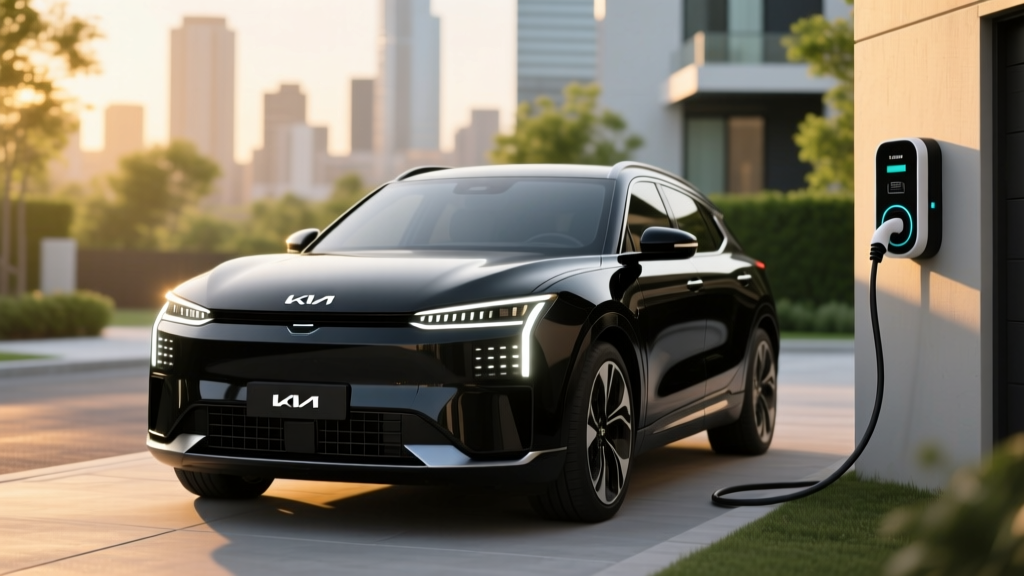
The Kia EV9 has held its position as one of the most practical three-row electric SUVs since its 2024 debut, and the 2026 model year carries that momentum forward with incremental software refinements and expanded color options. The black Kia EV9 — particularly in the GT-Line trim with its gloss-black 21-inch wheels and dark exterior accents — has become one of the most-searched configurations among buyers who want a family hauler that doesn't look like a minivan.
After spending extended time with the 2026 EV9 in both Light (RWD) and GT-Line AWD trims, the verdict is clear: this is the most complete electric three-row SUV under $70,000. It delivers genuine third-row usability, competitive DC fast-charging speeds, and Kia's class-leading warranty. The compromises? Highway range drops noticeably at sustained 75+ mph speeds, and the second-row captain's chairs sacrifice some flexibility versus a bench.
Range and Efficiency: EPA Sticker vs. Real-World Miles
Real-World Expectation: 250–280 mi highway; 220–250 mi in cold weather (below 32°F)
The 2026 Kia EV9 is available with two battery configurations. The standard-range Light trim uses a 76.1 kWh battery (NMC chemistry), while the Long Range models — including the Wind, Land, and GT-Line — step up to a 100.0 kWh usable NMC (nickel manganese cobalt) pack. Kia does not offer LFP (lithium iron phosphate) chemistry on the EV9, which means the battery prioritizes energy density over the extended cycle life that LFP provides.
On the EPA's fueleconomy.gov listing, the Long Range RWD achieves a combined 85 MPGe (35 kWh/100 mi), while the AWD GT-Line drops to 83 MPGe combined (37 kWh/100 mi). These are competitive numbers for a 5,000+ lb SUV, but they translate into real-world range that demands honesty.
In mixed driving at moderate temperatures (55–75°F), expect to see 270–290 miles from the Long Range AWD before needing a charge. Sustained highway driving at 75 mph cuts that to roughly 250 miles. In winter conditions with the heat pump running, plan for 220–250 miles of usable range. The EV9's heat pump — standard on all trims — mitigates cold-weather losses better than many competitors, but physics still wins: a 100 kWh battery pushing a large, boxy SUV through cold air will consume energy faster.
| Specification | Light (Std Range RWD) | Long Range RWD | GT-Line AWD |
|---|---|---|---|
| Battery (usable) | 76.1 kWh (NMC) | 100.0 kWh (NMC) | 100.0 kWh (NMC) |
| EPA Range | 230 mi | 304 mi | 280 mi |
| MPGe (combined) | 89 MPGe | 85 MPGe | 83 MPGe |
| Horsepower | 215 hp | 201 hp | 379 hp |
| 0–60 mph | 8.2 sec | 8.8 sec | 5.0 sec |
| Drivetrain | RWD | RWD | AWD (dual-motor) |
| Base MSRP | $54,900 | $59,900 | $73,900 |
Charging Speed: DC Fast Charge and Home Level 2
Charging infrastructure access is the make-or-break factor for any EV purchase, and the EV9 handles both public and home charging competently — though not class-leading in either domain.
| Charging Level | Power / Rate | Time or Miles Added |
|---|---|---|
| DC Fast Charge (peak) | 210 kW (Long Range) / 180 kW (Std Range) | 10–80% in ~24 min (Long Range) |
| Level 2 (240V, 48A) | 10.9 kW | ~32 mi/hr; full charge in ~9.5 hr |
| Level 1 (120V, 12A) | 1.4 kW | ~3.5 mi/hr |
The Long Range EV9's peak 210 kW DC fast-charge rate is respectable, but it's important to understand the charge curve. The EV9 sustains roughly 180–210 kW from 10% to about 40% state of charge (SoC), then tapers progressively. From 60% to 80%, you'll see speeds closer to 90–120 kW. The 10–80% time of approximately 24 minutes assumes optimal battery preconditioning and a charger capable of delivering 350 kW (such as Electrify America's latest stalls).
The EV9 uses the CCS1 connector for DC fast charging on 2024–2025 models. For 2026, Kia has confirmed that new EV9 models ship with the NACS (Tesla-style) charging port natively, granting direct access to Tesla Supercharger stalls with an adapter included for legacy CCS stations. This is a significant practical advantage for road-trippers in areas where Superchargers outnumber CCS networks.
For home charging, the onboard 10.9 kW charger means a Level 2 home station (hardwired, 48-amp, 240V circuit) will add roughly 32 miles of range per hour — enough to replenish a full day's driving overnight. A 60-amp circuit is recommended to accommodate the continuous 48A draw safely. Budget $800–$2,000 for a quality Level 2 charger and professional installation, depending on whether your electrical panel needs an upgrade.
Performance and Drivetrain
The EV9's performance varies dramatically by trim. The Light RWD with its 215 hp single-motor setup is adequate for city driving but feels strained during highway merging with a full load of passengers and cargo — the 8.2-second 0–60 time reflects that.
The GT-Line AWD is the enthusiast's pick. Its dual-motor configuration produces 379 hp and 516 lb-ft of torque, launching this 5,300-lb SUV to 60 mph in approximately 5.0 seconds. The torque delivery is immediate and linear, as expected from a dual-motor EV, and the all-wheel-drive system provides confident traction in rain and light snow.
Ride quality is composed but firm — Kia tuned the EV9's suspension for body control rather than plushness, which means you'll feel expansion joints and potholes more than in a Hyundai Palisade or Toyota Grand Highlander. The steering is precise if slightly numb, and the regenerative braking system offers multiple levels adjustable via paddle shifters, including a true one-pedal driving mode (i-Pedal) that brings the vehicle to a complete stop without touching the brake pedal.
Interior Space, Cargo, and Technology
The EV9's primary selling point over two-row EVs is genuine three-row practicality. Here's how the space breaks down:
- First-row legroom: 41.4 inches
- Second-row legroom: 42.8 inches (captain's chairs) / 42.8 inches (bench)
- Third-row legroom: 32.0 inches — usable for children and adults on short trips
- Cargo behind 3rd row: 20.2 cu ft
- Cargo behind 2nd row: 43.5 cu ft
- Cargo behind 1st row (max): 81.7 cu ft
The third row is not an afterthought. Adults up to about 5'10" can sit comfortably for 30–45 minutes, though longer trips will demand second-row compromise. The 20.2 cu ft behind the third row accommodates roughly four carry-on bags — enough for a family grocery run but not a week-long road trip with all seven seats occupied.
Technology highlights include a standard 12.3-inch digital instrument cluster paired with a 12.3-inch infotainment touchscreen running Kia's latest Connect system with wireless Apple CarPlay and Android Auto. The GT-Line adds a head-up display, a digital rearview mirror, and Kia's Highway Driving Assist 2 (HDA2) — a Level 2 SAE driver-assist system that handles adaptive cruise control and lane centering on divided highways. The driver must remain attentive and keep hands on the wheel at all times; this is not autonomous driving.
Notable tech drawbacks: the EV9 still relies on capacitive-touch climate controls rather than physical buttons, which are harder to use while driving. The infotainment system is responsive but the menu structure requires more taps than necessary for common functions like seat heating.
Pricing, Trims, and Federal Tax Credit Eligibility
| Trim | Drivetrain | MSRP | Est. After §30D Credit* |
|---|---|---|---|
| Light | RWD (Std Range) | $54,900 | $47,400 |
| Wind | RWD (Long Range) | $59,900 | $52,400 |
| Land | AWD (Long Range) | $65,400 | $57,900 |
| GT-Line | AWD (Long Range) | $73,900 | $66,400 |
| GT-Line Prestige | AWD (Long Range) | $78,900 | $71,400 |
*Federal tax credit eligibility under IRS §30D is subject to multiple requirements that change periodically. Key eligibility factors for the 2026 tax year include:
- MSRP cap: SUVs must not exceed $80,000 MSRP (all EV9 trims qualify)
- Buyer income cap: Modified AGI ≤ $150,000 (single) / $300,000 (joint filing)
- Battery sourcing: Critical minerals and battery components must meet escalating domestic-content thresholds; Kia has worked to qualify several trims, but confirm current eligibility with your dealer and tax professional
- Point-of-sale transfer: Eligible buyers can transfer the credit to the dealer at purchase, reducing the purchase price immediately rather than waiting for a tax refund
- Assembly: The EV9 is assembled in West Point, Georgia, satisfying the North American final-assembly requirement
The credit amount can be up to $7,500, split between a critical-minerals component ($3,750) and a battery-components component ($3,750). Because sourcing rules tighten annually, confirm with your dealer which 2026 EV9 trims currently qualify for the full amount, a partial amount, or none at all. Always consult a tax professional for your specific situation.
Warranty and Long-Term Ownership
Kia backs the EV9 with one of the strongest warranty packages in the EV space:
- Basic vehicle warranty: 5 years / 60,000 miles
- Powertrain warranty: 10 years / 100,000 miles
- EV battery warranty: 10 years / 100,000 miles (covers capacity below 70% state of health)
The 70% state-of-health (SoH) threshold is standard across the Hyundai Motor Group. Industry data from Recurrent Auto and other battery-health aggregators suggests that modern NMC batteries with active thermal management — like the EV9's liquid-cooled pack — typically retain 90–95% SoH after 100,000 miles. A full battery replacement on the EV9, should it ever be needed out of warranty, is estimated at $15,000–$22,000 based on current 100 kWh pack pricing, though costs are expected to decline as battery manufacturing scales.
Pros and Cons
Pros
- Genuine three-row seating with usable adult third-row space
- 210 kW DC fast charging with 10–80% in ~24 minutes
- Class-leading 10-year/100,000-mile battery warranty
- NACS port on 2026 models for native Supercharger access
- Strong 379 hp in GT-Line AWD with 5.0-sec 0–60
- Vehicle-to-load (V2L) capability for powering devices or camping gear
- Georgia-built, helping satisfy §30D assembly requirements
Cons
- Real-world highway range ~250 mi (AWD) falls short of 280 mi EPA
- Firm ride quality transmits road imperfections into the cabin
- Capacitive-touch climate controls are distracting while driving
- GT-Line Prestige pushes $79K, entering luxury-SUV territory
- Standard-range Light trim's 230-mi range limits road-trip utility
- No LFP battery option for buyers prioritizing longevity over range
Who Should Buy the Black Kia EV9?
The EV9 is purpose-built for families who need three rows but want to eliminate gasoline. If your typical week involves school runs, grocery trips, and a 40-mile round-trip commute — and you can charge at home overnight — the Long Range RWD or AWD will cover your needs with minimal public-charging dependence.
The black exterior, especially in the GT-Line's Panthera Metal or Aurora Black Pearl with gloss-black wheels, has become a popular configuration for buyers who want the EV9's practicality without the two-tone or lighter-color schemes that show road grime quickly. It's a practical aesthetic choice as much as a stylistic one.
For road-trippers who regularly drive 300+ miles between stops, the EV9's real-world range means you'll plan one charging stop on most long routes. The 210 kW peak rate and expanding NACS/Supercharger access make that stop relatively painless — roughly 25 minutes for a meaningful charge.
If you need maximum cargo volume and never use a third row, the Hyundai Ioniq 5 or Tesla Model Y offer better efficiency and lower pricing. If you need three rows and tow capacity (the EV9 is rated for up to 5,000 lbs with AWD), the Rivian R1S offers more range and capability but starts $20,000+ higher.
Frequently Asked Questions
What is the real-world range of the black Kia EV9?
The Long Range AWD EV9 carries a 280-mile EPA estimate. In real-world mixed driving at moderate temperatures, expect 260–280 miles. Sustained highway driving at 75 mph reduces this to approximately 250 miles, and cold weather (below 32°F) can drop it to 220–250 miles. The RWD Long Range model fares slightly better, with real-world returns closer to 270–290 miles in mixed driving.
How fast does the EV9 charge at home and on the road?
On a DC fast charger, the Long Range EV9 peaks at 210 kW and charges from 10% to 80% in approximately 24 minutes under optimal conditions. At home on a Level 2 (240V, 48A) station, the 10.9 kW onboard charger adds about 32 miles of range per hour, fully replenishing the 100 kWh battery in roughly 9.5 hours. Level 1 (120V) trickle charging adds only about 3.5 miles per hour and is best reserved for emergencies or plug-in hybrid-style overnight top-ups.
Does the 2026 Kia EV9 qualify for the $7,500 federal tax credit?
The EV9 is assembled in Georgia, satisfying the North American final-assembly requirement, and all trims fall under the $80,000 SUV MSRP cap. However, full credit eligibility depends on battery-component and critical-minerals sourcing thresholds that tighten each year, as well as buyer income limits ($150K single / $300K joint MAGI). Check IRS.gov's clean vehicle credit page and confirm with your dealer and a tax professional before assuming the full $7,500.
Is the Kia EV9 worth buying over the Tesla Model X or Rivian R1S?
The EV9 occupies a value sweet spot: it starts roughly $25,000 below the Model X and $20,000 below the R1S while offering comparable three-row space. The trade-offs are less range (the Model X reaches 348 mi EPA), lower tow capacity (5,000 lbs vs. the R1S's 7,700 lbs), and a less premium interior. For most families prioritizing daily usability and budget, the EV9 is the strongest value. For frequent towing or 350+ mile road trips, the R1S or Model X may justify their premiums.
What are the biggest drawbacks of the EV9?
The most common owner complaints center on the firm ride quality, capacitive-touch climate controls that lack physical buttons, and real-world range that can fall 30–50 miles short of the EPA estimate during highway or cold-weather driving. The GT-Line Prestige trim also pushes pricing near $79,000, where it competes with luxury alternatives that offer more refinement.
Does the EV9 have a front trunk (frunk)?
The AWD EV9 has a small 1.8 cu ft frunk — enough for a charging cable bag and a few small items. The RWD model offers a larger 3.2 cu ft frunk since there is no front motor. Neither is large enough for meaningful cargo; treat the frunk as supplementary storage.