Quick Verdict: The Black Hummer EV Is a Supercar in a Tank's Body
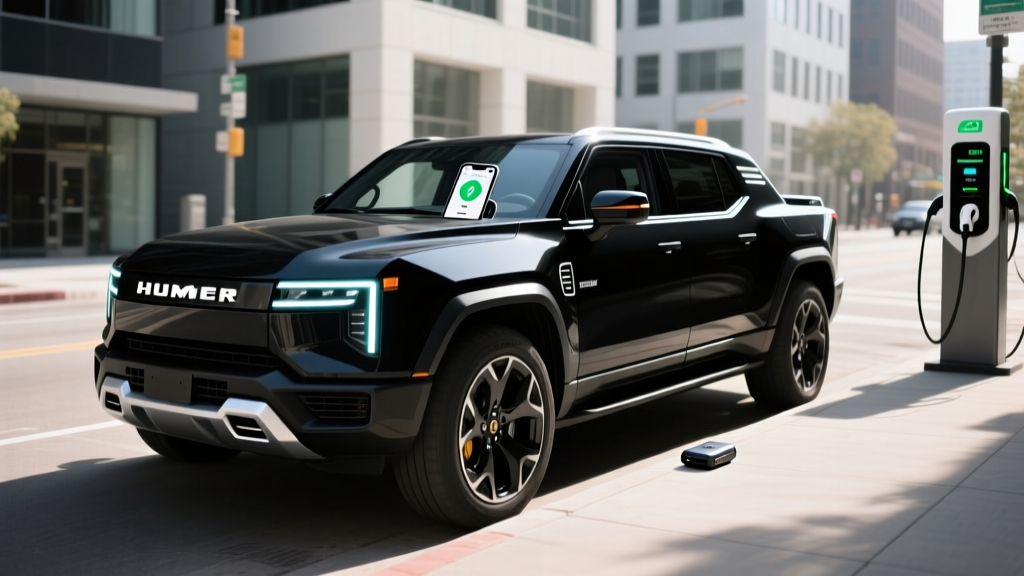
If you've seen a black Hummer EV rolling down the street — likely the Edition 1 or a 3X in Onyx Black — you already know this truck makes a statement that no other EV on the road can match. But beneath the 33-inch tires, removable Infinity Roof panels, and 830-horsepower Watts to Freedom mode sits one of the most capable electric platforms GM has ever built on the Ultium architecture.
The 2026 GMC Hummer EV Pickup and SUV lineup carries forward with meaningful updates: enhanced Super Cruise hands-free coverage, revised battery management software that improves cold-weather range retention, and expanded trim availability beyond the early limited-edition bottlenecks. The blacked-out aesthetic — whether in factory Onyx Black or dealer-applied wraps — remains the most popular configuration buyers order.
But at a base MSRP hovering above $100,000 and with real-world highway range falling well short of its EPA sticker, the Hummer EV demands a buyer who values presence, performance, and off-road capability over efficiency. Here's exactly what you're getting.
Range, Battery, and Efficiency: Big Pack, Big Appetite
| Spec | 2026 Hummer EV Pickup 3X | 2026 Hummer EV SUV 3X |
|---|---|---|
| EPA Range | 314 miles | 314 miles |
| Battery Capacity (Usable) | ~212 kWh (NMC) | ~212 kWh (NMC) |
| Battery Chemistry | NMC (Nickel Manganese Cobalt) | NMC |
| MPGe (Combined) | 47 MPGe | 47 MPGe |
| kWh per 100 Miles | ~72 kWh/100mi | ~72 kWh/100mi |
| Drivetrain | Tri-Motor AWD (e4WD) | Tri-Motor AWD (e4WD) |
The Hummer EV's 212 kWh usable battery pack is among the largest ever fitted to a production passenger vehicle. It uses GM's Ultium NMC pouch cells arranged in a double-stacked configuration across two layers. According to fueleconomy.gov, the 3X tri-motor variant achieves an EPA-estimated 314 miles of combined range.
EPA 314 miles is the combined cycle. In real-world highway driving at 70-75 mph, expect 250–275 miles before needing to charge. In cold weather (below 32°F), range can drop to 200–230 miles due to cabin heating demands and reduced battery efficiency. City driving with regenerative braking can approach or slightly exceed the EPA figure. The 2X dual-motor variant (when equipped) sees a modest range bump due to lower weight and one fewer motor drawing power.
Efficiency is not this truck's strong suit. At roughly 72 kWh per 100 miles, the Hummer EV consumes nearly twice the energy per mile of a Tesla Model Y or Hyundai Ioniq 5. That matters when you're paying for DC fast charging on road trips — a full 10-80% session can cost $45–$75 depending on your network and local rates.
Charging Speed: 350 kW Peak, But the Curve Tells the Full Story
| Charging Level | Power / Rate | Time / Miles Added |
|---|---|---|
| DC Fast Charge (Peak) | 350 kW (800V architecture) | 10–80% in ~34 minutes |
| DC Fast Charge (Sustained Avg) | ~220 kW average 10–80% | ~100 miles in 12 minutes |
| Level 2 Home (19.2 kW) | 19.2 kW (80A circuit) | ~52 miles per hour of charging |
| Level 2 Home (11.5 kW) | 11.5 kW (48A circuit) | ~31 miles per hour of charging |
| Level 1 (120V) | 1.4 kW | ~4 miles per hour (not practical) |
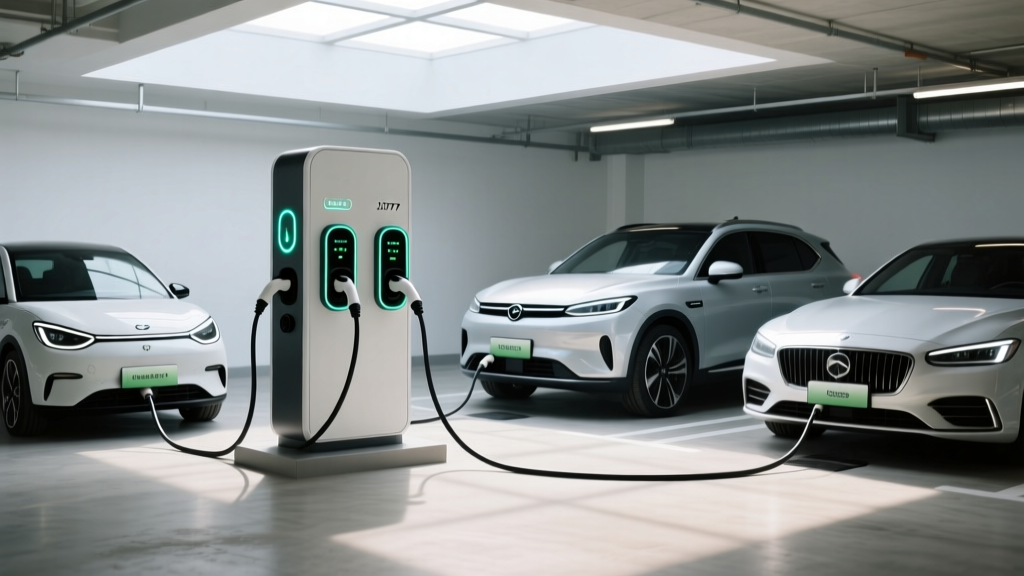
The Hummer EV supports up to 350 kW peak DC fast charging on its 800-volt architecture. At a compatible Electrify America or EVgo 350 kW station, GMC claims a 10–80% charge in approximately 34 minutes. However, real-world charging curves tell a more nuanced story.
The 212 kWh pack is so large that even at 350 kW peak, you're adding a massive amount of energy. The charge rate peaks early (roughly 10–30% SoC) and tapers significantly above 60%. Expect a sustained average closer to 200–220 kW across the full 10–80% session. That still translates to roughly 100 miles of range added in about 12 minutes — adequate for road-trip pit stops if you plan around 250-mile driving legs.
At home, the Hummer EV's onboard charger accepts up to 19.2 kW on Level 2 (requiring a dedicated 100-amp circuit and hardwired EVSE). Most homes will need a panel upgrade to support this. On a more common 48-amp / 11.5 kW Level 2 setup, a full overnight charge from 20% to 100% takes roughly 14–15 hours — plan accordingly if you have a long commute and a depleted pack.
Performance: Watts to Freedom and Then Some
| Performance Spec | 3X Tri-Motor | 2X Dual-Motor |
|---|---|---|
| Horsepower | 830 hp (1,000 hp w/ WTF mode) | 625 hp |
| Torque | 1,200 lb-ft | 775 lb-ft |
| 0–60 mph | ~3.0 seconds | ~4.5 seconds |
| Top Speed | ~106 mph (governed) | ~106 mph |
| Towing Capacity | 7,500 lbs | 7,500 lbs |
The 3X tri-motor Hummer EV produces 830 horsepower standard and up to 1,000 horsepower in Watts to Freedom (WTF) launch mode, which lowers the adaptive air suspension, pre-conditions the battery, and plays haptic and audio cues before unleashing a 3.0-second 0–60 mph sprint. For a vehicle weighing over 9,000 pounds, that figure borders on absurd — in the best possible way.
Beyond straight-line performance, the Hummer EV features four-wheel steering (CrabWalk), allowing the rear wheels to turn up to 10 degrees in the same or opposite direction as the fronts. This enables diagonal movement at low speeds for off-road obstacle navigation and dramatically tightens the turning radius on pavement. Extract Mode raises the air suspension by nearly 6 inches for maximum ground clearance when tackling trails.
The 2X dual-motor variant trades one rear motor for a lower price and slightly better efficiency, still delivering 625 hp and a 4.5-second 0–60 time — quick by any truck standard.
Pricing, Trims, and Federal Tax Credit Eligibility
| Trim | Base MSRP (2026) | Est. As-Tested | §30D Federal Credit |
|---|---|---|---|
| 2X (Dual-Motor Pickup) | $99,995 | $108,000+ | Up to $7,500* |
| 3X (Tri-Motor Pickup) | $122,995 | $135,000+ | Up to $7,500* |
| 2X (Dual-Motor SUV) | $99,995 | $106,000+ | Up to $7,500* |
| 3X (Tri-Motor SUV) | $112,595 | $125,000+ | Up to $7,500* |
*Federal tax credit subject to IRS §30D eligibility requirements. See details below.
- MSRP Cap: Pickup trucks must be under $80,000 MSRP to qualify. The Hummer EV's base MSRP exceeds this threshold on all trims, meaning it does NOT qualify for the new-vehicle §30D credit.
- Buyer Income Cap: AGI must not exceed $150,000 (single) / $300,000 (joint) — moot here due to MSRP cap.
- Battery Sourcing: Critical minerals and battery component requirements phase in annually through 2029.
- Point-of-Sale Transfer: Available for qualifying vehicles — allows the credit to be applied as a down-payment reduction at the dealer.
Bottom line: At MSRPs starting near $100,000, the Hummer EV exceeds the IRS §30D truck MSRP cap of $80,000. Buyers should not expect the $7,500 federal credit. Some state-level incentives may apply — check your local DMV or energy office. A tax professional can confirm your specific situation.
Interior, Cargo, and Technology
The Hummer EV's cabin is built around a 13.4-inch diagonal infotainment touchscreen running GM's latest Ultifi software platform, paired with a 12.3-inch driver instrument cluster. Wireless Apple CarPlay and Android Auto are standard. The interface is responsive, with dedicated off-road pages showing pitch/roll angles, tire pressure, and torque distribution in real time.
Cargo and passenger dimensions (Pickup 3X):
- Front legroom: 45.6 inches
- Rear legroom: 38.9 inches
- Bed length: 5 feet (with tailgate up)
- Front trunk (frunk): ~11.3 cu ft — includes power-operated eTrunk with available cargo organizer
- Bed cargo volume: ~55 cu ft (tailgate down, to roof height)
The SUV variant sacrifices bed length but gains a fully enclosed cargo area with approximately 81.8 cu ft behind the front seats when the rear row is folded. Both body styles feature the removable Infinity Roof — four modular panels that stow in a dedicated frunk bag, turning the Hummer EV into an open-air rig.
Driver Assistance: Super Cruise is standard on 3X trims and available on 2X, offering hands-free driving on over 750,000 miles of compatible roads across North America. This is an SAE Level 2 system — the driver must remain attentive and eyes on the road at all times. The system uses a driver-facing camera to monitor engagement and will issue escalating warnings if attention lapses.
GMC's Super Cruise is a Level 2 hands-free driver-assist system. It handles steering, acceleration, and braking on mapped divided highways, but the driver must remain alert, keep eyes forward, and be prepared to take over instantly. It does not handle construction zones, unmapped roads, or complex urban environments. Only Level 4 services like Waymo operate without a driver.
Warranty and Long-Term Ownership
GMC backs the Hummer EV with the following warranty coverage:
- Bumper-to-Bumper: 3 years / 36,000 miles
- Powertrain: 5 years / 60,000 miles
- Battery Pack: 8 years / 100,000 miles (retains ≥70% capacity)
The 8-year/100,000-mile battery warranty with a 70% capacity retention threshold is industry-standard for GM's Ultium platform. Given the pack's massive 212 kWh size, a 30% degradation would still leave ~148 kWh usable — roughly 220 miles of range. In practice, NMC packs on liquid-cooled Ultium platforms have shown degradation rates of 5–8% over the first 100,000 miles based on early fleet data.
Insurance costs are significant: expect annual premiums of $3,200–$4,800 depending on your state, driving record, and coverage level. The Hummer EV's repair costs, high MSRP, and performance profile place it in a high-risk insurance bracket.
Pros and Cons
Pros
- Unmatched road presence and off-road capability (CrabWalk, Extract Mode, 4-wheel steer)
- 3.0-second 0–60 mph in a 9,000-lb truck — genuinely thrilling
- 350 kW peak DC fast charging on 800V architecture
- 314-mile EPA range despite massive weight and frontal area
- Super Cruise hands-free highway driving on 750K+ miles of roads
- Removable Infinity Roof panels for open-air driving
- Massive 11.3 cu ft frunk with powered eTrunk lid
Cons
- Real-world highway range drops to 250–275 mi; 200–230 mi in cold weather
- Efficiency of ~72 kWh/100mi makes public charging expensive
- Base MSRP exceeds $80K — no federal §30D tax credit eligibility
- Insurance premiums $3,200–$4,800/year
- Level 2 home charging a full pack takes 14+ hours on standard 11.5 kW
- 9,000+ lb curb weight limits some parking structures and tire wear
- Dealer markups still common on high-demand black/3X configurations
Who Should Buy the Black Hummer EV?
Choose the Hummer EV if:
- You want a full-size electric truck with serious off-road chops and don't need to maximize efficiency
- You have Level 2 home charging and mostly drive under 200 miles daily
- Performance and presence matter more than tax-credit savings
- You'll use CrabWalk and Extract Mode on trails, not just pavement
- You want Super Cruise for frequent highway road trips
Look elsewhere if:
- You need federal tax credit eligibility — consider the Rivian R1T (Dual-Motor Standard) or Ford F-150 Lightning
- Efficiency and low charging costs are priorities — a Model Y or Ioniq 5 costs pennies per mile by comparison
- You live in an apartment or lack home charging — a 212 kWh pack is painful on public charging alone
- You need a sub-$70,000 electric truck — the F-150 Lightning and Silverado EV WT are better budget picks
FAQ
What is the real-world range of the Hummer EV?
The EPA rates the 3X tri-motor at 314 miles combined. Real-world highway driving at 70+ mph yields approximately 250–275 miles. Cold weather below freezing can reduce range to 200–230 miles. City driving with regenerative braking can approach the EPA figure.
How fast does the Hummer EV charge?
On a 350 kW DC fast charger, the Hummer EV peaks at 350 kW and achieves a 10–80% charge in roughly 34 minutes, averaging ~220 kW sustained. At home on a 19.2 kW Level 2 charger, it adds about 52 miles of range per hour. A full charge from near-empty takes 14+ hours on a standard 11.5 kW home charger.
Does the Hummer EV qualify for the federal EV tax credit?
No. Under IRS §30D rules, pickup trucks must have an MSRP below $80,000 to qualify. All Hummer EV trims start at or above $99,995, making them ineligible for the $7,500 federal credit. State incentives may still apply — consult IRS.gov and your tax professional.
Is the black Hummer EV worth buying vs. competitors?
Versus the Rivian R1T Tri-Motor: the Hummer EV is larger, heavier, and more off-road focused, with a bigger battery and more range, but the R1T is more efficient and eligible for the tax credit in certain trims. Versus the Ford F-150 Lightning: the Lightning is far more affordable and practical for daily use, but can't match the Hummer's performance or off-road hardware. The Hummer EV is a niche halo truck — worth it if its specific blend of excess and capability appeals to you.
What are the biggest pros and cons?
Top pros: 3.0-second 0–60, 350 kW charging, CrabWalk off-road tech, Super Cruise, removable roof. Top cons: poor efficiency (72 kWh/100mi), no federal tax credit, expensive insurance, cold-weather range loss, and long home-charge times for the massive 212 kWh pack.
What battery does the Hummer EV use?
The Hummer EV uses a ~212 kWh usable NMC (nickel manganese cobalt) lithium-ion pack built on GM's Ultium platform with double-stacked pouch cells and liquid thermal management. It is covered by an 8-year / 100,000-mile warranty with a 70% capacity retention guarantee.