What Does BEV Mean — and Why the 2026 Tesla Model 3 Is the Defining Example
If you've searched meaning BEV, the answer is straightforward: BEV stands for Battery Electric Vehicle — a car powered entirely by a rechargeable battery pack and electric motor(s), with no gasoline engine, no fuel tank, and no tailpipe emissions. Unlike hybrids (HEVs) or plug-in hybrids (PHEVs), a BEV relies 100% on stored electricity. You plug it in, you drive on electrons.
To make that definition concrete, there's no better case study than the 2026 Tesla Model 3, one of the best-selling BEVs in the United States. Below, we break down exactly what living with a modern BEV looks like — real-world range, charging speed, ownership cost, and tax-credit eligibility — using the refreshed Model 3 (internally called "Highland") as our reference point.
2026 Tesla Model 3 at a Glance: Key BEV Specifications
| Spec | Model 3 RWD | Model 3 Long Range AWD |
|---|---|---|
| EPA Range | 272 mi | 363 mi |
| Battery (usable) | ~60 kWh (LFP) | ~75 kWh (NMC) |
| Peak DC Fast Charge | 170 kW | 250 kW |
| 10–80% DCFC Time | ~25 min | ~18 min |
| Level 2 Home Charging | 11.5 kW (~44 mi/hr) | 11.5 kW (~44 mi/hr) |
| 0–60 mph | 5.8 sec | 4.2 sec |
| Horsepower | 271 hp | 346 hp |
| Drivetrain | RWD (single motor) | AWD (dual motor) |
| Combined MPGe | 132 MPGe | 130 MPGe |
| Efficiency | 25 kWh/100 mi | 26 kWh/100 mi |
| Base MSRP | $38,990 | $47,740 |
| Battery Warranty | 8 yr / 100,000 mi | 8 yr / 120,000 mi |
Real-World Range: What the EPA Sticker Doesn't Tell You
RWD: EPA 272 mi → Expect ~240–255 mi mixed highway/city; ~200–220 mi sustained 75 mph highway; ~185–200 mi in freezing weather.
Long Range AWD: EPA 363 mi → Expect ~310–335 mi mixed; ~275–295 mi highway; ~240–260 mi in freezing weather.
The EPA's official fuel-economy page rates the Model 3 Long Range at 363 miles. That number is measured on a dynamometer using standardized city and highway cycles. In practice, BEVs — like all vehicles — lose efficiency at sustained highway speeds because aerodynamic drag increases with the square of velocity. At 75 mph on an interstate, expect roughly 80–85% of the EPA combined figure.
Cold weather compounds this. LFP and NMC batteries both experience increased internal resistance below freezing, and cabin heating draws significant power (the Model 3 uses a heat pump, which helps, but doesn't eliminate the penalty). In temperatures below 30°F, plan for 20–30% range reduction depending on trip length and preconditioning habits.
BEV ownership tip: Precondition the battery while still plugged in. This warms the pack using grid power rather than battery power, preserving range and enabling faster DC charging upon arrival at a station.
Charging Speed: DC Fast Charging and Home Level 2
Understanding BEV charging means understanding the difference between kW (power — how fast energy flows) and kWh (energy — how much the battery holds). A 250 kW charger can theoretically deliver 250 kWh in one hour, but no BEV battery is that large, and charge speed tapers as the battery fills.
| Charge Level | Power (kW) | Miles Added per Hour | Typical Use Case |
|---|---|---|---|
| Level 1 (120V household) | ~1.4 kW | ~5 mi/hr | Overnight trickle; emergency top-ups |
| Level 2 (240V home/public) | 11.5 kW | ~44 mi/hr | Daily home charging; full overnight refill |
| DC Fast (Tesla Supercharger V3) | Up to 250 kW (LR) | Up to ~1,000 mi/hr (peak) | Road trips; 10–80% in ~18 min |
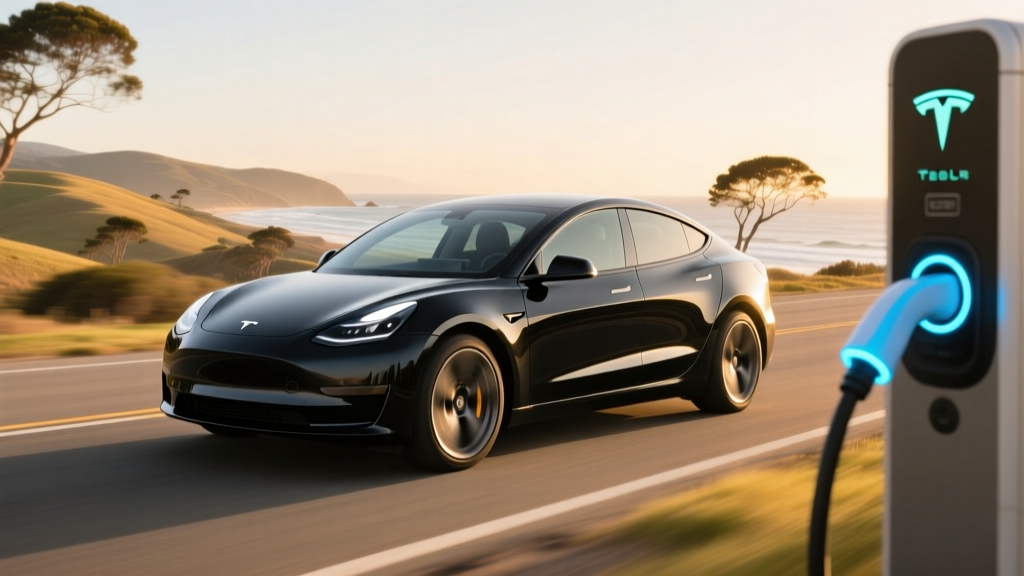
The charge-curve reality: The Long Range AWD peaks at 250 kW only at a low state of charge (roughly 10–20%). By 50% SoC, power drops to ~150 kW; above 80%, it tapers sharply to ~40–60 kW. That's why the industry standard metric is 10–80% time, not peak kW. For the Model 3 LR, that's approximately 18 minutes at a V3 Supercharger. The RWD with its LFP pack peaks lower (170 kW) and takes roughly 25 minutes for the same window.
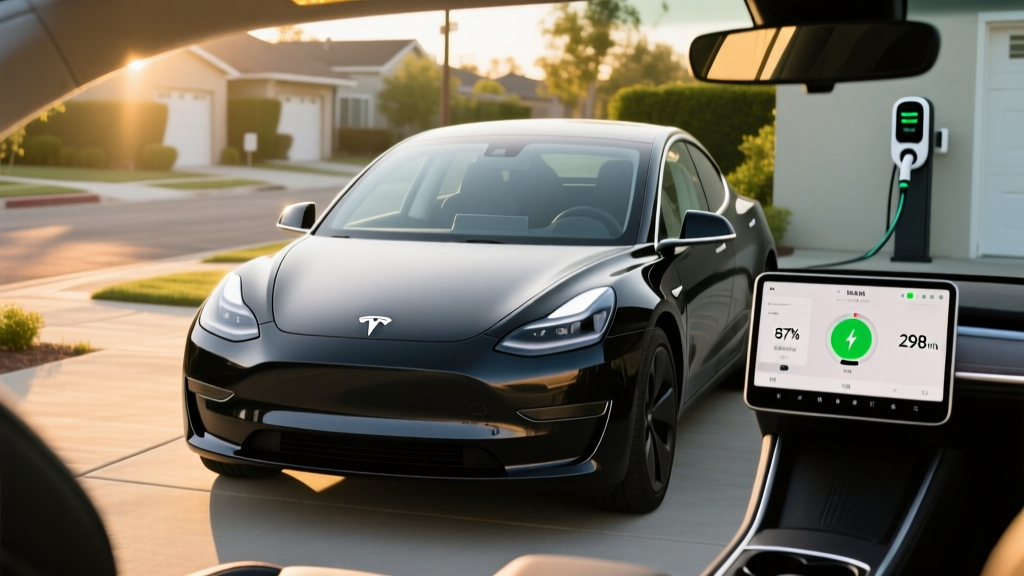
At home on a Level 2 wall connector (48-amp circuit, 11.5 kW), a depleted Long Range battery refills in about 7–8 hours — easily overnight. For most BEV owners, home Level 2 charging is the primary fueling method, making daily "refueling" essentially automatic.
Pricing, Trims, and Federal Tax Credit Eligibility
The 2026 Model 3 is available in three main trims:
- RWD: $38,990 MSRP (LFP battery, 272 mi range)
- Long Range AWD: $47,740 MSRP (NMC battery, 363 mi range)
- Performance: $52,990 MSRP (NMC, 315 mi range, 2.9-sec 0–60)
- Credit amount: Up to $7,500, split between critical-minerals and battery-component requirements
- MSRP cap: Sedans must be ≤ $55,000 (SUVs/trucks ≤ $80,000)
- Income cap: AGI ≤ $150K single / $300K joint filers
- Battery sourcing: Increasing percentages of critical minerals and battery components must be sourced from the US or FTA partners
- Point-of-sale transfer: Eligible buyers can apply the credit as an upfront discount at the dealer
Source: IRS Clean Vehicle Credits. Rules are subject to change; consult a tax professional.
| Trim | MSRP | Under $55K Cap? | Est. After $7,500 Credit |
|---|---|---|---|
| RWD | $38,990 | Yes | ~$31,490 |
| Long Range AWD | $47,740 | Yes | ~$40,240 |
| Performance | $52,990 | Yes | ~$45,490 |
Critical caveat: The full $7,500 depends on battery-sourcing compliance, which shifts periodically as supply chains evolve. Tesla periodically updates which vehicles qualify for the full, partial, or no credit. Always verify current eligibility on the IRS source above or Tesla's website before purchasing.
Performance, Interior, and Standout Technology
The Model 3 Long Range AWD hits 60 mph in 4.2 seconds with 346 horsepower from its dual-motor setup — brisk by any standard. The RWD manages 5.8 seconds, which is adequate for merging and passing. Both use Tesla's single-speed reduction gear, so acceleration is linear and immediate with no shift lag.
Cargo and passenger space:
- Trunk: 23 cu ft (including rear frunk of ~3 cu ft)
- Rear legroom: 35.2 inches
- Front legroom: 42.4 inches
- Seating: 5 passengers
The refreshed Highland interior is noticeably quieter than pre-2024 Model 3s, with acoustic glass, ventilated front seats, ambient lighting, and a rear touchscreen for passengers. The minimalist cabin still centers on a single 15.4-inch touchscreen — no physical stalks (turn signals are on the steering wheel rim, which remains divisive).
Tech highlights:
- Tesla Autopilot (SAE Level 2) standard — adaptive cruise + lane centering
- Full Self-Driving (Supervised) available as a $8,000 option or $99/mo subscription — still Level 2, driver must remain engaged
- Over-the-air updates continuously add features
- Sentry Mode dashcam, Dog Mode, and theater-mode streaming
Tesla Autopilot and FSD (Supervised) are SAE Level 2 driver-assistance systems. The driver must remain attentive, keep hands on the wheel (or demonstrate engagement via camera), and is legally responsible for the vehicle at all times. These are not self-driving systems.
Pros, Cons, and Who the Model 3 BEV Suits Best
Pros
- Class-leading efficiency (25 kWh/100 mi RWD)
- Access to Tesla Supercharger network (17,000+ US stalls)
- Over-the-air updates keep the car current
- Strong resale value relative to EV peers
- Excellent safety ratings (IIHS Top Safety Pick+)
- Low running costs (~$0.04–0.06/mi on home electricity)
Cons
- Stalkless steering wheel frustrates some drivers
- Rear visibility is limited; relies heavily on cameras
- No Apple CarPlay or Android Auto
- FSD subscription adds significant cost for Level 2 features
- LFP pack (RWD) charges slower and loses more range in extreme cold
- Firm ride on 19-inch sport wheels
Best for: Daily commuters with home charging access, tech-forward buyers who value OTA updates, and road-trippers who want reliable Supercharger access. The Long Range AWD is the sweet spot for most buyers — 363 miles of EPA range eliminates range anxiety on most single-day drives, and dual-motor AWD adds all-weather confidence.
Less ideal for: Families needing three-wide car seats (the rear is snug for three adults), buyers who prefer physical controls, or those in apartments without any charging access. If you can't charge at home or work, BEV ownership becomes significantly more inconvenient regardless of the model.
How the Model 3 Stacks Up Against Key BEV Competitors
| Attribute | Tesla Model 3 LR | Hyundai Ioniq 6 SE | BMW i4 eDrive40 |
|---|---|---|---|
| EPA Range | 363 mi | 361 mi | 307 mi |
| Peak DCFC | 250 kW | 350 kW | 205 kW |
| 10–80% Time | ~18 min | ~18 min | ~31 min |
| Base MSRP | $47,740 | $42,715 | $57,975 |
| 0–60 mph | 4.2 sec | 5.1 sec | 5.5 sec |
| Charging Network | Supercharger (native NACS) | CCS → NACS adapter | CCS → NACS adapter |
The Ioniq 6 offers comparable range at a lower price and faster peak charging (800V architecture), but Tesla's Supercharger network remains the most reliable and widespread DC fast-charging ecosystem in the US. The BMW i4 delivers premium materials and driving dynamics but at a steep price premium and without §30D credit eligibility (assembled outside the US). For pure value-per-mile of range, the Model 3 Long Range remains hard to beat.
Frequently Asked Questions About BEVs and the Model 3
What is the real-world range of the 2026 Tesla Model 3?
The EPA rates the Long Range AWD at 363 miles and the RWD at 272 miles. In real-world mixed driving, expect 310–335 miles (LR) and 240–255 miles (RWD). Sustained highway driving at 75+ mph or freezing temperatures can reduce range by 20–30%.
How fast does the Model 3 charge at home and on the road?
At home on Level 2 (240V, 11.5 kW), the Model 3 adds roughly 44 miles of range per hour — a full overnight charge from near-empty. On a Tesla V3 Supercharger, the Long Range peaks at 250 kW and charges 10–80% in about 18 minutes. The RWD peaks at 170 kW and takes about 25 minutes.
How much does the 2026 Model 3 cost after the federal EV tax credit?
If you qualify for the full $7,500 §30D credit (income under $150K single/$300K joint, battery sourcing compliant), the RWD drops to approximately $31,490 and the Long Range AWD to about $40,240. The credit can be applied as a point-of-sale discount. Verify current eligibility on IRS.gov before purchase.
Does the Tesla Model 3 qualify for the federal EV tax credit?
All three trims are under the $55,000 MSRP sedan cap, and Tesla is a US manufacturer. However, the full $7,500 depends on battery-component and critical-minerals sourcing requirements, which change periodically. The RWD's LFP battery has historically faced sourcing challenges. Check the latest status on the IRS clean vehicle credits page.
Is the Model 3 worth buying vs. competitors like the Ioniq 6 or BMW i4?
If Supercharger network access, OTA updates, and efficiency are your priorities, yes. The Ioniq 6 is a strong value alternative with 800V fast charging, and the i4 offers luxury refinement at a premium. But the Model 3 Long Range remains the best all-around BEV sedan for most buyers when factoring range, charging infrastructure, and total cost of ownership.
What does BEV mean compared to PHEV and HEV?
A BEV (Battery Electric Vehicle) runs solely on battery electricity — no gas engine at all. A PHEV (Plug-in Hybrid) has both a battery/motor and a gas engine, offering 25–40 miles of electric-only range before switching to hybrid mode. An HEV (standard Hybrid) cannot plug in and uses regenerative braking to assist a gas engine. BEVs have the lowest running costs but require reliable charging access.