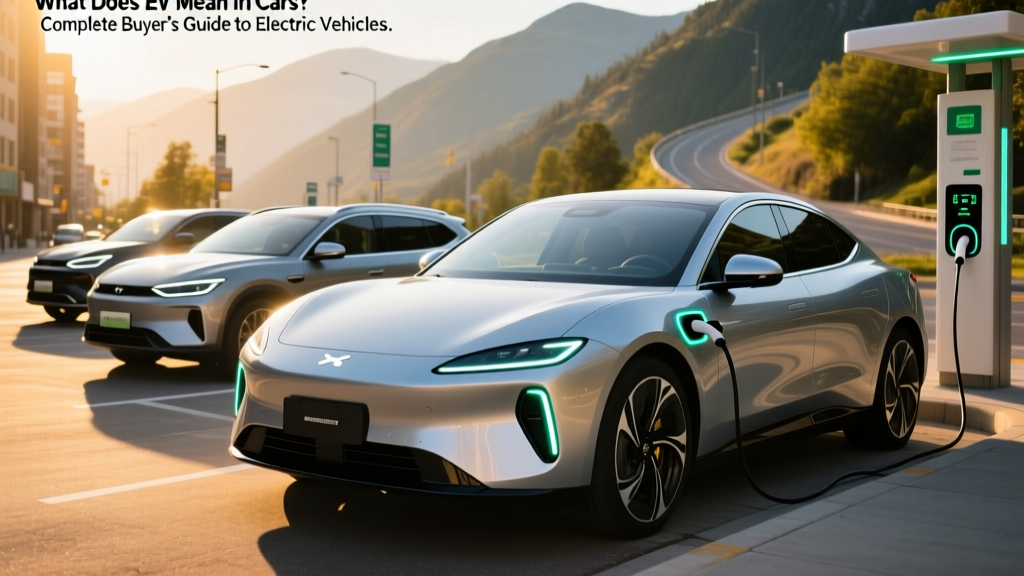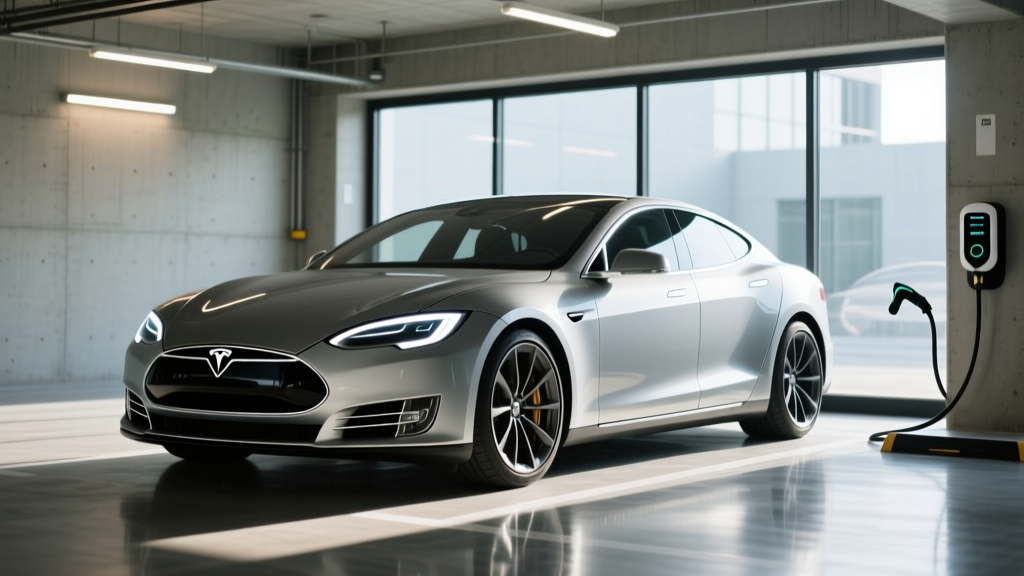
If you've been researching electric vehicles, you've likely encountered the acronym BEV and wondered about the BEV car meaning in practical terms. BEV stands for Battery Electric Vehicle — a car powered exclusively by an onboard battery pack and electric motor(s), with zero internal combustion components, no gas tank, and no tailpipe emissions. Unlike hybrids (HEVs) or plug-in hybrids (PHEVs), a BEV relies entirely on grid electricity stored in its battery.
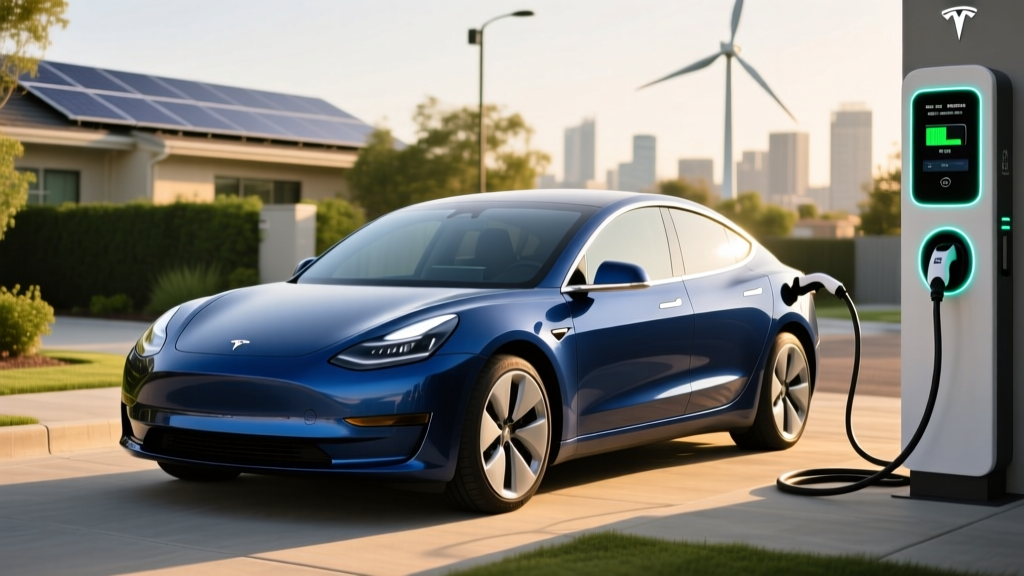
But knowing the definition is only the starting point. What matters to buyers is how a BEV actually performs in daily life: real-world range, charging speed, ownership costs, and whether it fits your driving patterns. To make the BEV car meaning tangible, we're putting the 2026 Tesla Model 3 — one of the most popular BEVs on the market — under a data-driven microscope.
2026 Tesla Model 3: Core BEV Specifications
| Spec | Model 3 RWD | Model 3 Long Range AWD | Model 3 Performance |
|---|---|---|---|
| EPA Range | 272 mi | 341 mi | 315 mi |
| Battery (usable) | ~60 kWh (LFP) | ~79 kWh (NMC) | ~79 kWh (NMC) |
| Drivetrain | RWD, single motor | AWD, dual motor | AWD, dual motor |
| Horsepower | 271 hp | 346 hp | 510 hp |
| 0–60 mph | 5.8 sec | 4.2 sec | 2.9 sec |
| Max DC Fast Charge | 170 kW | 250 kW | 250 kW |
| 10–80% DCFC Time | ~25 min | ~18 min | ~18 min |
| Level 2 Home Charge | 11.5 kW (~44 mi/hr) | 11.5 kW (~44 mi/hr) | 11.5 kW (~44 mi/hr) |
| Efficiency (MPGe) | 132 MPGe combined | 125 MPGe combined | 118 MPGe combined |
| Base MSRP | $38,990 | $45,990 | $52,990 |
Source: EPA fueleconomy.gov, Tesla specifications (2026 model year).
BEV Car Meaning in Practice: Real-World Range
Real-World Range vs. EPA Sticker
Model 3 Long Range AWD: EPA 341 miles
- City/commute driving: ~310–330 miles (regenerative braking recovers energy in stop-and-go traffic)
- Highway (70–75 mph sustained): ~270–295 miles (aerodynamic drag dominates at speed)
- Cold weather (below 32°F): ~230–270 miles (battery chemistry slows, cabin heating draws power — the Model 3's heat pump helps mitigate this significantly vs. resistive heaters)
Model 3 RWD: EPA 272 miles → expect ~220–240 mi highway, ~185–210 mi in freezing conditions.
The BEV car meaning becomes concrete when you map range to your actual routes. A 341-mile EPA rating doesn't mean you'll drive 341 miles on a road trip without stopping. Sustained highway speeds, elevation changes, headwinds, and HVAC use all reduce range. Tesla's navigation system accounts for these variables and routes you through Superchargers automatically, which is one of the strongest practical advantages of the BEV ecosystem in 2026.
For context, the average American drives ~37 miles per day according to FHWA data. Even the RWD Model 3 covers nearly a full week of commuting before needing a charge — making daily BEV ownership effortless for anyone with home charging access.
Charging Speed: DC Fast, Level 2, and Level 1
Charging speed is where the BEV car meaning diverges most sharply from gas-car ownership. You need to understand three charging tiers:
| Charging Level | Power (kW) | Miles Added/Hour | Typical Use Case |
|---|---|---|---|
| Level 1 (120V outlet) | ~1.4 kW | ~4–5 mi/hr | Emergency/top-off only |
| Level 2 (240V home/public) | 7.7–11.5 kW | ~30–44 mi/hr | Daily home charging, overnight |
| DC Fast Charge (Supercharger/EA) | 150–250 kW | ~500–1,000 mi/hr (peak) | Road trips, rapid top-ups |
DC Fast Charging Reality: The Charge Curve
The Model 3 Long Range peaks at 250 kW on a V3/V4 Tesla Supercharger, but that peak is not sustained. Here's what the charge curve actually looks like:
- 10–30% SoC: Peak ~250 kW (fastest charging phase)
- 30–60% SoC: Tapers to ~150–180 kW
- 60–80% SoC: Further taper to ~90–110 kW
- 80–100% SoC: Drops sharply to ~20–40 kW (charging above 80% is slow — plan to charge to 80% on road trips)
The 10–80% charge takes approximately 18 minutes for the Long Range and Performance trims. The RWD trim with its LFP battery peaks at 170 kW, taking roughly 25 minutes for the same 10–80% window. Tesla recommends charging LFP batteries to 100% regularly (unlike NMC, which prefers an 80% daily limit for longevity).
Home Level 2 Charging
With a Tesla Wall Connector on a 60A circuit, the Model 3 charges at 11.5 kW, adding roughly 44 miles of range per hour. A full charge from 10% to 100% takes about 7–9 hours depending on trim — ideal for overnight charging. Installation costs for a Level 2 home setup typically range from $500 to $2,000 depending on panel capacity and conduit run length (hire a licensed electrician for a site-specific quote).
Pricing, Tax Credits, and Total Cost
| Trim | Base MSRP | Potential §30D Credit | Effective Price (if eligible) |
|---|---|---|---|
| Model 3 RWD | $38,990 | Up to $7,500 | ~$31,490* |
| Model 3 Long Range AWD | $45,990 | Up to $7,500 | ~$38,490* |
| Model 3 Performance | $52,990 | Up to $7,500 | ~$45,490* |
*Effective price assumes full §30D eligibility. The IRS §30D federal tax credit has strict requirements that change based on battery sourcing and critical minerals rules. As of 2026:
- MSRP cap: Sedans must be under $55,000 (all Model 3 trims qualify on MSRP)
- Buyer income cap: Modified AGI ≤ $150,000 (single) / $300,000 (joint)
- Battery sourcing: Critical minerals and battery component requirements phase in annually — the credit splits into two halves ($3,750 each), and partial eligibility is common depending on supply chain compliance
- Point-of-sale transfer: As of 2024+, eligible buyers can transfer the credit to the dealer for an upfront price reduction rather than waiting for a tax refund
Consult a tax professional before relying on credit eligibility — the battery sourcing rules in particular shift year to year, and Tesla publishes current credit status on their website.
Interior, Cargo, Tech, and Drawbacks
Passenger and Cargo Space
- Front legroom: 42.7 inches
- Rear legroom: 35.2 inches (adequate for adults on shorter trips; taller passengers may find it snug vs. a Model Y)
- Trunk (rear): 23 cu ft
- Frunk (front trunk): 3.1 cu ft (good for charging cables, small bags)
- Total cargo: ~26 cu ft (less than the Model Y's 30+ cu ft, but competitive with compact sedans like the BMW 3 Series)
Standout Tech Features
- 15.4-inch center touchscreen: Controls virtually all vehicle functions — HVAC, mirrors, glovebox — which is polarizing. No physical instrument cluster.
- Tesla Supercharger network: 60,000+ global connectors; in North America, the NACS connector is now the industry standard adopted by Ford, GM, Rivian, Hyundai, and others.
- Autopilot (standard): SAE Level 2 driver assistance — adaptive cruise, lane centering, automatic emergency braking. The driver must remain attentive and keep hands on the wheel.
- Full Self-Driving (Supervised): Optional $8,000 add-on. Despite the name, this remains SAE Level 2 — it handles more complex scenarios but requires constant supervision. It is not autonomous driving.
- Over-the-air updates: Tesla regularly pushes software improvements that add features, refine efficiency, and update the UI post-purchase.
- Heat pump: Standard on all trims — significantly reduces cold-weather range loss compared to resistive cabin heaters.
⚠️ Notable Drawbacks
- Minimalist interior isn't for everyone: No physical buttons, stalks, or instrument cluster. Turn signals are on the steering wheel (no stalk), and gear selection is via the touchscreen.
- Rear visibility: The rear window is small; rely on the backup camera.
- Ride firmness: The "Highland" refresh improved ride quality over pre-2024 models, but it's still firmer than a Hyundai Ioniq 6 or BMW i4.
- Insurance costs: Tesla insurance premiums tend to run 15–30% higher than comparable sedans due to repair costs and parts pricing.
- No Apple CarPlay/Android Auto: Tesla uses its proprietary infotainment system exclusively.
Pros and Cons: At a Glance
✅ Pros
- Class-leading Supercharger network access (NACS standard)
- Excellent efficiency: 125–132 MPGe combined
- Strong real-world range on Long Range trim (270+ mi highway)
- 250 kW peak DC fast charging (18 min 10–80%)
- OTA updates keep the car improving post-purchase
- Heat pump standard — better cold-weather performance
- Competitive pricing after potential §30D credit
❌ Cons
- Touchscreen-only controls require a learning curve
- No Apple CarPlay or Android Auto
- Rear seat space is modest for the segment
- Insurance premiums are above average
- FSD (Supervised) is expensive and still Level 2
- RWD trim's 170 kW peak charge rate trails competitors
Who Should Buy the Model 3 (and Who Shouldn't)?
Choose the Model 3 if:
- You want access to the most reliable DC fast-charging network in North America
- You commute 30–80 miles daily and can charge at home overnight
- You value software-driven features, OTA updates, and a minimalist cabin
- You take road trips 3–6 times a year and want straightforward route planning with Supercharger stops
- Performance matters — the Performance trim's 2.9-second 0–60 rivals sports cars at a fraction of the cost
Look elsewhere if:
- You need maximum rear-seat space or cargo volume (consider the Model Y, Hyundai Ioniq 5, or Kia EV6)
- You prefer physical buttons, a traditional instrument cluster, or Apple CarPlay
- You lack home charging access and your area has sparse public charging infrastructure
- You need to tow (the Model 3 is not rated for towing; the Model Y handles up to 3,500 lbs)
How the Model 3 Compares to Key BEV Competitors
| Spec | Tesla Model 3 LR AWD | Hyundai Ioniq 6 SE LR | BMW i4 eDrive40 |
|---|---|---|---|
| EPA Range | 341 mi | 342 mi | 301 mi |
| Battery | ~79 kWh (NMC) | 77.4 kWh (NMC) | 81.5 kWh (NMC) |
| Max DC Charge | 250 kW | 235 kW | 200 kW |
| 0–60 mph | 4.2 sec | 5.1 sec | 5.5 sec |
| Base MSRP | $45,990 | $42,715 | $57,900 |
| Charging Network | Supercharger (NACS) | CCS → NACS adapter | CCS → NACS adapter |
The Ioniq 6 matches or edges the Model 3 on EPA range and undercuts it on price, but its charging network access (via CCS or adapter) is less seamless than Tesla's native Supercharger integration. The BMW i4 offers a more traditional luxury interior with physical controls but at a significant price premium and lower range.
Warranty and Battery Longevity
- Basic vehicle warranty: 4 years / 50,000 miles
- Battery and drive unit warranty: 8 years / 100,000 miles (RWD) or 8 years / 120,000 miles (Long Range & Performance)
- Capacity retention threshold: Tesla warrants a minimum of 70% battery capacity retention during the warranty period
Real-world degradation data from Tesla's fleet shows most Model 3 batteries retain approximately 85–90% capacity after 100,000 miles. LFP batteries (in the RWD trim) tend to have longer cycle life but lower energy density than NMC. For a deeper look at battery chemistry trade-offs, see our battery technology guide or the NHTSA safety ratings for the Model 3 (5-star overall).
Frequently Asked Questions
What exactly does BEV car mean vs. PHEV or HEV?
A BEV (Battery Electric Vehicle) runs 100% on electricity stored in a battery — no gas engine at all. A PHEV (Plug-in Hybrid) has both a battery/electric motor and a gas engine, offering 20–40 miles of electric-only range before the engine kicks in. An HEV (standard hybrid like a Prius) uses a small battery charged by regenerative braking and the gas engine — you never plug it in. The BEV car meaning is simplest: electricity is the only fuel.
What is the real-world range of the 2026 Tesla Model 3?
The Long Range AWD achieves an EPA-estimated 341 miles, but expect ~270–295 miles on sustained highway drives and ~230–270 miles in freezing weather. The RWD trim (EPA 272 mi) delivers ~220–240 highway miles. Preconditioning the battery before fast charging or hard driving helps preserve range.
How fast does the Model 3 charge at home and on road trips?
At home on a Level 2 Wall Connector (11.5 kW), you add ~44 miles per hour — a full overnight charge. On a Tesla V3/V4 Supercharger, the Long Range and Performance trims peak at 250 kW and charge from 10–80% in about 18 minutes. The RWD peaks at 170 kW, taking ~25 minutes for 10–80%.
Does the 2026 Model 3 qualify for the $7,500 federal EV tax credit?
Potentially — but eligibility depends on your income (≤$150K single / ≤$300K joint), the vehicle's MSRP (all Model 3 trims fall under the $55K sedan cap), and battery sourcing/critical minerals compliance, which shifts annually. Check the IRS §30D page and Tesla's current credit status before purchasing. The credit can now be transferred at point of sale for an immediate price reduction.
Is the Tesla Model 3 worth buying over the Hyundai Ioniq 6 or BMW i4?
The Model 3 wins on charging network access (Supercharger), software ecosystem, and performance-per-dollar. The Ioniq 6 offers comparable range at a lower price with a more conventional interior layout. The BMW i4 provides a premium cabin and physical controls but costs significantly more. If Supercharger reliability and software integration matter most, the Model 3 remains the strongest BEV sedan choice in 2026.
What are the biggest pros and cons of owning a BEV like the Model 3?
Pros: Near-zero "fuel" cost (electricity at $0.12/kWh = ~$4.50 for 270 miles vs. ~$35 in gas), minimal maintenance (no oil changes, fewer moving parts), instant torque, home charging convenience, and access to HOV lanes in many states. Cons: Higher upfront cost (mitigated by credits), charging on road trips takes planning, insurance premiums run higher, and battery replacement out of warranty costs $12,000–$16,000 if needed (rare within the first 150K+ miles).
Understanding the BEV car meaning goes well beyond the acronym. It's about a fundamentally different ownership model: plugging in at home instead of visiting gas stations, planning road trips around charging infrastructure, and benefiting from lower per-mile energy costs. The 2026 Tesla Model 3 remains one of the most capable and accessible entry points into BEV ownership — provided you have home charging access and the minimalist tech-forward approach fits your preferences.