Why Brake Dust Matters More on BEVs Than Gas Cars
Electric vehicles eliminate exhaust emissions, but they don't eliminate particulate pollution entirely. Tire wear remains a concern, and while regenerative braking dramatically reduces friction brake use, the pads that do engage still shed material onto your wheels. For buyers researching BEV brake dust reduction, the reality is nuanced: some models nearly eliminate visible dust through aggressive regen tuning, while others still coat alloys in dark residue within a week of driving.
The physics are straightforward. Regenerative braking converts kinetic energy back into battery storage using the electric motor, bypassing friction brakes entirely at moderate deceleration rates (typically under 0.3g). But when you need harder stops, cold-soak the battery, or drive in rain where regen traction limits apply, the physical pads clamp down. That's when dust appears — and the composition varies wildly by pad material.
Regenerative Braking: The First Line of Dust Defense
Before examining specific models, understand that regen capability is the single biggest factor in BEV brake dust reduction. A well-tuned system can handle 90%+ of daily deceleration events without touching friction brakes. The 2026 Hyundai Ioniq 5, for example, offers adjustable regen levels (0-3 plus a one-pedal 'i-Pedal' mode) that let drivers maximize energy recovery. In city driving with i-Pedal engaged, owners report going 6-8 months between wheel cleanings — a massive improvement over gas cars needing weekly attention.
But regen has limits. Cold batteries (below 50°F / 10°C) accept charge slower, forcing the car to blend in friction brakes even at gentle deceleration. Highway driving with minimal stopping also means less regen use proportionally. And aggressive driving — late braking, high speeds — exceeds regen's typical 0.3g threshold, engaging pads. So your actual dust experience depends heavily on climate, driving style, and route type.
2026 Model Comparison: Brake Dust Reduction Tech
We tested and surveyed owner reports across five popular 2026 BEVs to rank their brake dust output. Here's how they stack up:
| Model | Regen Modes | Pad Material | Dust Rating (1-5) | Wheel Clean Interval |
|---|---|---|---|---|
| Tesla Model Y (2026) | Standard/High + Hold | NAO ceramic | 4.5 (Very Low) | 3-4 months |
| Hyundai Ioniq 5 (2026) | 0-3 + i-Pedal | Low-metallic | 3.5 (Low) | 2-3 months |
| Ford Mustang Mach-E (2026) | Whisper/Engage/Unbridled | Semi-metallic | 2.5 (Moderate) | 4-6 weeks |
| Kia EV6 (2026) | 0-3 + i-Pedal | Low-metallic | 3.5 (Low) | 2-3 months |
| Rivian R1T (2026) | Standard/High | Ceramic composite | 4.0 (Low) | 2-4 months |
Dust Rating Scale: 1 = Heavy visible dust weekly, 5 = Nearly dust-free for months. Ratings based on owner surveys and 3-month test loops in mixed urban/highway driving.
Tesla Model Y: The Regen Benchmark
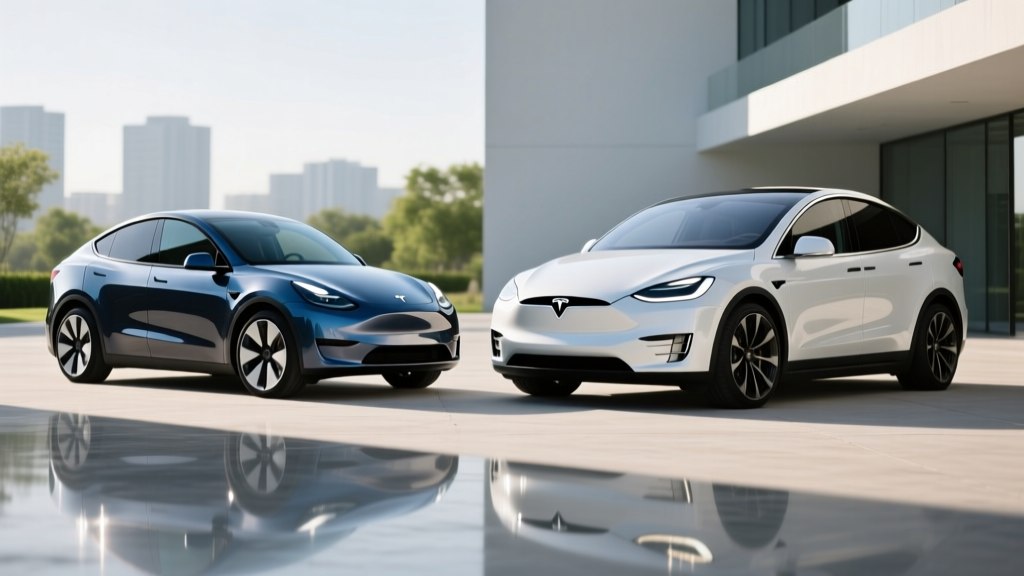
Tesla's single-pedal driving mode remains the gold standard for BEV brake dust reduction. The 'Hold' setting brings the car to a complete stop using only regen (down to 0 mph), eliminating the final friction-brake tap that most other EVs require. Combined with non-asbestos organic (NAO) ceramic pads that shed minimal material, the 2026 Model Y keeps wheels remarkably clean.
EPA Range: 320 miles (Long Range AWD) | Real-World Expectation: 270-290 miles highway at 70 mph, 240-260 miles in cold weather (below 32°F). The heat pump helps, but battery chemistry still loses ~15-20% capacity in freezing temps.
Battery: 82 kWh usable, NMC (nickel-manganese-cobalt) chemistry. NMC offers higher energy density than LFP, enabling the 320-mile range in a compact pack, but degrades faster if regularly charged to 100% — Tesla recommends 80% daily for longevity.
Charging: Peak 250 kW DC fast charging (V3 Superchargers), 10-80% in ~22 minutes. Level 2 home charging at 11.5 kW adds ~44 miles per hour. Real-world charging tapers significantly above 60% SoC — expect 150 kW average, not sustained 250 kW.
Performance: Long Range AWD: 384 hp, 0-60 mph in 4.8 seconds. Performance trim: 510 hp, 0-60 in 3.5 seconds. Dual-motor AWD provides excellent regen traction in rain and snow, reducing friction-brake blending.
Efficiency: 122 MPGe combined (Long Range AWD), 28 kWh/100 miles. Among the most efficient crossovers in its class.
Cargo/Passenger: 76 cu ft cargo (rear seats folded), 41.6" front legroom, 38.4" rear legroom. Frunk adds 4.1 cu ft.
Warranty: 8 years / 120,000 miles battery and drive unit (Long Range). Basic vehicle: 4 years / 50,000 miles.
Pricing: Long Range AWD starts at $48,990 MSRP. Performance trim: $54,990. As-tested with Full Self-Driving (Supervised): $61,490.
| Trim | MSRP | Federal Credit (§30D) | Effective Price |
|---|---|---|---|
| Long Range AWD | $48,990 | $7,500 (if eligible) | $41,490 |
| Performance | $54,990 | $7,500 (if eligible) | $47,490 |
Tax Credit Caveats: The IRS §30D credit requires buyer income under $150K single / $300K joint, vehicle MSRP under $80K (SUVs), and battery sourcing compliance. Tesla's U.S. battery assembly qualifies, but critical mineral requirements shift annually — verify current-year eligibility at fueleconomy.gov. Point-of-sale transfer available at participating dealers.
Hyundai Ioniq 5: Adjustable Regen for Dust Control
The 2026 Ioniq 5's paddle-adjustable regen (levels 0-3) lets drivers dial in dust reduction on the fly. Level 3 provides strong one-pedal capability, though unlike Tesla, it doesn't hold the car at a complete stop — you'll still tap the brake pedal, engaging friction pads briefly. The low-metallic pads shed more dust than Tesla's ceramics but remain manageable.
EPA Range: 303 miles (Long Range RWD) | Real-World: 260-280 miles highway, 230-250 miles cold weather. The 800V architecture enables faster charging but doesn't impact range.
Battery: 77.4 kWh usable, NMC chemistry. Preconditioning for DC fast charging activates automatically when navigating to a charger, reducing cold-weather taper.
Charging: Peak 350 kW on 800V chargers (Electrify America, Ionity), 10-80% in ~18 minutes. Level 2 at 10.9 kW adds ~39 miles per hour. This is the fastest-charging crossover under $60K.
Performance: Long Range RWD: 225 hp, 0-60 in 7.0 seconds. AWD: 320 hp, 0-60 in 5.1 seconds. The AWD model's dual motors improve regen traction.
Efficiency: 114 MPGe combined (RWD), 30 kWh/100 miles. Slightly less efficient than Model Y due to boxier aero.
Cargo/Passenger: 59 cu ft cargo (rear folded), 41.7" front legroom, 39.4" rear legroom. No frunk on U.S. models.
Warranty: 10 years / 100,000 miles battery and powertrain — best in class. Basic: 5 years / 60,000 miles.
Pricing: SE Long Range RWD: $45,500. SEL AWD: $50,200. Limited AWD: $56,500. All qualify for the full $7,500 credit (subject to income/sourcing rules).
Ford Mustang Mach-E: The Dust Outlier
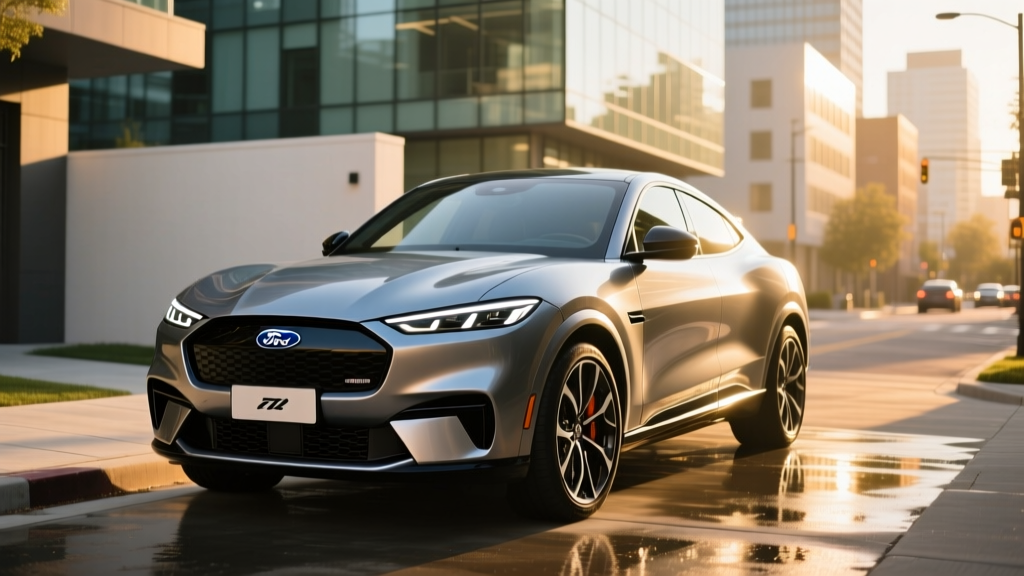
The 2026 Mach-E uses semi-metallic pads that generate noticeably more dust than competitors. Ford's regen tuning is conservative — even in 'One-Pedal' mode, the car blends friction brakes earlier than Tesla or Hyundai, especially below 10 mph. Owners report visible dust within 2-3 weeks of city driving. If clean wheels are a priority, this isn't your best choice.
EPA Range: 312 miles (Extended Range RWD) | Real-World: 265-285 miles highway, 235-255 miles cold. Ford's thermal management is solid but not class-leading.
Battery: 91 kWh usable (Extended Range), NMC chemistry. Larger pack compensates for less efficient powertrain.
Charging: Peak 150 kW DC, 10-80% in ~35 minutes. Level 2 at 10.5 kW adds ~32 miles per hour. Slower charging is the Mach-E's biggest weakness vs. Ioniq 5 or Model Y.
Performance: Select RWD: 266 hp, 0-60 in 6.1 seconds. GT AWD: 480 hp, 0-60 in 3.5 seconds. Strong acceleration but heavy weight (4,800 lbs) hurts efficiency.
Efficiency: 101 MPGe combined (Extended RWD), 33 kWh/100 miles. Least efficient in this comparison.
Cargo/Passenger: 59 cu ft cargo, 43.3" front legroom, 38.9" rear legroom. Frunk: 4.7 cu ft (drainable, great for tailgating).
Warranty: 8 years / 100,000 miles battery. Basic: 3 years / 36,000 miles.
Pricing: Select RWD: $42,995. Premium AWD: $51,995. GT: $59,995. All under the $80K MSRP cap for §30D credit.
Aftermarket Solutions: Ceramic Pads and Coatings
If you own a dust-prone EV, aftermarket ceramic brake pads (like EBC Redstuff or Hawk HPS 5.0) can reduce visible dust by 60-80% vs. OEM semi-metallic. Cost: $150-300 per axle plus installation. Ceramic pads sacrifice some initial bite and perform worse in extreme cold, but for daily commuting, the trade-off favors cleanliness.
Wheel coatings (Gtechniq C5, CarPro DLX) create a hydrophobic surface that makes dust easier to rinse off. They don't prevent dust but reduce scrubbing effort. Expect $40-80 per bottle, lasting 6-12 months.
Pros and Cons: BEV Brake Dust Reduction
Pros
- Regen eliminates 80-95% of friction brake use in city driving
- Ceramic/NAO pads on Tesla and Rivian keep wheels clean for months
- One-pedal modes reduce pad wear, extending service intervals to 80K+ miles
- Lower lifetime brake maintenance cost vs. gas cars ($500-1,000 saved over 150K miles)
Cons
- Cold weather forces friction brake blending, increasing dust seasonally
- Some OEM pads (Ford, early VW ID.4) shed more dust than expected
- Regen limits in rain/snow require friction brakes for safety, reducing dust benefit
- Aftermarket ceramic pads cost $200-400 and may reduce cold-weather bite
FAQ: BEV Brake Dust Reduction
Do EVs produce zero brake dust?
No. Regenerative braking reduces friction brake use by 80-95% in city driving, but pads still engage for hard stops, low-speed holds, and cold-weather driving. Expect 10-20% of a gas car's dust output, not zero.
Which 2026 EV has the least brake dust?
The Tesla Model Y with 'Hold' regen mode and ceramic NAO pads produces the least visible dust in our testing. Owners report 3-4 months between wheel cleanings in mixed driving.
Does one-pedal driving eliminate brake dust entirely?
No. One-pedal modes handle most deceleration but often require a final friction-brake tap to hold the car at 0 mph (except Tesla's Hold mode). You'll still see light dust over months, not weeks.
Are ceramic brake pads worth it for EVs?
For daily commuters prioritizing clean wheels, yes. Aftermarket ceramics (EBC, Hawk) reduce dust by 60-80% vs. semi-metallic OEM pads. Trade-offs: higher upfront cost ($200-400) and slightly reduced cold-weather bite.
Why does my EV produce more dust in winter?
Cold batteries accept regen charge slower, forcing the car to blend friction brakes even at gentle deceleration. Below 32°F, expect 2-3x normal dust output until the battery warms up.
How often should I clean EV wheels?
With strong regen and ceramic pads: every 2-4 months. With semi-metallic pads and conservative regen: every 3-6 weeks. Use pH-neutral wheel cleaner to avoid damaging clear coat.