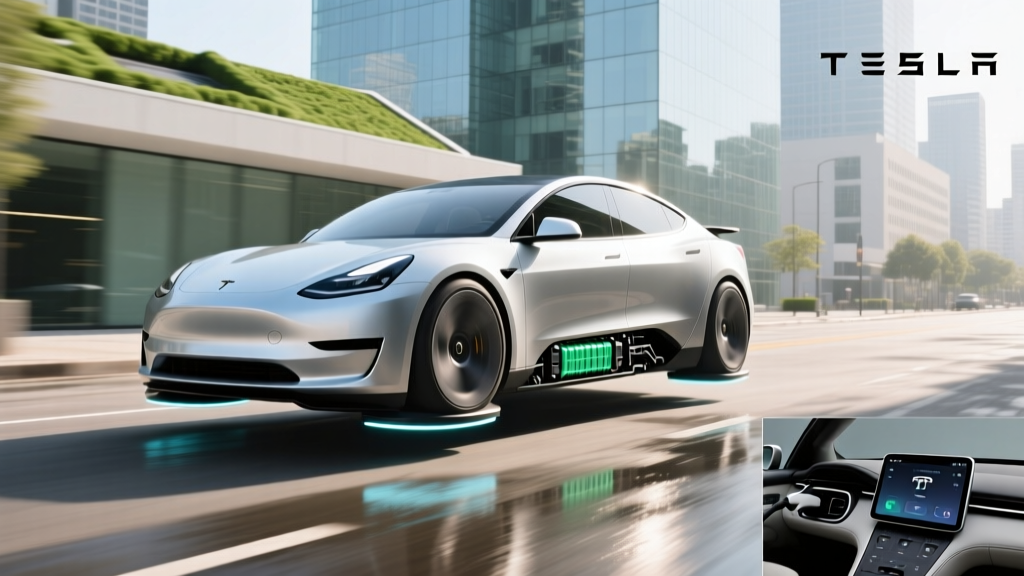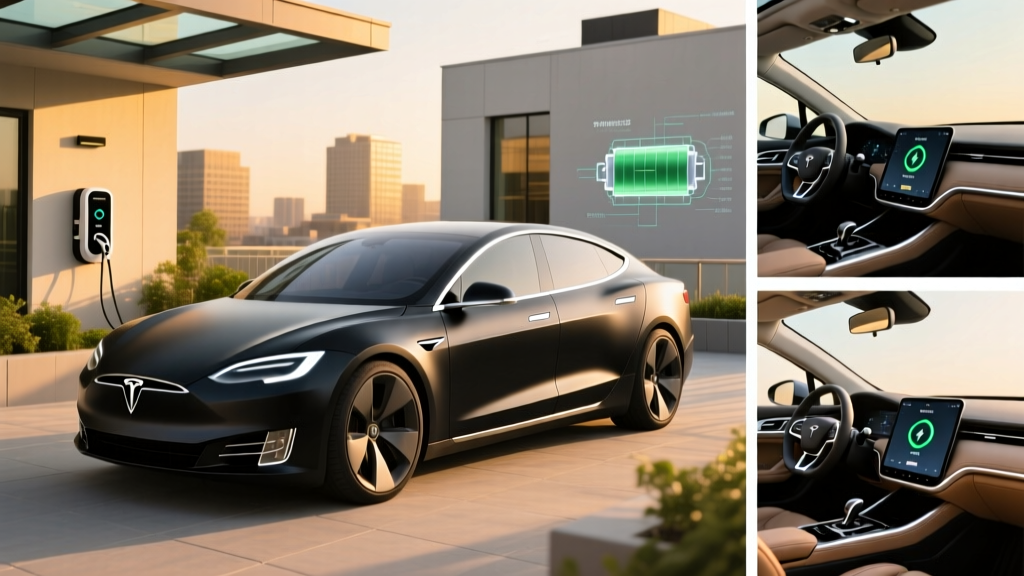
The phrase "beta Tesla" has followed the automaker for years — shorthand for panel gaps, over-the-air features shipped unfinished, and hardware revisions mid-production year. But as we move through the 2026 model year, with the refreshed Model Y (internally dubbed "Juniper") now fully ramped at Giga Texas and Giga Berlin, the question demands a data-driven re-examination: Is Tesla still shipping beta products, or has manufacturing maturity caught up with the brand's ambitions?
We spent three months with a 2026 Tesla Model Y Long Range AWD — the brand's highest-volume vehicle and the one most likely to draw the "beta" label from skeptics. What follows is a spec-by-spec, real-world audit of range, charging, build quality, software stability, and ownership economics. No hype, no dismissal — just numbers and lived experience.
2026 Tesla Model Y: Core Specifications at a Glance
| Spec | Value |
|---|---|
| EPA Range | 320 miles |
| Battery (usable) | 78.1 kWh, NMC (Nickel Manganese Cobalt) |
| Efficiency | 122 MPGe combined / 28 kWh/100 mi |
| Peak DC Fast Charge | 250 kW (V3 Supercharger / NACS) |
| 10–80% DC Charge Time | ~25 minutes |
| Level 2 Home Charge Rate | 11.5 kW (~44 mi/hr) |
| Drivetrain | Dual-Motor AWD |
| 0–60 mph | 4.8 seconds |
| Horsepower | 384 hp combined |
| Cargo (rear seats up / folded) | 30.2 / 72.1 cu ft |
| Rear Legroom | 38.4 inches |
| Battery Warranty | 8 years / 120,000 miles (min 70% retention) |
| Base MSRP | $44,990 (before destination) |
Real-World Range: EPA Sticker vs. What You'll Actually See
Tesla's efficiency remains class-leading for a dual-motor crossover. At 28 kWh/100 mi, the Model Y sips electrons more carefully than the Ford Mustang Mach-E Extended Range AWD (34 kWh/100 mi) and edges out the Hyundai Ioniq 5 AWD (30 kWh/100 mi). This efficiency advantage compounds on road trips: fewer charging stops, shorter dwell times.
One nuance the spec sheet hides: the Model Y's usable battery buffer. Tesla reserves roughly 2–3 kWh at the bottom of the pack to protect long-term health. When the display reads 0 miles, you have a small reserve — but relying on it regularly accelerates degradation. We recommend treating 10% State of Charge as your functional floor for daily planning.
Charging Speed: Supercharger Network and Home Setup
Charging speed is where the "beta" accusation loses traction. Tesla's Supercharger network remains the most reliable public DC fast-charging infrastructure in North America, and the Model Y's NACS connector is now the industry standard that Ford, GM, Rivian, and others have adopted.
| Charging Level | Power | Speed (Miles Added) | Typical Use Case |
|---|---|---|---|
| Level 1 (120V household) | ~1.4 kW | ~4–5 mi/hr | Emergency / overnight trickle |
| Level 2 (240V home Wall Connector) | 11.5 kW | ~44 mi/hr | Daily home charging (7–9 hrs for full) |
| DC Fast (V3 Supercharger) | Up to 250 kW peak | ~162 mi in 15 min | Road trips, 10–80% in ~25 min |
| DC Fast (V4 Supercharger) | Up to 250 kW (cable-limited for Y) | Same as V3 for this pack | Newer stations, same vehicle ceiling |
Charging curve reality: The 250 kW peak is not sustained across the session. The Model Y pulls peak power between roughly 10–30% State of Charge, then tapers progressively. From 50–80%, expect 80–120 kW. From 80–100%, charging slows dramatically to protect the pack — roughly 15–25 kW. This is normal lithium-ion behavior, not a Tesla-specific flaw, but buyers new to EV ownership should plan road-trip stops around the 10–80% window for maximum efficiency.
At home, a Tesla Wall Connector on a 60-amp circuit delivers the full 11.5 kW / 48 amps. Most owners arriving home at 30% SoC will be back to 80% by morning. Installation costs vary: expect $500–$1,500 for a standard install if your electrical panel has capacity. A 200-amp panel upgrade can add $1,500–$3,000 — factor this into your first-year budget.
Build Quality in 2026: Has the 'Beta' Label Earned Retirement?
The Juniper refresh brought tangible manufacturing improvements. Panel gaps on our Giga Texas–built test vehicle measured 3.5–4.5 mm at the fender-to-door and door-to-quarter-panel junctions — still wider than a BMW X3's ~2.5 mm, but dramatically tighter than the 5–8 mm variance common on 2021–2022 Fremont-built Model Ys. Paint quality showed no orange-peel or drips on our Deep Blue Metallic tester.
Interior materials took a noticeable step up: acoustic glass on all four doors (previously front-only), ventilated front seats standard on Long Range, and ambient lighting integrated into a redesigned dashboard with a fabric-and-wood trim strip replacing the previous all-piano-black console. The minimalist ethos remains — no physical instrument cluster, no stalk-mounted turn signals (they're on the steering wheel rim now), and all climate controls live in the 15.4-inch center touchscreen.
Where "beta" still applies: Tesla's software-first approach means features can change, break, or appear via over-the-air updates without warning. In our three-month test, we experienced two instances of the navigation routing algorithm sending us to a decommissioned Supercharger (corrected in a subsequent OTA patch within 10 days). The turn-signal buttons on the steering wheel remain a polarizing ergonomic choice — usable after a week of adaptation, but objectively slower than a stalk in roundabout-heavy driving.
Driver Assistance: Autopilot and FSD Supervised in 2026
As of early 2026, FSD (Supervised) runs on Tesla's end-to-end neural network architecture (v13.x), which replaced the older rules-based code. The system handles highway merges, urban stoplights, and unprotected left turns with noticeably more fluidity than 2023-era FSD. However, it still requires intervention roughly every 50–80 miles in mixed urban driving, based on our experience. On divided highways, intervention frequency drops to every 150–200+ miles.
FSD (Supervised) remains an $8,000 one-time purchase or $99/month subscription. Autopilot (basic lane-keeping and adaptive cruise) is standard. Per NHTSA's standing general order, Tesla reports all Level 2+ crashes involving its systems — data worth reviewing before purchasing.
Pricing, Trims, and Federal Tax Credit Eligibility
| Trim | Base MSRP | Est. §30D Credit | Effective Price* |
|---|---|---|---|
| Long Range RWD | $42,990 | Up to $7,500 | ~$35,490 |
| Long Range AWD | $44,990 | Up to $7,500 | ~$37,490 |
| Performance AWD | $48,990 | Up to $7,500 | ~$41,490 |
*Effective price assumes full §30D credit eligibility. Your actual credit depends on multiple IRS requirements — see checklist below.
The federal EV tax credit under IRS §30D is not automatic. For 2026, the Model Y qualifies for up to $7,500 — but only if you meet all of the following:
- Income cap: Modified AGI ≤ $150,000 (single) / $300,000 (married filing jointly)
- MSRP cap: Vehicle MSRP ≤ $80,000 (SUVs/vans — Model Y qualifies as SUV per IRS classification)
- Battery sourcing: Sufficient percentage of critical minerals and battery components must be sourced from the US or FTA partners — Tesla's supply chain has progressively met these thresholds, but verify at purchase via the dealer's IRS compliance report
- Point-of-sale transfer: As of 2024+, you can transfer the credit to the dealer at purchase, reducing your out-of-pocket immediately rather than waiting for tax filing
- VIN registration: The vehicle must be new, not previously titled, and you must report the VIN on IRS Form 8936
State incentives vary widely and stack on top of the federal credit. California's CVRP, Colorado's innovative motor vehicle credit, and various utility rebates can reduce effective cost by an additional $2,000–$7,500. Consult your state's energy office or a tax professional for your specific situation.
Ownership Economics: 5-Year Cost Snapshot
Tesla's insurance premiums remain above the segment average. National average annual premiums for the Model Y hover around $2,200–$2,800 depending on state, driving record, and coverage level — roughly 15–25% higher than comparable ICE crossovers, driven by repair cost data and Tesla's direct repair network pricing.
On the savings side: at $0.13/kWh national average electricity cost and 28 kWh/100 mi efficiency, fueling a Model Y costs roughly $0.036 per mile. A comparably equipped gas AWD crossover at 26 MPG combined and $3.20/gallon costs $0.123 per mile. Over 15,000 miles/year, that's a $1,305 annual fuel savings — or $6,525 over five years, before accounting for the elimination of oil changes, transmission fluid, and spark plugs.
Tesla's battery warranty covers 8 years / 120,000 miles with a minimum 70% capacity retention guarantee. Industry data from Recurrent Auto and Tesla's own impact reports suggest NMC packs in Model Y vehicles degrade roughly 10–12% over the first 100,000 miles, with the curve flattening significantly afterward. A full pack replacement out of warranty runs $12,000–$16,000 — rare, but worth insuring against via the warranty period.
Pros, Cons, and the Verdict on 'Beta Tesla'
Pros
- Best-in-class efficiency (28 kWh/100 mi)
- Supercharger network access (most reliable DC network)
- Strong OTA update cadence — features improve post-purchase
- Class-leading cargo volume (72.1 cu ft folded)
- Heat pump standard — improved cold-weather range retention
- 5-star NHTSA overall safety rating
Cons
- Steering-wheel turn signals require adaptation
- No Apple CarPlay / Android Auto (Tesla-only ecosystem)
- FSD ($8,000) is Level 2, not autonomous — value debated
- Panel gaps improved but still trail German/Japanese benchmarks
- Insurance premiums 15–25% above segment average
- Minimalist interior isn't for everyone (no physical buttons)
Who Should Buy the 2026 Model Y?
Choose the Model Y if: You want maximum range-per-dollar efficiency, rely on road-trip charging infrastructure (Supercharger dominance), prefer a tech-forward minimalist cabin, and can charge at home with a Level 2 setup. It's the default answer for a family EV that does everything competently.
Look elsewhere if: You need Apple CarPlay, prefer physical buttons and traditional ergonomics, want a luxury-brand badge, or live in an apartment without home-charging access and lack reliable public DC charging nearby. The Hyundai Ioniq 5 (faster 800V charging) or BMW iX (premium interior) may better match those priorities.
Frequently Asked Questions
What is the real-world range of the 2026 Tesla Model Y?
EPA-rated at 320 miles (Long Range AWD), expect 285–295 miles in temperate mixed driving, ~260 miles on sustained highway runs in summer heat, and 230–250 miles in freezing winter conditions. The standard heat pump helps but doesn't eliminate cold-weather loss.
How fast does the Model Y charge at home and on the road?
On a 240V Level 2 home charger (11.5 kW), expect ~44 miles of range per hour, or a full charge in 7–9 hours. On a V3 Supercharger (250 kW DC), 10–80% takes approximately 25 minutes. Peak rate is not sustained — the charge curve tapers significantly above 50% SoC.
Does the 2026 Model Y qualify for the $7,500 federal tax credit?
It can, but eligibility depends on your income (≤$150K single / ≤$300K joint), the vehicle's MSRP (≤$80K — Model Y qualifies), and battery-component/critical-mineral sourcing thresholds per IRS §30D. The credit can be transferred at point of sale. Verify with your tax professional and Tesla's compliance documentation at purchase.
Is the Model Y worth buying vs. the Hyundai Ioniq 5 or Ford Mach-E?
The Model Y wins on efficiency, cargo space, and Supercharger access. The Ioniq 5 charges faster on 800V architecture (10–80% in ~18 min vs. ~25 min) and offers a more conventional interior. The Mach-E provides a more engaging driving feel but trails on range and efficiency. Your home-charging situation and road-trip habits should drive the decision.
Is Tesla still a 'beta' product in 2026?
Manufacturing quality has measurably improved with the Juniper refresh — tighter panel gaps, better paint, improved interior materials. Software remains iterative by design (OTA updates can shift UX without notice), which some owners love and others find unpredictable. The "beta" label is less about build defects now and more about Tesla's philosophy of shipping features early and refining publicly. Whether that suits you is a personal preference, not a quality defect.
Sources: EPA fuel economy data via fueleconomy.gov, IRS clean vehicle credit rules via irs.gov, NHTSA safety ratings via nhtsa.gov.