The Short Answer: Beta Technologies Electric Plane vs. EVs
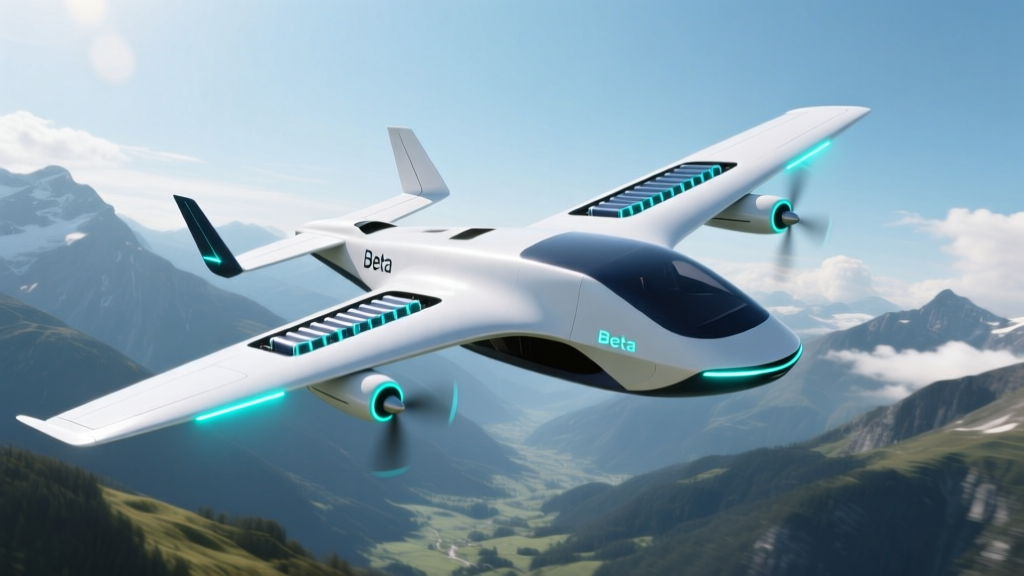
Beta Technologies, headquartered in Burlington, Vermont, manufactures the ALIA-250 — an electric aircraft designed for cargo and passenger transport with an estimated range of 250 nautical miles (~288 statute miles) and a battery system operating at roughly 800V architecture. While Beta's electric plane is not a consumer vehicle and won't appear in your driveway, its battery management, high-voltage DC fast-charging infrastructure, and thermal management strategies offer a real-time case study in where EV battery technology is heading. For EV buyers and owners in 2026, understanding Beta's approach helps contextualize why your car's 800V system charges faster, why LFP batteries are gaining ground, and what next-gen thermal management could mean for cold-weather range.
What Is Beta Technologies and the ALIA Electric Plane?
Beta Technologies is an aerospace company building fully electric aircraft and the multimodal charging infrastructure to support them. Their flagship product, the ALIA-250, is a single-engine electric airplane targeting cargo logistics, medical transport, and eventually passenger service. UPS (via its airline subsidiary) has placed orders, and the U.S. Air Force has granted the ALIA military airworthiness approval — making it the first electric aircraft to receive such certification.
The ALIA-250 is powered by a high-voltage lithium-ion battery pack. Key specifications (based on Beta's published data and FAA filings):
| Specification | ALIA-250 (Estimated/Published) |
|---|---|
| Battery Chemistry | Lithium-ion (NMC-type cells) |
| System Voltage | ~800V architecture |
| Target Range | 250 nautical miles (~288 statute miles) |
| Charge Time (DC Fast) | ~40–50 minutes to full (Beta's proprietary charger) |
| Charger Power Output | Up to 350 kW per charge pad |
| Propulsion | Single electric motor, fixed-pitch propeller |
| Certification Target | FAA Part 23 (Type Certificate pending as of 2026) |
| Intended Use | Cargo, medical organ transport, passenger (future) |
Beta also builds its own multimodal charging stations — ground-based DC fast chargers designed to serve both electric aircraft and electric ground vehicles. These chargers are already being deployed at airports in Vermont, New York, Florida, and Arkansas, and critically, they are compatible with CCS-equipped electric cars and trucks, not just aircraft.
Beta's Charging Network: A Bonus for EV Owners?
Here's where Beta's work intersects directly with EV ownership. Beta has installed CCS-compatible DC fast chargers at several of its aviation charging sites. These chargers can deliver up to 350 kW to ground vehicles — on par with the fastest public chargers from Electrify America or Ionity.
| Charging Metric | Beta Multimodal Charger | Typical Electrify America Station | Tesla Supercharger V4 |
|---|---|---|---|
| Peak Power (Ground Vehicle) | Up to 350 kW (CCS) | Up to 350 kW (CCS) | Up to 250–350 kW (NACS) |
| Connector Type | CCS1 | CCS1 + CHAdeMO (legacy) | NACS |
| Typical Location | Airports, logistics hubs | Highway corridors, retail | Tesla Supercharger network |
| Access | Limited; some sites open to public EVs | Public | Public (NACS open to Ford, GM, Rivian, etc.) |
| 10–80% Charge (est. 85 kWh pack) | ~18–22 min at peak | ~20–25 min at peak | ~15–20 min at peak |
Real-world caveat: Beta's chargers are primarily built to serve aircraft operations. Public EV access varies by site and is not yet widespread. If you're driving a CCS-equipped EV (Hyundai Ioniq 5, Ford F-150 Lightning, VW ID.4), a Beta charger near a regional airport might become an occasional convenience stop — but it is not a replacement for established networks. Always check PlugShare or the Beta site map before routing a trip around one.
Battery Lessons from Aviation: What EV Buyers Should Know
Aviation places extreme demands on batteries: weight sensitivity is measured in pounds, thermal runaway is catastrophic at altitude, and cycle-life expectations are defined by FAA safety margins rather than consumer convenience. These constraints push Beta toward engineering decisions that foreshadow trends already visible in the EV market.
800V Architecture Is the Future — On the Ground and in the Air
Beta's ALIA runs on an ~800V battery system. In the EV world, 800V architectures (Hyundai/Kia E-GMP, Porsche Taycan, Lucid Air) are the standard for achieving peak DC charge rates above 200 kW. Higher voltage means lower current for the same power, which reduces heat generation in cables and cells — critical when you can't afford thermal derating mid-flight or mid-road-trip.
What this means for your EV purchase: If you're choosing between a 400V vehicle (older Nissan Leaf, base Chevy Bolt architecture) and an 800V vehicle (Ioniq 5/6, Kia EV6/EV9, Porsche Taycan), the 800V platform will consistently deliver faster real-world DC charging, especially in the 10–80% window that matters most on road trips.
Thermal Management: Aviation-Grade vs. Automotive
Beta's battery pack uses active liquid cooling with redundancy — if one cooling loop fails, a backup maintains safe cell temperatures. Most modern EVs (Tesla, Ford, GM, Hyundai) use liquid-cooled packs as well, but redundancy levels vary. Tesla's octovalve system in the Model Y manages battery, cabin, and motor heat in a single integrated loop, which is efficient but represents a single point of potential failure.
For EV owners in extreme climates, the takeaway is practical: preconditioning your battery before a DC fast charge (a feature most 2024+ EVs support via navigation-based preconditioning) mimics the thermal staging that aviation systems do automatically. Always navigate to your charger in cold weather — it can cut your 10–80% charge time by 30–50% by warming the cells to optimal temperature before you plug in.
NMC vs. LFP: Why Aviation Chooses NMC
Beta uses NMC (nickel-manganese-cobalt) chemistry because energy density — watt-hours per kilogram — is paramount in aircraft. Every pound of battery costs range and payload. In EVs, the calculus is different:
| Factor | NMC (Beta/Performance EVs) | LFP (Standard Range Tesla, Ford, BYD) |
|---|---|---|
| Energy Density | Higher (~220–260 Wh/kg cell-level) | Lower (~160–180 Wh/kg cell-level) |
| Weight Penalty | Lighter for same kWh | Heavier pack for same range |
| Cost | Higher (cobalt, nickel) | Lower (iron, phosphate) |
| Cycle Life | ~1,000–2,000 cycles | ~3,000–5,000+ cycles |
| Thermal Stability | More prone to thermal runaway | Extremely stable |
| Best For | Long range, performance, aviation | Daily commuting, fleet, budget EVs |
| Charging to 100% | Degrades faster if held at 100% | Can be charged to 100% regularly |
EV buyer decision point: If your daily commute is under 40 miles and you charge at home nightly, an LFP battery (Tesla Model 3 RWD, Ford Mustang Mach-E Select LFP) offers superior longevity and lower cost. If you regularly drive 300+ mile highway trips or live in a region with sparse charging, NMC's higher energy density and faster charging justify the trade-offs. Beta's choice of NMC for aviation confirms what the data already shows: when weight and range per kilogram dominate the equation, NMC wins.
EV vs. Gas vs. Electric Aviation: Cost Context
While you can't buy an ALIA-250 for your commute, comparing the energy economics of electric aviation to electric cars illuminates why electrification makes financial sense at every scale.
| Metric | Beta ALIA-250 (Electric Plane) | Comparable Turboprop (e.g., Cessna 208) | 2026 EV (e.g., Tesla Model Y LR) | 2026 Gas Car (e.g., Toyota RAV4) |
|---|---|---|---|---|
| Energy Cost per Mile | ~$0.15–$0.25/mi (electricity) | ~$0.80–$1.20/mi (Jet-A fuel) | ~$0.04–$0.06/mi (home charging) | ~$0.12–$0.16/mi (gas at $3.40/gal, 28 MPG) |
| Maintenance Cost | Low (fewer moving parts; electric motor) | High (turbine overhaul every ~4,000 hrs) | Low (no oil, fewer brake replacements) | Higher (oil, transmission, exhaust) |
| Upfront Cost | Not publicly priced (commercial contracts) | $1.5M–$2.5M (new turboprop) | $44,990–$52,490 MSRP | $30,090–$40,000 MSRP |
The pattern is consistent: electric propulsion dramatically reduces per-mile energy and maintenance costs, whether you're flying cargo or driving to work. The U.S. Department of Energy confirms that EVs operating on U.S. average electricity rates cost roughly 3–5 cents per mile to fuel, compared to 12–18 cents for gasoline vehicles at 2025–2026 fuel prices.
Real-World Ownership Considerations for EV Buyers in 2026
Beta's aviation context highlights universal electrification truths. Here's how they apply to your EV purchase decision:
Home Charging Access Is Still the Biggest Variable
Just as Beta's chargers are concentrated at specific airports, your EV experience depends entirely on your charging access. If you can install a Level 2 home charger (240V, 32–48A, delivering 7.7–11.5 kW), you'll wake up every morning with a full battery and pay roughly $0.04/mile. Without home charging, public DC fast charging at $0.30–$0.50/kWh pushes your per-mile cost to $0.10–$0.15 — still cheaper than gas, but the convenience gap widens.
Level 2 installation cost (2026 estimates):
- Charger hardware (ChargePoint Home Flex, Tesla Wall Connector): $400–$700
- Electrician labor + permit (240V/50A circuit): $800–$2,500
- Electrical panel upgrade (if needed, 100A → 200A): $1,500–$4,000
- Total typical range: $1,200–$3,200 (without panel upgrade)
Cold-Weather Range: Aviation's Problem Is Yours Too
Beta's ALIA faces cold-weather performance challenges at altitude — and so does your EV on a January morning in Minneapolis. Lithium-ion batteries lose 20–40% of usable range at temperatures below 20°F, depending on the vehicle's heat pump efficiency and cabin heating demand.
Real-world cold-weather range (20°F, highway driving, cabin heat on):
- Tesla Model Y Long Range: EPA 310 mi → expect ~210–240 mi
- Hyundai Ioniq 5 (heat pump equipped): EPA 303 mi → expect ~230–260 mi
- Ford F-150 Lightning (Extended Range): EPA 320 mi → expect ~220–260 mi
Vehicles with heat pumps (standard on Hyundai/Kia, available on some Tesla trims) recover 10–15% of that loss compared to resistive heating. Beta's aviation batteries use active thermal management to maintain cell temperature — the same principle your EV applies when you precondition before a fast charge.
Federal Tax Credit: §30D Rules for 2026
The IRS §30D clean vehicle credit offers up to $7,500 for qualifying new EVs — but eligibility is not universal. Key 2026 rules:
- MSRP Cap: Vans/SUVs/pickups ≤ $80,000; sedans/other ≤ $55,000
- Buyer Income Cap: AGI ≤ $150,000 (single) / $225,000 (head of household) / $300,000 (joint)
- Battery Sourcing: Battery components must meet increasing North American content thresholds; critical minerals must be sourced from the U.S. or free-trade-agreement partners
- Final Assembly: Vehicle must be assembled in North America (check VIN at fueleconomy.gov)
- Point-of-Sale Transfer: Eligible buyers can transfer the credit to the dealer for an upfront price reduction at purchase
- Used EV Credit: Up to $4,000 (30% of sale price) for qualifying used EVs under $25,000
Important: Battery sourcing requirements have tightened annually. Many 2024-qualifying models lost eligibility in 2025–2026 as critical-mineral thresholds increased. Always verify current eligibility on the IRS website or with your tax professional before relying on the credit in your purchase decision.
Decision Framework: Should You Buy an EV, Hybrid, or Wait?
Choose a Battery EV (BEV) if:
- You have home or workplace Level 2 charging access
- Your daily driving is under 250 miles round-trip
- You want the lowest per-mile fuel and maintenance cost (~$0.04–$0.06/mi)
- You qualify for the §30D tax credit, bringing effective price closer to gas-car parity
- You drive a model with ≥ 280 miles EPA range and ≥ 150 kW DC fast charging
Choose a Plug-in Hybrid (PHEV) if:
- You lack reliable home charging but want some electric-only commuting (25–45 mi EPA electric range)
- You frequently take road trips into areas with sparse DC fast-charging infrastructure
- You want EV-like daily driving without range anxiety on long highway trips
- Examples: Toyota RAV4 Prime (42 mi electric, 38 MPG combined), Jeep Wrangler 4xe (22 mi electric)
Choose a Standard Hybrid (HEV) if:
- You have zero charging access (no garage, no workplace charger, apartment living)
- You want fuel savings without any plug-in behavior change
- Examples: Toyota Prius (57 MPG combined), Honda Accord Hybrid (48 MPG combined)
Wait if:
- Your current vehicle is paid off, reliable, and under 100,000 miles
- You're banking on solid-state batteries (commercial availability still 2028+ for most OEMs)
- Your budget is under $30,000 and you can't access the used EV credit
What Beta Technologies Teaches Us About the EV Road Ahead
Beta's electric plane program validates several trends already reshaping the EV market in 2026:
- 800V is becoming standard for any application demanding fast charging and high efficiency — from the ALIA-250 to the Ioniq 5.
- Multimodal charging infrastructure is expanding beyond highway rest stops to airports and logistics hubs, potentially adding CCS-compatible chargers in unexpected locations.
- Battery safety engineering driven by aviation's zero-tolerance standards will eventually filter into automotive certification, potentially raising the bar for thermal runaway protection in consumer EVs.
- NMC chemistry remains essential for weight-sensitive, long-range applications — confirming that LFP's rise won't eliminate NMC from long-range and performance EVs.
For the EV buyer in 2026, Beta Technologies isn't a product you'll purchase — it's a leading indicator. The engineering decisions being validated at 10,000 feet today will appear in your next vehicle's spec sheet within two to three model-year cycles.
Frequently Asked Questions
Can I buy a Beta Technologies electric plane?
No. The ALIA-250 is a commercial/cargo aircraft sold to operators like UPS and military entities. It is not available for consumer purchase. FAA type certification is still in progress as of 2026.
Can I charge my EV at a Beta Technologies charging station?
Some Beta multimodal chargers include CCS connectors for ground vehicles. However, access is limited and site-dependent. Check PlugShare or Beta's website for specific station availability before planning a trip around one.
Does Beta's aviation battery tech apply to my electric car?
Indirectly, yes. Beta's use of 800V architecture, active liquid cooling, and NMC chemistry mirrors the engineering direction of high-performance EVs from Hyundai, Porsche, and Lucid. Aviation-grade safety standards may eventually influence automotive battery certification requirements.
What EV has the fastest charging in 2026?
The Hyundai Ioniq 5 (800V E-GMP platform) peaks at ~240 kW on a 350 kW DC charger, achieving 10–80% in approximately 18 minutes. The Porsche Taycan and Kia EV6 offer similar 800V-class performance. Lucid Air's 900V+ architecture supports even higher sustained charge rates.
Is an LFP or NMC battery better for my EV?
It depends on your use case. LFP offers longer cycle life, lower cost, and safer chemistry — ideal for daily commuting and budget EVs. NMC provides higher energy density and lighter weight — better for long-range models and cold climates. Beta's aviation use of NMC confirms its superiority where weight matters most.
How much does it cost to install a home EV charger in 2026?
A Level 2 (240V) home charger installation typically costs $1,200–$3,200 including hardware and electrician labor, assuming your electrical panel has capacity. A panel upgrade (100A to 200A) adds $1,500–$4,000. Always get a quote from a licensed electrician before purchasing hardware.