Quick Answer
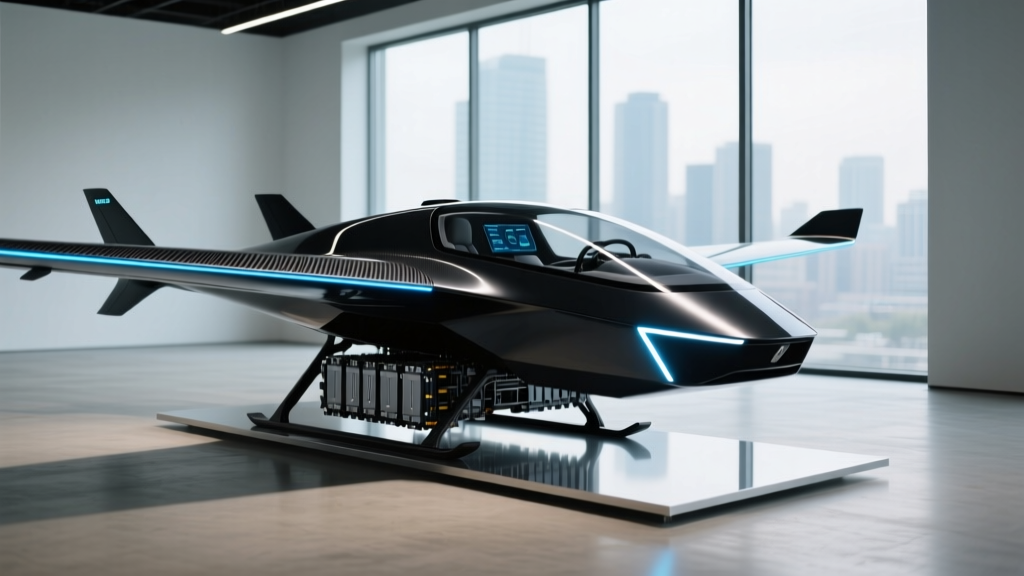
Beta Technologies is a Vermont-based aerospace company building the ALIA-250, an all-electric aircraft designed for cargo and passenger missions. As of 2026, the ALIA-250 is in advanced testing and early certification phases — it is not available for consumer purchase. For EV buyers, Beta's relevance lies in its battery architecture, charging infrastructure (which uses the same CCS/NACS connectors found on ground EVs), and the thermal-management lessons crossing over from aviation to automotive electrification.
If you searched for "Beta Technologies electric aircraft" while researching your next EV purchase, you are not alone. Beta has attracted attention from logistics companies, the U.S. military, and EV-curious readers because its engineering choices — large-format LFP-adjacent cells, liquid-cooled packs, DC fast-charging networks — mirror the decisions facing every electric-car buyer today. This guide translates what Beta is doing in the sky into practical takeaways for your garage.
What Is Beta Technologies and the ALIA-250?
Founded in 2017 and headquartered in Burlington, Vermont, Beta Technologies is developing two variants of its ALIA-250 electric aircraft:
- ALIA-250 CTOL (Conventional Takeoff and Landing) — fixed-wing, runway-based
- ALIA-250 eVTOL (electric Vertical Takeoff and Landing) — helicopter-style vertical lift for urban pads
Both share a common airframe, six independent battery packs, and a distributed electric propulsion system. The aircraft targets short-haul cargo routes (FedEx, UPS feeder lines) and eventually air-taxi passenger service. As of early 2026, Beta has completed hundreds of test flights, including a notable Vermont-to-Arkansas demonstration route, and is working toward FAA Part 23 type certification.
Myth vs. Fact: Beta Technologies
| Myth | Fact |
|---|---|
| "You can buy a Beta electric plane today." | The ALIA-250 is in certification testing. No consumer or commercial sales have been completed as of 2026. |
| "Beta uses the same batteries as Tesla." | Beta uses custom large-format cylindrical cells (similar form factor to 4680-type) in aviation-grade packs — not off-the-shelf automotive modules. |
| "Their chargers only work on planes." | Beta's ground charging stations use CCS and NACS connectors and can charge any compatible ground EV — a deliberate cross-industry strategy. |
| "Electric aircraft will replace cars." | E-aircraft target 100–250 nm cargo/passenger hops, not personal commuting. Ground EVs remain the practical choice for daily transport. |
ALIA-250 Specs: How It Compares to Ground EVs
Understanding Beta's aircraft helps contextualize where battery and charging technology is heading. Here is how the ALIA-250 stacks up against popular 2026 ground EVs:
| Spec | Beta ALIA-250 (Estimated) | Tesla Model Y LR (2026) | Ford F-150 Lightning (2026) |
|---|---|---|---|
| Usable Battery Capacity | ~250 kWh (6 packs) | 75 kWh (NMC) | 131 kWh (NMC) |
| Range | ~250 nautical miles (~288 statute mi) | 320 mi (EPA) | 320 mi (EPA) |
| Max DC Charge Rate | ~350 kW (aviation pad charger) | 250 kW (V4 Supercharger) | 150 kW peak |
| 10–80% Charge Time | ~30 min (estimated) | ~18 min | ~41 min |
| Connector Standard | CCS / NACS (ground stations) | NACS | CCS (NACS adapter avail.) |
| Thermal Management | Liquid-cooled, aviation-grade redundancy | Liquid-cooled heat pump | Liquid-cooled |
| Availability | Certification testing (not on sale) | On sale now | On sale now |
Key takeaway: Beta's 250 kWh pack is roughly 3.3× the capacity of a Model Y, yet delivers comparable range because aviation demands far more energy per mile to overcome gravity. The engineering challenge — packing energy density, managing heat, and charging quickly — is identical to what EV buyers care about, just at a different scale.
What Beta's Battery Tech Means for EV Buyers
Beta Technologies has invested heavily in battery-pack design, and several of its principles directly translate to ground EVs you can buy today:
Cell Chemistry and Safety Margins
Aviation demands extreme safety margins. Beta's packs use large-format cylindrical cells with redundant isolation between modules — a design philosophy you see echoed in the structural battery packs from Tesla and GM's Ultium platform. For EV buyers, the lesson is clear: pack architecture matters as much as cell chemistry. When evaluating an EV, look beyond "LFP vs. NMC" and ask about module isolation, thermal runaway containment, and crash-protection ratings (IIHS, NHTSA).
Charging Infrastructure Crossover
Beta has installed multi-standard DC fast chargers at airports and logistics hubs along the U.S. East Coast. These chargers feature both CCS and NACS connectors — meaning a Beta aircraft pad can simultaneously serve a Rivian delivery van, a Tesla Semi, or your Hyundai Ioniq 5. This cross-pollination is accelerating the buildout of high-power charging in areas that previously had none, indirectly benefiting ground-EV owners who drive near these logistics corridors.
Thermal Management Lessons
Aircraft batteries must perform from −40°F at altitude to 110°F on a tarmac. Beta's liquid-cooling loops with active preconditioning mirror what you need for reliable DC fast charging in extreme climates. If you live in Minnesota or Arizona, prioritize EVs with heat pumps (Tesla, Hyundai/Kia E-GMP, BMW iX) and active battery preconditioning — the same tech Beta relies on to hit its 350 kW charge rate without degrading cells.
Real Costs: Electric Aircraft vs. Electric Cars
Beta has not published retail pricing for the ALIA-250 — it is expected to be sold or leased to fleet operators, not individuals. But comparing the operating economics of electric aviation to electric ground transport reveals why electrification is spreading across both sectors:
| Cost Factor | ALIA-250 (Operator Estimate) | 2026 Tesla Model Y LR | 2026 Toyota Camry (Gas Baseline) |
|---|---|---|---|
| Purchase / List Price | Undisclosed (fleet lease model) | $44,990 MSRP | $29,995 MSRP |
| Energy Cost per Mile | ~$0.15–$0.22/mi (electricity) | ~$0.04/mi ($0.13/kWh avg) | ~$0.12/mi (28 MPG, $3.40/gal) |
| Maintenance Cost / Year | Lower than turbine (fewer moving parts) | ~$300–$500/yr | ~$800–$1,200/yr |
| Federal Tax Incentive | N/A (aircraft) | Up to $7,500 (§30D, income/MSRP/sourcing rules apply — see IRS) | None |
| Estimated 5-Year Energy Cost | Fleet-dependent | ~$2,000 | ~$6,000 |
For the ground-EV buyer, the numbers are decisive: a Model Y driven 12,000 miles per year costs roughly $4,000 less in fuel and maintenance over 5 years compared to a comparable gas sedan, even before applying the federal tax credit. Beta's aircraft follow the same logic at fleet scale — fewer moving parts, lower energy cost per mission, and reduced downtime versus turbine-powered alternatives.
Tax Credits, Incentives, and What Applies to You
While you cannot claim a §30D tax credit on an electric aircraft, the same IRS rules that govern ground-EV credits are worth understanding if you are buying a car in 2026:
- MSRP cap: Vans/SUVs/pickups must be ≤$80,000; sedans ≤$55,000
- Income cap: AGI ≤$150,000 (single), $225,000 (head of household), $300,000 (joint)
- Battery sourcing: Critical minerals and battery components must meet phased-in domestic/free-trade-partner thresholds — these tighten annually through 2032
- Point-of-sale transfer: Eligible buyers can apply the credit as a discount at the dealer, reducing out-of-pocket cost immediately
- FEOC restriction: Vehicles with battery components from a "foreign entity of concern" (primarily Chinese supply chain) are disqualified
Always verify current-year eligibility on fueleconomy.gov before purchasing — the qualified-vehicle list updates frequently as OEMs adjust sourcing.
Decision Framework: Should Beta's Tech Influence Your EV Purchase?
If / Then Guide for EV Buyers Watching Aviation Electrification
- If you want to buy an electric aircraft: You cannot — not yet. Beta's ALIA-250 is targeting fleet operators in cargo and air-taxi roles, with FAA certification still in progress. Monitor FAA eVTOL certification updates.
- If you care about battery safety margins: Apply aviation-style thinking to your EV purchase. Prioritize vehicles with published thermal-runaway containment data, NHTSA 5-star crash ratings, and battery warranties guaranteeing ≥70% capacity retention at 8 years/100,000 miles.
- If you live near Beta's charging corridor (East Coast logistics hubs): You may benefit from new multi-standard DC fast chargers being installed at airports and freight facilities. Check PlugShare or the Beta network map for chargers that also serve ground EVs.
- If you are choosing between EV, PHEV, and gas today: Aviation electrification will not change your ground-transport economics. Use the table below.
| Scenario | Best Choice | Why |
|---|---|---|
| Home Level 2 charging available, <150 mi/day | BEV (e.g., Tesla Model Y, Hyundai Ioniq 5) | Lowest cost/mile, minimal maintenance, §30D eligible |
| No home charging, frequent 300+ mi road trips | PHEV (e.g., Toyota RAV4 Prime) | 42 mi electric-only range covers errands; gas for highways |
| Rural area, extreme cold (−20°F winters) | HEV or PHEV | Cold reduces BEV range 25–40%; hybrid eliminates range risk |
| Fleet/cargo operator watching Beta | Monitor ALIA-250 certification; buy ground EVs now | Electric aircraft won't be commercially viable for regional cargo until ~2028–2030 |
Common Misconceptions About Beta and Electric Aviation
| Misconception | Reality |
|---|---|
| "Electric planes will make EVs obsolete." | Aircraft and ground vehicles serve different physics. Lifting mass into the air requires ~10× the energy per mile. EVs will remain dominant for personal transport. |
| "Beta's batteries are the same as my EV." | Beta uses aviation-certified cells with higher safety margins and lower energy density than automotive NMC. Your EV's cells prioritize range-per-dollar. |
| "I can charge my EV at a Beta aircraft pad." | Some Beta ground stations do have CCS/NACS connectors, but access is currently limited to fleet partners and authorized users. Public access may expand post-certification. |
| "Beta is a Tesla competitor." | Beta operates in aerospace, not automotive. They are a potential customer for Tesla's Megacharger network, not a rival. |
Frequently Asked Questions
Can I buy a Beta Technologies electric aircraft in 2026?
No. The ALIA-250 is in FAA certification testing. Beta is targeting commercial cargo operators (UPS, FedEx, military) first, with passenger variants further out. Individual ownership is not currently part of their business model.
How far can the ALIA-250 fly on a charge?
Beta estimates approximately 250 nautical miles (~288 statute miles) with reserves. This is mission-dependent — payload weight, wind, and altitude all affect range, much like cold weather and highway speed affect your EV's EPA range.
Does Beta use CCS or NACS connectors?
Beta's ground-based charging stations support both CCS and NACS. The aircraft itself uses a proprietary high-power aviation connector, but the ground infrastructure is designed for dual-use with ground EVs where permitted.
What can EV buyers learn from Beta's approach?
Three things: (1) Pack architecture and thermal management matter as much as cell chemistry. (2) Charging infrastructure buildout in logistics corridors benefits all EV drivers. (3) Electrification economics — lower energy cost, fewer moving parts — apply whether you are moving cargo by air or commuting by highway.
Will electric aircraft technology make my EV's battery better?
Indirectly, yes. Aviation demands extreme energy density and safety, which pushes cell manufacturers to innovate. Solid-state batteries, which Beta and others are monitoring, could eventually trickle down to automotive use — but expect that crossover in the 2028–2032 timeframe, not today.
Should I wait for solid-state batteries before buying an EV?
No. Current NMC and LFP batteries from major OEMs are proven, warrantied (8 years/100,000 mi minimum), and deliver 250–350 mi of real-world range. Solid-state is promising but remains in pre-production for automotive applications. Waiting means missing years of fuel savings and available tax credits.