Why Your Tesla Model Y Tires Matter More Than You Think
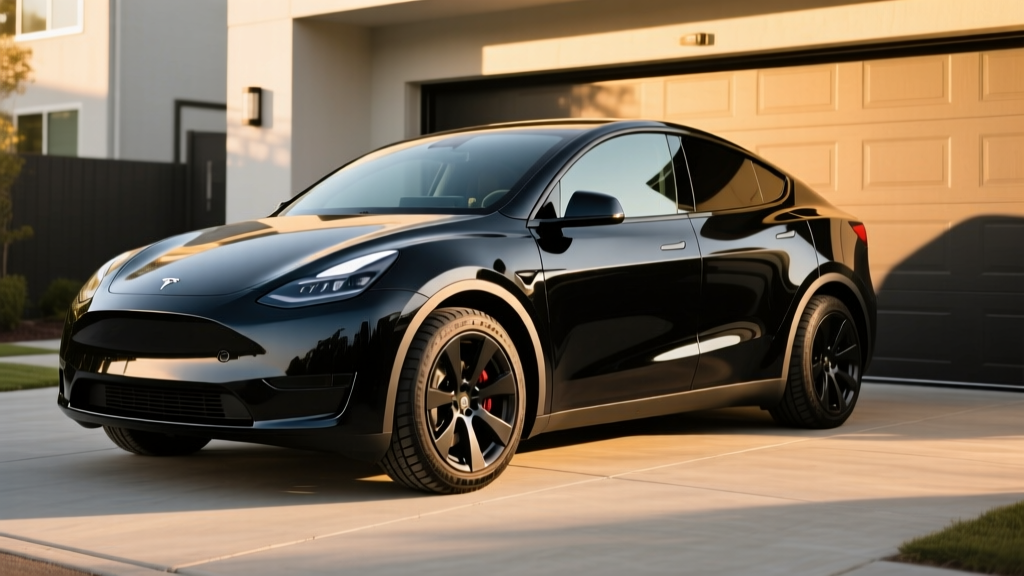
If you've searched for tires for Tesla Model Y, you're not alone — it's one of the most common ownership questions in the EV space. The Model Y is the best-selling electric vehicle in the United States, and its tires do far more than just grip the road. They directly affect your EPA-estimated range, real-world efficiency, cabin noise, ride comfort, and even how well regenerative braking feels. Tesla's instant torque (up to 384 lb-ft in the Performance trim) accelerates tire wear compared to gas cars, making your replacement decision both a performance and a financial one.
This guide covers the best tire options for the 2025–2026 Tesla Model Y, how tire selection impacts your range and MPGe, and a full refresh on the Model Y's specs, pricing, and tax-credit eligibility so you can make an informed choice whether you're shopping for a new EV or replacing worn rubber on one you already own.
2026 Tesla Model Y: Range, Battery & Efficiency Specs
Before choosing tires, understand the baseline vehicle you're fitting them to. The refreshed "Juniper" Model Y (released early 2025, carried into 2026) brought meaningful efficiency gains through improved aerodynamics, a revised heat pump, and lower-rolling-resistance stock tires.
| Spec | Long Range AWD | Performance AWD | Rear-Wheel Drive |
|---|---|---|---|
| EPA Range | 320 miles | 277 miles | 300 miles |
| Battery (usable) | ~75 kWh (NMC) | ~75 kWh (NMC) | ~60 kWh (LFP) |
| MPGe (combined) | 111 MPGe | 104 MPGe | 115 MPGe |
| Efficiency | 30 kWh/100 mi | 32 kWh/100 mi | 29 kWh/100 mi |
| 0–60 mph | 4.8 sec | 3.5 sec | 6.6 sec |
| Horsepower | 384 hp | 456 hp | 295 hp |
| Drivetrain | Dual-Motor AWD | Dual-Motor AWD | RWD |
| Base MSRP | $46,630 | $51,490 | $39,990 |
Source: fueleconomy.gov, Tesla.com. Prices reflect 2025–2026 model-year MSRP before destination fees and incentives.
EPA estimates assume a mix of city and highway driving at moderate temperatures. In real-world use:
- Highway (75 mph sustained): Expect ~260–280 miles in the Long Range AWD.
- Cold weather (below 32°F): Range drops 15–30%, bringing the Long Range down to ~220–270 miles depending on cabin heating use.
- City/regen-heavy driving: You may meet or slightly exceed the EPA number thanks to regenerative braking.
Tire impact: Switching from the stock low-rolling-resistance tires to high-performance summer rubber can reduce range by 5–10% (~15–30 miles). Winter tires typically cost 3–7% range.
How Tire Choice Affects Range, Efficiency & MPGe
Tires are the single largest variable in EV efficiency outside of temperature and driving speed. Rolling resistance — the energy required to keep a tire deforming as it rolls — accounts for roughly 20–30% of an EV's total energy consumption at highway speeds. For a vehicle consuming 30 kWh/100 mi, that's 6–9 kWh/100 mi tied directly to your tire choice.
Here's how different tire categories typically affect the Model Y Long Range AWD (320-mile EPA baseline):
| Tire Category | Rolling Resistance | Est. Range Change | Noise Level | Best For |
|---|---|---|---|---|
| OEM EV-specific (Hankook iON, Michelin Pilot Sport EV) | Very Low | Baseline (320 mi) | Quiet | Daily driving, max range |
| Touring all-season (Michelin CrossClimate 2, Continental PureContact LS) | Low–Moderate | −5 to −15 mi | Quiet–Moderate | Year-round versatility |
| Performance summer (Michelin Pilot Sport 4S, Pirelli P Zero) | Moderate–High | −15 to −30 mi | Moderate | Grip, handling, warm weather |
| Winter/snow (Nokian Hakkapeliitta R5, Michelin X-Ice Snow) | Moderate | −10 to −25 mi | Moderate | Snow, ice, cold-weather safety |
| All-terrain (rare for Model Y) | High | −25 to −40 mi | Loud | Light off-road (not recommended) |
Top Tire Picks for Tesla Model Y in 2026
The Model Y uses either 255/45R19 (Gemini wheels) or 255/40R20 (Induction/Performance wheels) depending on trim and wheel option. Always confirm your exact size on the driver's door jamb sticker before ordering.
Best for Maximum Range & Efficiency: Hankook iON evo AS
Hankook's iON line was engineered specifically for EVs, with a foam noise-reduction liner, low rolling resistance compound, and reinforced sidewalls to handle the Model Y's ~4,400-lb curb weight. Expect near-OEM efficiency with a quiet ride. Treadwear warranty: 50,000 miles.
Best All-Season Versatility: Michelin CrossClimate 2
The CrossClimate 2 carries the Three-Peak Mountain Snowflake (3PMSF) rating, meaning it's certified for severe snow conditions while functioning as an all-season tire. It's a popular single-set solution for owners in moderate-winter climates who don't want to swap to dedicated winter rubber. Rolling resistance is slightly higher than the iON, costing roughly 10–15 miles of range. Treadwear warranty: 60,000 miles.
Best for Performance Driving: Michelin Pilot Sport 4S (or Pilot Sport EV)
If you prioritize cornering grip and steering response over maximum range, the Pilot Sport 4S remains the benchmark. The EV-specific variant adds a foam liner to reduce cabin noise. Expect a 15–25 mile range penalty versus stock, but transformative dry and wet grip. Treadwear warranty: 30,000 miles.
Best for Winter: Nokian Hakkapeliitta R5 EV
Nokian's Hakkapeliitta R5 EV is a studless winter tire with a foam-lined cavity and a compound optimized for sub-freezing temperatures. It preserves more range than most winter tires due to its low rolling resistance for the category. Essential for owners in the Upper Midwest, Northeast, or mountain regions.
Charging Speed: DC Fast Charge & Home Level 2
Tire choice doesn't affect charging speed, but if you're evaluating the Model Y as a whole, here's what the 2026 Juniper platform delivers:
| Charging Level | Power / Rate | Speed / Time |
|---|---|---|
| Level 1 (120V household) | ~1.4 kW | ~3–4 miles per hour |
| Level 2 (240V home, 48A) | 11.5 kW | ~35–40 miles per hour; full charge in ~8–9 hrs |
| DC Fast Charge (Supercharger V3/V4) | Peak 250 kW | 10–80% in ~25 minutes (Long Range); charge curve tapers significantly above 80% |
| DC Fast Charge (50 kW public) | 50 kW | 10–80% in ~65 minutes |
The Model Y uses the NACS (North American Charging Standard) connector natively, giving access to the full Tesla Supercharger network (20,000+ stalls in North America) as well as an increasing number of third-party networks adopting the standard. The Long Range's NMC battery can sustain high charge rates through the mid-SoC range; the RWD's LFP battery can be charged to 100% regularly without degradation concerns — a significant daily-use advantage Tesla recommends leveraging.
Pricing, Tax Credit & Total Cost
Tire replacement for the Model Y typically runs $800–$1,600 for a set of four depending on brand and size (20" tires cost more than 19"). Here's how the vehicle itself prices out, including federal incentive considerations:
| Trim | Base MSRP | Est. After §30D Credit* | §30D Eligible? |
|---|---|---|---|
| Rear-Wheel Drive | $39,990 | ~$32,490 | Yes (meets MSRP cap, sourcing requirements) |
| Long Range AWD | $46,630 | ~$39,130 | Yes (below $80,000 SUV cap) |
| Performance AWD | $51,490 | ~$43,990 | Yes (below $80,000 SUV cap) |
*Federal tax credit (§30D) caveats: The up-to-$7,500 credit requires:
- MSRP cap: Vehicle must be under $80,000 (SUVs/vans/pickups) — all Model Y trims qualify.
- Buyer income cap: AGI ≤ $150,000 (single), $225,000 (head of household), $300,000 (joint).
- Battery sourcing: Critical minerals and battery components must meet phased-in domestic/free-trade sourcing thresholds (verified per VIN at purchase).
- Point-of-sale transfer: As of 2024+, the credit can be transferred to the dealer at purchase for an immediate price reduction, rather than claimed at tax time.
Always verify current eligibility on IRS.gov and confirm with your tax professional before purchasing. Rules change and are subject to per-manufacturer and per-VIN verification.
Cargo, Interior Space & Warranty
The Model Y remains one of the most practical compact luxury EV crossovers:
- Cargo (rear seats up): 30.2 cu ft
- Cargo (rear seats folded): 72.0 cu ft
- Front trunk (frunk): 4.1 cu ft
- Rear legroom: 41.6 inches
- Front headroom: 41.0 inches
These dimensions comfortably fit two full-size suitcases plus a stroller behind the second row, or a full sheet of plywood with seats folded.
Warranty coverage:
- Battery & Drive Unit: 8 years / 120,000 miles (Long Range/Performance, NMC); 8 years / 100,000 miles (RWD, LFP) — whichever comes first, with minimum 70% capacity retention.
- New Vehicle Limited Warranty: 4 years / 50,000 miles.
For comparison, Hyundai's Ioniq 5 offers a 10-year/100,000-mile battery warranty. Tesla's coverage is adequate but not class-leading.
Tech, Driver Assistance & Notable Drawbacks
The Juniper refresh brought a quieter cabin (acoustic glass all around), ventilated front seats, ambient lighting, a rear-seat touchscreen, and a revised suspension that meaningfully improved ride quality over the pre-2025 Model Y.
Standard tech includes:
- 15.4-inch front touchscreen with Tesla OS (navigation, streaming, gaming)
- Tesla Autopilot (SAE Level 2): adaptive cruise, lane-keeping, auto lane change
- Full Self-Driving (Supervised) available as a $8,000 add-on or $99/month subscription — still requires active driver supervision at all times
- Over-the-air software updates
- Sentry Mode dashcam recording, Dog Mode, Camp Mode
Tesla Autopilot and FSD (Supervised) are SAE Level 2 driver-assistance systems. The driver must remain fully attentive, hands on or near the wheel, and ready to take over at any moment. These are not self-driving systems. Only Level 4 services like Waymo operate without a human driver in defined areas.
Pros
- Best-in-class Supercharger network access (NACS native)
- Excellent efficiency: 111–115 MPGe across trims
- Strong cargo capacity and frunk for the segment
- LFP option (RWD) allows daily 100% charging without battery anxiety
- OTA updates continuously add features
- Improved ride quality post-Juniper refresh
Cons
- No physical turn-signal stalks or gear selector (haptic/touchscreen-based) — divisive ergonomics
- Tire wear accelerates due to weight and torque — expect 20,000–30,000 mi on stock rubber
- FSD (Supervised) is expensive and still requires full driver attention
- Build quality inconsistency (panel gaps, paint) improved but not eliminated
- Insurance premiums run 15–30% higher than comparable gas crossovers
Who Should Buy the Tesla Model Y?
The Model Y fits a wide range of EV buyers, but your tire choice should match your use case:
- Daily commuter (city/suburban): Stick with OEM EV tires (Hankook iON) for max range and quiet ride. The RWD LFP trim is ideal — lower price, charge to 100% daily.
- Family road-tripper: Long Range AWD with all-season tires (CrossClimate 2) gives you 300+ real-world miles and year-round confidence. Supercharger access makes long trips practical.
- Performance enthusiast: Performance AWD with Pilot Sport 4S transforms handling — accept the range trade-off. Keep a winter set on separate wheels if you see snow.
- Cold-climate owner: Dedicated winter tires (Nokian Hakkapeliitta R5 EV) on 19" steel wheels are a safety necessity below 40°F, not a luxury.
- You want access to the most reliable DC fast-charging network in North America
- You need crossover cargo space with EV efficiency above 110 MPGe
- You prefer OTA software updates and a tech-forward cabin
- You prefer physical controls and more traditional ergonomics
- You want a longer battery warranty (Hyundai: 10 yr/100k mi)
- You want 800V ultra-fast charging architecture (Ioniq 5: 10–80% in ~18 min at 350 kW chargers)
Frequently Asked Questions
What size tires does the Tesla Model Y use?
The 2025–2026 Model Y uses 255/45R19 (standard Gemini wheels) or 255/40R20 (Induction and Performance wheels). Always verify on your door jamb placard — some older 2023–2024 models used 21" Überturbine wheels with staggered 265-width rears.
How long do Tesla Model Y tires last?
Stock tires on the Model Y typically last 20,000–35,000 miles. EV-specific tires like the Hankook iON may reach 40,000–50,000 miles. Heavy regenerative braking, instant torque, and the vehicle's 4,400+ lb weight accelerate wear versus comparable gas crossovers. Rotate every 6,250 miles.
Do I need special "EV tires" for the Model Y?
Not strictly required, but strongly recommended. EV-specific tires feature low rolling resistance (preserving range), foam noise-reduction liners (critical without engine noise masking road noise), and higher load ratings for the vehicle's weight. Standard tires work but typically cost 5–15 miles of range and produce more cabin noise.
Does the Tesla Model Y qualify for the $7,500 federal tax credit?
As of current IRS rules, yes — all Model Y trims fall under the $80,000 SUV MSRP cap. However, buyer income limits ($150K single / $300K joint AGI), battery critical-mineral sourcing requirements, and point-of-sale transfer rules all apply. Verify your specific eligibility at IRS.gov before purchasing.
What's the real-world range of the Model Y Long Range?
EPA-rated at 320 miles, expect roughly 260–280 miles on sustained highway driving at 75 mph, and 220–270 miles in freezing temperatures with cabin heat active. City driving with regenerative braking may meet or slightly exceed the EPA figure. Tire choice can shift these numbers by ±15–30 miles.
Is the Model Y worth buying versus the Hyundai Ioniq 5 or Ford Mach-E?
The Model Y leads in charging-network access (Supercharger), software ecosystem, and cargo space. The Ioniq 5 wins on 800V charging speed and warranty length. The Mach-E offers more traditional controls and competitive pricing. If Supercharger access matters to you, the Model Y remains the default choice — but test-drive all three before committing.
Editorial note: Range, pricing, and tax-credit figures reflect 2025–2026 model-year data from fueleconomy.gov and Tesla.com as of publication. Federal and state incentives change frequently. Consult a tax professional for personal eligibility. Tire pricing and availability vary by retailer.