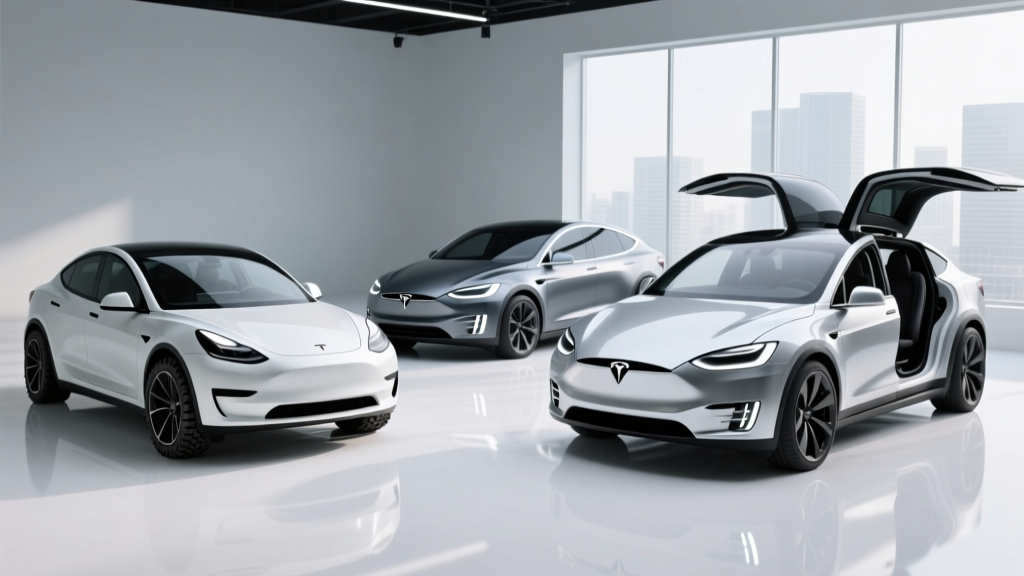
Quick Verdict: Which Tesla Should You Take on the Highway?
If you're evaluating a Tesla for road trips, the answer depends on how far you drive between stops and how much gear you haul. The 2026 Model 3 Long Range AWD remains the efficiency champion, squeezing the most miles per kWh out of Tesla's current lineup and keeping Supercharger stops short. The Model Y Long Range trades a bit of range for substantially more cargo volume, making it the better pick for families. The Model S offers the longest single-charge range in the lineup for those who despise stopping, while the Model X prioritizes passenger space and towing at the cost of efficiency.
Below, we break down every current Tesla by the metrics that matter on a 500-mile drive: real-world highway range, DC fast-charge speed, cabin comfort over long stretches, cargo capacity, and total trip cost. All figures reflect the 2026 model year.
Real-World Range vs. EPA Estimates: What You'll Actually See
EPA range stickers assume a mix of city and highway driving at moderate temperatures. On a real road trip — sustained 70-80 mph highway speeds, climate control running, possibly cold weather — expect to use 15-25% more energy than the EPA combined figure suggests.
Model 3 Long Range AWD: EPA 363 mi → expect ~290-310 mi highway in mild weather; ~240-260 mi in freezing temps.
Model Y Long Range AWD: EPA 320 mi → expect ~255-275 mi highway mild; ~215-235 mi cold.
Model S Long Range: EPA 402 mi → expect ~320-345 mi highway mild; ~270-295 mi cold.
Model X Long Range: EPA 335 mi → expect ~265-285 mi highway mild; ~220-245 mi cold.
Source: fueleconomy.gov EPA estimates. Real-world figures based on sustained highway driving at 70-75 mph with climate control active.
The Model 3 Long Range's advantage comes down to aerodynamics and weight. Its drag coefficient of 0.219 Cd and lighter curb weight (~4,000 lbs) mean it sips energy at highway speeds where the heavier, boxier Model X and Model Y work harder to push air. If your road trips are predominantly interstate cruising, the Model 3 delivers the most stress-free experience between Supercharger stops.
Cold weather compounds range loss through cabin heating and increased battery resistance. Teslas with heat pumps (standard on all 2026 models) mitigate this significantly compared to older resistive-heater EVs, but physics still wins: plan for roughly 20% range reduction when ambient temps drop below 30°F.
Charging Speed: Supercharger Stops and Home Charging
Charging speed determines how long you're parked at a rest stop. Tesla's 2026 lineup uses different battery chemistries and architectures that affect peak DC charge rates and the shape of the charge curve — the rate at which charging slows as the battery fills past 80% State of Charge (SoC).
| Model | Battery (kWh usable) | Chemistry | Peak DC kW | 10-80% Time | Level 2 Rate |
|---|---|---|---|---|---|
| Model 3 LR AWD | ~75 kWh | NMC | 250 kW | ~27 min | 11.5 kW (44 mi/hr) |
| Model Y LR AWD | ~75 kWh | NMC | 250 kW | ~28 min | 11.5 kW (37 mi/hr) |
| Model S LR | ~95 kWh | NMC | 250 kW | ~32 min | 11.5 kW (41 mi/hr) |
| Model X LR | ~95 kWh | NMC | 250 kW | ~34 min | 11.5 kW (33 mi/hr) |
Key insight for road trippers: Peak kW is not sustained kW. A Model 3 hitting 250 kW at 10% SoC will taper to ~150 kW around 50% and drop further above 70%. The 10-80% times above reflect this real charge curve. On a V3 Supercharger (250 kW capable), you'll add roughly 170-200 miles of range in 15 minutes in a Model 3 Long Range — enough to stretch legs, grab food, and get back on the road.
At home on a Level 2 Wall Connector (48A circuit), expect a full overnight charge in 7-9 hours for the smaller batteries and 9-11 hours for the Model S/X packs. A standard 240V/40A NEMA 14-50 outlet delivers about 30-35 miles of range per hour of charging across the lineup.
All 2026 Teslas use the NACS connector natively and access Tesla's Supercharger network — the most reliable DC fast-charging network in the U.S. by uptime metrics. Non-Tesla networks (Electrify America, EVgo) are accessible via adapter but remain less consistent in rural corridors.
Full Spec Comparison: Every 2026 Tesla at a Glance
| Spec | Model 3 LR AWD | Model Y LR AWD | Model S LR | Model X LR |
|---|---|---|---|---|
| EPA Range | 363 mi | 320 mi | 402 mi | 335 mi |
| MPGe (combined) | 134 MPGe | 122 MPGe | 120 MPGe | 109 MPGe |
| kWh/100 mi | 25 | 27 | 28 | 31 |
| 0-60 mph | 4.2 sec | 4.8 sec | 3.1 sec | 3.8 sec |
| Horsepower | ~384 hp | ~384 hp | ~670 hp | ~670 hp |
| Drivetrain | Dual-motor AWD | Dual-motor AWD | Dual-motor AWD | Dual-motor AWD |
| Cargo (rear seats up) | 23 cu ft | 34 cu ft | 28 cu ft | 42 cu ft |
| Cargo (seats folded) | 60 cu ft | 76 cu ft | ~65 cu ft | ~88 cu ft |
| Rear Legroom | 35.2 in | 40.5 in | 40.5 in | 41.2 in |
| Seating Capacity | 5 | 5 (7 optional) | 5 | 6 or 7 |
| Towing Capacity | N/A | 3,500 lbs | N/A | 5,000 lbs |
| Battery Warranty | 8 yr / 120,000 mi | 8 yr / 120,000 mi | 8 yr / 150,000 mi | 8 yr / 150,000 mi |
| Base MSRP | $47,740 | $50,630 | $79,990 | $84,990 |
Pricing, Tax Credits, and Total Trip Cost
The federal EV tax credit under IRS §30D can reduce your effective purchase price by up to $7,500 — but eligibility depends on three moving targets: your modified adjusted gross income (AGI), the vehicle's MSRP relative to the cap, and battery component/critical mineral sourcing requirements that tighten annually.
| Model / Trim | Base MSRP | Under $55K MSRP Cap? | §30D Credit (est.) | Effective Price |
|---|---|---|---|---|
| Model 3 LR AWD | $47,740 | ✅ Yes | Up to $7,500* | ~$40,240 |
| Model Y LR AWD | $50,630 | ✅ Yes | Up to $7,500* | ~$43,130 |
| Model S LR | $79,990 | ❌ No (over $55K cap) | $0 | $79,990 |
| Model X LR | $84,990 | ❌ No (over $80K SUV cap) | $0 | $84,990 |
*§30D credit amount depends on battery-sourcing compliance (critical minerals + component manufacturing). Buyer income caps apply: $150K single / $225K HOH / $300K joint MAGI. Credit can be transferred to the dealer at point of sale as a price reduction. Always verify current-year eligibility on irs.gov and consult a tax professional.
Road-trip fuel cost: At the national average electricity price of ~$0.16/kWh (home charging) and Tesla's Supercharger average of ~$0.35/kWh, a 500-mile trip in a Model 3 LR costs roughly $22-26 at home or $44-52 on Superchargers. The same trip in a 30 MPG gas sedan at $3.40/gallon costs about $57. Over a year of road trips, the savings are meaningful but not dramatic — the real advantage is Supercharger reliability and route planning integration.
Comfort, Cargo, and Tech for Long Drives
Range and charging speed get you there, but comfort determines whether you arrive refreshed. Here's how the 2026 Teslas stack up for multi-hour drives:
Model 3 Long Range
The refreshed Model 3 ("Highland" platform) significantly improved cabin quietness with acoustic glass and better insulation. The 15.4-inch center touchscreen handles navigation, media, and vehicle controls. Rear seat comfort is adequate for adults on 2-3 hour stretches but the 35.2 inches of legroom feels tight for taller passengers on full-day drives. Cargo space (23 cu ft trunk + small frunk) handles two large suitcases and a carry-on. Best for: couples or solo drivers who prioritize efficiency and lower cost.
Model Y Long Range
The Model Y's crossover ride height and 40.5 inches of rear legroom make it substantially more comfortable for rear-seat passengers — children and adults alike. The 34 cu ft cargo area behind the second row swallows a family's road-trip gear without playing Tetris. The optional third row (7-seat) is best reserved for small children. The panoramic glass roof adds an airy feel but can increase cabin heat in summer — preconditioning while plugged in mitigates this. Best for: families needing cargo flexibility and passenger space without stepping up to luxury pricing.
Model S Long Range
The Model S remains Tesla's highway cruiser. Its longer wheelbase delivers a smoother ride over expansion joints and rough pavement. The 17-inch center screen and rear-seat touchscreen give passengers their own media controls. With 402 miles EPA, you can stretch between stops on routes where Superchargers are sparse (think I-10 through West Texas or I-80 across Nebraska). The hatchback trunk is deep but the sloping roofline limits vertical cargo space. Best for: drivers covering serious solo/couple mileage who value range above all else.
Model X Long Range
The Model X's falcon-wing rear doors are a conversation starter at every Supercharger, and they genuinely ease loading children into car seats. The 6-seat configuration with captain's chairs provides the most comfortable second-row experience in the lineup. However, the Model X is the least efficient Tesla (31 kWh/100 mi), meaning more frequent stops. Its 5,000-lb towing capacity is the highest in the lineup. Best for: large families who need 6-7 seats and tow boats or campers on trips.
Autopilot and FSD (Supervised) on the Highway
Tesla's Autopilot and Full Self-Driving (Supervised) are SAE Level 2 driver-assistance systems. The driver must remain fully engaged, hands on or near the wheel, and eyes on the road at all times. These systems do NOT make the vehicle self-driving. Tesla's FSD (Supervised) can handle highway lane changes, on-ramp to off-ramp navigation, and some city streets — but it requires constant human oversight and can make errors at construction zones, unmapped intersections, and in adverse weather. NHTSA classifies true driverless operation at SAE Level 4, currently available only in limited robotaxi services like Waymo.
For road trips, Autopilot's adaptive cruise control and lane centering reduce fatigue on long, monotonous interstate stretches. FSD (Supervised) adds automatic lane changes and navigation-guided exits. Both are genuine fatigue-reducers but not replacements for an attentive driver.
Pros and Cons for Road-Trip Use
✅ Pros
- Supercharger network: Tesla's proprietary network remains the most reliable, fastest, and best-integrated DC fast-charging system in the U.S., with route planning baked into the navigation.
- Efficiency leadership: Tesla's powertrains extract more miles per kWh than most competitors, meaning fewer stops on equivalent routes.
- Over-the-air updates: Navigation maps, charging algorithms, and entertainment features improve without dealer visits.
- Preconditioning: The car warms or cools the battery en route to a Supercharger, ensuring peak charge rates on arrival.
- Frunk + trunk: Dual cargo areas add flexibility for separating clean/dirty gear.
❌ Cons
- No Apple CarPlay / Android Auto: Tesla's proprietary infotainment is the only option; no phone mirroring for those who prefer familiar interfaces.
- Touchscreen-only controls: Climate, mirrors, and glovebox all require the screen — distracting while driving.
- Model 3 rear-seat space: Tight for tall adults on long drives compared to the Model Y or Model S.
- Model X efficiency: The heaviest Tesla requires the most frequent charging stops, eroding its range advantage on paper.
- Phantom braking: Autopilot occasionally brakes unexpectedly behind overpasses or shadows — requires driver vigilance.
- Insurance costs: Tesla insurance premiums run 15-30% higher than comparable non-EV sedans/SUVs in most states.
How Teslas Compare to Key Road-Trip Rivals
The Tesla Supercharger advantage is real but narrowing. Competitors now access Tesla's network via NACS adapters, and rival vehicles have closed the efficiency gap. Here's how the key alternatives stack up for road-trip duty:
| Vehicle | EPA Range | Peak DC kW | 10-80% Time | Base MSRP |
|---|---|---|---|---|
| Tesla Model 3 LR AWD | 363 mi | 250 kW | ~27 min | $47,740 |
| Hyundai Ioniq 6 SEL | 361 mi | ~240 kW | ~18 min | $42,700 |
| BMW i4 eDrive40 | 307 mi | ~205 kW | ~31 min | $57,900 |
| Tesla Model Y LR AWD | 320 mi | 250 kW | ~28 min | $50,630 |
| Kia EV9 Land AWD | 283 mi | ~210 kW | ~25 min | $59,900 |
The Hyundai Ioniq 6 is the closest rival to the Model 3 for pure road-trip efficiency and actually charges faster on compatible 800V chargers — but Supercharger access requires an adapter, and charger availability on rural routes still favors Tesla's native network. The Kia EV9 offers three-row seating that the Model Y's cramped optional third row can't match, at the cost of range.
Decision Framework: Choose Your Tesla by Road-Trip Style
🗺️ Pick the right Tesla for your trip pattern
Choose the Model 3 Long Range if: You primarily travel as a couple or solo, prioritize the lowest cost per mile, and want the fewest Supercharger stops. It's the most efficient Tesla and the most affordable after the §30D credit.
Choose the Model Y Long Range if: You need family-friendly cargo space and rear-seat comfort, take 3-5 road trips per year with kids, and want the versatility of a crossover without luxury-car pricing.
Choose the Model S Long Range if: You regularly cover 400+ mile days, drive routes with sparse Supercharger coverage, and value a premium ride. You won't get the tax credit, but you'll stop less often.
Choose the Model X Long Range if: You need 6-7 seats, tow a trailer or boat, and prioritize passenger comfort over charging efficiency. Budget accordingly — it's the most expensive Tesla and the thirstiest at the charger.
Frequently Asked Questions
What is the real-world highway range of a Tesla on a road trip?
Expect 15-25% less than the EPA sticker on sustained highway driving at 70-80 mph. A Model 3 Long Range (EPA 363 mi) delivers roughly 290-310 real highway miles in mild weather and 240-260 miles in freezing conditions. Plan your Supercharger stops around 200-250 miles apart for a comfortable buffer.
How long does it take to charge a Tesla at a Supercharger during a road trip?
On a V3 Supercharger (250 kW), expect 27-34 minutes from 10% to 80% depending on the model. The Model 3 and Model Y charge slightly faster due to their smaller ~75 kWh batteries. Charging slows significantly above 80% — if you need to go from 80% to 100%, budget an additional 25-40 minutes. For road trips, the 10-80% window is what matters.
Does the Tesla Model 3 or Model Y qualify for the $7,500 federal tax credit?
Both the Model 3 Long Range ($47,740 MSRP) and Model Y Long Range ($50,630 MSRP) fall under the §30D MSRP caps ($55,000 for sedans, $80,000 for SUVs/vans/trucks). However, the actual credit amount depends on battery-sourcing compliance (critical minerals and component manufacturing thresholds that tighten each year), and buyer income must not exceed $150K single / $300K joint MAGI. Verify current eligibility at irs.gov. The credit can be applied as a point-of-sale price reduction at the dealer. The Model S and Model X exceed MSRP caps and do not qualify.
Is a Tesla better for road trips than other EVs?
Tesla's primary road-trip advantage is the Supercharger network — reliable, fast, and seamlessly integrated into navigation with automatic battery preconditioning. Competitors like the Hyundai Ioniq 6 match or exceed Tesla's efficiency and charge speed on paper, but rely on third-party networks (Electrify America, EVgo) that still trail in uptime and rural coverage. As non-Tesla EVs gain NACS access to Superchargers through 2025-2026, this gap is narrowing — but native Tesla integration still provides the smoothest experience today.
How does cold weather affect Tesla range on winter road trips?
Expect 15-25% range loss in temperatures below 30°F due to battery resistance and cabin heating demands. All 2026 Teslas use heat pumps, which are significantly more efficient than resistive heaters, but cold still impacts energy consumption. Preconditioning the battery while plugged in before departure recovers some of this loss. On winter road trips, plan Supercharger stops at 175-200 mile intervals instead of the 250-300 you'd use in summer.
Can I use non-Tesla chargers on a road trip?
All 2026 Teslas use the NACS connector natively. You can charge at CCS-equipped stations using a third-party NACS-to-CCS adapter (Tesla sells one for ~$250), but charge speeds may be limited depending on the station. CHAdeMO chargers are increasingly rare and not recommended for trip planning. For reliable road-trip charging, the Supercharger network remains the path of least resistance.