Tesla still dominates EV mindshare, but the landscape in 2026 looks dramatically different from even two years ago. Legacy automakers and Korean challengers now field electric vehicles that match or exceed Tesla's offerings in charging speed, interior quality, and real-world practicality — often at lower prices and with broader federal tax credit eligibility. If you've been searching for other electric cars besides Tesla, this is the year the alternatives genuinely stack up.
We've selected five EVs that represent the strongest non-Tesla options across key segments: the midsize crossover, the performance SUV, the electric truck, the affordable compact, and the family hauler. Each pick below is evaluated on the metrics that matter most to actual owners — EPA range versus real-world expectations, DC fast-charging curves (not just peak kW), total cost after the federal §30D tax credit, and daily usability.
Hyundai Ioniq 5: The Benchmark Midsize EV Crossover
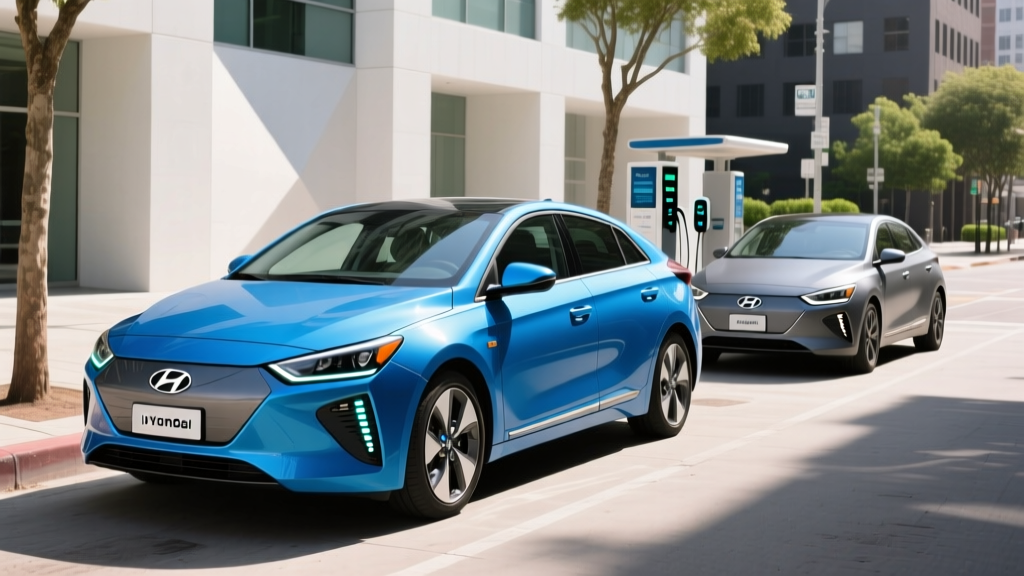
The 2026 Hyundai Ioniq 5 remains the strongest all-around alternative to the Tesla Model Y. Built on Hyundai's E-GMP platform with an 800-volt architecture, it delivers charging speeds that rival anything Tesla's Supercharger network offers, plus a more refined ride and a genuinely usable interior.
| Spec | Ioniq 5 SEL AWD |
|---|---|
| EPA Range | 290 miles |
| Battery (usable) | 77.4 kWh, NMC |
| Peak DC Fast Charge | 240 kW |
| 10–80% DC Time | ~18 minutes |
| Level 2 Home Charge | 10.9 kW (~37 mi/hr) |
| 0–60 mph | 5.1 seconds |
| Horsepower | 320 hp (dual motor AWD) |
| MPGe (combined) | 110 MPGe |
| Efficiency | 30 kWh/100 mi |
| Cargo (rear seats up) | 27.2 cu ft |
| Cargo (rear seats folded) | 59.3 cu ft |
| Base MSRP | $47,600 |
| Battery Warranty | 10 years / 100,000 miles |
The Ioniq 5's 800V architecture is its killer feature for road-trippers. On a 350 kW DC fast charger, it sustains above 180 kW well past 60% state of charge before tapering — meaning the 10–80% time of roughly 18 minutes is achievable on Electrify America or Ionity stations, not just a marketing peak. At home on a Level 2 charger, the 10.9 kW onboard charger refills the battery in about 7.5 hours, easily covering a full overnight top-up.
Inside, the Ioniq 5 offers a flat floor, a sliding center console, and a 12.3-inch dual-screen layout running Hyundai's latest infotainment with wireless Apple CarPlay and Android Auto. The available Highway Driving Assist 2 is a solid Level 2 driver-assistance system — note that the driver must remain engaged at all times; this is not autonomous driving.
Tax Credit Eligibility: The Ioniq 5 is assembled in Georgia at Hyundai's Metaplant, making it eligible for the full §30D federal tax credit of up to $7,500, available as a point-of-sale transfer. Eligibility depends on buyer income caps ($150K single / $300K joint modified AGI) and the vehicle's MSRP falling under the $80,000 SUV cap. Verify battery critical-mineral and component sourcing requirements on the IRS site before purchase, as these rules tighten annually.
Kia EV6: The Sportier Sibling with 300+ Mile Range
Sharing the E-GMP platform with the Ioniq 5, the 2026 Kia EV6 leans harder into sporty design and a slightly longer wheelbase, translating to more rear legroom and up to 310 miles of EPA range in the RWD Long Range trim. It's the pick for buyers who want Tesla Model Y Performance vibes without the Tesla ecosystem lock-in.
| Spec | EV6 GT-Line AWD | EV6 Long Range RWD |
|---|---|---|
| EPA Range | 282 miles | 310 miles |
| Battery (usable) | 77.4 kWh, NMC | 77.4 kWh, NMC |
| Peak DC Fast Charge | 240 kW | 240 kW |
| 10–80% DC Time | ~18 minutes | ~18 minutes |
| 0–60 mph | 5.1 seconds | 7.2 seconds |
| Horsepower | 320 hp | 225 hp |
| Base MSRP | $52,200 | $43,700 |
The EV6 GT-Line AWD delivers 320 hp and a composed ride, though its slightly lower EPA range versus the Ioniq 5 comes from more aggressive tire compounds and added weight from sport-tuned suspension components. The high-performance EV6 GT (576 hp, 3.4-second 0–60) sacrifices range (206 mi EPA) for thrills — a deliberate trade-off, not an oversight.
Charging performance mirrors the Ioniq 5 exactly: 800V architecture, 240 kW peak, and a flat charge curve up to about 55% SoC. Kia's UVO connected services and over-the-air updates keep the EV6 current post-purchase. Cargo space is generous at 24.4 cu ft behind the rear seats and 50.2 cu ft with them folded — slightly less than the Ioniq 5 due to the sloping roofline.
Who it suits: The EV6 is ideal for performance-oriented commuters who take occasional road trips and want a striking design. If maximum cargo space is a priority, the Ioniq 5 or a Model Y still wins on utility.
Ford F-150 Lightning: The Electric Truck That Actually Works
The 2026 F-150 Lightning has matured past its early-production growing pains. Ford's electric full-size pickup now offers the extended-range battery with 320 miles of EPA range, Pro Power Onboard for job-site or campsite use, and a towing capacity of up to 10,000 pounds — making it the most practical other electric car besides Tesla for truck buyers.
| Spec | Lightning Lariat Ext. Range |
|---|---|
| EPA Range | 320 miles |
| Battery (usable) | 131 kWh, NMC |
| Peak DC Fast Charge | 150 kW |
| 10–80% DC Time | ~41 minutes |
| Level 2 Home Charge | 19.2 kW (~30 mi/hr) w/ Ford Charge Station Pro |
| 0–60 mph | ~4.0 seconds |
| Horsepower | 580 hp |
| Max Towing | 10,000 lbs |
| Max Payload | 2,235 lbs |
| Frunk Volume | 14.1 cu ft (400 lbs payload) |
| Base MSRP (Lariat Ext.) | $69,995 |
| Battery Warranty | 8 years / 100,000 miles |
The Lightning's 150 kW peak charge rate is modest compared to the 800V Korean EVs, but Ford compensates with the available 19.2 kW Level 2 home charger (Ford Charge Station Pro), which adds about 30 miles per hour — a full overnight charge is realistic even from near-empty. The Pro Power Onboard system delivers up to 9.6 kW of exportable power (240V outlets in the bed), making the Lightning a legitimate mobile generator for contractors and campers.
The 14.1 cu ft front trunk ("frunk") is lockable, weather-sealed, and includes a drain plug — large enough for groceries, tools, or a cooler. BlueCruise, Ford's hands-free Level 2 highway driving system, works on over 130,000 miles of pre-mapped divided highways. Remember: BlueCruise requires driver attention and is not self-driving.
Tax Credit: The F-150 Lightning qualifies for up to $7,500 under §30D (MSRP under the $80,000 truck cap). Point-of-sale transfer is available. Confirm current critical-mineral and battery-component sourcing compliance on IRS.gov before purchasing.
Chevrolet Equinox EV: Affordable Range for the Masses
The 2026 Chevrolet Equinox EV is the price-to-range champion among non-Tesla EVs. Starting under $35,000 and offering up to 319 miles of EPA range, it targets the exact buyer who wants to go electric without stretching their budget. It's built on GM's Ultium platform with an NMC battery.
| Spec | Equinox EV 2LT FWD |
|---|---|
| EPA Range | 319 miles |
| Battery (usable) | 85 kWh, NMC |
| Peak DC Fast Charge | 150 kW |
| 10–80% DC Time | ~34 minutes |
| Level 2 Home Charge | 11.5 kW (~35 mi/hr) |
| 0–60 mph | ~7.5 seconds |
| Horsepower | 213 hp (FWD) |
| MPGe (combined) | 109 MPGe |
| Cargo (rear seats up) | 26.4 cu ft |
| Base MSRP | $33,600 |
| Battery Warranty | 8 years / 100,000 miles |
At $33,600 before incentives, the Equinox EV 2LT FWD undercuts the Tesla Model Y by over $10,000 while delivering comparable EPA range. The trade-off is charging speed: 150 kW peak is adequate but not class-leading, and the charge curve tapers noticeably above 60% SoC. For a commuter who charges at home nightly and takes a few road trips per year, this is a perfectly acceptable compromise.
The Equinox EV rides on a 116.3-inch wheelbase, yielding generous rear legroom (approximately 37.8 inches) and a flat load floor. GM's 17.7-inch diagonal infotainment screen runs Google Built-in with native Google Maps navigation — useful for finding chargers on the go. Super Cruise availability (hands-free Level 2 on compatible highways) is a segment advantage, though it requires an active OnStar subscription.
Tax Credit Eligibility: The Equinox EV is assembled in Mexico, which has historically complicated §30D eligibility due to battery sourcing and final-assembly requirements. As of early 2026, certain trims qualify for partial or full credits — verify your specific configuration on the IRS clean vehicle credit page and confirm with your dealer before signing.
Volkswagen ID.4: The Practical Family EV at a Fair Price
The 2026 Volkswagen ID.4 continues as the value-oriented family crossover in the non-Tesla EV space. Now assembled in Chattanooga, Tennessee, it qualifies for the federal tax credit and offers a comfortable, spacious cabin with straightforward controls — an EV for people who don't want their car to feel like a gadget.
| Spec | ID.4 Pro S AWD |
|---|---|
| EPA Range | 275 miles |
| Battery (usable) | 77 kWh, NMC |
| Peak DC Fast Charge | 175 kW |
| 10–80% DC Time | ~28 minutes |
| Level 2 Home Charge | 11 kW (~32 mi/hr) |
| 0–60 mph | 5.4 seconds |
| Horsepower | 295 hp (AWD) |
| MPGe (combined) | 104 MPGe |
| Cargo (rear seats up) | 30.3 cu ft |
| Cargo (rear seats folded) | 64.2 cu ft |
| Base MSRP | $47,090 |
| Battery Warranty | 8 years / 100,000 miles |
The ID.4's 30.3 cu ft of cargo space behind the rear seats beats every competitor in this roundup, making it the best choice for families hauling strollers, sports gear, or weekly groceries. The AWD Pro S variant adds a front motor for 295 hp total and confident all-weather traction, though it gives up about 20 miles of range versus the RWD Pro model (291 mi EPA).
Charging at 175 kW peak is a solid improvement over the ID.4's earlier 125 kW cap, and VW's inclusion of three years of complimentary Electrify America charging (30-minute sessions) helps offset public-charging costs during the ownership honeymoon period. The IQ.DRIVE suite includes Travel Assist, a competent Level 2 lane-centering and adaptive cruise system.
The ID.4's interior is its weakest link relative to Korean competitors — materials are durable but plain, and VW's capacitive-touch steering wheel controls have drawn consistent criticism. If infotainment polish matters to you, the Ioniq 5 and EV6 win this comparison.
Side-by-Side: How These EVs Compare to Tesla's Lineup
| Vehicle | EPA Range | 10–80% DC | 0–60 mph | Base MSRP | Est. After $7,500 Credit |
|---|---|---|---|---|---|
| Hyundai Ioniq 5 SEL AWD | 290 mi | ~18 min | 5.1s | $47,600 | ~$40,100 |
| Kia EV6 LR RWD | 310 mi | ~18 min | 7.2s | $43,700 | ~$36,200 |
| Ford F-150 Lightning Lariat | 320 mi | ~41 min | ~4.0s | $69,995 | ~$62,495 |
| Chevy Equinox EV 2LT FWD | 319 mi | ~34 min | ~7.5s | $33,600 | ~$26,100* |
| VW ID.4 Pro S AWD | 275 mi | ~28 min | 5.4s | $47,090 | ~$39,590 |
| Tesla Model Y LR AWD | 308 mi | ~22 min | 4.8s | $46,630 | ~$39,130** |
*Equinox EV credit eligibility varies by sourcing; confirm on IRS.gov. **Tesla Model Y credit eligibility depends on battery sourcing and buyer income; verify at purchase.
- Choose the Ioniq 5 if you want the best combination of fast charging, interior quality, and daily usability in a midsize crossover.
- Choose the EV6 if you prioritize sporty handling and maximum single-charge range for commuting.
- Choose the F-150 Lightning if you need truck capability — towing, payload, and job-site power — with zero tailpipe emissions.
- Choose the Equinox EV if budget is the top priority and you want 300+ miles of range under $35K before incentives.
- Choose the ID.4 if cargo space and family practicality matter more than performance or charging speed.
Federal Tax Credit: What You Need to Know for 2026
The §30D clean vehicle credit offers up to $7,500 for qualifying new EVs, but eligibility hinges on several rules that change and tighten over time:
- MSRP Caps: Vans, SUVs, and trucks must have an MSRP at or below $80,000; sedans and other body styles cap at $55,000.
- Buyer Income Limits: Modified AGI cannot exceed $150,000 (single), $225,000 (head of household), or $300,000 (married filing jointly).
- Battery Sourcing: Increasing percentages of critical minerals and battery components must be sourced from the US or free-trade-agreement countries. These thresholds rise each year, which can disqualify previously eligible models.
- Final Assembly: The vehicle must undergo final assembly in North America (verify via VIN lookup on IRS.gov).
- Point-of-Sale Transfer: You can transfer the credit to the dealer at purchase, reducing your out-of-pocket cost immediately rather than waiting for a tax refund.
Always confirm eligibility for your specific trim and delivery date. A vehicle that qualified in January may not qualify in July if sourcing requirements shift. Consult a tax professional for your personal situation.
Pros and Cons: The Full Picture
- Broader federal tax credit eligibility (Tesla's credit status fluctuates with sourcing rules)
- 800V charging on Ioniq 5/EV6 outpaces most Tesla models on non-Tesla chargers
- More traditional dealership service networks in rural areas
- Physical controls and conventional interfaces (if you prefer them)
- Competitive or superior cargo space (ID.4, Lightning)
- Tesla's Supercharger network remains the most reliable and widespread DC fast-charging infrastructure
- Tesla's software integration and mobile app experience are still best-in-class
- Some competitors (Equinox EV, ID.4) charge slower than Tesla's 250 kW V3 Superchargers
- Resale value data is thinner for newer non-Tesla EVs
- NACS adoption means many 2026 non-Tesla EVs now include the Tesla connector natively, narrowing the charging-network gap
Frequently Asked Questions
What is the real-world range of these non-Tesla EVs?
EPA estimates are a starting point, not a guarantee. In our experience, highway driving at 70+ mph reduces range by 10–15% versus the sticker. Cold weather (below 30°F) can cut range by 20–35% depending on whether the vehicle uses a heat pump (Ioniq 5, EV6, and ID.4 all have one). The Ioniq 5 AWD's 290-mile EPA figure translates to roughly 240–260 miles highway in mild weather and 190–220 miles in deep cold.
How fast do these EVs charge at home and on the road?
At home on a Level 2 (240V) charger, expect 30–37 miles of range added per hour for most of these vehicles — a full overnight charge is standard. On DC fast chargers, the Ioniq 5 and EV6 are class leaders at ~18 minutes (10–80%), while the Lightning's large 131 kWh battery takes ~41 minutes due to its 150 kW peak rate. Always precondition your battery before DC fast charging to hit advertised speeds.
Is it worth buying a non-Tesla EV versus a Model Y?
In 2026, the answer depends on your priorities. The Model Y still wins on charging network access (though NACS adoption is closing this gap), software polish, and Supercharger reliability. The Ioniq 5 and EV6 win on charging speed at non-Tesla stations, interior comfort, and available tax credits. The Equinox EV wins on price. For truck buyers, there simply is no Tesla equivalent to the Lightning.
Do these EVs qualify for the $7,500 federal tax credit?
Most do, but eligibility is configuration-specific and subject to change. The Ioniq 5, EV6 (US-assembled variants), F-150 Lightning, and ID.4 (Chattanooga-built) have strong eligibility. The Equinox EV's Mexico assembly complicates sourcing compliance. Always verify on the fueleconomy.gov tax credit lookup and confirm with your dealer.
What about long-term battery degradation?
All five vehicles carry battery warranties guaranteeing at least 70% capacity retention for 8 years/100,000 miles (Hyundai/Kia extend to 10 years). Real-world NMC degradation data from earlier-model EVs suggests most packs retain 85–92% capacity after 100,000 miles with normal use. Avoid routinely charging to 100% or leaving the battery at very low SoC in extreme heat to maximize longevity.