Quick Verdict: A Luxury EV Sedan That Prioritizes Comfort Over Headlines
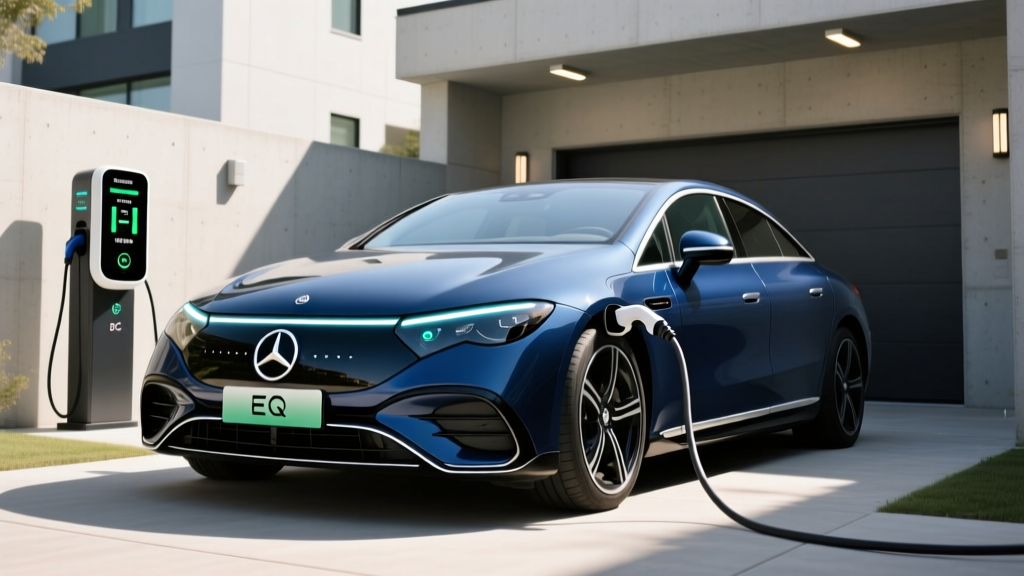
The Mercedes-Benz EQE occupies an unusual position in the luxury EV market. It doesn't chase the longest range or the quickest 0-60 time — instead, it delivers the kind of refined, whisper-quiet driving experience that Mercedes has spent decades perfecting, now applied to a battery-electric platform. For 2026, the EQE sedan continues with its 90.6 kWh usable battery, rear- and all-wheel-drive configurations, and a cabin that rivals anything in its class for material quality and isolation.
But the EQE also asks buyers to accept some trade-offs: a rear seat that's tighter than you'd expect for its footprint, a sloping roofline that compromises trunk utility, and a starting price that lands well above some compelling alternatives. This review breaks down every number that matters — from real-world highway range to DC fast-charge taper — so you can decide whether the Benz EQe earns a spot in your garage.
Range, Efficiency, and the Real-World Caveat
The 2026 EQE 350+ (rear-wheel drive) carries an EPA-estimated range of 305 miles on its 90.6 kWh usable battery pack. The dual-motor EQE 350 4MATIC drops to approximately 277 miles, while the performance-oriented AMG EQE 43 4MATIC settles around 251 miles. Efficiency for the 350+ lands at roughly 90 MPGe combined, or about 37 kWh per 100 miles.
EPA 305 miles (350+ RWD) is the laboratory number. In mixed highway driving at 70-75 mph, expect 255–275 miles before you're hunting for a charger. In freezing temperatures (below 32°F), range can drop an additional 15–25%, putting realistic winter highway range closer to 210–235 miles. City driving with regenerative braking recovers some of that gap — we've seen 285+ miles in stop-and-go conditions at moderate temperatures. The EQE's thermal management system helps mitigate cold-weather losses, but physics is physics: a cold battery is a less efficient battery.
The battery pack uses NMC (nickel-manganese-cobalt) lithium-ion chemistry, which offers higher energy density than LFP but requires more careful state-of-charge management for long-term health. Mercedes recommends charging to 80% for daily use and reserving 100% charges for road trips — a practice that extends battery longevity.
| Spec | EQE 350+ (RWD) | EQE 350 4MATIC (AWD) | AMG EQE 43 |
|---|---|---|---|
| EPA Range | 305 mi | 277 mi | 251 mi |
| Battery (Usable) | 90.6 kWh NMC | 90.6 kWh NMC | 90.6 kWh NMC |
| Horsepower | 288 hp | 288 hp | 469 hp |
| 0–60 mph | 6.2 sec | 5.8 sec | 4.0 sec |
| Drivetrain | Rear-Wheel Drive | Dual-Motor AWD | Dual-Motor AWD |
| Efficiency (MPGe) | 90 combined | 82 combined | 74 combined |
| Base MSRP | $76,050 | $79,050 | $106,900 |
Charging Speed: DC Fast, Level 2, and the Curve
Charging speed is where luxury EV buyers often have the most questions, and the EQE delivers competent but not class-leading performance. The sedan supports a maximum DC fast-charge rate of 170 kW on a CCS-equipped charger. In practice, that means a 10–80% charge in approximately 32 minutes under ideal conditions — battery preconditioned, ambient temperature moderate, and connected to a charger capable of sustaining that rate.
Here's the charging-curve reality that spec sheets omit: the EQE doesn't hold 170 kW for the entire session. Peak rate is achieved at lower states of charge (roughly 10–30% SoC), then tapers progressively. By 60% SoC, you're typically seeing 100–120 kW, and above 80%, the rate drops sharply to protect battery health. If you're road-tripping and need to charge past 80%, budget extra time — the last 20% can take as long as the first 50%.
| Charging Level | Power / Rate | Speed | Notes |
|---|---|---|---|
| Level 1 (120V household) | ~1.4 kW | ~4 mi/hr | Emergency/trickle only; 60+ hrs for full charge |
| Level 2 (240V home/public) | 9.6 kW (onboard charger) | ~28 mi/hr | Full charge in ~10 hrs; ideal for overnight |
| DC Fast Charge (CCS) | Up to 170 kW peak | 10–80% in ~32 min | Tapers above 60%; precondition battery via nav |
For home Level 2 charging, the EQE's 9.6 kW onboard charger is a strong point. Many competitors still use 7.2–7.7 kW onboard chargers, meaning the EQE refills faster overnight. A full 10-hour session on a 48-amp Level 2 circuit adds roughly 280 miles — enough to replenish nearly the entire battery. If you're installing a home charger, a NEMA 14-50 outlet or hardwired wallbox on a 60-amp circuit will deliver the full 9.6 kW. Consult a licensed electrician to confirm your panel can support the load — a 200-amp service panel is typically required.
The EQE comes with a CCS1 connector in North America. As Mercedes-Benz has begun adopting NACS (Tesla's connector) for newer models, check your specific model year and build date — some 2026 models may ship with a NACS port or include a CCS-to-NACS adapter for Supercharger access. Verify with your dealer before purchase.
Performance, Ride Quality, and Drivetrain
The EQE 350+ makes 288 horsepower and 391 lb-ft of torque from its single rear-mounted motor. The 0–60 mph sprint takes 6.2 seconds — respectable for a 5,400-pound luxury sedan but not thrilling by EV standards. The 350 4MATIC adds a front motor for all-wheel grip and shaves the 0–60 to 5.8 seconds with the same peak horsepower (torque delivery differs with dual motors).
Where the EQE genuinely impresses is ride quality. The available AIRMATIC air suspension (standard on 4MATIC, optional on 350+) delivers a supple, controlled ride that absorbs highway expansion joints and broken pavement with the kind of composure that defines the Mercedes brand. Rear-axle steering (optional, up to 10 degrees) transforms the car's maneuverability — the EQE's turning circle shrinks to that of a compact car, making parking and low-speed navigation remarkably easy for a vehicle over 194 inches long.
The AMG EQE 43 steps performance up substantially: 469 hp, 0–60 in 4.0 seconds, and a sport-tuned air suspension. It's genuinely quick, but at a $30,000+ premium and 50+ miles of range sacrificed, it's a niche choice within the lineup.
Interior, Cargo, and Daily Livability
The EQE's cabin is a showcase of Mercedes' design language: available Hyperscreen (a 56-inch glass panel spanning the dashboard), turbine-style air vents, ambient lighting with 64 colors, and materials that range from open-pore wood to MB-Tex synthetic leather. The front seats are comfortable on long drives, with available massage, ventilation, and multi-contour bolsters.
However, the EQE's exterior proportions — that sleek, bow-shaped roofline — create interior trade-offs. Rear legroom measures 38.2 inches, which is adequate but falls short of the BMW i5 and the Mercedes EQS. Taller passengers will notice the sloping roofline reducing headroom. The trunk offers 15.2 cubic feet of cargo space — usable but not generous for a sedan in this price class. There's no front trunk (frunk); the space under the hood houses drivetrain components.
The MBUX infotainment system runs well, with responsive touch inputs, wireless Apple CarPlay and Android Auto, and a capable voice assistant ("Hey Mercedes"). The available Driver Assistance Package includes adaptive cruise control with stop-and-go, active lane-keeping, and evasive steering assist — all operating at SAE Level 2, meaning the driver must remain fully engaged and hands on the wheel at all times.
The EQE's available DRIVE PILOT system (where offered) is a Level 2 driver-assistance feature. It does not make the vehicle self-driving. You are responsible for monitoring the road, maintaining awareness, and intervening at any time. Mercedes' Level 3 DRIVE PILOT system, which permits conditional hands-off operation at low speeds on approved highways, has limited availability and specific operational constraints — check current regional availability with your dealer.
Pricing, Tax Credits, and Ownership Cost
The 2026 EQE lineup starts at $76,050 for the 350+ Sedan (including destination). The 350 4MATIC begins at $79,050, and the AMG EQE 43 at $106,900. Well-equipped 350+ models with the Premium Package, AIRMATIC suspension, and Driver Assistance Package typically land in the $85,000–$92,000 range before incentives.
| Trim | Base MSRP | Typical As-Tested | §30D Credit Eligibility |
|---|---|---|---|
| EQE 350+ Sedan | $76,050 | $85,000–$92,000 | Likely ineligible — see sourcing note below |
| EQE 350 4MATIC | $79,050 | $88,000–$95,000 | Likely ineligible — see sourcing note below |
| AMG EQE 43 | $106,900 | $115,000+ | Ineligible — exceeds MSRP cap |
Federal tax credit reality: Under IRS §30D rules, the new EV credit provides up to $7,500, but eligibility hinges on three factors: buyer income caps ($300K joint / $150K single modified AGI), vehicle MSRP caps ($55,000 for sedans), and battery component/critical mineral sourcing requirements. The EQE sedan's MSRP exceeds the $55,000 sedan cap, which disqualifies it from the new-vehicle credit regardless of sourcing. The point-of-sale transfer option (allowing the credit to be applied as a down payment reduction at the dealer) is available for eligible vehicles — but again, the EQE sedan does not qualify.
Some buyers may find the EQE available through the used EV credit (up to $4,000 or 30% of sale price, whichever is less, on vehicles under $25,000 with their own income caps) once depreciation brings prices into range — typically 3–4 years out. Consult a tax professional for your specific situation, and verify current rules at IRS.gov clean vehicle credits.
On the ownership-cost side, the EQE benefits from lower fueling costs versus its gasoline counterpart (the E-Class). At $0.14/kWh national average electricity and 37 kWh/100mi efficiency, fueling costs roughly $0.052 per mile. A comparable E350 at 25 MPG combined and $3.50/gallon costs about $0.14 per mile — a savings of roughly $1,320 per year at 15,000 miles. Insurance premiums, however, tend to run 15–25% higher than equivalent ICE vehicles; get quotes before purchasing. Mercedes' warranty covers the battery and electric powertrain for 8 years or 100,000 miles (whichever comes first), with a capacity retention threshold of 70% — consistent with industry norms.
Pros and Cons
- Exceptional ride refinement and cabin quietness — best-in-class NVH isolation
- 9.6 kW onboard Level 2 charger fills the battery faster overnight than most rivals
- Available rear-axle steering dramatically improves low-speed maneuverability
- Strong build quality and premium materials throughout
- AIRMATIC air suspension delivers a composed, adaptive ride
- MBUX infotainment is responsive with Hyperscreen option
- 170 kW peak DC charging is slower than rivals (BMW i5, Lucid Air, Hyundai Ioniq 6)
- Real-world highway range falls 30–50 miles short of EPA sticker
- Rear seat headroom and trunk space compromised by sloping roofline
- No frunk for additional cargo
- Exceeds $55,000 MSRP cap — ineligible for $7,500 federal tax credit
- Starting price above $76K with options pushing past $90K
Who Should Buy the Mercedes-Benz EQE?
The Benz EQE is best suited for luxury sedan buyers who prioritize ride comfort, cabin isolation, and brand prestige over maximum range or the fastest charging speeds. If your daily routine involves a 40–80 mile round-trip commute with overnight Level 2 home charging, the EQE's 305-mile EPA range provides ample buffer, and you'll rarely need DC fast charging during the work week.
It's less ideal for frequent road-trippers who need 300+ miles of real-world highway range and 20-minute charging stops — the BMW i5 (with available 205 kW charging) or Lucid Air (400+ mile range, 300+ kW charging) serve that use case better. Families needing maximum rear-seat space should also test-fit passengers before committing; the EQS or an electric SUV like the Rivian R1S offers more room.
- You value ride comfort and cabin silence above all else in an EV sedan
- You have reliable home Level 2 charging and commute under 80 miles daily
- Rear-axle steering and air suspension matter for your driving environment
- Budget is not the primary constraint (you're shopping $80K–$95K as-equipped)
- You road-trip frequently and need fast DC charging + maximum real-world range
- Rear-seat space for adult passengers is a priority
- Federal tax credit eligibility is essential to your purchase math
- You want sport-sedan dynamics (consider the BMW i5 M60 or Porsche Taycan)
Frequently Asked Questions
What is the real-world range of the Mercedes-Benz EQE?
The EPA rates the EQE 350+ at 305 miles, but real-world highway driving at 70–75 mph typically yields 255–275 miles in moderate temperatures. In cold weather (below freezing), expect 210–235 miles of highway range. City driving with regenerative braking can approach or slightly exceed the EPA figure.
How fast does the EQE charge at home and on DC fast chargers?
At home on a 240V Level 2 charger, the EQE's 9.6 kW onboard charger adds roughly 28 miles of range per hour — a full charge takes about 10 hours. On a DC fast charger, the EQE peaks at 170 kW and charges from 10–80% in approximately 32 minutes, though the rate tapers significantly above 60% state of charge.
Does the 2026 Mercedes-Benz EQE qualify for the federal EV tax credit?
No. The EQE sedan's base MSRP starts at $76,050, which exceeds the IRS §30D MSRP cap of $55,000 for sedans. Even if battery sourcing requirements were met, the price alone disqualifies it. Always verify current eligibility at IRS.gov and consult a tax professional.
How does the EQE compare to the BMW i5 and Lucid Air?
The BMW i5 offers comparable luxury with faster DC charging (up to 205 kW), slightly more rear-seat space, and a lower starting price — but a firmer ride. The Lucid Air Pure delivers over 400 miles of EPA range and dramatically faster charging (300+ kW) but at a higher entry price and with a less established service network. The EQE wins on ride comfort and cabin quietness but trails on charging speed and range efficiency.
What is the EQE's battery warranty?
Mercedes-Benz covers the EQE's high-voltage battery and electric drivetrain for 8 years or 100,000 miles, whichever comes first. The warranty guarantees a minimum of 70% battery capacity retention during that period. This aligns with the industry standard set by most EV manufacturers.
Is the EQE a good EV for road trips?
It's adequate but not ideal. With 255–275 real-world highway miles, you'll stop every 2.5–3 hours on long trips. The 32-minute 10–80% DC charge is workable, but the 170 kW peak rate means you'll spend more time at chargers than you would in a Lucid Air, Hyundai Ioniq 6, or Tesla Model S. Route planning with Mercedes' built-in navigation (which preconditions the battery for charging stops) helps optimize the experience.
Does the EQE have a front trunk (frunk)?
No. The EQE does not offer a frunk. The space under the hood is occupied by drivetrain components, power electronics, and the HVAC system. All cargo goes in the 15.2-cubic-foot rear trunk.