Quick Answer: Is a Benz Electric Car Right for You?
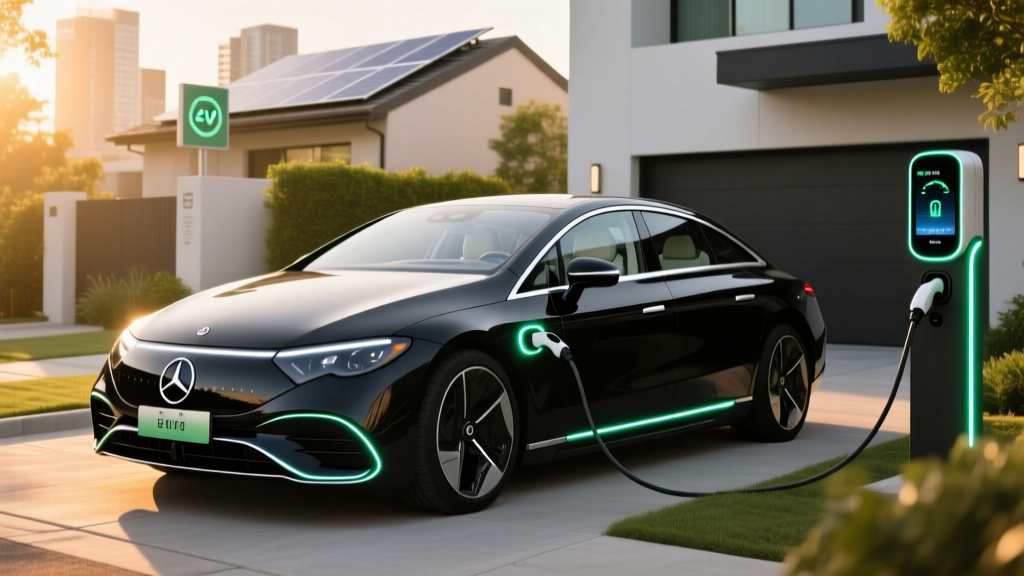
A 2026 Mercedes-Benz electric car — primarily the EQE sedan and EQS sedan/SUV — delivers 230–390 miles of EPA range, 170 kW DC fast charging (10–80% in ~31 minutes), and luxury EV refinement starting around $75,000. These vehicles suit buyers with home Level 2 charging, daily commutes under 100 miles, and a desire for premium interiors. However, they do not currently qualify for the federal §30D tax credit due to battery-sourcing rules, and real-world highway range drops 15–20% below EPA stickers. If you need maximum range-per-dollar, a Tesla or Hyundai Ioniq delivers more efficiency. If you want Mercedes luxury with zero tailpipe emissions, the EQ lineup is compelling — with caveats.
The 2026 Mercedes-Benz EV Lineup: What You Can Actually Buy
Mercedes-Benz has streamlined its electric portfolio for 2026 after discontinuing the smaller EQA and EQB in the U.S. market. The current buyable lineup centers on two platforms:
| Model | Battery (usable kWh) | EPA Range | Peak DC Charge | 10–80% Time | 0–60 mph | HP | Base MSRP |
|---|---|---|---|---|---|---|---|
| EQE 350+ Sedan | 90.6 kWh (NMC) | 305 mi | 170 kW | ~31 min | 6.2 sec | 288 | $75,050 |
| EQE 350 4MATIC | 90.6 kWh (NMC) | 277 mi | 170 kW | ~31 min | 5.8 sec | 288 | $78,050 |
| EQE 500 4MATIC | 90.6 kWh (NMC) | 268 mi | 170 kW | ~31 min | 4.5 sec | 402 | $87,550 |
| EQS 450+ Sedan | 108.4 kWh (NMC) | 390 mi | 200 kW | ~29 min | 5.9 sec | 355 | $105,550 |
| EQS 450 4MATIC SUV | 108.4 kWh (NMC) | 330 mi | 200 kW | ~29 min | 5.8 sec | 355 | $110,000 |
| AMG EQE 53 | 90.6 kWh (NMC) | 230 mi | 170 kW | ~31 min | 3.3 sec | 617 | $108,600 |
Sources: fueleconomy.gov, Mercedes-Benz USA press specifications. Range figures are EPA estimates; real-world results vary.
Real-World Range vs. EPA Sticker
EPA 305 mi (EQE 350+): Expect approximately 255–275 miles in mixed highway driving at 70–75 mph. In cold weather (below 30°F), range can drop to 210–235 miles due to battery resistance and cabin heating demands. The EQS 450+ sedan's 390-mile EPA figure similarly translates to roughly 320–340 miles on the highway in mild conditions. Mercedes includes a usable battery buffer that protects long-term health but means you'll never access the full gross kWh.
Benz Electric Car vs. Gas Mercedes: The Cost Reality
The most common question from luxury sedan buyers: does an electric Mercedes save money compared to a gas E-Class or S-Class? Let's run the numbers over a 5-year ownership period assuming 12,000 miles per year.
| Cost Category | EQE 350+ (Electric) | E350 (Gas) | Difference |
|---|---|---|---|
| Purchase Price (MSRP) | $75,050 | $62,300 | +$12,750 (EV) |
| Federal Tax Credit (§30D) | $0* | $0 | — |
| Fuel/Energy (5 yrs) | $4,200** | $11,250*** | –$7,050 (EV saves) |
| Maintenance (5 yrs) | $2,100 | $4,800 | –$2,700 (EV saves) |
| Insurance (5 yrs) | $14,400 | $11,400 | +$3,000 (EV) |
| Estimated Depreciation | $33,750 (45%) | $28,000 (45%) | +$5,750 (EV) |
| Total 5-Year Cost | $95,250 | $93,550 | +$1,700 (EV) |
*The Mercedes EQ lineup does not currently meet §30D critical-mineral and battery-component sourcing requirements. Verify current status at irs.gov.
**Based on $0.14/kWh national average, home charging primarily, 3.0 mi/kWh efficiency.
***Based on $3.75/gallon premium, 25 MPG combined.
The takeaway: a benz electric car costs roughly the same as its gas counterpart over five years, with higher upfront and insurance costs offset by dramatically lower fuel and maintenance expenses. The EQE breaks even around year 6–7 if you keep the vehicle. The financial case strengthens considerably if your utility offers off-peak EV rates below $0.10/kWh, or if your state offers additional rebates.
Charging a Mercedes EV: Home, Public, and What It Costs
Mercedes-Benz EVs use the CCS1 connector for DC fast charging and the J1772 connector for Level 2 AC charging across all 2026 EQ models. Unlike Tesla and recent Ford/GM/Rivian vehicles, Mercedes has not yet adopted the NACS (Tesla) connector, though the brand has confirmed a transition is planned for future model years.
| Level | Power (kW) | Miles Added/Hour | Typical Use Case |
|---|---|---|---|
| Level 1 (120V) | 1.4 kW | ~4 mi/hr | Emergency/trickle only |
| Level 2 (240V, 48A) | 11.5 kW | ~34 mi/hr | Home daily charging |
| DC Fast (EQE) | 170 kW peak | ~180 mi in 15 min | Road trips |
| DC Fast (EQS) | 200 kW peak | ~200 mi in 15 min | Road trips |
The Charging Curve Reality
Mercedes' 170 kW peak rate on the EQE is not sustained across the full session. Like all EVs, the battery management system tapers charging speed as the battery fills. Expect peak speeds between 10–40% SoC, dropping to roughly 100 kW by 60% and below 50 kW past 80%. This is why manufacturers quote 10–80% times rather than 0–100%. For road-trip efficiency, plan to charge from 10% to 80% and drive on — charging past 80% at a DC station is rarely time-efficient.
Home Charging Installation Costs
Most benz electric car owners will want a Level 2 home charger. Here's a realistic installation breakdown:
| Component | Low Estimate | High Estimate | Notes |
|---|---|---|---|
| Level 2 Charger (48A) | $400 | $750 | ChargePoint, Wallbox, Emporia |
| Electrician Labor | $500 | $2,000 | Depends on panel proximity |
| Permit & Inspection | $50 | $300 | Varies by municipality |
| Panel Upgrade (if needed) | $1,500 | $4,000 | Required if panel is 100A or maxed |
| Total (no panel upgrade) | $950 | $3,050 | Most homes with 200A service |
| Total (with panel upgrade) | $2,450 | $7,050 | Older homes or maxed panels |
Always get a quote from a licensed electrician before purchasing a charger. The Mercedes Wallbox Home (branded charger) is available but typically costs more than equivalent third-party units with identical functionality.
Tax Credits, Incentives, and the §30D Problem for Mercedes EVs
This is where the benz electric car story gets complicated. As of 2026, no Mercedes-Benz EQ model qualifies for the $7,500 federal §30D clean vehicle credit. The reason: the Inflation Reduction Act's battery-sourcing requirements mandate that critical minerals and battery components come from the U.S. or free-trade-agreement partners. Mercedes sources battery cells from suppliers whose supply chains do not currently meet these thresholds.
Federal §30D Credit Requirements (2026)
- MSRP Cap: Sedans must be under $55,000; SUVs/trucks under $80,000 — most EQ models exceed this regardless
- Buyer Income Cap: $150K single / $225K head of household / $300K joint filers
- Battery Sourcing: Critical minerals and components must meet escalating domestic/FTA thresholds — Mercedes does not currently meet this
- Point-of-Sale Transfer: Eligible buyers can apply the credit as a dealer discount at purchase
- Verification: Check the official list at fueleconomy.gov before purchasing
The EQS SUV (starting ~$110,000) and EQE sedan (starting ~$75,000) also fail the MSRP cap test independently. Even if battery sourcing were resolved, the price ceiling eliminates most of the lineup. This is a significant disadvantage versus competitors like the BMW iX (which also doesn't qualify) but also versus the Tesla Model S, Lucid Air Pure, and select trims of the Cadillac Lyriq that do meet some or all requirements.
State incentives may apply. States like California, Colorado, and Massachusetts offer additional EV rebates or HOV-lane access that don't depend on federal sourcing rules. Check your state's energy office for current programs.
Common Misconceptions About Mercedes Electric Cars
| Myth | Fact |
|---|---|
| "The EQS gets 390 miles, so I'll never need to charge on road trips." | EPA 390 mi drops to ~320 mi at highway speeds; plan stops every 250–280 miles for comfort and battery health. |
| "I can charge at Tesla Superchargers." | 2026 Mercedes EQ models use CCS1 — Tesla Superchargers (NACS) are not compatible without an adapter, and Mercedes has not officially approved third-party NACS adapters for EQ vehicles. |
| "Electric Mercedes are maintenance-free." | Tires, cabin air filters, brake fluid, coolant, wiper blades, and the 12V auxiliary battery still require service. Expect ~$400–600/year in maintenance, not zero. |
| "The battery will need replacing in 5 years." | Mercedes warranties the traction battery for 10 years/155,000 miles against degradation below 70% capacity. NMC chemistry in a thermally managed pack typically retains 85–90% capacity at 100,000 miles based on industry data. |
| "I don't need home charging; public stations are everywhere." | Public DC charging costs 2–3× more than home charging ($0.35–$0.50/kWh vs. $0.12–$0.14/kWh). Without home charging, your fuel cost advantage over gas shrinks dramatically, and convenience suffers. |
Who Should Buy a Benz Electric Car — and Who Shouldn't
Decision Framework: Is a Mercedes EV Right for You?
Choose a benz electric car if:
- You have access to Level 2 home charging (garage or driveway with 240V circuit)
- Your daily driving is under 100 miles round-trip, with occasional road trips under 300 miles between stops
- You prioritize cabin quietness, ride comfort, and brand prestige over maximum range-per-dollar
- You understand and accept the lack of federal tax credit eligibility
- You live in a moderate climate, or accept 15–25% range loss in winter with preconditioning
Look elsewhere if:
- You rely exclusively on apartment/condo living without charging access — public-only charging erodes the cost advantage and convenience
- You regularly drive 400+ miles in a single day — the 170–200 kW charge rate means longer stops than a Tesla Model S (250 kW) or Lucid Air (300+ kW)
- The federal tax credit is essential to your purchase math — consider Tesla, Rivian, Cadillac, or qualifying Ford models
- You want the latest NACS connector for Tesla Supercharger access — wait for Mercedes' confirmed connector transition or choose a brand already on NACS
- Maximum efficiency (mi/kWh) is your priority — the EQE averages 3.0 mi/kWh vs. 3.8–4.2 mi/kWh for a Tesla Model S or Hyundai Ioniq 6
Ownership Realities: Insurance, Depreciation, and the Long Game
Luxury EVs carry higher insurance premiums than their gas counterparts — typically 15–25% more for EQ models, driven by higher repair costs for battery-adjacent damage and specialized parts. Budget $2,400–$3,200/year for comprehensive coverage depending on your state and driving record.
Depreciation has been the painful headline for luxury EVs. The EQS and EQE experienced steeper first-year depreciation (30–40%) in 2024–2025 as Mercedes aggressively discounted new inventory and the used EV market softened. For 2026 models, expect a more normalized 5-year depreciation of approximately 45–50%, similar to a gas S-Class. If you lease rather than buy, Mercedes Financial often structures leases with residual values that absorb depreciation risk — and current EQ lease deals frequently include subsidized money factors that make leasing the more financially rational choice.
The battery warranty provides long-term peace of mind: 10 years or 155,000 miles with a capacity retention threshold of 70%. Out-of-warranty battery replacement for the 90.6 kWh EQE pack currently runs $18,000–$25,000 at a dealer, though individual module replacement (for localized cell failures) can cost significantly less at $3,000–$6,000 per module.
Frequently Asked Questions
Is Mercedes discontinuing its electric cars?
No. Mercedes-Benz has reaffirmed its commitment to electric vehicles, though the brand has adjusted its timeline for going fully electric from "Ambition 2025" to a more flexible approach that includes updated hybrids alongside EVs through 2030. The EQE and EQS remain in production for 2026, and a next-generation electric CLA (based on the MMA platform) is expected for the 2026 model year with improved efficiency and NACS charging.
Can I charge a Mercedes EQ at a Tesla Supercharger?
Not natively. 2026 EQ models use the CCS1 connector, while Tesla Superchargers use NACS. Mercedes has announced plans to adopt NACS in future model years, but current owners cannot use Superchargers without a third-party adapter — and Mercedes has not officially validated any adapter for use with EQ vehicles, which could affect warranty coverage.
How long does it take to charge an EQE at home?
With a 48-amp Level 2 charger (11.5 kW), a fully depleted EQE 90.6 kWh battery charges from 0–100% in approximately 9.5 hours. In practice, most owners plug in at 30–40% remaining and wake up to a full charge in 5–6 hours. A standard 120V outlet (Level 1) adds only about 4 miles per hour and is not practical as a primary charging method.
What's the real-world efficiency of a benz electric car?
The EQE 350+ achieves an EPA-rated 97 MPGe combined (34 kWh/100 mi). In real-world highway driving at 70 mph, expect approximately 3.0 mi/kWh (33 kWh/100 mi). The heavier EQS SUV drops to roughly 2.5–2.7 mi/kWh on the highway. For comparison, a Tesla Model S achieves approximately 3.8–4.0 mi/kWh under similar conditions.
Does the EQ lineup have regenerative braking and one-pedal driving?
Yes, but with nuance. Mercedes offers three regen levels selectable via steering-wheel paddles (D+, D, D–) plus an intelligent D Auto mode that uses radar and navigation data to adjust regen dynamically. Full one-pedal driving (coming to a complete stop via regen alone) is available in D– mode, though Mercedes' regen tuning is generally smoother and less aggressive than Tesla or Nissan Leaf implementations.