Quick Answer: Is the Benz B-Class Electric Drive Worth Buying in 2026?
The Mercedes-Benz B-Class Electric Drive (sold as the B250e for 2017) is a used-only compact EV with 87 miles of EPA range, a 28 kWh usable battery, and 177 horsepower. Production ended after the 2017 model year, so you will only find these on the used market, typically priced between $10,000 and $16,000 depending on mileage and condition. It qualifies for the up-to-$4,000 used EV tax credit under IRS §25E if you meet income requirements and purchase from a dealer. This car works best as a city commuter for drivers with home Level 2 charging and daily drives under 60 miles. It is not a road-trip vehicle.
What Exactly Is the Benz B-Class Electric Drive?
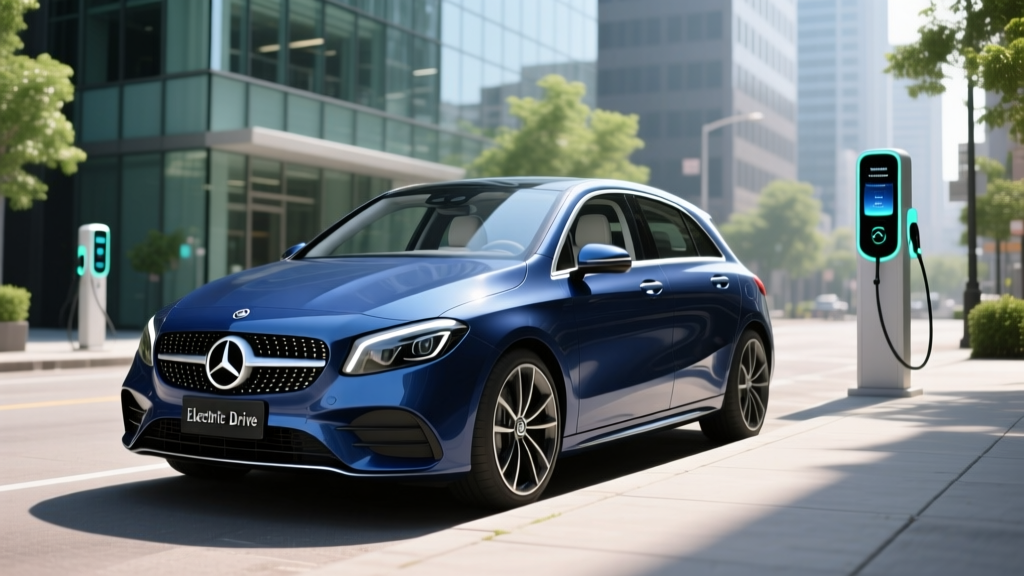
Mercedes-Benz introduced the B-Class Electric Drive for the 2014 model year as a compliance-oriented EV built on the standard B-Class hatchback platform. The electric powertrain was developed in partnership with Tesla, which supplied the motor and battery components — a notable engineering collaboration at the time. For the 2017 model year, Mercedes renamed it the B250e before discontinuing it entirely.
Despite its limited range by today's standards, the B-Class Electric Drive stands out for its solid build quality, quiet cabin, and surprisingly spacious interior thanks to a clever "sandwich floor" design that positioned the battery pack beneath the passenger compartment rather than intruding into cargo or seating space.
| Spec | 2014–2016 B-Class ED | 2017 B250e |
|---|---|---|
| EPA Range | 87 miles | 87 miles |
| Battery (usable) | 28 kWh | 28 kWh |
| Battery Chemistry | NMC (Tesla-supplied) | NMC (Tesla-supplied) |
| Motor Output | 177 hp / 251 lb-ft | 177 hp / 251 lb-ft |
| 0–60 mph | ~7.9 seconds | ~7.9 seconds |
| DC Fast Charge (max) | None (L2 only) | None (L2 only) |
| Level 2 Charge Rate | 7.2 kW | 7.2 kW |
| L2 Charge Time (0–100%) | ~3.5 hours | ~3.5 hours |
| MPGe (combined) | 84 MPGe | 84 MPGe |
| EPA Efficiency | 40 kWh/100mi | 40 kWh/100mi |
| Cargo Volume | 23.0 cu ft (rear seats up) | 23.0 cu ft (rear seats up) |
| Original MSRP (base) | ~$41,450 (2014) | ~$42,400 (2017) |
| Used Price Range (2026) | $10,000–$16,000 | |
Source: EPA fueleconomy.gov
Real-World Range: What 87 EPA Miles Actually Means
The EPA sticker says 87 miles, but your real-world experience will vary considerably based on temperature, speed, and terrain. Here is what to expect:
Real-World Range Expectations
- Ideal conditions (65°F, city driving, 35–45 mph): 85–95 miles
- Highway (70 mph, moderate temps): 65–75 miles
- Cold weather (30°F, city + highway mix): 55–65 miles
- Cold weather highway (30°F, 70 mph): 45–55 miles
The B-Class Electric Drive lacks a heat pump — it uses resistive cabin heating, which draws heavily from the 28 kWh battery in cold weather. Expect 25–35% range loss in freezing temperatures.
At 40 kWh per 100 miles, the B-Class Electric Drive is notably less efficient than modern EVs. For comparison, the 2026 Hyundai Ioniq 5 achieves roughly 26–29 kWh/100mi. This inefficiency, combined with the small battery, explains the limited range.
Charging: Level 2 Only — No DC Fast Charging
This is the single biggest limitation of the B-Class Electric Drive for modern buyers: it has no DC fast charging capability. The vehicle charges exclusively via Level 1 (120V) or Level 2 (240V) AC charging using a J1772 connector. There is no CCS, CHAdeMO, or NACS port.
| Charging Level | Power | Miles Added per Hour | Full Charge Time |
|---|---|---|---|
| Level 1 (120V / 12A) | ~1.4 kW | ~3.5 mi/hr | ~25 hours |
| Level 2 (240V / 30A) | 7.2 kW | ~18 mi/hr | ~3.5 hours |
Without DC fast charging, this car cannot meaningfully road-trip. A 200-mile journey would require multiple multi-hour stops at Level 2 chargers, adding 10+ hours to your trip. This vehicle is strictly a home-base commuter.
Home charging setup: A Level 2 home charger (240V, 30A circuit minimum) is essentially mandatory. Expect to pay $500–$1,500 for a quality Level 2 wallbox (ChargePoint Home Flex, Emporia Level 2, or similar) and $500–$2,000+ for professional electrician installation depending on your panel capacity and run distance. If your home electrical panel needs a 200A upgrade, add $1,500–$3,000.
EV vs. Gas: Cost Comparison for the B-Class Electric Drive
Let's compare the used B-Class Electric Drive against a typical used gas compact hatchback (e.g., 2016 Honda Civic Hatchback at ~32 MPG combined) for a driver covering 10,000 miles per year.
| Cost Category | B-Class ED (EV) | Gas Compact (32 MPG) |
|---|---|---|
| Fuel/Energy (10k mi/yr) | $480 (at $0.12/kWh) | $1,094 (at $3.50/gal) |
| Maintenance (annual avg) | ~$200 | ~$550 |
| Insurance (annual avg) | ~$1,400 | ~$1,100 |
| Annual Total | ~$2,080 | ~$2,744 |
| Annual Savings (EV) | ~$664/year | |
Energy cost assumes home Level 2 charging at the national average residential rate of ~$0.12/kWh. At 40 kWh/100mi, 10,000 miles requires ~4,000 kWh annually. If you rely on public Level 2 charging at $0.30–$0.50/kWh, your energy cost jumps to $1,200–$2,000/year — erasing most of the fuel savings.
Common Misconceptions About the B-Class Electric Drive
| Myth | Fact |
|---|---|
| "It's a Tesla underneath, so it's basically a Model 3" | Tesla supplied the motor and battery pack, but the platform, chassis, software, and cabin are entirely Mercedes. The powertrain is from an earlier Tesla generation with far less range. |
| "87 miles is enough for anyone's commute" | 87 miles EPA drops to 55–65 miles in cold weather. If your round-trip commute exceeds 50 miles, you risk range shortfall in winter. |
| "I can road-trip with it if I plan stops" | With no DC fast charging, every stop requires 3+ hours at a Level 2 charger. This is not practical for trips over 80 miles one-way. |
| "The battery will need expensive replacement soon" | NMC batteries from this era typically retain 80–90% capacity at 80,000–100,000 miles. However, replacement (if needed) costs $8,000–$12,000. |
| "It qualifies for the $7,500 federal tax credit" | The §30D new-vehicle credit no longer applies. As a used EV purchased from a dealer, it may qualify for the §25E used-EV credit of up to $4,000 (30% of sale price, capped at $4,000) if you meet income limits. |
Used EV Tax Credit: §25E Rules for the B-Class Electric Drive
Since the B-Class Electric Drive is only available used, the relevant incentive is the IRS §25E Previously-Owned Clean Vehicle Credit. Here is the eligibility framework as of current IRS rules:
- Credit amount: 30% of the sale price, up to a maximum of $4,000
- Vehicle price cap: Sale price must be $25,000 or less (the B-Class ED qualifies at typical used prices)
- Vehicle age: Must be at least 2 model years old (all B-Class EDs qualify)
- Buyer income caps (MAGI): $75,000 single / $112,500 head of household / $150,000 joint
- Dealer sale required: Must purchase from a licensed dealer (private-party sales do not qualify)
- Point-of-sale transfer: You can transfer the credit to the dealer for an immediate price reduction
- First use rule: You (the buyer) must not have received a §25E credit in the prior 3 years
At a typical purchase price of $13,000, the 30% credit would be $3,900 — bringing your effective cost to roughly $9,100. This makes the B-Class Electric Drive one of the most affordable ways to get into a premium-brand EV.
Always verify current eligibility with the IRS §25E page and consult a tax professional before relying on credit assumptions.
Battery Health and Longevity: What to Check Before Buying
The B-Class Electric Drive uses a 28 kWh (usable) NMC lithium-ion pack supplied by Tesla. These cells are generally robust, but any used EV purchase should include a battery health assessment.
What to look for:
- State of Health (SoH): Ask the dealer or seller for a battery diagnostic report. Most B-Class EDs at 60,000–90,000 miles show 82–92% SoH, meaning roughly 23–26 kWh of usable capacity remains.
- Range test: Charge to 100% and verify the dashboard range estimate. A healthy pack should show 75–90 miles at full charge. Below 70 suggests significant degradation.
- Warranty status: Mercedes originally warranted the battery for 8 years/100,000 miles against defects and capacity loss below 70%. A 2014 model's warranty expired in 2022; a 2017 model's warranty expired in 2025. All B-Class EDs are now out of battery warranty.
- Replacement cost: A refurbished or new replacement battery pack runs $8,000–$12,000 installed. Factor this into your total-cost-of-ownership calculation if the SoH is already below 80%.
Ownership Decision Framework: Is This the Right Used EV for You?
Choose the B-Class Electric Drive If:
- Your daily round-trip commute is under 50 miles (under 40 miles in cold climates)
- You have reliable home Level 2 charging (garage or driveway with 240V access)
- You want a premium cabin with Mercedes build quality at a bargain used price
- You need a practical hatchback with 23 cu ft of cargo space and comfortable seating for four
- You will use this as a second car or dedicated commuter, not a sole vehicle for road trips
- You qualify for the §25E used EV credit, bringing effective price under $10,000
Look at Other Used EVs If:
- Your commute exceeds 60 miles round-trip (consider a used Chevrolet Bolt EV with 238–259 miles of range, ~$14,000–$18,000)
- You need DC fast charging for any highway trips (the Bolt, Nissan Leaf Plus, or used Tesla Model 3 all support DCFC)
- You live in an apartment without charging access and must rely on public infrastructure
- You need more than 100 miles of real-world range for daily flexibility
- You want a current-generation battery warranty (consider a certified pre-owned 2023+ EV instead)
Frequently Asked Questions
Can I install a NACS or CCS adapter to use DC fast chargers?
No. The B-Class Electric Drive's onboard charging hardware only supports AC charging (Level 1 and Level 2). There is no DC fast-charge inlet or compatible adapter. J1772-to-NACS adapters only work for AC charging at Level 2 speeds and do not add DC capability.
How does the B-Class Electric Drive compare to a used Nissan Leaf?
The 2014–2017 Nissan Leaf offers a similar 84 miles of EPA range (24 kWh battery) but is less efficient, less refined, and uses passive air-cooled battery management that accelerates degradation in hot climates. The B-Class ED has a liquid-cooled battery, a more premium interior, and more cargo space. However, the 2018+ Leaf (40 kWh, 151-mile range) and Leaf Plus (62 kWh, 226-mile range) are far more practical used alternatives. The Leaf does offer CHAdeMO DC fast charging (on models equipped with it), which the Benz lacks entirely.
What maintenance does the B-Class Electric Drive require?
Minimal compared to a gas car. Expect cabin air filter replacement (~$50–$80 every 20,000 miles), brake fluid flush every 2 years (~$100–$150), tire rotation, and wiper fluid. The regenerative braking system significantly extends brake pad life — many owners report original pads at 80,000+ miles. There is no engine oil, transmission fluid, spark plugs, or exhaust system to service.
Is insurance expensive for a used B-Class Electric Drive?
Insurance averages $1,200–$1,600/year depending on your state, driving record, and coverage levels. This is slightly higher than a comparable gas compact because EV repair costs tend to be higher after collisions (specialized high-voltage safety protocols). Get quotes from multiple insurers — some offer EV-specific discounts.
What happens if the battery fails out of warranty?
Complete battery failure is rare on these Tesla-sourced packs, but gradual degradation is normal. If the pack drops below usable capacity, replacement costs $8,000–$12,000 at a Mercedes dealer. Some independent EV shops offer refurbished pack replacements for $5,000–$8,000. Given the car's used value of $10,000–$16,000, a full battery replacement may not be economically justified — this is the key financial risk of buying an older, out-of-warranty EV.
Does the B-Class Electric Drive qualify for HOV lane access?
HOV lane sticker programs vary by state. California's Clean Air Vehicle decals for used EVs are subject to income limits and program availability. Check your state's DMV for current rules — many states have closed or restricted EV carpool lane programs as adoption has increased.
Final Verdict: A Niche Used EV at the Right Price
The Mercedes-Benz B-Class Electric Drive occupies a specific niche: a well-built, comfortable, premium-badged electric hatchback with very limited range and no fast-charging capability. At $10,000–$16,000 on the used market — and potentially $4,000 less after the §25E credit — it represents genuine value for the right buyer. That buyer has a short commute, home charging, and realistic expectations about what 87 EPA miles (often fewer) can deliver.
If your needs align with those constraints, you get a remarkably refined daily driver with Mercedes engineering, Tesla powertrain DNA, and operating costs roughly $664 per year lower than a comparable gas car. If you need more range or any road-trip flexibility, spend a few thousand more on a used Chevrolet Bolt EV (238 miles, DC fast charging) or a used Tesla Model 3 (220+ miles, Supercharger access).