Bentley's Electric Vehicle: The Short Answer
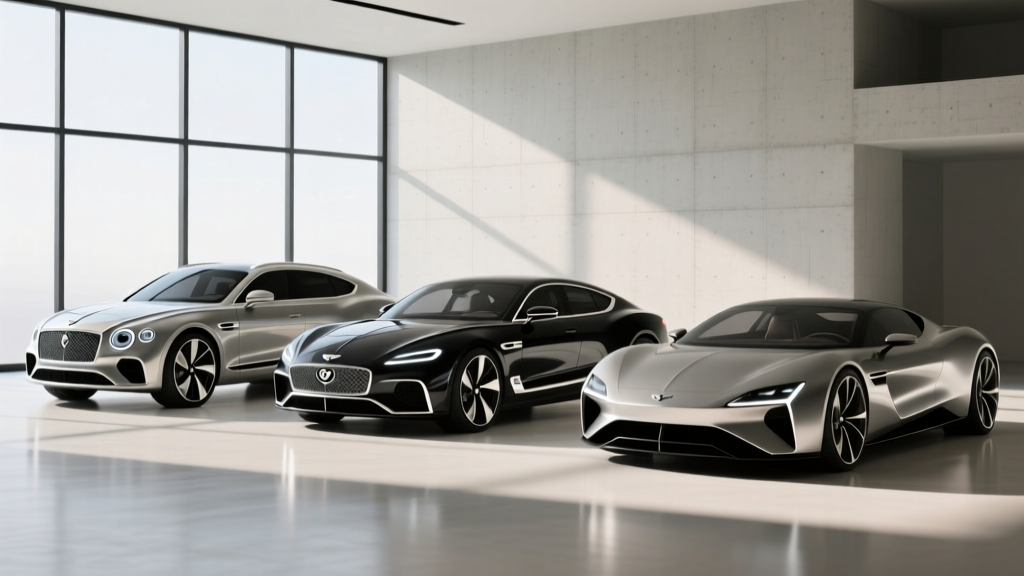
Bentley's first production electric vehicle — widely expected to arrive for the 2027 model year — will ride on Volkswagen Group's PPE (Premium Platform Electric) architecture shared with the Porsche Macan EV and Audi Q6 e-tron. Based on Bentley's announced "Beyond100" strategy and preliminary disclosures, expect a luxury SUV or grand tourer with approximately 100–120 kWh usable battery capacity, an EPA-estimated range of 300–370 miles, 800V architecture supporting up to 270 kW DC fast charging, and a starting MSRP likely between $220,000 and $300,000+. As of early 2026, no Bentley EV is available for purchase; the brand continues to sell plug-in hybrid models (Bentayga EWB Hybrid, Flying Spur Hybrid) while its first BEV remains in development. Bentley has pushed back its originally announced 2030 all-electric target, now planning a more gradual transition.
Where Bentley Stands on Electrification in 2026
Bentley's road to full electrification has been anything but linear. The brand initially committed to going fully electric by 2030 under its Beyond100 strategy, announced in 2020. By late 2023 and into 2024–2025, Bentley's CEO Adrian Hallmark acknowledged that market demand for ultra-luxury EVs had not materialized as quickly as projected, and the timeline was revised. The current plan positions Bentley to offer its first battery-electric vehicle around 2026–2027, with a full electric lineup targeted by the early 2030s rather than 2030 exactly.
What Bentley buyers can purchase today are two plug-in hybrid models:
- Bentayga Hybrid (PHEV): 18 miles EPA electric-only range, 17.8 kWh battery, combined 443 HP, starting around $207,000
- Flying Spur Hybrid (PHEV): 21 miles EPA electric-only range, 18.1 kWh battery, combined 536 HP, starting around $226,000
These PHEVs represent Bentley's bridge technology — useful for short electric commutes with a gasoline engine for longer trips. But they are not the full-electric vehicles that the brand's long-term strategy envisions.
Expected Specs: What We Know About Bentley's First BEV
While Bentley has not released official EPA figures for its first production EV, the PPE platform provides a strong technical baseline. The Porsche Macan EV and Audi Q6 e-tron, which share this architecture, offer useful comparison points for estimating Bentley's specifications.
| Specification | Estimated Bentley EV (2027+) | Porsche Macan 4 EV (Reference) | Audi Q6 e-tron (Reference) |
|---|---|---|---|
| Platform | VW Group PPE | VW Group PPE | VW Group PPE |
| Architecture | 800V | 800V | 800V |
| Battery (usable, est.) | 100–120 kWh | 95 kWh | 94.5 kWh |
| Chemistry (likely) | NMC (nickel manganese cobalt) | NMC | NMC |
| EPA Range (est.) | 300–370 mi | 308 mi | 310–321 mi |
| Peak DC Fast Charge | Up to 270 kW | 270 kW | 270 kW |
| 10–80% DC Charge (est.) | ~21–25 min | ~21 min | ~21 min |
| Level 2 AC Charge | 11–22 kW | 11 kW (optional 22 kW) | 11 kW (optional 22 kW) |
| Horsepower (est.) | 550–700+ HP | 402 HP | 456 HP |
| 0–60 mph (est.) | 3.5–4.5 sec | 4.9 sec | 4.9 sec |
| Expected Starting MSRP | $220,000–$300,000+ | $81,000 | $65,000 |
Important caveats: Bentley vehicles are significantly heavier than their platform-mates due to added luxury materials, sound deadening, and larger dimensions. This weight penalty typically reduces efficiency and range compared to lighter PPE vehicles. The range figures above assume Bentley optimizes for a larger battery pack to offset the mass. Real-world highway range at 75+ mph will likely be 15–25% below the EPA sticker, and cold-weather (below 32°F) range loss of 20–30% is typical for NMC chemistry without aggressive cabin preconditioning.
Real-World Range Expectations
EPA Estimate (projected): 300–370 miles
Highway driving at 75 mph: ~240–300 miles
Cold weather (20°F) with cabin heat: ~210–270 miles
Mixed city/highway in moderate temps: ~280–340 miles
These are projections based on PPE platform efficiency data and Bentley's expected weight class (~5,500–6,000 lbs). Actual EPA figures will be published closer to launch.
Charging Reality: Home, Public, and What You'll Need
At the ultra-luxury price point, Bentley EV owners will almost certainly charge primarily at home. But understanding the full charging picture matters for road trips and daily logistics.
| Charging Level | Power | Estimated Miles Added per Hour | Typical Use Case |
|---|---|---|---|
| Level 1 (120V outlet) | ~1.4 kW | ~4–5 mi/hr | Emergency/trickle only |
| Level 2 (240V, 48A) | ~11.5 kW | ~35–40 mi/hr | Daily home charging |
| Level 2 (240V, 80A) | ~19.2 kW | ~55–65 mi/hr | High-power home (if supported) |
| DC Fast Charge | Up to 270 kW peak | ~600–800 mi/hr (peak) | Road trips, 10–80% in ~22 min |
Home charging setup: A Bentley EV with a ~110 kWh battery charging at 11.5 kW (standard Level 2) will take approximately 9–10 hours for a full charge. This works well for overnight charging. Installation of a hardwired Level 2 charger (like a ChargePoint Home Flex or Tesla Wall Connector with J1772 adapter) typically costs $1,200–$3,500 including equipment, electrical work, and permits — assuming your panel has capacity. A 200-amp service panel is usually sufficient; older homes may need a panel upgrade ($2,000–$5,000 additional).
Public DC fast charging: The 800V PPE architecture means Bentley's EV will charge at some of the fastest speeds available. On a 270 kW-capable charger (such as Electrify America's latest 350 kW stalls), expect a 10–80% charge in roughly 21–25 minutes. However, the charging curve tapers significantly above 80% — a full 80–100% top-off can take an additional 20–30 minutes. For road-trip planning, plan stops around the 10–80% window for maximum efficiency.
Connector note: Bentley's EV will likely use the NACS (North American Charging Standard) connector, as Volkswagen Group has committed to NACS adoption across its brands for the North American market. This grants access to Tesla's Supercharger network in addition to Electrify America, EVgo, and other networks.
Cost Breakdown: Purchase, Fueling, and Ownership
Let's compare the projected costs of a Bentley EV against the current Bentayga V8 (gasoline) and Bentayga Hybrid over a 5-year ownership period. This analysis uses estimated figures for the EV since official pricing is not yet confirmed.
| Cost Factor (5-Year) | Bentley EV (Projected) | Bentayga V8 (Gas) | Bentayga Hybrid (PHEV) |
|---|---|---|---|
| Starting MSRP | $250,000 (est.) | $205,000 | $207,000 |
| Federal Tax Credit (§30D) | $0 (exceeds MSRP cap) | $0 | $0 |
| Fuel/Energy (12,000 mi/yr) | $3,000–$4,500 | $18,000–$22,000 | $10,000–$14,000 |
| Maintenance | $3,500–$5,000 | $8,000–$12,000 | $7,000–$10,000 |
| Insurance (est. annual avg) | $6,000–$8,000/yr | $5,500–$7,500/yr | $5,500–$7,500/yr |
| Estimated Depreciation (5yr) | 50–60% | 55–65% | 55–65% |
| 5-Year Total Cost of Ownership | $420,000–$510,000 | $430,000–$520,000 | $390,000–$470,000 |
Key takeaway: At the ultra-luxury price tier, the traditional EV advantage of lower "fuel" costs becomes a smaller percentage of total ownership cost. The Bentley EV will save roughly $14,000–$18,000 in energy costs over five years compared to the V8 Bentayga, and maintenance savings (no oil changes, fewer brake replacements due to regenerative braking) add another $4,000–$7,000. But these savings are modest relative to the vehicle's purchase price. Buyers at this level are choosing EVs for refinement, instant torque, and environmental positioning — not primarily for cost savings.
Federal tax credit: Under current IRS §30D rules, the Bentley EV will almost certainly not qualify for the $7,500 federal tax credit. The credit has an MSRP cap of $80,000 for SUVs and $55,000 for sedans, and buyer income limits apply ($300,000 joint / $150,000 individual AGI). Bentley's pricing far exceeds these thresholds. State and local incentives vary by jurisdiction — check your state's energy office for any applicable luxury-EV rebates.
EV vs Gas vs Hybrid: Bentley Edition
| Attribute | Bentley EV (Projected) | Bentayga V8 (Gas) | Bentayga Hybrid (PHEV) |
|---|---|---|---|
| Powertrain | Dual-motor AWD BEV | 4.0L Twin-Turbo V8 | 2.9L V6 + electric motor |
| Horsepower | 550–700+ HP | 542 HP | 443 HP |
| 0–60 mph | 3.5–4.5 sec | 4.4 sec | 5.2 sec |
| EPA Range / MPG | 300–370 mi (est.) | 17 MPG combined | 21 mi electric + 430 mi gas |
| Refueling/Recharge Time | ~22 min (10–80% DC) | ~5 min (full tank) | ~5 min gas / ~2.5 hr L2 |
| Driving Refinement | Silent, instant torque | V8 rumble, 8-speed auto | Quiet EV mode at low speed |
| Towing Capacity (est.) | 5,000–7,000 lbs | 7,716 lbs | 5,500 lbs |
| Best For | Daily luxury + road trips | Maximum range flexibility | Short electric commute + long trips |
Where the EV wins: Instantaneous torque delivery (no turbo lag or transmission shift delay), near-silent operation at cruising speeds, lower center of gravity for improved handling dynamics, and zero tailpipe emissions. For a brand that prioritizes cabin serenity, electric propulsion is a natural fit.
Where gas/hybrid still has advantages: Total range flexibility on long road trips through areas with sparse DC fast charging infrastructure (rural Montana, parts of the Southwest). The V8 Bentayga's 7,716-lb towing capacity is also likely to exceed the EV's rating due to weight and thermal management constraints under sustained heavy loads. If you regularly tow a horse trailer or boat over 5,000 lbs, the current V8 or hybrid remains the safer choice.
Common Misconceptions About Bentley's EV Transition
| Myth | Fact |
|---|---|
| "Bentley already sells a fully electric car" | As of 2026, Bentley only offers plug-in hybrids (Bentayga Hybrid, Flying Spur Hybrid). Their first BEV is still in development, expected around the 2027 model year. |
| "The Bentley EV will qualify for the $7,500 tax credit" | Under current IRS §30D rules, the $80,000 MSRP cap for SUVs disqualifies any Bentley product. Buyer income limits also apply. |
| "Electric means less luxury or performance" | The PPE platform's 800V architecture and dual-motor AWD will deliver 550+ HP with instant torque. Electric drivetrains actually enhance cabin quietness — a core Bentley value. |
| "I can charge a Bentley EV on any public charger" | While the NACS connector will provide broad access, many older 50 kW CHAdeMO or CCS chargers will charge the large battery painfully slowly. You'll want 150+ kW DC chargers for practical road-trip stops. |
| "Bentley's battery won't last" | VW Group's PPE platform batteries come with an 8-year/100,000-mile warranty (minimum 70% capacity retention). NMC chemistry with active thermal management typically retains 85–90% capacity after 100,000 miles based on DOE research. |
Real-World Ownership: What First-Time Luxury EV Buyers Should Know
Home Charging Is Non-Negotiable
At $250,000+, you should not be relying on public charging infrastructure for daily needs. A dedicated Level 2 home charger (240V, 48-amp minimum) is essential. Budget $1,500–$3,500 for professional installation by a licensed electrician. If your home has a 100-amp electrical panel, a panel upgrade to 200 amps will add $2,000–$5,000. Confirm your garage or parking area can accommodate a hardwired charger before committing to the vehicle.
Cold Climate Considerations
If you live in a region with sustained sub-freezing winters (upper Midwest, New England, mountain states), expect 20–30% range reduction. A Bentley EV with a projected 340-mile EPA range might deliver only 240–270 miles in 15°F weather. The PPE platform includes a heat pump for efficient cabin heating, which mitigates some loss, but physics dictates that battery chemistry slows in cold temperatures. Preconditioning the battery while plugged in (using the vehicle's app to warm the pack before departure) recovers significant range and improves DC charging speed.
Charging Deserts Still Exist
Despite rapid expansion of the Electrify America and Tesla Supercharger networks, stretches of rural America — particularly in the Great Plains, rural Mountain West, and parts of the Deep South — still have gaps of 100+ miles between DC fast chargers. For a Bentley EV with ~300+ miles of range, this is manageable with route planning, but it's a reality for cross-country travel. Apps like A Better Routeplanner (ABRP) and PlugShare are essential tools.
Insurance Costs
EVs generally carry 15–25% higher insurance premiums than comparable gas vehicles due to higher repair costs (battery replacement, specialized body shop requirements). For a $250,000 Bentley EV, expect annual premiums of $6,000–$8,000 depending on your driving record, location, and coverage levels. Get quotes before purchasing.
Battery Longevity and Warranty
VW Group's standard EV battery warranty covers 8 years or 100,000 miles with a minimum 70% state-of-health threshold. If the battery degrades below 70% capacity within the warranty period, Bentley will repair or replace it. Outside of warranty, a full battery pack replacement for a 100+ kWh pack would likely cost $25,000–$40,000 at luxury-brand labor rates — though industry data shows most modern NMC packs retain 80%+ capacity well beyond 150,000 miles with proper thermal management.
Decision Framework: Should You Wait for the Bentley EV?
Choose the upcoming Bentley EV if:
- You want the quietest, most refined Bentley driving experience possible
- You have reliable Level 2 home charging and primarily drive in areas with good DC fast-charging coverage
- You want instant torque and sub-4.5-second 0–60 performance without turbo lag
- You're willing to wait until late 2026 or 2027 for delivery and accept early-production unknowns
- Lower running costs (energy + maintenance) matter, even if modest relative to the purchase price
Choose the current Bentayga Hybrid (PHEV) if:
- You need a Bentley SUV now and can't wait 12–18 months
- You regularly tow over 5,000 lbs or drive in remote areas with poor charging infrastructure
- Your daily commute is under 18 miles (the hybrid's electric-only range covers it entirely)
- You want the flexibility of gasoline range for spontaneous long road trips
Choose the Bentayga V8 (gasoline) if:
- Maximum towing capacity (7,716 lbs) is a priority
- You live in an area with extreme cold and limited charging options
- You prefer the sound and character of a twin-turbo V8
- You want proven long-term reliability data and established resale value patterns
Frequently Asked Questions
Is there a Bentley electric car I can buy right now?
No. As of early 2026, Bentley does not sell a fully electric vehicle. The brand offers two plug-in hybrids (Bentayga Hybrid and Flying Spur Hybrid) with 18–21 miles of electric-only range. Bentley's first battery-electric vehicle is expected around the 2027 model year.
How much will the first Bentley EV cost?
Based on Bentley's current pricing structure and the premium over platform-mates like the Porsche Macan EV, expect a starting MSRP between $220,000 and $300,000+, with well-optioned examples exceeding $350,000. Official pricing will be confirmed closer to launch.
Will the Bentley EV use Tesla's Supercharger network?
Very likely yes. Volkswagen Group has committed to adopting the NACS connector for North American vehicles, which provides access to Tesla's Supercharger network. Bentley's EV is expected to follow this standard, though an adapter may be used during the transition period.
How long will it take to charge a Bentley EV at home?
With a standard Level 2 home charger (240V, 48A, ~11.5 kW), a full charge of a ~110 kWh battery will take approximately 9–10 hours. This is practical for overnight charging. Higher-power Level 2 chargers (80A, ~19.2 kW) could reduce this to 5–6 hours if the vehicle supports that AC rate.
Does the Bentley EV qualify for any tax credits?
Under current IRS §30D rules, the Bentley EV will not qualify for the $7,500 federal tax credit because its MSRP will far exceed the $80,000 SUV cap (or $55,000 sedan cap). Buyer income limits also apply. Some states may offer additional incentives — consult your state's energy office or a tax professional for specifics.
What is the battery warranty on a Bentley EV?
While Bentley has not published EV-specific warranty details, VW Group's standard battery warranty across its PPE-platform vehicles covers 8 years or 100,000 miles with a minimum 70% capacity retention guarantee. Bentley is expected to match or exceed this coverage.