If you're researching the benefits of electric vehicles, here's the practical answer: EVs typically cost less per mile to fuel than gas cars, require significantly less routine maintenance, and can qualify for up to $7,500 in federal tax credits—but the actual savings depend heavily on your electricity rate, driving habits, and home charging access. A typical EV driver paying $0.13/kWh at home spends roughly $0.04 per mile on energy versus $0.12–$0.15 per mile on gasoline for a comparable sedan. Over five years and 75,000 miles, that translates to $6,000–$8,000 in fuel savings alone, before factoring in reduced maintenance and available incentives.
Quick Take: Are EVs Worth It?
Yes, if: You have home or workplace Level 2 charging access, drive under 300 miles per day, and can utilize federal/state incentives.
Think twice if: You rely exclusively on public DC fast charging, frequently drive in sub-zero temperatures, or live in an apartment without charging options.
EV vs Gas: The Real-World Cost Comparison
The most cited benefit of electric vehicles is lower operating cost. Let's ground that claim in numbers using a 2026 Chevrolet Equinox EV (319 miles EPA range, 85 kWh usable battery, starting at ~$33,600) versus a 2026 Toyota RAV4 gas model (30 MPG combined, starting at ~$30,000).
| Cost Factor | Chevy Equinox EV (2LT) | Toyota RAV4 LE (Gas) |
|---|---|---|
| Base MSRP | $33,600 | $30,000 |
| Fed. Tax Credit (§30D)* | Up to $7,500 | $0 |
| Effective Purchase Price | ~$26,100 | $30,000 |
| Energy/Fuel Cost Per Mile | $0.04 (home) / $0.11 (DC fast) | $0.13 (at $3.50/gal, 30 MPG) |
| Annual Energy Cost (12,000 mi) | $480 (home) / $1,320 (DC fast) | $1,560 |
| 5-Year Maintenance (est.) | ~$1,800 | ~$3,500 |
| 5-Year Total Operating Cost | $4,200–$8,400 | $11,300 |
*The IRS §30D credit requires the buyer to meet income caps ($150K single / $300K joint), the vehicle to be under MSRP caps ($55K sedans, $80K SUVs/trucks), and battery components and critical minerals to meet domestic-sourcing thresholds. Eligibility changes as sourcing rules tighten—always verify current-year requirements on irs.gov or with a tax professional.
The maintenance gap is where EVs quietly win. Without an internal combustion engine, there are no oil changes, no spark plugs, no timing belts, no transmission fluid swaps, and no exhaust system repairs. Regenerative braking also extends brake pad life substantially—many EV owners report original brake pads lasting 80,000–100,000 miles. According to fueleconomy.gov, EVs have roughly 40% lower maintenance costs over their lifetime compared to gas vehicles.
The Charging Equation: Where You Plug In Determines Your Savings
The benefits of electric vehicles scale dramatically based on how you charge. This is the single most important variable new buyers underestimate.
| Charging Method | Speed (kW) | Cost Per kWh | Cost Per Mile (3.5 mi/kWh) | Time: 10–80% |
|---|---|---|---|---|
| Level 1 (120V outlet) | 1.4 kW | $0.13 (avg. residential) | $0.037 | N/A (3–5 mi/hr) |
| Level 2 (Home, 240V/48A) | 11.5 kW | $0.13 | $0.037 | ~7–8 hours (overnight) |
| DC Fast (Electrify America) | 150–350 kW | $0.35–$0.55 | $0.10–$0.16 | 18–35 min (varies) |
| Tesla Supercharger (V4) | 250–350 kW | $0.28–$0.40 | $0.08–$0.11 | 15–25 min |
Here's the math that matters: if you charge at home on Level 2 at the national average of $0.13/kWh, you're paying roughly $0.04 per mile. If you rely entirely on public DC fast charging at $0.45/kWh, you're paying $0.13 per mile—nearly matching what a 30 MPG gas car costs at $3.50/gallon. The fuel-cost benefit of an EV is real, but it's primarily a home-charging benefit.
Home charger installation reality check: A Level 2 home charger (such as a ChargePoint Home Flex or Emporia Level 2) costs $400–$700 for the unit. Professional installation by a licensed electrician runs $500–$2,000 for a straightforward setup near your panel. If your home needs a panel upgrade from 100A to 200A service, add $1,500–$3,500. Total: expect $1,000–$2,500 for most homes, more if panel work is needed. Factor this into your first-year cost.
Range and Efficiency: What the EPA Sticker Doesn't Tell You
Modern EVs deliver genuine daily usability on range. A 2026 Hyundai Ioniq 5 (Long Range, RWD) carries a 77.4 kWh battery (NMC chemistry) with a 303-mile EPA estimate. The Tesla Model Y Long Range AWD posts 320 miles EPA on its ~75 kWh usable pack. The Ford Mustang Mach-E Extended Range achieves 320 miles EPA.
But EPA range is a laboratory composite. Real-world conditions change the picture:
- Highway driving at 75 mph: Expect 10–15% range reduction versus the EPA combined figure. A 303-mile Ioniq 5 delivers roughly 255–270 miles at sustained interstate speeds.
- Cold weather (below 32°F): Battery chemistry slows and cabin heating draws energy. Expect 20–35% range loss depending on severity. That same Ioniq 5 may deliver 200–240 miles in a 20°F winter commute.
- Heat pump advantage: EVs equipped with a heat pump (standard on Ioniq 5, optional on some competitors) recover 10–15% of cold-weather range versus resistive heating.
- DC fast charging taper: Peak charge rates (e.g., 240 kW on the Ioniq 5) hold only between roughly 10–55% SoC. Above 80%, charging slows dramatically to protect battery health. A "10–80% in 18 minutes" spec means 80–100% may take another 25–30 minutes.
For most daily driving—a 30–50 mile round-trip commute with errands—even a modest 250-mile real-world range provides a 4–5x buffer. Range becomes a practical concern primarily on road trips exceeding 200 miles between charging stops or in extreme cold.
Tax Credits and Incentives: The Price Equalizer
The federal §30D clean vehicle credit can reduce an EV's effective price by up to $7,500, and since 2024, buyers can transfer the credit to the dealer as a point-of-sale discount rather than waiting to claim it on their tax return. This is the single biggest purchase-price benefit of electric vehicles for eligible buyers.
- Income caps: Modified AGI must not exceed $150,000 (single), $225,000 (head of household), or $300,000 (married filing jointly).
- MSRP caps: Vans, SUVs, and pickup trucks must be under $80,000 MSRP; sedans and other vehicles under $55,000.
- Battery sourcing: Increasing percentages of battery components must be manufactured or assembled in North America, and critical minerals must be sourced from the U.S. or free-trade-agreement partners. These thresholds tighten annually, which means some models that qualified in 2024 may not qualify in 2026.
- Point-of-sale transfer: You can assign the credit to the dealer at purchase, reducing your out-of-pocket cost immediately rather than claiming it at tax time.
Beyond federal credits, many states offer additional rebates—California's CVRP, Colorado's state credit, and utility-company rebates for home charger installation are common. Check your state energy office and local utility for current programs, as these vary widely by jurisdiction.
Common EV Myths vs. Facts
| Myth | Fact |
|---|---|
| "EV batteries need replacing every few years" | Federal law mandates battery warranties of at least 8 years/100,000 miles. Real-world data shows most EV batteries lose 5–10% capacity over 100,000 miles, not catastrophic failure. LFP chemistry batteries (e.g., Tesla Model 3 RWD) show even slower degradation. |
| "EVs are worse for the environment because of electricity generation" | Even on the U.S. average grid mix, EVs produce fewer lifecycle emissions than comparable gas cars. As the grid decarbonizes, that gap widens. Per EPA analysis, EVs are cleaner in every U.S. region. |
| "There aren't enough charging stations" | The U.S. has over 200,000 public charging ports as of 2026. The real issue is distribution—rural corridors and apartment-dweller access remain gaps. For home-charging owners, public infrastructure matters mainly for road trips. |
| "EVs can't handle cold weather" | EVs operate in Norwegian winters (–20°F regularly) with proper planning. Range drops 20–35%, preconditioning the battery while plugged in mitigates charging-speed loss, and heat pumps improve cabin efficiency. Cold is a factor, not a dealbreaker. |
| "EVs cost more to insure" | Partially true. EV insurance premiums run 10–25% higher on average due to higher repair costs for battery packs and specialized bodywork. Shop quotes before buying—the gap varies significantly by model and insurer. |
First-Time EV Buyer: What You Actually Need to Know
If you're transitioning from a gas vehicle, these ownership realities will shape your experience more than any spec sheet:
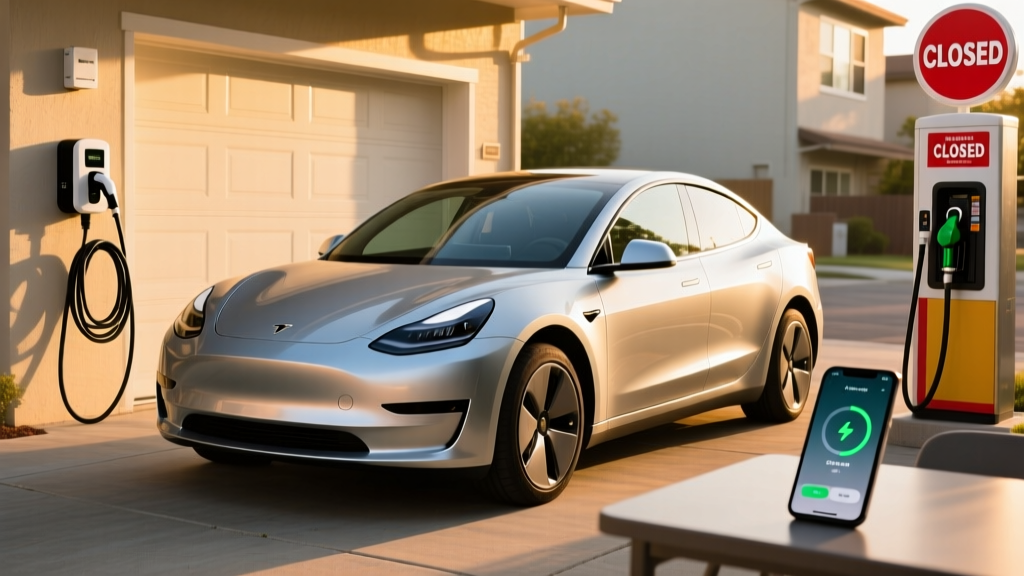
1. Charge where you park. The ideal EV ownership model is plugging in at home overnight and starting every day with a full "tank." If you can install a Level 2 charger at home or have reliable workplace charging, an EV integrates seamlessly. If you're entirely dependent on public charging, your experience—and costs—will be closer to gas-car fueling with added time penalties.
2. Learn your charge curve. On road trips, plan to charge from 10–80% rather than 0–100%. The last 20% charges at a fraction of peak speed. Multiple shorter stops (10–80%, drive 150 miles, repeat) are faster than one long stop to 100%.
3. Precondition for fast charging. Most modern EVs let you set a navigation waypoint to a DC fast charger, which triggers battery preconditioning—heating the pack to optimal temperature for maximum charge acceptance. Skipping this in cold weather can cut your peak charge rate in half.
4. Budget for the charger install. Add $1,000–$2,500 to your first-year cost for a home Level 2 setup. Some utilities offer rebates of $200–$500 for certified charger installations—check before you buy equipment.
5. Tires wear faster. EVs are 15–25% heavier than comparable gas cars and deliver instant torque. Expect tire replacement at 25,000–40,000 miles rather than the 50,000+ miles typical on lighter vehicles. Budget accordingly.
Decision Framework: Is an EV Right for You?
Choose a Battery EV (BEV) If:
- You can install a Level 2 charger at home or have workplace charging
- Your daily driving is under 200 miles round-trip
- You qualify for the §30D tax credit (income and vehicle MSRP within caps)
- You want the lowest per-mile operating cost and minimal maintenance
- You take road trips 3–4 times per year and can plan DC fast-charging stops
Choose a Plug-In Hybrid (PHEV) If:
- You have home charging but frequently drive 300+ miles without stopping
- You want 25–45 miles of electric-only commuting with gas-engine backup for long trips
- You live in an area with sparse DC fast-charging infrastructure
- Examples: Toyota RAV4 Prime (42 mi EV range), Jeep Wrangler 4xe (22 mi EV range)
Stick With a Hybrid (HEV) or Gas Car If:
- You have no access to home, workplace, or reliable public charging
- You regularly tow heavy loads over long distances (towing can cut EV range 40–50%)
- Your budget doesn't accommodate the higher upfront cost, even after incentives
- You drive in extreme cold frequently and can't tolerate 25–35% range reduction
Frequently Asked Questions
How long do EV batteries actually last?
Federally mandated warranties cover EV batteries for at least 8 years or 100,000 miles (10 years/150,000 miles in CARB states like California) against capacity loss below 70%. Real-world degradation data from fleets and high-mileage owners shows most NMC batteries retain 85–92% capacity at 100,000 miles. LFP batteries, used in vehicles like the Tesla Model 3 RWD and some BYD models, typically show even less degradation due to their chemistry's longer cycle life. Full battery replacement is rare and expensive—$8,000–$20,000 depending on pack size—but rarely needed within normal ownership periods.
Do EVs save money compared to gas cars over 5 years?
For a home-charging owner, the typical 5-year savings versus a comparable gas vehicle is $6,000–$10,000 when combining fuel savings ($4,000–$6,000), maintenance savings ($1,500–$2,500), and federal tax credits ($3,750–$7,500). These savings can offset the higher purchase price of many EVs within 3–4 years. However, if you rely exclusively on expensive DC fast charging and pay higher insurance premiums, the savings narrow to $2,000–$4,000 over 5 years.
What happens if I live in an apartment and can't charge at home?
This is the biggest practical barrier to EV ownership. Options include: negotiating with your building to install shared Level 2 chargers (some property management companies now offer this as an amenity), relying on workplace charging, or using public Level 2 and DC fast chargers near your routine stops. If none of these are viable, a PHEV may be a better fit—you can charge when convenient and use gas when not, without range pressure.
Are EVs good in cold climates?
Yes, with planning. Expect 20–35% range reduction in sub-freezing temperatures. Mitigation strategies include preconditioning the battery and cabin while still plugged in (drawing from grid power rather than the battery), using seat and steering wheel heaters instead of cabin air heating, and choosing an EV with a heat pump. In practice, a 300-mile EPA EV delivering 210 miles in winter still covers most daily needs with margin.
How does towing affect EV range?
Towing is an EV weakness. Pulling a 3,000–5,000 lb trailer can reduce range by 40–50% due to the combined aerodynamic drag and weight. A Ford F-150 Lightning with a 320-mile EPA range may deliver 160–190 miles while towing at highway speeds. For frequent heavy towing over long distances, a diesel or gas truck still holds a practical advantage, though PHEV trucks are narrowing this gap.
The benefits of electric vehicles are substantial and measurable—lower fuel cost, reduced maintenance, available tax incentives, and strong daily-driving convenience for home-charging owners. The trade-offs are real too: upfront cost, charging access dependency, cold-weather range loss, and higher insurance premiums. The right decision comes down to your specific charging situation, driving patterns, and budget—not the headlines.