Quick Verdict: The Entry-Level EV Benchmark
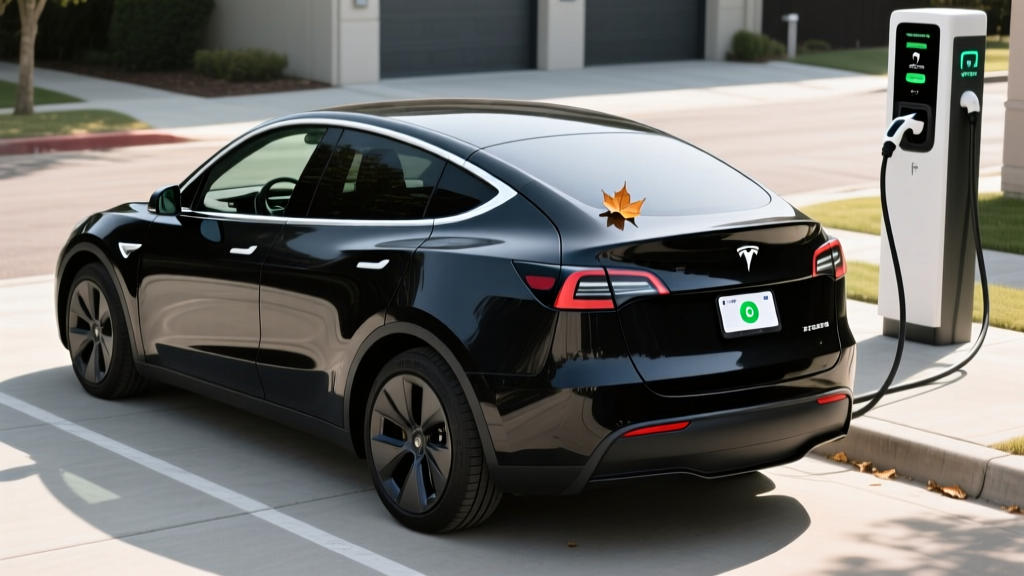
The 2026 Tesla Model Y Rear-Wheel Drive (often searched as the "base Model Y") remains the best-selling electric vehicle in the United States for good reason. Starting at $44,990 before incentives, it delivers 320 miles of EPA-estimated range, access to the most reliable DC fast-charging network in North America, and a practical crossover form factor that fits a family of five. But the base trim isn't without compromises — its 60 kWh LFP battery charges slower than competitors on third-party networks, and the minimalist interior forces nearly every control through a 15.4-inch touchscreen.
This review covers the RWD base Model Y with exact specifications, real-world range data from mixed driving conditions, and a clear breakdown of federal tax credit eligibility under current IRS §30D rules.
Range, Battery, and Efficiency
| Spec | Value |
|---|---|
| Battery capacity (usable) | ~60 kWh |
| Chemistry | LFP (lithium iron phosphate) |
| EPA-estimated range | 320 miles |
| EPA efficiency | 125 MPGe combined (27 kWh/100 mi) |
| Drivetrain | Rear-wheel drive, single motor |
Real-World Range vs. EPA Sticker
EPA estimate: 320 miles
Real-world highway (70 mph, 72°F): ~265–280 miles
Real-world mixed city/highway: ~285–305 miles
Cold weather (30°F, highway): ~210–240 miles (30–35% reduction typical for LFP packs without heat pump preconditioning on short trips)
The base Model Y's LFP battery trades peak energy density for longevity and cost. You'll see the gap most on sustained highway driving above 70 mph and in sub-freezing temperatures. For daily commuting under 60 miles round-trip, the 320-mile EPA figure is easily achievable, and Tesla recommends charging LFP batteries to 100% regularly — unlike NMC packs — which helps you use the full capacity.
Tesla's LFP chemistry (sourced primarily from CATL) offers a significant longevity advantage: these cells tolerate thousands of full charge cycles with minimal degradation compared to NMC. Owners can expect roughly 8–12% capacity loss over 150,000 miles based on fleet data aggregated by fueleconomy.gov and third-party telemetry. The trade-off is lower energy density, which is why the RWD model carries ~15 fewer EPA miles than the Long Range AWD variant with its larger NMC pack.
Charging Speed: DC Fast and Home Level 2
| Charging Level | Max Rate | Speed / Time |
|---|---|---|
| Level 1 (120V household) | ~1.4 kW | ~3–4 miles per hour |
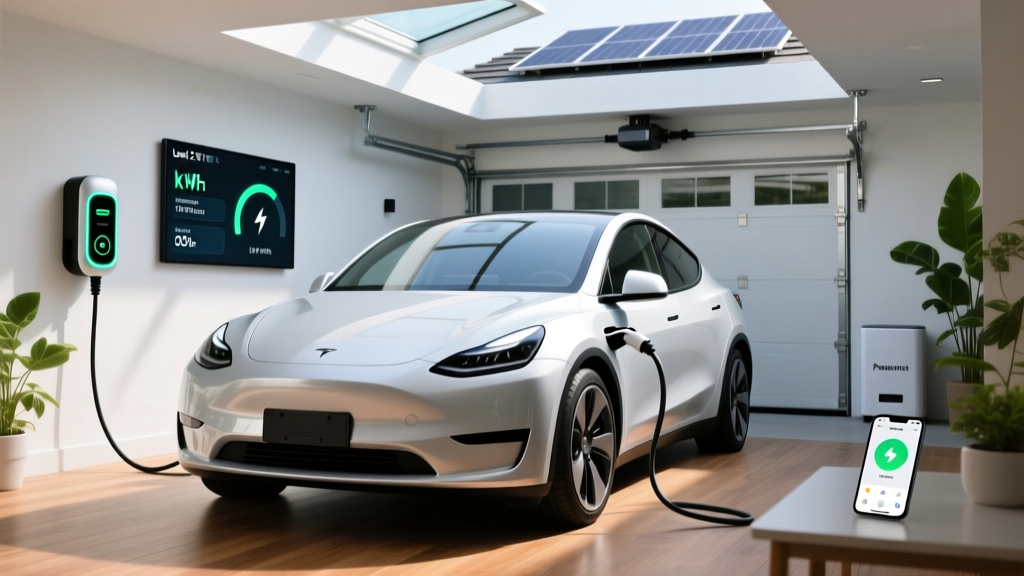
| Level 2 (240V, 48A home charger) | 11.5 kW | ~38 miles per hour; 0–100% in ~6.5 hours |
| DC fast charge (Tesla Supercharger) | 170 kW peak | 10–80% in ~28 minutes |
| DC fast charge (CCS adapter, Electrify America) | ~150 kW peak (adapter-limited) | 10–80% in ~32 minutes |
The base Model Y peaks at 170 kW on V3 Tesla Superchargers — adequate but no longer class-leading. Competitors like the Hyundai Ioniq 5 (240 kW peak) and Kia EV6 (240 kW peak) on 800V architectures can add 10–80% in roughly 18 minutes. The Model Y's charging curve tapers noticeably above 60% state of charge, dropping to under 80 kW by 80% SoC. On a road trip, plan for ~25-minute stops at 10–80% rather than the ~15-minute marketing claims associated with Tesla's higher trims.
For home charging, the Model Y's 11.5 kW onboard charger is a strong point. On a 48-amp Level 2 circuit (hardwired 60A breaker), you'll add roughly 38 miles of range per hour — enough to replenish a full day's driving in about two hours. Tesla's Wall Connector costs $475 and is a reliable choice, though any J1772/NACS-compatible Level 2 unit from ChargePoint or Emporia will work. Note: the base Model Y ships with the NACS (North American Charging Standard) connector natively, meaning direct access to 17,000+ Tesla Supercharger stalls without an adapter.
Performance and Driving Dynamics
| Spec | Value |
|---|---|
| Horsepower | 295 hp |
| Torque | 310 lb-ft |
| 0–60 mph | 6.6 seconds |
| Top speed | 135 mph |
| Towing capacity | 2,000 lbs (braked) |
The single rear-mounted motor delivers 295 hp and a 6.6-second 0–60 time — quick for a 4,200-pound crossover but noticeably slower than the dual-motor Long Range (5.0 seconds) or Performance (3.5 seconds). For merging onto highways and city driving, the RWD model feels responsive thanks to instant electric torque. The low center of gravity from the floor-mounted battery pack keeps body roll controlled through corners, and the regenerative braking system is strong enough to enable one-pedal driving in most conditions.
One caveat: the RWD Model Y's traction in snow and wet conditions is acceptable with quality all-season or winter tires, but it cannot match the AWD variants' confidence in slippery conditions. If you live above the 38th parallel with regular snowfall, the Long Range AWD's $4,000 premium is a justifiable upgrade.
Interior, Cargo, and Technology
The Model Y's cabin is a study in minimalism. A single 15.4-inch center touchscreen handles climate controls, navigation, media, and vehicle settings — there are no physical buttons aside from steering-wheel scroll wheels and hazard lights. Build quality on the 2026 Fremont and Austin-built models has improved noticeably over earlier years, with tighter panel gaps and upgraded materials on the dashboard and door panels.
| Spec | Value |
|---|---|
| Passenger capacity | 5 (optional 7-seat not available on RWD) |
| Front legroom | 41.8 in |
| Rear legroom | 37.7 in |
| Cargo (rear seats up) | 30.2 cu ft |
| Cargo (rear seats folded) | 72.1 cu ft |
| Front trunk (frunk) | 4.1 cu ft |
Cargo space is a genuine strength. With 30.2 cubic feet behind the second row and 72.1 with seats folded, the Model Y out-cargoes the Ioniq 5 (27.2 cu ft rear up) and the Ford Mustang Mach-E (29.7 cu ft rear up). The frunk adds another 4.1 cubic feet — useful for charging cables or a small bag.
Standard technology includes Tesla's basic Autopilot (lane centering and adaptive cruise control, SAE Level 2 — you must keep your hands on the wheel and eyes on the road), over-the-air software updates, a built-in trip planner that routes through Superchargers, and Tesla's mobile app for remote preconditioning and charge monitoring. Full Self-Driving (Supervised) remains a $8,000 add-on or $99/month subscription and is still an SAE Level 2 system requiring active driver supervision — it is not autonomous driving.
Pricing, Tax Credit, and Total Cost
| Item | Amount |
|---|---|
| Base MSRP | $44,990 |
| Destination fee | $1,390 |
| As-tested (with FSD, red paint, 19" wheels) | $55,880 |
| Federal tax credit (if eligible) | Up to $7,500 (point-of-sale) |
| Effective price (base, after max credit) | ~$38,880 |
The base Model Y qualifies for the full $7,500 federal tax credit under IRS §30D for eligible buyers — and since 2024, this credit can be transferred to the dealer at point of sale, reducing your purchase price upfront rather than waiting for a tax refund. However, eligibility has specific requirements:
- MSRP cap: The vehicle's base MSRP must be under $80,000 for SUVs/crossovers (the Model Y qualifies).
- Buyer income cap: Modified adjusted gross income must not exceed $150,000 (single), $225,000 (head of household), or $300,000 (joint filers).
- Battery sourcing: The Model Y's LFP battery components and critical minerals must meet phased-in domestic-content and FEOC (foreign entity of concern) thresholds that tighten annually through 2026. Tesla has restructured supply chains to maintain compliance — verify current eligibility at fueleconomy.gov before purchasing.
- VIN verification: The dealer must report the sale and your VIN to the IRS through the Energy Credits Online portal at time of purchase.
Tesla also prices the Model Y below the luxury threshold, and many states offer additional rebates (California's CVRP, for example, or utility-specific incentives) that can stack on top. Consult a tax professional for your specific situation — rules are subject to change, and state-level incentives vary by jurisdiction.
Warranty and Long-Term Ownership
| Coverage | Term |
|---|---|
| Basic vehicle | 4 years / 50,000 miles |
| Battery & drive unit | 8 years / 120,000 miles |
| Battery capacity retention threshold | 70% of original capacity during warranty period |
Tesla's 8-year/120,000-mile battery warranty is competitive with the industry standard (Hyundai offers 10 years/100,000 miles on the battery, Ford offers 8 years/100,000 miles). The 70% capacity retention threshold means Tesla will repair or replace the battery if it degrades below 70% of original usable capacity within the warranty window. Based on real-world fleet data, LFP packs in the Model Y have shown strong retention, with most vehicles retaining 88–92% capacity at 100,000 miles.
One ownership consideration: Tesla does not publish fixed labor rates or replacement battery pricing the way legacy automakers do. Out-of-warranty LFP pack replacement is estimated at $12,000–$16,000 based on service-center reports, though the likelihood of needing this within the vehicle's practical lifespan is low given LFP's cycle-life durability.
How It Compares: Model Y RWD vs. Key Rivals
| Spec | Tesla Model Y RWD | Hyundai Ioniq 5 SE Std Range | Ford Mustang Mach-E Select RWD |
|---|---|---|---|
| Base MSRP | $44,990 | $42,600 | $43,995 |
| EPA range | 320 mi | 303 mi | 290 mi |
| Battery (kWh) | ~60 (LFP) | 63 (NMC) | 72 (NMC) |
| DC fast charge peak | 170 kW | 180 kW | 150 kW |
| 10–80% DC time | ~28 min | ~25 min | ~35 min |
| 0–60 mph | 6.6 sec | 7.4 sec | 6.3 sec |
| Cargo (rear seats up) | 30.2 cu ft | 27.2 cu ft | 29.7 cu ft |
| Federal tax credit | $7,500 (if eligible) | $7,500 (if eligible) | $3,750 (partial sourcing) |
The Model Y RWD wins on range, cargo space, and Supercharger network access. The Ioniq 5 undercuts on price and offers 800V-class charging speed (though its standard-range pack is smaller). The Mach-E is a strong handler but trails on efficiency and DC charging speed. For buyers who road-trip regularly, Tesla's Supercharger network — now open to other brands via NACS adapters — still delivers the most seamless long-distance experience with reliable stall uptime and integrated trip planning.
Pros
- 320-mile EPA range is best-in-class at this price
- LFP battery tolerates daily 100% charging with minimal degradation
- Supercharger network access (17,000+ stalls, highest reliability)
- Class-leading cargo volume (30.2 / 72.1 cu ft)
- Over-the-air updates continuously add features
- Eligible for full $7,500 federal tax credit (point-of-sale transfer)
Cons
- 170 kW DC fast charging is slower than 800V rivals
- All controls through touchscreen — no physical climate knobs
- RWD-only: no AWD option on base trim for snow-belt buyers
- Rear-seat comfort is adequate but not premium (firm cushion, limited recline)
- No Apple CarPlay or Android Auto (Tesla's native UI only)
- FSD remains Level 2 and requires full driver attention
Who Should Buy the Base Model Y?
Choose the base Model Y RWD if: You commute under 80 miles daily, have access to home Level 2 charging, take 2–4 road trips per year, want maximum cargo utility in a compact footprint, and value the Supercharger network for hassle-free travel.
Look elsewhere if: You need AWD for harsh winters (consider the Long Range AWD at $48,990), you prioritize rapid DC charging above all else (Ioniq 5/EV6), or you prefer physical controls and Apple CarPlay integration (Mach-E, Ioniq 5).
Frequently Asked Questions
What is the real-world range of the base Model Y?
Expect 265–280 miles on the highway at 70 mph in mild weather, 285–305 miles in mixed city/highway driving, and 210–240 miles in cold weather (below freezing) on highway trips. The 320-mile EPA figure is achievable in city-dominant driving with moderate temperatures.
How fast does it charge at home and on the road?
On a 48-amp Level 2 home charger (11.5 kW), you'll add ~38 miles of range per hour and fully charge in about 6.5 hours. On a Tesla V3 Supercharger (170 kW peak), 10–80% takes approximately 28 minutes. Using a CCS adapter on Electrify America, expect ~32 minutes for 10–80%.
Does the base Model Y qualify for the $7,500 federal tax credit?
Yes, for eligible buyers. The Model Y RWD is under the $80,000 SUV MSRP cap, and Tesla's current battery sourcing meets 2026 §30D requirements. Buyer income must not exceed $150K (single) / $300K (joint). The credit can be transferred at point of sale, reducing your purchase price directly. Confirm eligibility at irs.gov before purchase.
Is the base Model Y worth it vs. the Long Range?
If you don't need AWD and your daily driving is under 100 miles, the RWD saves $4,000 and still delivers 320 miles of range. The Long Range adds a dual-motor AWD system, 350 miles of EPA range, and a larger NMC battery — worth it for road-trip-heavy buyers and snow-belt residents.
Can I charge the base Model Y on non-Tesla chargers?
Yes. The Model Y uses the NACS connector natively. You can charge at Tesla Superchargers directly, and use a NACS-to-CCS adapter (sold by Tesla and third parties) to access Electrify America, EVgo, and other CCS networks. Level 2 public chargers with J1772 connectors work with a simple adapter.
How long will the LFP battery last?
LFP chemistry is rated for 3,000+ full charge cycles before reaching 80% capacity. At an average of 300 miles per cycle, that translates to roughly 900,000 theoretical miles before significant degradation. Real-world fleet data suggests 88–92% capacity retention at 100,000 miles. Tesla warranties the battery for 8 years/120,000 miles at 70% minimum capacity.