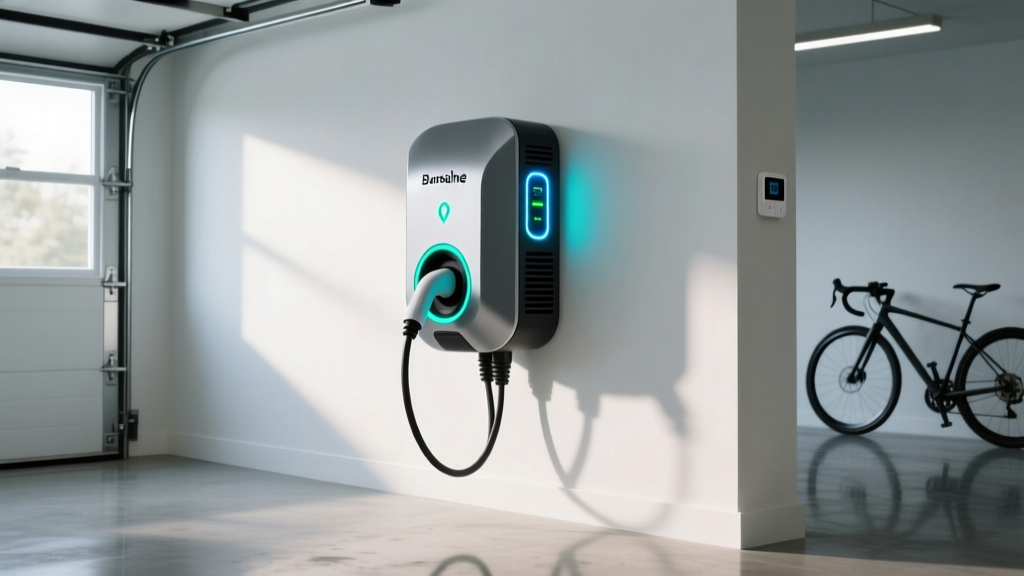
If you've been browsing EV forums or Reddit threads in 2026, you've likely seen the term Banshee charger surface among home-charging recommendations. The Banshee EV wall connector — manufactured by a growing tier of high-output Level 2 charging equipment makers — has earned a reputation for delivering robust 48-amp (11.5 kW) continuous output on a 60-amp dedicated circuit, a NACS-native connector option, and smart-home integration at a price that undercuts many legacy brands. But does the hardware hold up under real-world daily charging, and what does a full home installation actually cost?
This guide breaks down the Banshee charger's specs, installation requirements, connector compatibility, and operating costs — while also explaining how it fits into the broader Level 1 / Level 2 / DC Fast Charging ecosystem so you can decide whether it's the right unit for your garage or driveway.
Where the Banshee Charger Fits: Charging Levels Explained
Before evaluating any specific unit, you need to understand the three EV charging tiers and where a home wall connector like the Banshee sits. The single most important distinction in EV charging literacy: kW (kilowatts) measures power — how fast energy flows — while kWh (kilowatt-hours) measures energy capacity, the size of your battery. Confusing them is the most common mistake new EV owners make.
| Level | Voltage | Max Power (kW) | Miles of Range Added per Hour | Typical Use Case |
|---|---|---|---|---|
| Level 1 | 120V AC | 1.4–1.9 kW | 3–5 mi/hr | Overnight trickle; PHEVs or low-mileage commuters |
| Level 2 (Home/Public AC) | 240V AC | 3.3–19.2 kW | 12–75 mi/hr | Daily home charging; workplace; destination charging |
| DC Fast Charging | 400–900V DC | 50–400+ kW | 150–1,000+ mi/hr (peak) | Road trips; highway corridor stops; 10–80% in 15–30 min |
The Banshee charger is a Level 2, 240V AC wall connector rated for up to 48 amps continuous (11.5 kW). That places it at the top tier of residential single-phase charging — matching units like the ChargePoint Home Flex and Grizzl-E Smart, and exceeding the Tesla Universal Wall Connector's default 48A configuration.
Banshee Charger Specifications at a Glance
| Specification | Detail |
|---|---|
| Max Continuous Output | 48A / 11.5 kW (at 240V) |
| Required Circuit | 60A dedicated breaker (NEC 80% rule) |
| Connector Options | NACS (native Tesla) or J1772 (CCS1-compatible vehicles) |
| Cable Length | 24 ft standard (18 ft option available) |
| Smart Features | Wi-Fi, app scheduling, energy monitoring, OTA updates |
| Outdoor Rating | NEMA 4 (weatherproof, suitable for exterior mounting) |
| Warranty | 3 years |
| Equipment Price | $449–$549 (depending on connector/cable option) |
- Tesla Model Y (75 kWh usable, NACS): 10–80% in ~5 hours 15 min — ideal for overnight recovery.
- Hyundai Ioniq 5 (77.4 kWh, via J1772/CCS1): 10–80% in ~5 hours 30 min.
- Ford F-150 Lightning Extended Range (131 kWh): 10–80% in ~9 hours — still completes in a single overnight session for most owners.
- Toyota RAV4 Prime PHEV (18.1 kWh): 0–100% in ~1 hour 40 min.
Home Installation: Electrical Requirements, Panel Upgrades, and Costs
The Banshee charger's 48A continuous draw requires a 60-amp dedicated 240V circuit per the National Electrical Code (NEC) 125% continuous-load rule. This is where many homeowners discover their existing electrical panel may not have the spare capacity.
What Your Electrician Will Evaluate
- Panel capacity: Most modern homes have 200A service. If your panel is already near capacity (electric range, HVAC, dryer, water heater), adding 60A may require a panel upgrade to 300–400A or a load-management device that throttles the charger when other large loads activate.
- Wiring: 6 AWG copper (or 4 AWG aluminum) THHN wire in conduit for runs up to ~100 ft; larger gauge for longer runs to prevent voltage drop.
- Dedicated breaker: A 60A double-pole breaker in your main or sub-panel.
- GFCI protection: NEC 2020 and later require GFCI protection for EV receptacles; hardwired installations (recommended for the Banshee) typically satisfy this through the breaker.
- Permit: Most jurisdictions require an electrical permit ($50–$250) and a post-installation inspection.
| Component | Simple Install (Panel Adjacent) | Complex Install (Long Run / Panel Upgrade) |
|---|---|---|
| Banshee Charger Unit | $449–$549 | $449–$549 |
| Electrician Labor (2–6 hrs) | $300–$600 | $800–$2,000 |
| Materials (wire, conduit, breaker) | $100–$250 | $300–$700 |
| Electrical Permit | $50–$150 | $100–$250 |
| Panel Upgrade (if needed) | — | $1,500–$4,000 |
| Total Estimated Cost | $900–$1,550 | $3,150–$7,500 |
Connector Compatibility: NACS, CCS1, and CHAdeMO
As of the 2026 model year, the North American EV charging connector landscape has consolidated significantly around NACS (North American Charging Standard), the connector Tesla pioneered and which Ford, GM, Rivian, Hyundai, Kia, and most other automakers have adopted for new vehicles. The legacy CCS1 (Combined Charging System) connector remains on 2022–2025 model-year vehicles, and CHAdeMO is effectively limited to older Nissan Leaf models.
| Connector | Vehicles That Use It (2026 Models) | Banshee Charger Support | Adapter Needed? |
|---|---|---|---|
| NACS (Tesla-style) | Tesla (all), Ford (2025+), GM (2025+), Hyundai/Kia (2026+), Rivian (2025+) | Available as native NACS model | No |
| J1772 (AC standard) | All CCS1-equipped EVs (2022–2025 models); all non-Tesla Level 2 charging | Available as native J1772 model | CCS1 vehicles use J1772 inlet for AC charging — no adapter |
| CHAdeMO | Nissan Leaf (legacy); discontinued on new models | J1772 model with adapter | Yes — J1772-to-CHAdeMO adapter (~$150) |
Key point: For AC Level 2 charging, CCS1 vehicles use the J1772 inlet (the top portion of the CCS1 plug). You only need the full CCS1 connector for DC fast charging. So a Banshee charger with a J1772 connector will charge any CCS1-equipped EV at home without an adapter. If you own a newer NACS-native vehicle (2025+ Ford, GM, Hyundai, etc.), order the Banshee in its NACS configuration to avoid adapter clutter.
Operating Costs: What Does Charging Actually Cost Per Mile?
One of the strongest arguments for home Level 2 charging is the per-mile fuel cost advantage over gasoline. Here's how the numbers break down with the Banshee charger in real-world scenarios:
| Charging Scenario | Avg. Cost ($/kWh) | Cost Per Mile (at 3.5 mi/kWh) | Equivalent Gas Price (at 28 MPG) |
|---|---|---|---|
| Home — Off-Peak TOU Rate | $0.08–$0.12 | $0.023–$0.034 | $0.64–$0.95/gal |
| Home — Standard Flat Rate | $0.13–$0.18 | $0.037–$0.051 | $1.04–$1.43/gal |
| Public Level 2 (ChargePoint, EVgo L2) | $0.20–$0.35 | $0.057–$0.100 | $1.60–$2.80/gal |
| DC Fast Charging (Electrify America, Tesla Supercharger) | $0.30–$0.55 | $0.086–$0.157 | $2.41–$4.40/gal |
| Gasoline (U.S. avg., early 2026) | — | $0.11–$0.13 (at $3.10/gal, 28 MPG) | $3.10/gal |
Bottom line: Charging at home on an off-peak time-of-use (TOU) rate plan with a Banshee Level 2 unit delivers fuel costs equivalent to gasoline priced below $1.00/gallon. Even on a standard flat rate, you're paying the equivalent of $1.04–$1.43/gallon. Most EV owners who install a home charger report that 85–95% of their charging happens at home, making the effective cost per mile dramatically lower than any gasoline vehicle.
To maximize savings, contact your utility about EV-specific TOU plans. Many utilities now offer rates as low as $0.06–$0.09/kWh for overnight charging between 10 PM and 6 AM — which is exactly when a Banshee charger on a scheduled charge will do most of its work.
Equipment Comparison: Banshee vs. Competing Level 2 Chargers
The Banshee charger competes in the high-output smart charger segment. Here's how it stacks up against the most popular alternatives in 2026:
Banshee 48A Smart Charger
- Power: 11.5 kW (48A)
- Connector: NACS or J1772
- Cable: 24 ft
- Smart Features: Wi-Fi, app, scheduling, energy monitoring
- Price: $449–$549
Tesla Universal Wall Connector
- Power: 11.5 kW (48A)
- Connector: NACS with integrated J1772 adapter
- Cable: 24 ft
- Smart Features: Wi-Fi, OTA, vehicle integration
- Price: $450
ChargePoint Home Flex
- Power: Up to 12 kW (50A adjustable)
- Connector: J1772 (NACS adapter sold separately)
- Cable: 23 ft
- Smart Features: Wi-Fi, Alexa, app, scheduling
- Price: $599–$649
Grizzl-E Smart
- Power: 10 kW (40A) or 11.5 kW (48A DIP-switch)
- Connector: J1772 or NACS
- Cable: 24 ft
- Smart Features: Wi-Fi, OCPP-compatible, app
- Price: $499–$599
The Banshee's value proposition is straightforward: it matches the Tesla Universal Wall Connector in power output and cable length while offering a NACS-native option (no adapter dongle) and undercuts the ChargePoint Home Flex by $100–$150. Its 3-year warranty is competitive, though the ChargePoint and Grizzl-E units also offer 3-year coverage. Where the Banshee differentiates is its aggressive pricing and clean NACS integration for the growing population of non-Tesla NACS vehicles hitting driveways in 2025–2026.
Safety, Code Compliance, and Installation Best Practices
EV chargers draw sustained high current for hours — making proper installation critical for fire safety and long-term reliability. Here are the non-negotiable requirements for any Banshee charger installation:
- Dedicated circuit: The 60A breaker must serve only the EV charger. No shared circuits with other outlets or appliances.
- Hardwired preferred: The Banshee supports both hardwired and NEMA 14-50 plug configurations. Hardwired eliminates the receptacle as a failure point, avoids GFCI nuisance tripping common with 14-50 outlets, and is recommended by most licensed electricians for daily-use EV charging.
- NEMA 4 rating for outdoor installs: If mounting outside, verify the unit's NEMA 4 weatherproof rating covers your climate. The Banshee is rated for outdoor use, but the conduit entry and wiring connections must also be sealed properly.
- Permit and inspection: Skipping the permit may save $100–$200 upfront but can void your homeowner's insurance coverage in the event of an electrical fire. Most jurisdictions require inspection, and your utility may require proof of permitted installation before activating an EV-specific TOU rate.
- Load calculation: A licensed electrician should perform a NEC Article 220 load calculation to confirm your panel can handle the additional 60A circuit. If your calculated load exceeds 80% of panel capacity, a panel upgrade or automated load management system (like the Emporia VUE with EV load shed) is necessary.
Federal and State Incentives for Home Charging Equipment
The federal Alternative Fuel Vehicle Refueling Property Credit (IRS Form 8911) was extended through 2025 and has been renewed for 2026, offering a 30% credit on equipment and installation costs up to $1,000 for home EV charging hardware — including the Banshee charger and its associated electrical work. This credit applies to both the charger unit and the electrician labor, wiring, and permit costs.
Eligibility depends on your census tract meeting certain income or rural criteria under the Inflation Reduction Act's targeting provisions. Consult a tax professional and verify current-year rules at IRS.gov's refueling property credit page before filing.
Additionally, many states and utilities offer separate rebates of $250–$750 for Level 2 charger purchases and $500–$1,500 for panel upgrades. Check the Alternative Fuels Data Center's state incentive database for programs specific to your zip code.
Frequently Asked Questions
How much does it cost to install a home EV charger like the Banshee?
For a straightforward installation with the panel nearby and sufficient capacity, expect $900–$1,550 total (charger + electrician + materials + permit). If your home needs a panel upgrade or a long wire run through finished walls, costs can reach $3,150–$7,500. Get at least two quotes from licensed electricians who have specific EV charger installation experience.
How fast will each charging level add range to my EV?
Level 1 (120V) adds 3–5 miles of range per hour — adequate only for PHEVs or very low-mileage drivers. Level 2 at 11.5 kW (like the Banshee) adds roughly 35–44 miles per hour, depending on your vehicle's efficiency. DC fast charging at 150–250 kW can add 150–500+ miles per hour at peak, but is intended for road-trip stops, not daily use, due to cost and battery-wear considerations.
Which connector and charger is compatible with my EV?
For 2026 model-year vehicles: if your EV is a Tesla, or a Ford, GM, Hyundai, Kia, or Rivian with a NACS port, order the Banshee in NACS configuration. If you drive a 2022–2025 model with a CCS1 port (most non-Tesla EVs from that era), order the J1772 configuration — it will plug directly into your car's J1772 AC inlet. CHAdeMO vehicles (older Nissan Leaf) require the J1772 model plus a J1772-to-CHAdeMO adapter.
How much does EV charging cost per mile compared to gasoline?
Home charging on a standard rate ($0.13–$0.18/kWh) costs roughly $0.037–$0.051 per mile for an average EV — equivalent to paying $1.04–$1.43 per gallon of gasoline. On off-peak TOU rates ($0.08–$0.12/kWh), that drops to $0.023–$0.034 per mile, or the equivalent of $0.64–$0.95/gallon. By comparison, a 28 MPG gasoline car at $3.10/gallon costs about $0.11 per mile.
What electrical upgrades might I need before installing a Banshee charger?
The most common upgrade is a panel capacity increase from 100A or 150A to 200A+ service, which costs $1,500–$4,000. Older homes may also need a grounding electrode upgrade, a new meter base, or service-lateral replacement. If your panel is already 200A with spare capacity, you likely only need a new 60A double-pole breaker and wiring run — no major upgrade required. Always have a licensed electrician perform a NEC load calculation before committing to the installation.