Baker Electric Cars: Quick Answer
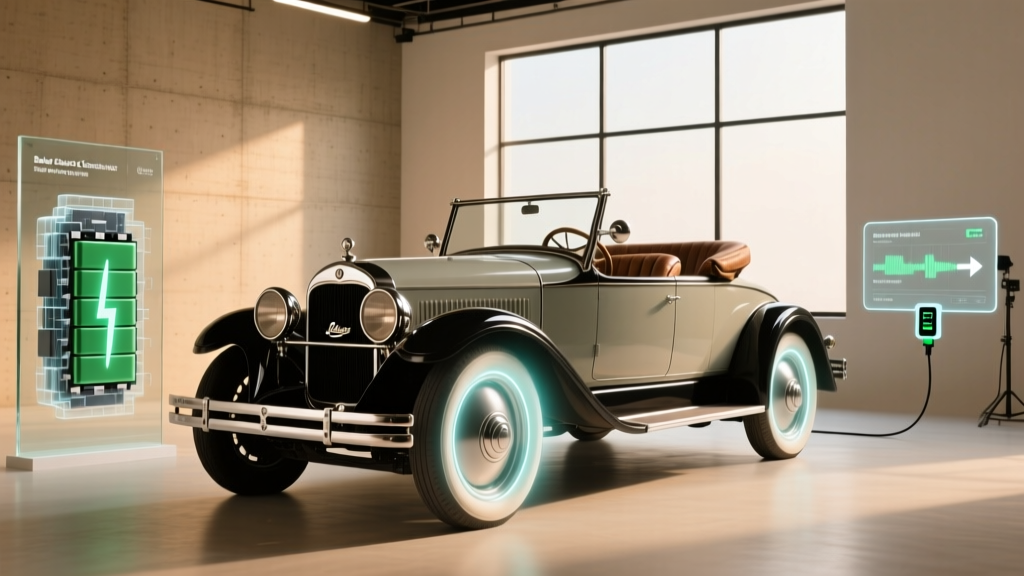
Baker Electric cars were manufactured by the Baker Motor Vehicle Company of Cleveland, Ohio, from roughly 1899 to 1914. They were among the most popular electric vehicles in the United States during the early 1900s, prized for their quiet operation, ease of use, and appeal to urban drivers — particularly women, who found them simpler than hand-cranked gasoline cars. There is no modern "Baker Electric" automaker producing vehicles today. If you've encountered the name in a 2026 search, it likely refers to the historical brand, a local EV-conversion shop using the name, or a classic-car collector listing. For anyone researching early EV history as context for buying a modern electric vehicle, this guide connects the century-old lessons of Baker Electric to the concrete numbers, costs, and decisions you face with today's EVs from Tesla, Hyundai, Ford, Chevrolet, and others.
Why Baker Electric Matters to Modern EV Shoppers
It seems odd to search for a brand that stopped building cars before World War I while shopping for a 2026 EV. But Baker's rise and fall is the most concise case study in electric-vehicle ownership economics ever written — and the same variables that killed Baker in 1914 are the ones you need to audit before signing a 2026 purchase agreement.
Baker Electric vehicles typically offered 40 to 60 miles of range on heavy lead-acid batteries, topped out around 14–20 mph, and required overnight charging from the limited DC mains available in wealthy urban neighborhoods. They were expensive — roughly $2,000 to $3,500 at the time, equivalent to a premium vehicle today. Their downfall came from three forces: (1) rural driving patterns demanded more range than batteries could deliver, (2) the electric starter eliminated the hand-crank advantage that EVs held over gas cars, and (3) cheap Texas crude collapsed the fuel-cost argument.
Fast-forward to 2026: modern lithium-ion and LFP batteries deliver 250–400 EPA-rated miles, DC fast charging adds 150–250 miles in 20 minutes, and the federal §30D tax credit (with strict MSRP, income, and battery-sourcing rules) reshapes the price equation. The variables are the same. The numbers are radically different. Let's look at those numbers.
2026 EV Costs vs Gas Cars: The Numbers That Matter
Before comparing a Baker Electric to a 2026 Tesla Model Y or Hyundai IONIQ 5, we need to ground the modern EV purchase in concrete data. The table below reflects typical 2026 mainstream EVs versus a comparable gasoline compact SUV, based on EPA fueleconomy.gov figures and national average energy prices.
| Category | 2026 EV (e.g., IONIQ 5 / Model Y) | Gas Compact SUV (28 MPG combined) |
|---|---|---|
| Base MSRP (avg trim) | $43,000 – $48,000 | $33,000 – $38,000 |
| Federal §30D credit (if eligible) | Up to $7,500 (point-of-sale) | $0 |
| Effective purchase price | $35,500 – $40,500 | $33,000 – $38,000 |
| 5-year fuel/energy (75,000 mi) | $3,200 – $4,800 (home L2 + public DC mix) | $8,400 – $10,200 (at $3.20/gal) |
| 5-year maintenance | $1,200 – $1,800 | $3,000 – $4,200 |
| Insurance (5-yr avg) | $8,500 – $10,500 | $6,800 – $8,400 |
| Estimated 5-yr depreciation | $14,000 – $18,000 | $11,000 – $14,500 |
| Total 5-yr cost of ownership | $62,400 – $75,600 | $62,200 – $75,300 |
The takeaway: at the mainstream level, a 2026 EV and a gas SUV reach near-parity over five years when the §30D credit applies and the buyer can charge at home. The advantage tilts sharply toward EVs for drivers with cheap overnight electricity (under $0.14/kWh), high annual mileage (18,000+ mi/yr), or access to workplace charging. It tilts against EVs if you rely exclusively on public DC fast charging at $0.45–$0.65/kWh, live in a state with high EV registration fees, or cannot install a Level 2 home charger.
Real-World Range: What the EPA Sticker Doesn't Tell You
A Baker Electric's "range" was whatever you could extract from its lead-acid cells before they sagged — often under 50 miles in winter. Today's EV buyers still face a version of this problem, just at a much higher baseline. Here's how to read a 2026 EPA range number honestly:
- EPA combined range (e.g., 320 miles) assumes a mix of city and highway driving at moderate temperatures with climate control partially on.
- Sustained highway driving at 75 mph typically delivers 80–88% of EPA range. A "320-mile" EV often yields 255–280 miles on an interstate trip.
- Cold weather (below 30°F) reduces range 15–30% depending on whether the vehicle uses a heat pump. An LFP-equipped vehicle without a heat pump can lose 35%+.
- DC fast charging taper means the advertised "10–80% in 18 minutes" peak applies only up to roughly 50–60% state of charge; the curve slows dramatically above 80% to protect the battery. Budget 25–35 minutes for a realistic 10–80% session including taper.
For 2026 model-year references, the Hyundai IONIQ 5 (84 kWh NMC battery, EPA 305–325 mi depending on trim) and Tesla Model Y Long Range (EPA ~320 mi, NMC) both support peak DC charging near 230–250 kW. The Chevrolet Equinox EV (LFP options on select trims, EPA up to ~319 mi) trades some charging speed for lower cost and better cycle life.
What a First-Time 2026 EV Buyer Must Know Before Signing
If Baker Electric's original buyers had a checklist, it would have read: "Do you live in a city? Do you have access to a charging mains? Will you drive under 40 miles a day?" The 2026 checklist is longer but follows the same logic.
2026 EV Purchase Decision Framework
- If you can install a Level 2 (240V, 32–48 amp) home charger AND drive under 250 miles on most days → a BEV (battery electric) is likely your lowest total-cost option. Budget $600–$1,800 for electrician installation; $1,500–$3,500 if your panel needs a 200A upgrade.
- If you rent, live in an apartment, or lack off-street parking → test your public-charging access for two weeks before buying. If your nearest reliable DC fast charger is more than 10 minutes out of your way, consider a PHEV (plug-in hybrid) instead.
- If you regularly drive 400+ miles in a day, tow a trailer, or live in sustained sub-zero climates → a PHEV like the Toyota RAV4 Prime (42 mi electric-only, 38 MPG combined after depletion) or a modern diesel-hybrid may be a more honest fit than a BEV today.
- If your household has two vehicles → make the shorter-commute car a BEV first. This captures 80%+ of the fuel savings with minimal range risk.
- If the vehicle MSRP exceeds $55,000 (sedans) or $80,000 (SUVs/trucks/vans) → it is ineligible for the federal §30D new-EV credit regardless of powertrain, per current IRS rules.
Tax Credits, Incentives, and the Fine Print for 2026
The §30D federal clean vehicle credit remains available in 2026 for qualifying new EVs, but eligibility has narrowed significantly since its expansion under the Inflation Reduction Act. According to the IRS clean-vehicle credit guidance, the key requirements include:
- MSRP caps: ≤$55,000 for sedans/wagons; ≤$80,000 for SUVs, trucks, and vans.
- Buyer income caps (modified AGI): ≤$150,000 single; ≤$225,000 head of household; ≤$300,000 joint.
- Battery sourcing: Increasing percentages of critical minerals and battery components must come from the U.S. or free-trade-agreement partners, with phase-outs for foreign entities of concern.
- Point-of-sale transfer: Buyers can apply the up-to-$7,500 credit as a down-payment reduction at the dealer, subject to dealer registration and IRS reporting.
- Used EV credit (§25E): Up to $4,000 or 30% of sale price (whichever is lower) on qualifying used EVs under $25,000, with lower income caps.
Always verify eligibility on the official fueleconomy.gov tax credit lookup for the specific VIN you're considering — eligibility can vary by build date and battery batch, even within the same model year.
Baker Electric Myths vs 2026 EV Facts
| Myth (Then & Now) | Factual Reality |
|---|---|
| "EVs don't have enough range for real driving." | A Baker had ~50 mi. A 2026 IONIQ 5 has EPA 305–325 mi; real-world highway ~260–280 mi. For 92% of U.S. daily drives under 40 mi (per DOT NHTS data), a modern EV covers multiple days between charges. |
| "Batteries won't last." | 2026 NMC and LFP packs are warrantied for 8 years / 100,000 miles at ≥70% capacity retention. Real-world degradation data from Tesla's fleet reports ~12% loss at 150,000 miles for NMC; LFP shows slower fade with higher cycle life but lower energy density. |
| "EVs are worse in cold weather." | They lose range — 15–30% is real — but start instantly, don't need warm-up, and heat-pump-equipped models (Hyundai/Kia/Genesis, Tesla) recover much of the cabin-heating penalty. Baker owners simply didn't drive in January. |
| "Charging takes too long." | Home Level 2 adds ~25–35 miles per hour of sleep. Road-trip DC fast charging at 230–250 kW delivers 10–80% in ~18–25 min — roughly a meal/rest stop. |
| "EVs are more expensive to own." | Upfront MSRP is often higher, but 5-year TCO is at parity or lower when the §30D credit applies and home charging is available. See cost table above. |
Home Charging Reality: What It Actually Costs to Install
The single biggest predictor of EV satisfaction in 2026 is whether you charge at home. Here's what a typical Level 2 installation costs, based on national electrician averages:
| Component | Low End | High End | Notes |
|---|---|---|---|
| Level 2 EVSE hardware (32–48A, hardwired or NEMA 14-50) | $350 | $750 | ChargePoint, Emporia, Wallbox, Tesla Wall Connector |
| Electrician labor (run 240V circuit, 40–60A breaker) | $450 | $1,500 | Varies by panel proximity and wall material |
| Permit & inspection | $75 | $300 | Required in most jurisdictions |
| Electrical panel upgrade (if needed, 100A → 200A) | $1,500 | $3,500 | Older homes often need this |
| Total (no panel upgrade) | $875 | $2,550 | Most common scenario |
| Total (with panel upgrade) | $2,375 | $6,050 | Older homes / high-load panels |
Many utilities in 2026 offer rebates of $200–$800 for EVSE installation, and some states add their own incentives on top of any remaining federal residential clean-energy credits. Always check with a licensed electrician for your specific panel load calculation before committing.
FAQ: Baker Electric & Modern EV Ownership
Is Baker Electric still making cars today?
No. The Baker Motor Vehicle Company ceased automobile production around 1914–1915 after merging with Rauch & Lang and later being absorbed into Detroit Electric-related operations. Any modern use of the "Baker Electric" name is either a collector reference, a local shop, or a restoration project — not a current automaker.
What was the range of a Baker Electric car?
Most Baker Electric models offered roughly 40 to 60 miles per charge on their lead-acid battery packs, depending on speed, terrain, and battery condition. Top speeds were typically 14–20 mph. This is roughly 1/6th the range of a modest 2026 BEV.
How much did a Baker Electric cost in its era?
Prices ranged roughly from $2,000 to $3,500 in the early 1900s — a premium price at a time when the average U.S. annual income was under $1,000. In today's purchasing-power terms, that's comparable to a $60,000–$100,000 luxury vehicle.
Should I buy a BEV, PHEV, or stick with gas in 2026?
Use the decision framework above. Short version: BEV if you have home charging and under 250 mi/day; PHEV if you lack reliable charging or drive long rural routes; gas/HEV if upfront budget is tight and mileage is low. The §30D credit and cheap home electricity are what flip the math toward BEV for most buyers.
What happens if my EV battery degrades?
Federal law mandates that EV batteries carry a warranty of at least 8 years / 100,000 miles (longer in CARB states like California, New York, and others) against capacity loss below roughly 70%. Full pack replacement out of warranty costs $8,000–$18,000 depending on kWh capacity and chemistry, but catastrophic failure before 150,000 miles is statistically rare in modern liquid-cooled packs.
Are EVs actually better for the environment?
On a lifecycle basis — including battery manufacturing — EVs sold in the U.S. in 2026 produce fewer grams of CO₂-equivalent per mile than comparable gasoline cars in nearly every regional grid mix, according to DOE's Argonne National Laboratory GREET model. The advantage grows as the grid decarbonizes and as LFP chemistry (which avoids cobalt and nickel) gains market share.