Quick Answer: The Awake Ravik is a high-performance electric surfboard (e-surfboard / motorized surfboard) built by Swedish manufacturer Awake Boards. It is not an automobile and does not qualify for any federal EV tax credits under IRS §30D, which apply only to highway-capable four-wheeled vehicles. If you found this page researching the Ravik alongside electric vehicles, the short version is: the Ravik is a premium electric watercraft priced between approximately $12,000–$17,000 USD depending on configuration, powered by a swappable lithium-ion battery pack delivering roughly 30–50 minutes of ride time per charge. For buyers comparing electrified recreation to electrified transportation, the ownership economics are fundamentally different — read on for a full breakdown.
What Is the Awake Ravik Electric Surfboard?
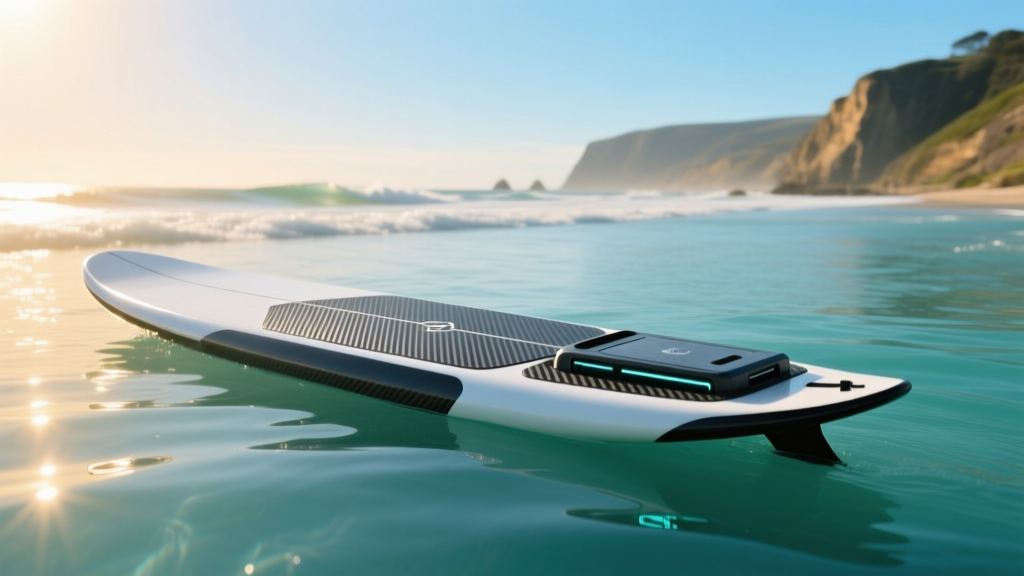
The Awake Ravik is a carbon-fiber-hull electric surfboard designed for high-speed riding on lakes, rivers, and coastal waters. Awake Boards, based in Malmö, Sweden, launched the Ravik line to compete directly with brands like Radinn and Lampuga. The Ravik series includes multiple configurations — typically the Ravik Sport, Ravik Pro, and Ravik Race — each tuned for different rider profiles from recreational cruising to competitive racing.
Unlike gasoline-powered personal watercraft (PWCs) such as the Sea-Doo or Yamaha WaveRunner, the Ravik uses a fully electric powertrain: a brushless DC motor driving an internal waterjet, powered by a removable lithium-ion battery pack housed in the hull. There is no exhaust, no fuel mixing, and significantly less noise — a major advantage on lakes with noise restrictions.
Because autoedgeview.com focuses on electric and smart automobiles, we're covering the Ravik here as a point of comparison for readers evaluating the broader electrified-recreation market and asking whether electric watercraft have reached the same maturity as electric vehicles.
Ravik Specifications: Battery, Motor, Speed, and Ride Time
| Specification | Ravik Sport (approx.) | Ravik Pro / Race (approx.) |
|---|---|---|
| Motor Output | ~12 kW (16 hp) | ~15–18 kW (20–24 hp) |
| Top Speed | ~35 mph (56 km/h) | ~40–44 mph (64–71 km/h) |
| Battery Capacity | ~2.5 kWh (Lithium-ion) | ~3.0–3.5 kWh (Lithium-ion) |
| Ride Time (mixed use) | ~30–45 min | ~25–40 min |
| Charge Time (standard) | ~2–3 hours | ~2–3.5 hours |
| Weight (board + battery) | ~65–75 lbs (29–34 kg) | ~70–85 lbs (32–39 kg) |
| Hull Material | Carbon fiber composite | Carbon fiber composite |
| Approximate Price (USD) | $12,000–$14,000 | $15,000–$17,000+ |
Note: Specifications are based on manufacturer-published data and third-party reviews. Awake Boards updates configurations periodically; confirm current specs with an authorized dealer before purchasing.
A few critical distinctions for EV-minded readers:
- kW vs kWh still applies here. The motor's power rating (kW) determines acceleration and top speed; the battery's energy capacity (kWh) determines how long you can ride. A 15 kW motor drawing from a 3 kWh battery will drain that battery in roughly 12 minutes at full throttle — which is why real-world ride times at mixed throttle are 25–45 minutes, not the theoretical minimum.
- Swappable batteries are the Ravik's equivalent of "fast charging." Rather than waiting 2+ hours at the dock, owners can purchase a second battery pack (~$2,000–$3,500) and swap in under a minute, effectively doubling ride sessions. This is conceptually similar to Nio's battery-swap stations for EVs, but manual and at a much smaller scale.
- There is no regenerative braking on water. Unlike EVs that recapture energy during deceleration, the Ravik's waterjet offers negligible regen. All energy is consumptive.
Awake Ravik vs. Gas-Powered Watercraft: Cost & Performance Comparison
For buyers cross-shopping the Ravik against a gasoline personal watercraft, the economics look very different from an EV-vs-gas-car comparison. Here's a side-by-side:
| Factor | Awake Ravik (Electric) | Gas PWC (e.g., Sea-Doo Spark) |
|---|---|---|
| Upfront Price | $12,000–$17,000 | $6,500–$10,000 |
| Fuel / Energy Cost per Hour | ~$0.50–$1.50 (electricity) | ~$8–$15 (premium gasoline) |
| Maintenance (annual) | ~$100–$300 (seals, impeller, winterization) | ~$400–$800 (oil, spark plugs, winterization, engine service) |
| Noise Level | ~65–75 dB (jet whine + water) | ~85–95 dB (engine exhaust) |
| Emissions on Water | Zero tailpipe | Unburned hydrocarbons, CO, NOx |
| Ride Duration per "Tank" | 25–45 min | 2–4 hours |
| Refuel / Recharge Time | 2–3 hr (or instant with spare battery) | ~3 min at fuel dock |
| Top Speed | 35–44 mph | 50–65 mph (performance models) |
| Federal Tax Credit | None (not a highway vehicle) | None |
The key takeaway: the Ravik costs roughly 2× more upfront than an entry-level gas PWC but dramatically less per operating hour. However, the limited ride time per charge is the electric surfboard's version of range anxiety — and unlike EV road-trippers, you can't pull into a DC fast-charging station on the lake.
Real-World Ownership: Charging, Storage, and Practical Considerations
Buying an electric surfboard involves logistics that differ sharply from buying an EV. Here's what first-time buyers need to plan for:
Charging Access
The Ravik's battery charges from a standard 120V household outlet using the included charger — no Level 2 installation or electrical panel upgrade required. A full charge draws roughly 1–1.5 kW over 2–3 hours. If you're at a lake house with standard shore power, you can charge between sessions. If you're launching from a public boat ramp with no electrical infrastructure, you'll need to charge at home, transport the board to the water, and accept the single-session limitation (unless you invest in a spare battery).
Climate and Water Temperature
Lithium-ion batteries lose effective capacity in cold conditions — the same physics that reduce EV range in winter. Riding in 45°F (7°C) water will reduce your ride time by an estimated 15–25% compared to warm-water conditions. Awake recommends storing the battery at room temperature and inserting it just before riding.
Storage and Transport
At 65–85 lbs, the Ravik is manageable but not trivial to carry. You'll need a roof rack, truck bed, or trailer. The battery must be removed for transport and stored separately per DOT lithium-battery shipping guidelines. Winter storage requires maintaining the battery at ~50–60% state of charge in a temperature-controlled environment — similar to how EV owners in cold climates manage long-term parking.
Registration and Insurance
Most U.S. states classify motorized surfboards as vessels, requiring registration with the state boating authority. Insurance is available through marine insurers (e.g., BoatUS, Markel) at approximately $200–$500 annually depending on coverage. This is a cost many first-time buyers overlook.
Total Cost of Ownership: 5-Year Breakdown
| Cost Category | Awake Ravik (5 Years) | Gas PWC (5 Years) |
|---|---|---|
| Purchase Price | $14,000 (mid-config) | $8,000 (mid-range) |
| Registration / Titling | ~$150–$400 | ~$150–$400 |
| Insurance (5 years) | ~$1,500–$2,500 | ~$2,000–$3,500 |
| Energy / Fuel (5 years, 50 hrs/yr) | ~$200–$400 | ~$2,500–$4,000 |
| Maintenance (5 years) | ~$750–$1,500 | ~$2,500–$4,000 |
| Battery Replacement (if needed) | $2,000–$3,500 | N/A |
| Estimated 5-Year Total | $18,600–$22,300 | $15,150–$19,900 |
Over five years, the Ravik's higher purchase price is partially offset by dramatically lower energy and maintenance costs. The break-even point versus a gas PWC depends heavily on usage: at 50 hours per year, the gas PWC remains cheaper overall. At 100+ hours per year, the Ravik's energy savings narrow the gap significantly.
The battery wildcard is important: lithium-ion marine batteries typically retain usable capacity for 500–1,000 charge cycles. At 50 sessions per year, that's 10–20 years of battery life before significant degradation — but replacement cost is substantial when it arrives.
Common Misconceptions About Electric Surfboards
| Myth | Fact |
|---|---|
| "Electric surfboards qualify for the $7,500 EV tax credit." | They do not. IRS §30D credits apply only to qualified plug-in electric drive motor vehicles — four-wheeled, highway-capable, meeting specific MSRP and battery-sourcing requirements. See IRS clean vehicle credit rules. |
| "The battery lasts all day." | A single charge provides 25–45 minutes of mixed riding. All-day use requires a spare battery and a charging setup at the water. |
| "It's silent." | The Ravik is much quieter than a gas PWC but still produces audible jet-pump noise and water displacement sound — typically 65–75 dB at speed. |
| "Electric means zero maintenance." | The hull, impeller, seals, and cooling system still require inspection and service. Winterization is essential in freezing climates. |
| "It's basically a toy." | At 35–44 mph on water with no stability aids, the Ravik demands the same safety respect as any high-performance watercraft. A PFD and safety lanyard are mandatory. |
Decision Framework: Is the Awake Ravik Right for You?
Choose the Awake Ravik if:
- You ride primarily on lakes with noise restrictions or emissions bans (growing in states like Minnesota, Wisconsin, and parts of California).
- You value near-silent operation and zero on-water emissions.
- Your sessions are typically under 45 minutes, or you're willing to invest in a spare battery.
- You have access to shore power or home charging near your launch point.
- You're drawn to the surfboard-style form factor (standing or prone) rather than a sit-down PWC.
Choose a gas PWC or alternative if:
- You need 2+ hours of continuous ride time without interruption.
- You frequently ride at remote locations with no electrical access.
- Your budget is under $10,000 all-in.
- You want passenger capacity (most gas PWCs seat 2–3; the Ravik is single-rider only).
- You need towing capability for wakeboarding or tubing.
Consider a different electric watercraft if:
- The Radinn line offers modular hull configurations you prefer.
- Sit-down electric PWCs like the upcoming generation from Taiga Motors better match your riding style.
- You want a lower-cost entry point — brands like Fliteboard (electric hydrofoil) start around $8,000–$12,000 for a different ride experience.
Frequently Asked Questions
Does the Awake Ravik qualify for any federal or state EV tax incentives?
No. The federal §30D clean vehicle credit, as defined by the IRS, requires the vehicle to be a four-wheeled, highway-capable motor vehicle with a gross vehicle weight under 14,000 lbs. The Ravik is classified as a marine vessel / motorized surfboard and is ineligible. Some states offer recreational equipment rebates or clean-marina incentives — check your state's energy or natural resources department.
How long does the Awake Ravik battery last before needing replacement?
Awake Boards rates its lithium-ion packs for approximately 500–1,000 full charge cycles before capacity drops below 80% of original. At 50 sessions per year, that translates to roughly 10–20 years of usable life. However, calendar aging, extreme temperatures, and improper storage can accelerate degradation. Replacement battery packs cost approximately $2,000–$3,500.
Can I charge the Ravik battery from my car or a portable power station?
The Ravik's charger requires standard 120V AC power. A sufficiently large portable power station (e.g., EcoFlow Delta Pro, Bluetti AC300 — rated for 1,500W+ output) can charge the battery in the field, but this adds $2,000–$4,000 in equipment cost and significant weight to your kit. This is analogous to using a portable generator to charge an EV in a pinch — technically possible but impractical as a primary strategy.
How does the Ravik compare to an electric hydrofoil (eFoil)?
Different use cases entirely. eFoils (Lift, Fliteboard) fly above the water on a hydrofoil mast, offering a smooth, surf-like experience at 15–28 mph. The Ravik is a planing hull designed for aggressive speed and carving at 35–44 mph. eFoils typically offer 60–90 minutes of ride time due to lower power draw (~3–5 kW motors). If you want silent, meditative gliding, choose an eFoil. If you want adrenaline and speed, the Ravik wins.
Is the Awake Ravik safe for beginners?
The Ravik Sport's lower power output is manageable for intermediate riders who are comfortable on a wakeboard or surfboard. However, 12+ kW of jet thrust on a small, unstable platform demands respect. Awake recommends starting in the lowest power mode and wearing a helmet, PFD, and impact vest. Total beginners should consider a lesson or supervised introduction.
Where can I buy or test-ride the Awake Ravik in the U.S.?
Awake Boards sells through a network of authorized marine dealers and direct from their website. Demo days are occasionally hosted at major lakes and marine shows. Because this is a niche, high-value product, test-ride opportunities are limited compared to walking into a Sea-Doo dealership. Contact Awake directly or check their dealer locator for the nearest option.
Final Assessment for EV-Minded Buyers
The Awake Ravik represents the same electrification trade-off familiar to every EV buyer: higher upfront cost in exchange for lower operating costs, reduced emissions, and a fundamentally different user experience. The technology is mature enough for confident purchase — the battery chemistry, motor reliability, and hull construction are proven across hundreds of units in the field.
The limitations are equally familiar: range (ride time) anxiety is real, "refueling" infrastructure doesn't exist on the water, and cold weather reduces performance. If your use case aligns with the Ravik's strengths — short, intense sessions on noise-restricted lakes with shore-power access — it's the best electric surfboard in its class. If you need all-day range, passenger capacity, or remote-water access, a gas PWC remains the pragmatic choice, much as a hybrid or ICE vehicle still makes sense for certain driving patterns.
For readers researching electric vehicles for road use, the Ravik is a useful reminder that electrification extends well beyond cars — and that the core engineering challenges (energy density, charging speed, cold-weather performance) are universal across every battery-powered platform.