Quick Answer: Is the Awake Electric Surfboard Worth It?
The Awake Ravik and Ravik Pro are high-performance electric surfboards (e-surfboards or electric hydrofoils) built for thrill-seekers who want instant torque on the water — no gas, no two-stroke fumes, no pull-starting. Expect 30–45 minutes of aggressive ride time per charge from a removable lithium-ion battery (roughly 4.5–7 kWh depending on model), a top speed up to 35 mph on the Ravik Pro, and a charge time of about 1.5–2 hours on a standard 240V outlet. Pricing starts around $12,000 and climbs past $17,000 for the Pro variant. If you want silent, zero-local-emission power on a lake or calm coastal water and can absorb the premium, the Awake delivers. If you need multi-hour sessions or operate on a budget, a gas-powered jetboard or a lower-cost e-foil may serve you better.
At AutoEdgeView, we spend our days analyzing EVs — from the Tesla Model Y to the latest LFP battery chemistries and DC fast-charging curves. The Awake electric surfboard sits outside our usual four-wheeled coverage, but it shares the same core DNA: a lithium-ion traction battery, an electric motor, a thermal management challenge, and a buyer who needs honest numbers before spending real money. Below, we apply the same data-driven lens we use on EVs to help you decide whether this electric watercraft earns a spot in your garage — or on your roof rack.
Awake Electric Surfboard: Models, Specs, and Performance
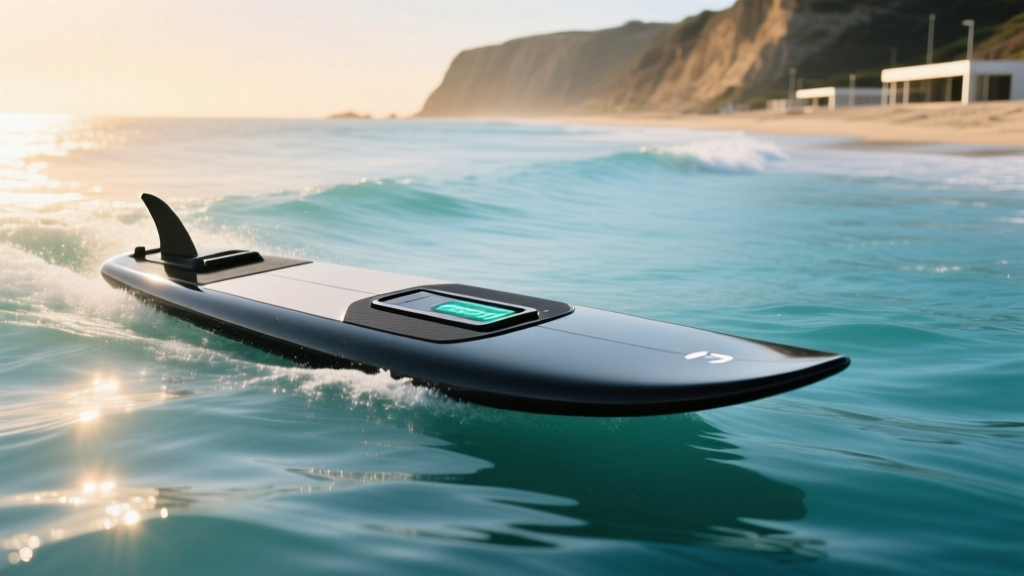
Awake, a Swedish manufacturer, produces two primary electric surfboard models aimed at different performance tiers. Both use a removable battery pack and a jet-drive propulsion system — no propeller, no exposed impeller blades on the hull bottom.
| Specification | Awake Ravik | Awake Ravik Pro |
|---|---|---|
| Motor Output | ~11 kW (15 hp) | ~15 kW (20 hp) |
| Top Speed | ~30 mph (48 km/h) | ~35 mph (56 km/h) |
| Battery Capacity | ~4.5 kWh (NMC) | ~7 kWh (NMC) |
| Ride Time (aggressive) | ~25–35 min | ~35–45 min |
| Ride Time (cruising) | ~40–50 min | ~55–70 min |
| Charge Time (240V) | ~1.5 hours | ~2 hours |
| Board Weight | ~68 lbs (31 kg) | ~75 lbs (34 kg) |
| Base Price (approx.) | ~$12,000 | ~$17,000 |
| Warranty | 1 year limited | 1 year limited |
Battery chemistry note: Awake uses NMC (nickel manganese cobalt) lithium-ion cells, the same chemistry favored by most performance-oriented EVs for its high energy density. The trade-off versus LFP (lithium iron phosphate) is a somewhat shorter cycle life and greater thermal sensitivity — relevant when you're asking a battery to dump its entire capacity in under an hour on hot lake water.
Real-World Ride Time: What the Battery Actually Delivers
Just as EPA range stickers on EVs rarely match highway reality at 75 mph, the Awake's published ride times assume moderate use. Here's what to actually expect:
- Full-throttle carving and jumps: 15–25 minutes before the battery management system (BMS) limits output to protect cells from thermal stress.
- Mixed riding (bursts of speed plus cruising): 30–45 minutes on the Ravik Pro; 25–35 on the standard Ravik.
- Steady cruising at half-throttle: Up to 50–70 minutes depending on rider weight and water conditions.
Rider weight matters enormously. A 220 lb rider demanding planing speed in choppy water will drain the pack noticeably faster than a 150 lb rider on glass-calm conditions. Cold water (below 55°F/13°C) also reduces lithium-ion discharge efficiency — expect roughly 10–15% less ride time in early-season conditions, mirroring the cold-weather range loss we document in EVs every winter.
The removable battery design is a genuine advantage: you can carry a spare pack ($3,000–$4,500 depending on model) and swap in under a minute, effectively doubling your session. This is the e-surfboard equivalent of a quick DC fast-charge stop, except you're carrying the energy on your back.
Charging the Awake: What You Need at Home or the Dock
The Awake charges via its included charger, which plugs into a standard 240V outlet (the same NEMA 14-50 or 6-20 receptacle you'd use for a Level 2 EV home charger). Here's the breakdown:
| Charging Method | Power Draw | Time (Empty to Full) | Equivalent EV Level |
|---|---|---|---|
| Awake charger on 240V | ~3 kW | 1.5–2 hours | Level 2 (low end) |
| Awake charger on 120V | ~1 kW | 5–7 hours | Level 1 |
kW vs. kWh reminder: The charger's power draw (kW) determines how fast energy flows into the battery; the battery's capacity (kWh) is how much total energy it stores. A 3 kW charger filling a 7 kWh battery takes roughly 7 ÷ 3 = ~2.3 hours, minus some efficiency loss and taper near full charge.
If you're already running a Level 2 home charger for your EV, you likely have a 240V circuit available in your garage. The Awake charger uses a different plug, so you won't share the receptacle simultaneously — but the infrastructure is the same. A licensed electrician can add a dedicated 240V outlet for $300–$800 if your panel has capacity.
Cost of Ownership: Awake vs. Gas Jetboard vs. EV Daily Driver
Let's put real numbers on what owning an Awake electric surfboard costs over three seasons (roughly 150 rides), and compare it to a gas-powered jetboard like the Radinn or Jetsurf.
| Cost Factor | Awake Ravik Pro (Electric) | Gas Jetboard (e.g., Jetsurf) |
|---|---|---|
| Purchase Price | ~$17,000 | ~$10,000–$14,000 |
| Energy/Fuel (150 sessions) | ~$135 (electricity at $0.13/kWh) | ~$900–$1,200 (premium 2-stroke mix) |
| Annual Maintenance | ~$100 (seals, impeller inspection) | ~$400–$600 (engine rebuild, carb, winterization) |
| 3-Year Maintenance Total | ~$300 | ~$1,200–$1,800 |
| Battery/Engine Replacement Risk | $3,500–$4,500 (spare battery, years 4–6) | $1,500–$3,000 (engine rebuild, years 3–5) |
| 3-Season Total Cost | ~$17,435 | ~$12,100–$17,000 |
The electric surfboard's higher purchase price is partially offset by dramatically lower fuel and maintenance costs. At $0.13/kWh (the US residential average per the U.S. Energy Information Administration), a full 7 kWh charge costs about $0.91 — compared to $6–$10 per session in premixed two-stroke fuel.
However, the Awake does not qualify for the IRS §30D federal EV tax credit. That credit applies only to qualified plug-in electric vehicles with four wheels and a gross vehicle weight under 14,000 lbs — surfboards, e-foils, and personal watercraft are excluded. Do not factor a $7,500 credit into your budget.
Common Misconceptions About Electric Surfboards
| Myth | Fact |
|---|---|
| "It's as fast as a jetski." | Top speed is ~35 mph — quick for a board, but a Sea-Doo RXP hits 67+ mph. |
| "The battery lasts all day." | Expect 35–45 minutes of real mixed riding. Buy a spare pack for all-day sessions. |
| "It's totally silent." | The jet drive produces a noticeable whir and water roar. It's far quieter than a two-stroke, not silent. |
| "Saltwater will destroy it." | The Awake is rated for saltwater use, but thorough freshwater rinsing after every ocean session is mandatory to prevent corrosion on electrical contacts and the impeller housing. |
| "You don't need a life jacket." | Most US states and the US Coast Guard classify motorized surfboards as vessels. A PFD is legally required in most jurisdictions. |
Decision Framework: Is the Awake Right for You?
Choose the Awake Ravik if:
- You ride on lakes or calm coastal water where noise restrictions ban gas jetboards.
- You value instant electric torque and zero exhaust fumes over top-speed records.
- You already have 240V garage access and can charge between sessions.
- Your budget accommodates $12,000–$17,000 plus a spare battery.
Choose a Gas Jetboard if:
- You need multi-hour sessions without carrying spare battery packs.
- You ride in remote locations with no electrical access.
- Your budget is under $12,000 and you're comfortable with two-stroke maintenance.
Choose an E-Foil (e.g., Lift, Fliteboard) if:
- You prefer a hydrofoil riding experience (above-water flight) over a planing surfboard.
- You want 60–90 minutes of ride time at moderate speeds (e-foils are more energy-efficient at lower speeds).
First-Time Buyer Essentials: What to Know Before Ordering
- Registration and legality: Check your state's boating registration requirements. Some states require titling and registration for any motorized watercraft; others exempt boards under a certain length or horsepower.
- Insurance: Specialty marine insurers (e.g., Markel, BoatUS) offer personal watercraft policies. Expect $200–$500/year depending on coverage and your location.
- Storage and transport: The Awake weighs 68–75 lbs plus a 15–20 lb battery. You'll need a roof rack rated for the load or a small trailer. Store the battery at 40–60% state of charge during off-season to minimize NMC degradation — the same principle that extends EV battery health.
- Warranty reality: Awake's 1-year limited warranty is short compared to the 8-year/100,000-mile battery warranties mandated on EVs by the EPA. Budget for out-of-warranty battery replacement in years 4–6.
- Water temperature limits: The BMS will throttle power if battery temperature exceeds safe thresholds. On very hot days with consecutive full-throttle runs, expect a cooldown period before the board delivers peak output again.
Frequently Asked Questions
How long does the Awake electric surfboard battery last before it needs replacement?
NMC lithium-ion cells in high-discharge applications like e-surfboards typically retain 70–80% of original capacity after 300–500 full charge cycles. For a rider who goes out 50 times per season, that translates to roughly 4–6 years of usable life before noticeable range loss — similar to the degradation curves we see in performance EVs that frequent DC fast chargers.
Can I charge the Awake from my EV's home charger?
Not directly. The Awake uses its own proprietary charger with a different connector. However, both draw from the same 240V circuit infrastructure. If you have a NEMA 14-50 outlet installed for your EV, an electrician can add a second dedicated 240V receptacle for the Awake charger without a panel upgrade in most homes with 200A service.
Is the Awake electric surfboard safe for beginners?
The Awake has adjustable power modes that limit top speed and acceleration, making it manageable for intermediate riders. However, it's not a beginner toy — the jet thrust is powerful and the board requires balance and water-sport experience. Awake recommends their training program, and most first-time riders need 2–3 sessions to achieve confident planing.
Does the Awake qualify for any tax credits or incentives?
No. The IRS §30D Clean Vehicle Credit applies only to four-wheeled plug-in vehicles meeting specific MSRP, income, and battery-sourcing requirements. Personal watercraft, surfboards, and e-foils are excluded regardless of their battery technology. Some states offer sales-tax exemptions for electric watercraft — check your state's department of revenue for current rules.
How does the Awake compare to an e-foil like the Fliteboard?
Different experiences entirely. The Awake is a planing surfboard — it rides on the water surface, carves aggressively, and reaches 30–35 mph. An e-foil like the Fliteboard lifts above the water on a hydrofoil mast, offering a smoother, more surf-like glide at 15–25 mph with significantly longer ride times (60–90 min) due to lower energy consumption. Choose Awake for adrenaline and speed; choose an e-foil for endurance and elegance.