The Quick Answer: Avis EV Returns
If you rented an electric vehicle from Avis and need to return it, you are not required to return it at a specific state of charge, and Avis does not currently charge a "low battery" penalty fee at most locations. However, you should return the EV with a reasonable charge (ideally above 20%) to avoid any location-specific surcharges and to ensure the next renter isn't stranded. Unlike gas cars — where Avis charges a premium refueling rate (often $9-$13/gallon equivalent) if you return below the starting fuel level — EV return policies are still evolving. Always confirm at pickup. Many renters use an Avis EV rental as a real-world test drive before committing to a purchase, and this guide covers how to maximize that experience.
Why the "Avis EV Return" Question Is Surging
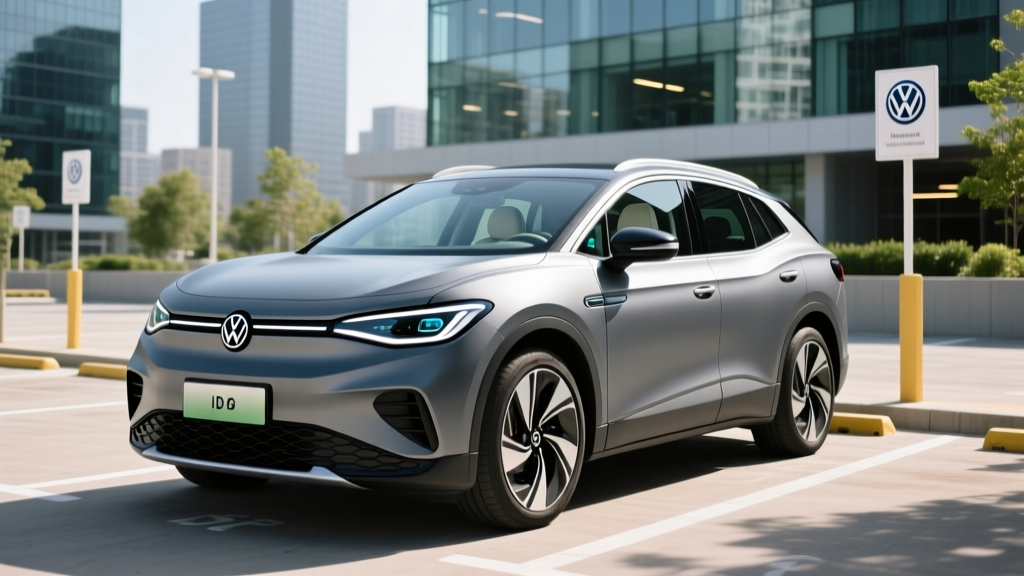
As of early 2026, Avis Budget Group continues to operate one of the largest EV rental fleets in North America, though the company has rebalanced its fleet away from the massive Tesla-only purchasing commitments of 2021-2022. Today's Avis EV fleet is more diverse: you'll find Tesla Model Y and Model 3 vehicles alongside the Ford Mustang Mach-E, Hyundai Ioniq 5, Chevrolet Equinox EV, and select Kia EV6 models depending on location.
Searches around "Avis EV return" have grown because renters are genuinely uncertain about the rules. With a gas car, the process is straightforward: return it with the same fuel level or pay a per-gallon premium. With an EV, the variables are different — charging takes 20-45 minutes at a DC fast charger (or 8-10 hours on Level 2), and public charger availability near airport rental returns is inconsistent.
Here's what you need to know before you book, drive, and return an Avis EV in 2026.
Avis EV Return Rules: Charge Level, Fees, and What Actually Happens
Based on current Avis rental agreements and customer reports from major airport locations (LAX, SFO, MCO, DEN, ATL), here is how the EV return process works:
| Policy Element | EV Rental | Gas Car Rental (for comparison) |
|---|---|---|
| Return charge/fuel requirement | No strict SoC requirement at most locations; "reasonable charge" expected | Return at same fuel level as pickup |
| Low-battery/low-fuel penalty | No standardized low-battery fee (varies by location — ask at pickup) | Premium refuel rate: $9-$13/gallon |
| Time to "refuel" before return | 20-45 min at DC fast charger (10-80% SoC) | 5-10 min at gas station |
| Charger availability at return lots | Limited — some major airports now have Level 2 chargers in rental return areas | Gas stations near every airport |
| Odometer/overage charges | Same daily mileage limits as gas vehicles (often unlimited on standard rates) | Same |
Key takeaway: Before driving off the lot, ask the counter agent specifically: "Is there a low-battery return fee at this location, and what is the minimum state of charge you expect?" Get it in writing on your rental agreement if possible. Policies vary by franchise vs. corporate location.
Using an Avis EV Rental as a Purchase Test Drive: What to Evaluate
A 3-to-5-day Avis EV rental is one of the most cost-effective ways to answer the question: "Should I buy an EV?" A 15-minute dealership test drive tells you almost nothing about daily EV ownership. A multi-day rental reveals the real picture.
Here's what to evaluate during your rental, with concrete benchmarks:
1. Real-World Range vs. EPA Sticker
If you rent a 2025 Hyundai Ioniq 5 (Long Range AWD), the EPA rates it at 290 miles of range. In real-world highway driving at 70-75 mph, expect approximately 240-260 miles. In cold weather (below 40°F), subtract another 15-25%, bringing usable range to roughly 195-220 miles. Track your actual miles driven vs. the range displayed on the dash at departure and return.
2. Charging Speed and Infrastructure
Test a DC fast charge during your rental. The Ioniq 5's 800-volt architecture allows peak charging at up to 235 kW, achieving a 10-80% charge in approximately 18 minutes under ideal conditions. However, real-world charging curves taper significantly above 80%, and actual speeds depend on the charger's output, battery temperature, and state of charge. Use apps like PlugShare or the vehicle's native navigation to locate chargers and note your actual charge time.
3. Home Charging Feasibility
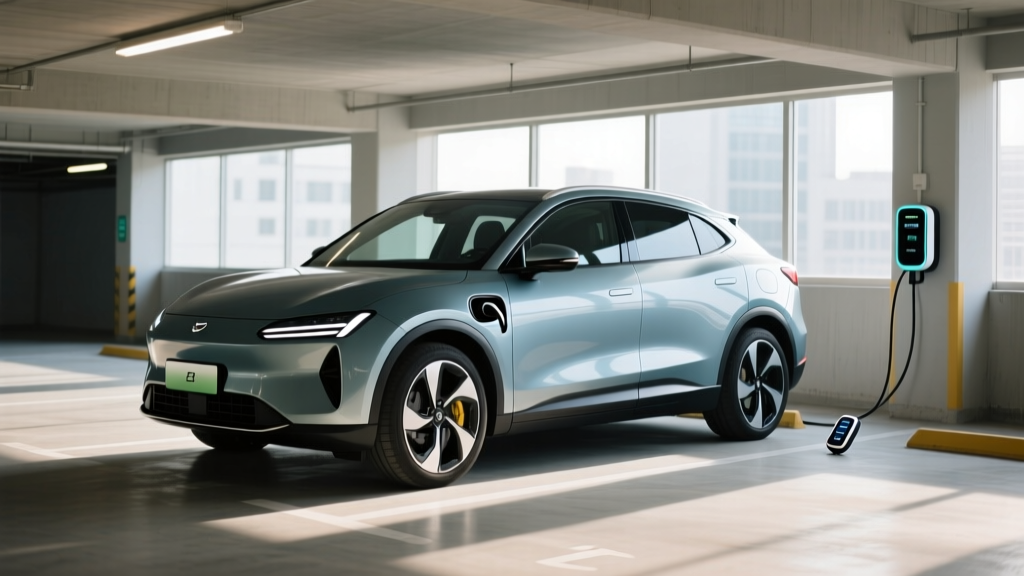
If you have access to a garage or driveway with a 240V outlet (or the ability to install one), EV ownership is dramatically more convenient. A Level 2 home charger (typically 7.2-11.5 kW) adds roughly 25-44 miles of range per hour of charging — enough to fully replenish any EV overnight. If you live in an apartment without charging access, your experience during the rental (relying solely on public chargers) is a realistic preview of the friction you'd face.
EV vs. Gas: The Real Cost Comparison for Buyers
If your Avis EV rental has you considering a purchase, here's how the numbers stack up. We're comparing a 2025 Hyundai Ioniq 5 SEL AWD (EV) against a 2025 Toyota RAV4 AWD (gas) — two popular compact crossovers in a similar price band.
| Cost Category | 2025 Hyundai Ioniq 5 SEL AWD | 2025 Toyota RAV4 LE AWD |
|---|---|---|
| Base MSRP | $49,850 | $32,350 |
| Federal tax credit (§30D, if eligible) | Up to $7,500 (subject to income, MSRP caps, and battery sourcing rules — see IRS.gov) | $0 |
| Effective purchase price | ~$42,350 (with full credit) | $32,350 |
| Energy/fuel cost (5 yr, 75k mi) | ~$4,500 (home charging at $0.14/kWh avg) to ~$7,500 (public DC fast charging heavy) | ~$9,750 (at $3.25/gal, 30 MPG combined) |
| Maintenance (5 yr) | ~$1,800 (no oil changes, fewer brake replacements due to regen) | ~$3,600 (oil, filters, brake pads, transmission fluid) |
| Insurance (5 yr avg) | ~$11,000 (EV premiums run 15-25% higher) | ~$8,500 |
| Estimated 5-yr depreciation | ~$22,000 (EV depreciation has been steep; improving as market stabilizes) | ~$14,000 |
| Total 5-year cost of ownership | ~$81,650 - $84,650 | ~$68,200 |
The honest math: Even with the federal tax credit and lower fuel/maintenance costs, the Ioniq 5 costs more over 5 years primarily due to higher purchase price, steeper depreciation, and elevated insurance premiums. The EV breaks even or wins on cost only if: (a) you charge primarily at home at low electricity rates, (b) you keep the vehicle 8-10+ years (amortizing the upfront cost and riding out depreciation), or (c) your state offers additional rebates.
Common EV Misconceptions — Fact-Checked
| Myth | Fact |
|---|---|
| "EV batteries need replacing every few years and cost $20,000." | Modern LFP and NMC batteries are warrantied for 8 years/100,000 miles (10 years in CARB states) with a capacity retention threshold of 70%. Real-world data shows most EVs retain 85-92% capacity at 100,000 miles. Full replacements are rare and typically covered under warranty during the coverage period. |
| "You'll be stranded — chargers are everywhere but always broken." | Public charging reliability has improved significantly. Tesla's Supercharger network maintains 95%+ uptime. Electrify America and EVgo report 85-90% uptime at newer stations. The real pain point is charger availability in rural areas and at apartment complexes — not reliability at major corridors. |
| "EVs are worse in cold weather." | EVs do lose 15-30% range in sub-freezing temperatures due to battery chemistry and cabin heating demands. However, preconditioning (warming the battery and cabin while plugged in) mitigates this significantly. A heat pump — standard on most 2025-2026 EVs — reduces cabin heating energy draw by 30-50%. |
| "EVs are slower and less powerful than gas cars." | Electric motors deliver instant torque. The Ioniq 5 AWD produces 320 hp and hits 0-60 mph in 5.1 seconds. The base Tesla Model Y Long Range AWD does it in 4.8 seconds with 384 hp. Most EVs outperform comparable gas vehicles in acceleration. |
| "The federal tax credit is $7,500 for every EV." | The §30D credit is up to $7,500 but requires meeting MSRP caps ($55,000 for sedans, $80,000 for SUVs/trucks), buyer income limits ($150K single / $300K joint), and critical-mineral/battery-component sourcing requirements. Many EVs qualify for only $3,750 or nothing at all. Always verify on fueleconomy.gov before purchasing. |
Decision Framework: Should You Buy an EV After Your Avis Rental?
If X, Then Y — Your EV Purchase Decision
If you have home charging access (garage/driveway with 240V or the ability to install a Level 2 charger): An EV is likely an excellent fit. You'll do 85-95% of your charging at home for $0.10-$0.18/kWh (equivalent to $1.00-$1.80/gallon gasoline). The convenience of waking up to a "full tank" every morning is the single biggest ownership advantage.
If you rely entirely on public charging (apartment, street parking, no workplace charging): Proceed with caution. Public DC fast charging costs $0.30-$0.55/kWh (equivalent to $3.00-$5.50/gallon), which erases most fuel-cost savings. Charging takes 20-45 minutes per session, and you'll need to plan your week around charger locations. A PHEV (plug-in hybrid like the Toyota RAV4 Prime, with 42 miles of electric range plus a gas engine) may be a better bridge.
If your daily commute is under 60 miles round-trip: Virtually any modern EV (200+ mile EPA range) will handle your week with 1-2 home charging sessions. Range anxiety is minimal in this scenario.
If you regularly drive 300+ miles in a single day (road trips, rural routes): Look for EVs with 300+ mile EPA range AND fast charging capability (10-80% in under 25 minutes). The Hyundai Ioniq 5, Tesla Model Y, and Chevrolet Silverado EV are strong options. Plan routes around DC fast chargers using A Better Routeplanner. In winter, add a 20% range buffer.
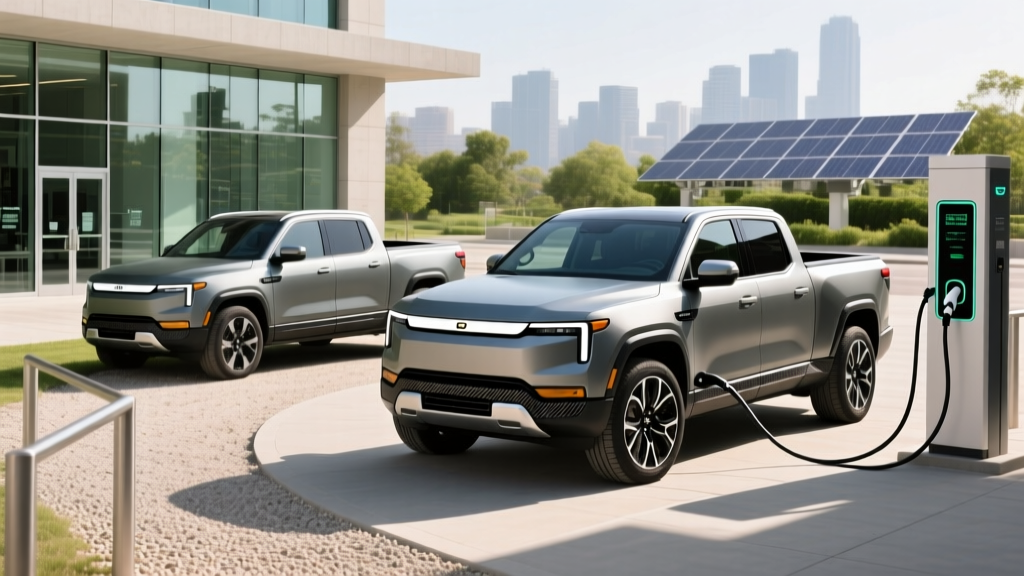
If you tow frequently: EVs can tow, but towing cuts range by 30-50%. The Ford F-150 Lightning (EPA range 230-320 mi depending on battery) loses roughly 100+ miles of range when towing a 5,000-lb trailer. If towing is a weekly activity, a diesel or hybrid truck may still be more practical.
If your budget is under $35,000: New EV options are limited but growing. The 2025 Chevrolet Equinox EV 3LT starts around $33,600 (before credits) and offers 319 miles of EPA range. The used EV market offers strong value — a 2023 Tesla Model 3 or Hyundai Ioniq 5 can be found for $25,000-$30,000, and the used EV tax credit offers up to $4,000 (30% of sale price, capped) for qualifying vehicles under $25,000.
Home Charging Setup: What It Actually Costs
If your Avis EV rental convinced you that home charging is the way to go, here's a realistic cost breakdown for a Level 2 installation. Note: final electrical specifications should always be confirmed by a licensed electrician.
| Component | Cost Range | Notes |
|---|---|---|
| Level 2 charger hardware (40-48 amp) | $350 - $700 | Popular picks: ChargePoint Home Flex, Emporia Vue, Tesla Wall Connector |
| Electrician labor (240V circuit installation) | $500 - $2,000 | Depends on panel proximity; simple garage installs are cheapest |
| Electrical panel upgrade (if needed) | $1,500 - $3,500 | Required if your panel is at capacity (common in older homes with 100-amp service) |
| Permit and inspection | $50 - $300 | Required in most jurisdictions |
| Total (typical install) | $900 - $2,500 | Without panel upgrade |
| Total (with panel upgrade) | $2,400 - $6,000 | Panel upgrade adds significant cost but increases home value |
Some utilities offer rebates of $250-$1,000 for Level 2 charger installation — check with your local provider. The federal Residential Clean Energy Credit does not currently cover EV charger hardware for most taxpayers (the previous §30C alternative fuel infrastructure credit has limited availability for residential use after 2023, though it remains available for certain underserved census tracts).
Frequently Asked Questions
Does Avis charge a fee if I return an EV with a low battery?
Avis does not have a standardized, nationwide low-battery return fee for EVs as of 2026, unlike its premium refueling charges for gas vehicles. However, individual franchise locations may impose their own policies. Always ask at the rental counter and get the policy confirmed on your rental agreement before driving off.
Can I use my Avis EV rental to test whether I should buy an EV?
Absolutely — and it's one of the smartest ways to evaluate EV ownership. A 3-5 day rental lets you experience real-world range, charging logistics, regenerative braking, and one-pedal driving in your actual daily environment. Pay attention to: how often you need to charge, whether your routine routes have adequate charging infrastructure, and how the range display tracks with your actual mileage.
How does EV charging cost compare to gasoline in 2026?
Home charging at the national average electricity rate of ~$0.16/kWh costs roughly $4.80 to add 100 miles of range to a vehicle rated at 3.0 kWh/mile (30 kWh/100mi). That same 100 miles in a 30 MPG gas car at $3.25/gallon costs $10.83. However, public DC fast charging at $0.40-$0.50/kWh costs $12-$15 per 100 miles — more expensive than gasoline. Home charging access is the primary determinant of EV fuel savings.
What EV models can I expect to find in the Avis fleet in 2026?
Avis EV fleet composition varies by location and season. Common models include the Tesla Model 3 and Model Y, Hyundai Ioniq 5, Ford Mustang Mach-E, Chevrolet Equinox EV, and Kia EV6. You typically cannot guarantee a specific model at booking — Avis assigns EVs from available inventory. Call the location directly if you have a preference.
Do I need to charge the Avis EV before returning it, or can I just drop it off?
At most Avis locations, you can return the EV at any state of charge without penalty. However, returning with less than 10-15% battery is inconsiderate to the next renter and may trigger location-specific fees. Aim to return with at least 20-30% charge. If a DC fast charger is conveniently located near the rental return area, a 10-15 minute top-up is good practice.
Is a plug-in hybrid (PHEV) a better choice than a full EV if I'm unsure?
For many first-time electrified-vehicle buyers, a PHEV is an excellent bridge. The 2025 Toyota RAV4 Prime offers 42 miles of EPA electric-only range (enough for most daily commutes) plus a gasoline engine for longer trips — eliminating range anxiety entirely. The trade-off: PHEVs have smaller batteries (18-20 kWh), meaning you'll charge more frequently for electric driving, and you still need to maintain a gas engine (oil changes, etc.). If your daily driving is under 40 miles and you have home charging, a full EV is simpler and cheaper to operate day-to-day.
Bottom Line: Rent First, Buy Smart
The "Avis EV return" question reflects a broader reality: EV ownership has different logistics than gas cars, and renting before buying is the best way to learn those logistics at low cost. Use your Avis rental to stress-test real-world range on your actual commute, try a DC fast charge, and honestly assess whether your living situation supports home charging. The data from your rental — actual miles per kWh, charging time, and cost — will tell you more than any spec sheet about whether an EV fits your life in 2026.