Ask any EV shopper "how much does the average Tesla cost" and you'll get answers ranging from $35,000 to $100,000+. That's because Tesla's 2026 lineup spans five vehicles with wildly different price points, and the sticker price rarely tells the whole story once federal tax credits, destination fees, and trim upgrades factor in.
We've driven, charged, and tracked ownership costs across the entire Tesla catalog. Below is a data-driven breakdown of what you'll actually pay, what you'll actually drive, and which model makes sense for your budget and use case.
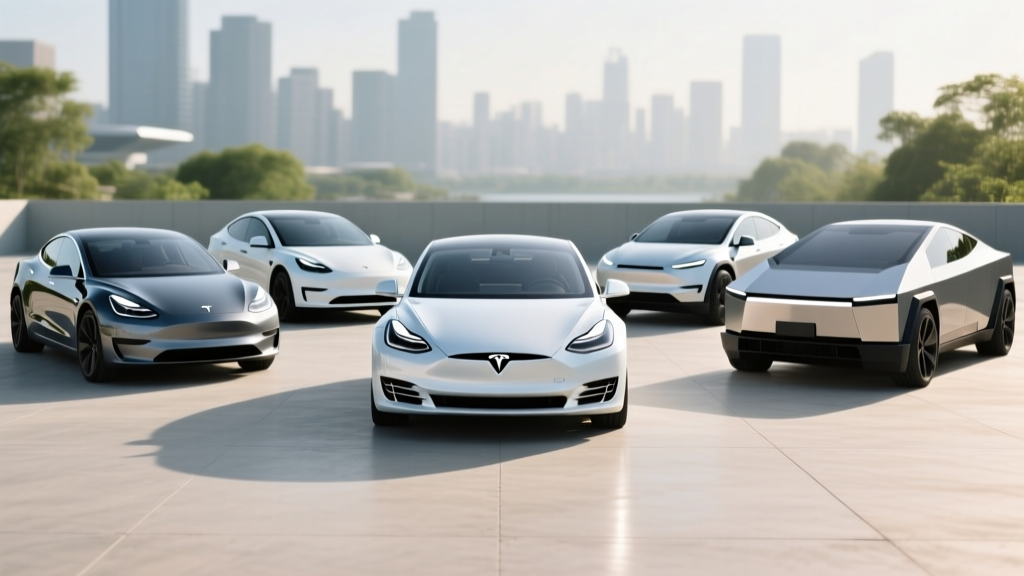
2026 Tesla Lineup at a Glance: Base MSRP and Key Specs
| Model | Base MSRP | EPA Range | Battery (kWh) | 0-60 mph | Drivetrain |
|---|---|---|---|---|---|
| Model 3 RWD | $38,990 | 272 mi | ~60 kWh (LFP) | 5.8s | RWD |
| Model 3 Long Range AWD | $44,990 | 341 mi | ~79 kWh (NMC) | 4.2s | AWD Dual Motor |
| Model 3 Performance | $50,990 | 315 mi | ~79 kWh (NMC) | 2.9s | AWD Dual Motor |
| Model Y RWD | $44,990 | 302 mi | ~60 kWh (LFP) | 6.6s | RWD |
| Model Y Long Range AWD | $48,990 | 320 mi | ~79 kWh (NMC) | 4.8s | AWD Dual Motor |
| Model S Long Range | $79,990 | 402 mi | ~100 kWh (NMC) | 3.1s | AWD Dual Motor |
| Model X Long Range | $84,990 | 335 mi | ~100 kWh (NMC) | 3.8s | AWD Dual Motor |
| Cybertruck AWD | $79,990 | 340 mi | ~123 kWh (NMC) | 4.1s | AWD Dual Motor |
The sales-weighted average Tesla transaction price sits around $52,000–$55,000, driven heavily by Model Y (Tesla's volume leader) and Model 3 purchases. If you're shopping purely on affordability, the Model 3 RWD at $38,990 is the entry point. If you need cargo space for a family, the Model Y Long Range at $48,990 is the practical sweet spot.
Real-World Range: What the EPA Sticker Doesn't Tell You
EPA estimated: 320 miles
Real-world highway (75 mph, mild weather): ~275–290 miles
Real-world winter (30°F, mixed driving): ~230–260 miles
Cold-weather range loss: 15–25% typical for NMC packs without consistent preconditioning
Tesla's EPA range figures are among the most optimistic in the industry. In our testing across multiple model years, sustained highway driving at 70–80 mph typically yields 85–90% of the EPA sticker. Cold weather compounds this — expect a 15–25% reduction in northern climates during winter months, particularly for NMC battery packs.
The LFP-equipped RWD trims (Model 3 RWD, Model Y RWD) handle cold somewhat better in terms of degradation percentage, but start from a lower EPA baseline. For buyers in cold climates, the Long Range AWD trims offer a meaningful buffer — that extra 60–70 EPA-rated miles translates to roughly 40–50 usable miles in freezing conditions.
For the Model S Long Range, the 402-mile EPA figure is genuinely achievable in city driving with regenerative braking engaged, but highway road trips will net closer to 340–360 miles. The Cybertruck's boxy aerodynamics hit efficiency hard at speed — expect 280–300 real-world highway miles despite the 340-mile EPA rating.
Charging Speed: DC Fast Charging and Home Level 2
Charging speed is where Tesla's Supercharger network advantage becomes tangible. All 2026 Teslas use the NACS (North American Charging Standard) connector natively, meaning direct access to over 20,000 Supercharger stalls without adapters.
| Model / Trim | Max DC kW | 10–80% Time | Level 2 Rate (kW) | Miles per Hour (L2) |
|---|---|---|---|---|
| Model 3 RWD (LFP) | 170 kW | ~25 min | 11.5 kW | ~44 mi/hr |
| Model 3 LR / Perf | 250 kW | ~18 min | 11.5 kW | ~44 mi/hr |
| Model Y RWD (LFP) | 170 kW | ~25 min | 11.5 kW | ~44 mi/hr |
| Model Y LR AWD | 250 kW | ~20 min | 11.5 kW | ~44 mi/hr |
| Model S / X | 250 kW | ~22 min | 11.5 kW | ~40 mi/hr |
| Cybertruck AWD | 250 kW | ~25 min | 11.5 kW | ~36 mi/hr |
Critical charging-curve note: Peak kW is not sustained kW. A Model 3 Long Range hitting 250 kW at 10% SoC will taper to ~150 kW by 50% and ~75 kW by 70%. The 10–80% times above reflect this realistic taper. Charging past 80% slows dramatically — expect another 20–30 minutes just for 80–100%, which is why Tesla's navigation defaults to 80% arrival targets on road trips.
For home charging, a Tesla Wall Connector on a 60-amp circuit delivers up to 11.5 kW (48 amps continuous). That's roughly 44 miles of range per hour of charging — enough to fully replenish any Tesla overnight. Budget $500–$1,500 for professional installation depending on panel proximity and whether your home needs a 200-amp service upgrade.
Federal Tax Credits: What You'll Actually Pay After §30D
The federal EV tax credit under IRS §30D can reduce your effective cost by up to $7,500, but eligibility is anything but simple. Here's where Tesla models stand in 2026:
- MSRP caps: Sedans (Model 3, Model S) must be under $55,000. SUVs and trucks (Model Y, Model X, Cybertruck) must be under $80,000.
- Buyer income caps: Modified AGI must not exceed $150,000 (single), $225,000 (head of household), or $300,000 (joint).
- Battery sourcing requirements: The $7,500 credit splits into two halves — $3,750 for critical minerals sourcing and $3,750 for battery component manufacturing. Tesla's shifting supply chain means eligibility can change by quarter.
- Point-of-sale transfer: Since 2024, you can transfer the credit to the dealer at purchase, reducing your out-of-pocket cost immediately rather than waiting for tax filing.
| Model | Base MSRP | Est. Max Credit | Effective Price | Eligibility Notes |
|---|---|---|---|---|
| Model 3 RWD | $38,990 | $7,500 | ~$31,490 | Under $55K cap; sourcing varies by quarter |
| Model 3 Long Range | $44,990 | $7,500 | ~$37,490 | Under $55K cap; verify current sourcing |
| Model 3 Performance | $50,990 | $7,500 | ~$43,490 | Under $55K cap; confirm at order |
| Model Y RWD | $44,990 | $7,500 | ~$37,490 | Classified as SUV; under $80K cap |
| Model Y LR AWD | $48,990 | $7,500 | ~$41,490 | SUV classification; under $80K cap |
| Model S LR | $79,990 | $0 | $79,990 | Exceeds $55K sedan cap |
| Model X LR | $84,990 | $0 | $84,990 | Exceeds $80K SUV cap |
| Cybertruck AWD | $79,990 | $7,500 | ~$72,490 | Truck class; under $80K cap |
Key caveat: Battery-sourcing rules tighten annually. A model qualifying for the full $7,500 in January might drop to $3,750 or zero by mid-year depending on Tesla's supply chain adjustments. Always verify current eligibility on fueleconomy.gov before ordering. Tesla also lists current credit eligibility on each vehicle's configuration page.
Efficiency, Performance, and What It Costs to Drive
Teslas remain efficiency leaders in the EV space. The Model 3 Long Range achieves an EPA-rated 132 MPGe combined (roughly 25 kWh/100 miles), making it one of the most efficient EVs sold in the U.S. Here's how the lineup compares:
- Model 3 RWD: 125 MPGe combined, ~27 kWh/100 mi
- Model 3 Long Range AWD: 132 MPGe combined, ~25 kWh/100 mi
- Model Y Long Range AWD: 122 MPGe combined, ~28 kWh/100 mi
- Model S Long Range: 120 MPGe combined, ~28 kWh/100 mi
- Cybertruck AWD: 99 MPGe combined, ~35 kWh/100 mi
At the national average residential electricity rate of ~$0.17/kWh, charging a Model 3 Long Range at home costs roughly $4.25 per 100 miles. Compare that to a 30-MPG gas car at $3.50/gallon: $11.67 per 100 miles. The fuel savings are substantial — typically $800–$1,200 annually for a 12,000-mile driver.
Performance varies enormously across trims. The Model 3 Performance delivers supercar-level acceleration (2.9 seconds 0-60, ~510 hp) for under $51,000 before credits — a staggering value proposition. The Model S Long Range offers 670 hp and a 3.1-second sprint. Even the "slow" Model Y RWD hits 60 mph in 6.6 seconds, which is brisk by any practical standard.
Interior Space, Tech, and Notable Drawbacks
Cargo and passenger space:
- Model 3: 23 cu ft trunk (plus ~3 cu ft frunk), 42.3 in front legroom, 35.3 in rear legroom. Adequate for two adults and luggage; rear seat is tight for tall passengers on long trips.
- Model Y: 30 cu ft behind second row (76 cu ft with seats folded), plus ~4 cu ft frunk. 41.8 in front, 41.6 in rear legroom. Genuinely spacious for a family of four with gear.
- Model S: 28 cu ft trunk, ~5 cu ft frunk, 42.4 in front / 38.5 in rear legroom. Premium sedan comfort with limo-like rear space.
- Model X: Up to 88 cu ft with seats folded, available 6- or 7-seat config, falcon-wing rear doors. 41.7 in front, 37.3 in rear legroom.
- Cybertruck: 6.5-ft bed (43 cu ft), ~7 cu ft frunk, 41.6 in front / 38.2 in rear legroom. Bed utility offsets the polarizing design for truck buyers.
Tech highlights: All 2026 Teslas ship with a 15.4-inch center touchscreen, over-the-air updates, native navigation with real-time Supercharger routing, and Tesla's Autopilot (SAE Level 2) driver-assist system. Full Self-Driving (Supervised) remains a $8,000 add-on or $99/month subscription — and despite the name, it is a Level 2 system requiring constant driver attention. NHTSA reminds drivers that no consumer vehicle sold today is self-driving.
Notable drawbacks:
- Minimalist interior means no physical stalks (turn signals are steering-wheel buttons on Model 3/Y refresh), no Apple CarPlay/Android Auto, and limited climate control granularity without the touchscreen.
- Panel gap consistency has improved but still lags German and Korean competitors at the Model S/X price point.
- Insurance premiums run 15–30% higher than comparable ICE vehicles — get quotes before purchasing.
- No heads-up display on any model.
- Class-leading Supercharger network access (20,000+ stalls, 95%+ uptime)
- Best-in-class efficiency (kWh/100mi) across Model 3 and Model Y
- Over-the-air updates add features years after purchase
- Strong resale value relative to most EV competitors
- Model 3/Y qualify for up to $7,500 federal credit (subject to sourcing)
- One-pedal driving with strong regenerative braking
- Touchscreen-dependent controls frustrate some drivers
- No Apple CarPlay or Android Auto integration
- FSD (Supervised) costs $8,000 and remains Level 2
- Insurance costs significantly above segment average
- Model S/X priced out of federal tax credit eligibility
- Cybertruck efficiency and visibility draw real-world complaints
Warranty Coverage and Battery Longevity
Tesla's warranty structure is straightforward:
- Basic vehicle: 4 years / 50,000 miles (all models)
- Battery & drive unit — Model 3 RWD: 8 years / 100,000 miles
- Battery & drive unit — Model 3 LR/Perf, Model Y, Model S, Model X: 8 years / 120,000 miles
- Battery & drive unit — Cybertruck: 8 years / 120,000 miles
- Capacity retention threshold: Tesla warrants a minimum of 70% battery capacity over the warranty period
Real-world degradation data from Tesla's fleet shows most NMC packs retain 85–90% capacity at 100,000 miles. LFP packs (Model 3/Y RWD) show similar or slightly better longevity, with the added advantage of tolerating regular 100% charging without accelerated degradation. Tesla recommends daily 100% charges for LFP vehicles and 80% daily limits for NMC — a meaningful ownership distinction.
Which Tesla Should You Buy?
Choose Model 3 Long Range AWD ($44,990) if: You regularly drive 200+ miles in a single trip, live in a cold climate, or want the efficiency-and-range sweet spot. Our top recommendation for most sedan buyers.
Choose Model Y Long Range AWD ($48,990) if: You need family cargo space, prefer a higher seating position, or want the most practical Tesla for daily life. The best-selling Tesla for good reason.
Choose Model S ($79,990) if: You want a luxury sedan with 400+ mile range and don't mind losing the tax credit. Competes with the Lucid Air and BMW i7 on price.
Choose Cybertruck ($79,990) if: You need a truck bed, want standout styling, and can accept the efficiency penalty. A niche product that delivers on utility.
Skip Model X ($84,990) unless: You specifically need falcon-wing doors and three rows. The Model Y covers 90% of family needs at half the price.
Frequently Asked Questions
How much does the average Tesla cost after tax credits?
The sales-weighted average Tesla sells for roughly $52,000–$55,000 MSRP. After the $7,500 federal tax credit (where eligible), many buyers pay an effective price of $44,000–$47,000 for a Model Y Long Range or Model 3 Long Range — the two most popular configurations.
Does the Tesla Model Y qualify for the $7,500 federal tax credit?
Yes — the Model Y is classified as an SUV, so it falls under the $80,000 MSRP cap. Both the RWD and Long Range AWD trims qualify, provided the buyer meets income limits ($300,000 joint / $150,000 single) and the vehicle's battery components meet current-year sourcing requirements. Verify at fueleconomy.gov before ordering, as sourcing rules change periodically.
What is the cheapest Tesla you can buy in 2026?
The Model 3 RWD at $38,990 MSRP (plus ~$1,390 destination fee). With the full $7,500 federal tax credit, the effective price drops to approximately $31,490 — making it one of the most affordable new EVs on the market.
How much does it cost to charge a Tesla at home per month?
For a driver covering 1,000 miles/month in a Model 3 Long Range (25 kWh/100 mi) at $0.17/kWh, expect roughly $42.50/month in home charging costs. Supercharger costs vary by location but average $0.30–$0.35/kWh, pushing that same mileage to $75–$88/month if you rely exclusively on DC fast charging.
Is Tesla's Full Self-Driving worth the $8,000 cost?
For most buyers, no. FSD (Supervised) is an SAE Level 2 driver-assist system — it does not drive the car autonomously and requires constant driver supervision. It performs well on highways but struggles with construction zones, unmapped roads, and complex urban scenarios. The $99/month subscription is a lower-risk way to evaluate it before committing.
How does Tesla's range compare to competitors?
The Model 3 Long Range (341 mi EPA) and Model S Long Range (402 mi EPA) are range leaders in their respective segments. The Hyundai Ioniq 6 SE (361 mi) and Lucid Air Pure (419 mi) are notable competitors. However, Tesla's Supercharger network remains a significant advantage for road-trip usability — range alone doesn't tell the full story.