Quick Verdict: What Does It Really Cost to Charge a Tesla?
The average Tesla charge cost depends entirely on where you plug in. For a 2026 Tesla Model Y Long Range with its 75 kWh usable battery, a full charge at home on the national average electricity rate of $0.17/kWh costs roughly $12.75, while the same fill at a Tesla Supercharger (averaging $0.35/kWh in 2026) runs about $26.25. Per mile, that translates to approximately $0.04 at home versus $0.08 on the road — both dramatically cheaper than gasoline at $3.50/gallon.
But averages obscure the real picture. Time-of-use rates, regional electricity pricing, Supercharger idle fees, and battery chemistry all shift the numbers. Below, we model the exact costs for the two best-selling Teslas — the Model 3 and Model Y — across home Level 2, public DC fast charging, and Tesla's Supercharger network, using 2026 pricing data and EPA efficiency figures.
2026 Tesla Model 3 and Model Y: Spec Table
| Spec | 2026 Model 3 Long Range AWD | 2026 Model Y Long Range AWD |
|---|---|---|
| EPA Range | 363 miles | 320 miles |
| Battery (usable) | 75 kWh (NMC) | 75 kWh (NMC) |
| EPA Efficiency | 25 kWh/100 mi (133 MPGe) | 27 kWh/100 mi (123 MPGe) |
| Max DC Fast Charge | 250 kW | 250 kW |
| 10–80% DC Time | ~27 min | ~27 min |
| Level 2 Home Rate | 11.5 kW (~44 mi/hr) | 11.5 kW (~40 mi/hr) |
| 0–60 mph | 4.2 sec | 4.8 sec |
| Horsepower | 346 hp | 384 hp |
| Drivetrain | Dual-Motor AWD | Dual-Motor AWD |
| Cargo Volume | 23 cu ft (trunk+frunk) | 76 cu ft (rear seats folded) |
| Base MSRP | $47,740 | $48,240 |
| Battery Warranty | 8 yr / 120,000 mi | 8 yr / 120,000 mi |
Breaking Down the Average Tesla Charge Cost
To calculate what you will actually spend, we need to separate energy (kWh — the "gallons" in your battery) from power (kW — how fast those electrons flow). Your cost is always a function of kWh consumed multiplied by the per-kWh rate at your charging location.
Home Charging: The Baseline
The U.S. Energy Information Administration reports the national residential average at $0.17 per kWh entering 2026, though this varies enormously: California averages around $0.30/kWh, Texas sits near $0.13/kWh, and the Northeast hovers around $0.22/kWh. The Model 3 Long Range consumes roughly 25 kWh per 100 miles on the EPA cycle. For a full 0–100% charge (75 kWh usable):
- National average home cost: 75 × $0.17 = $12.75
- California home cost: 75 × $0.30 = $22.50
- Texas home cost: 75 × $0.13 = $9.75
If you charge during off-peak hours on a time-of-use (TOU) plan — typically 11 PM to 6 AM — rates can drop to $0.08–$0.12/kWh in many regions, pushing a full Model Y charge below $9.00. This is where most Tesla owners find their real "average" cost, since over 80% of EV charging happens at home.
Tesla Supercharger Network
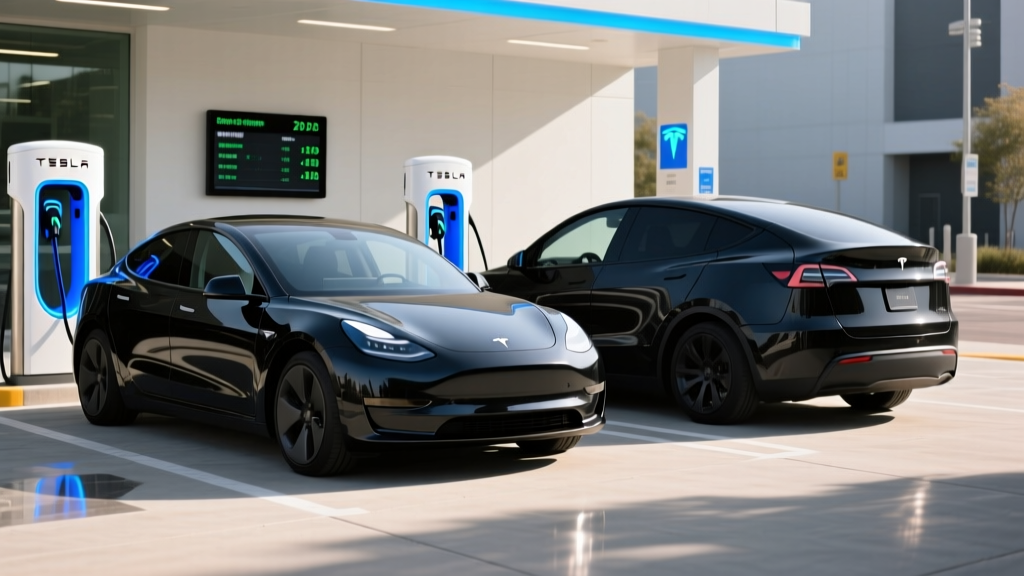
Tesla's Supercharger pricing is not uniform. As of early 2026, rates across the U.S. range from $0.25/kWh in low-cost markets (parts of the Southeast and Midwest) to $0.48/kWh in premium urban locations (downtown San Francisco, New York City). The network-wide average lands near $0.35/kWh. For a 10–80% session (adding ~52.5 kWh to a 75 kWh pack):
- Low-cost Supercharger: 52.5 × $0.25 = $13.13
- Average Supercharger: 52.5 × $0.35 = $18.38
- Premium urban Supercharger: 52.5 × $0.48 = $25.20
Tesla also charges idle fees of $1.00/minute if your car remains plugged in after reaching its charge limit at a busy station — a cost that can eclipse the energy bill if you are not paying attention.
Third-Party DC Fast Chargers
With the Model 3 and Model Y now shipping with the NACS connector natively (and CCS adapters available for older vehicles), you can access Electrify America, EVgo, and ChargePoint stations. These networks typically charge $0.40–$0.56/kWh for non-subscribers, making them the most expensive routine charging option. A 10–80% fill at $0.48/kWh costs $25.20 — comparable to premium Supercharger locations.
Real-World Range vs. EPA: What You Will Actually Drive
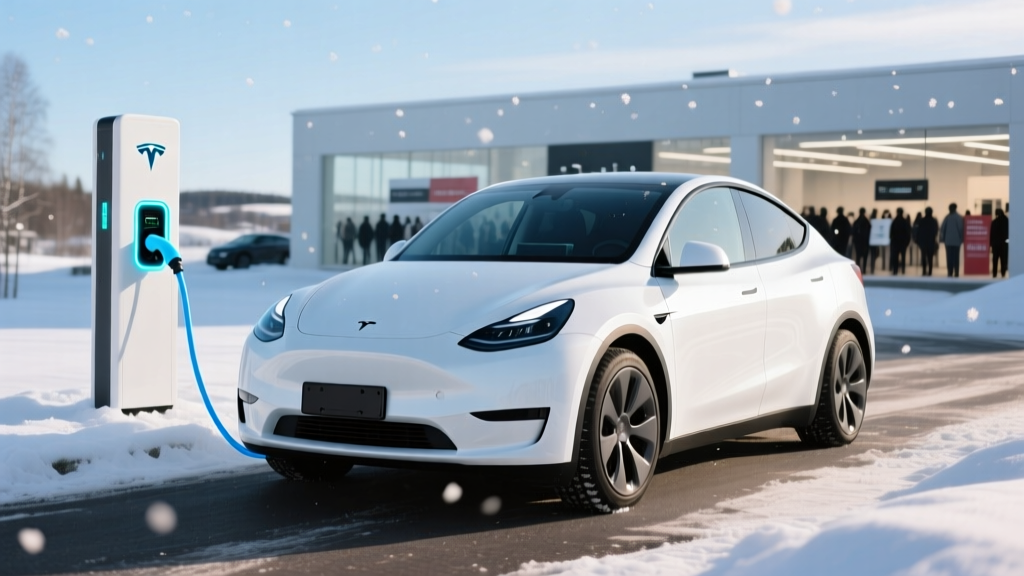
EPA sticker: 320 miles. Real-world expectation: 270–290 miles at 70 mph highway speeds in mild weather. In freezing temperatures (below 30°F), expect 220–250 miles due to battery resistance and cabin heating load. City driving with regenerative braking can match or slightly exceed the EPA figure at ~320–340 miles.
The EPA test cycle includes a mix of city and highway driving with climate control off. In practice, highway speeds above 65 mph increase aerodynamic drag exponentially, and the Model Y's crossover profile creates more drag than the Model 3 sedan. Cold weather reduces lithium-ion battery efficiency and forces energy into cabin and battery heating — even with Tesla's standard heat pump, which is significantly more efficient than resistive heating. Plan road-trip charging stops around 200–220 miles apart in winter to maintain a safety buffer.
Charging Speed: From Wall Outlet to Supercharger
| Charging Level | Power (kW) | Miles Added per Hour | Full Charge Time (0–100%) | Typical Location |
|---|---|---|---|---|
| Level 1 (120V) | 1.2–1.4 kW | ~4–5 mi/hr | ~60+ hours | Standard household outlet |
| Level 2 (240V, 48A) | 11.5 kW | ~40–44 mi/hr | ~7–8 hours | Home wall connector, public L2 |
| DC Fast (Supercharger V3) | Peak 250 kW | ~180 mi in 15 min | 10–80% in ~27 min | Tesla Supercharger stations |
| DC Fast (CCS/NACS 350 kW station) | Peak 250 kW (vehicle-limited) | ~180 mi in 15 min | 10–80% in ~27 min | Electrify America, EVgo |
The Tesla Model 3 and Model Y peak at 250 kW on DC fast chargers, but that peak is sustained only between roughly 10% and 30% state of charge. Above 50%, the charge curve tapers significantly — by 80%, you are pulling under 60 kW. This is normal lithium-ion behavior designed to protect battery longevity. Tesla's navigation system preconditions the battery when you route to a Supercharger, warming it to optimal temperature for maximum charge acceptance. Without preconditioning (e.g., arriving at a charger with a cold battery), your 10–80% time can stretch to 40+ minutes in cold weather.
Pricing, Trims, and Federal Tax Credit Eligibility
| Trim | MSRP | Est. Federal Credit (§30D) | Effective Price |
|---|---|---|---|
| 2026 Model 3 RWD | $40,240 | Up to $7,500* | ~$32,740* |
| 2026 Model 3 Long Range AWD | $47,740 | Up to $7,500* | ~$40,240* |
| 2026 Model 3 Performance | $54,240 | Up to $7,500* | ~$46,740* |
| 2026 Model Y Long Range AWD | $48,240 | Up to $7,500* | ~$40,740* |
| 2026 Model Y Performance | $53,240 | Up to $7,500* | ~$45,740* |
*Federal tax credit eligibility under IRS §30D depends on multiple requirements that change frequently:
- Buyer income caps: Modified AGI must not exceed $150,000 (single), $225,000 (head of household), or $300,000 (joint filing).
- MSRP caps: Sedans (Model 3) must be under $55,000; SUVs/trucks (Model Y) under $80,000.
- Battery sourcing: Increasing percentages of critical minerals and battery components must be sourced from the U.S. or free-trade-agreement countries. Tesla's supply chain has adapted significantly, but exact eligibility can shift by model year and build month.
- Point-of-sale transfer: As of 2024, eligible buyers can transfer the credit to the dealer at purchase, reducing the out-of-pocket price immediately rather than waiting for a tax refund.
Verify current eligibility on fueleconomy.gov and consult a tax professional before relying on credit assumptions.
Cost Per Mile: Tesla vs. Gasoline Baseline
Let's compare the Model Y Long Range against a comparable gasoline crossover getting 26 MPG combined (the EPA average for new AWD crossovers) at $3.50/gallon:
- Model Y (home charging, $0.17/kWh): 27 kWh/100 mi × $0.17 = $4.59 per 100 miles ($0.046/mi)
- Model Y (Supercharger avg, $0.35/kWh): 27 × $0.35 = $9.45 per 100 miles ($0.095/mi)
- Gasoline crossover (26 MPG, $3.50/gal): $13.46 per 100 miles ($0.135/mi)
Even at the most expensive Supercharger rates, the Tesla costs less per mile than gasoline. At home rates, the savings approach $900–$1,200 per year for a driver covering 12,000 miles annually. Over five years of ownership, home-charging savings alone can total $4,500–$6,000 — enough to offset a significant portion of the purchase price premium over a gasoline alternative.
Tech, Interior, and Ownership Experience
The 2026 Model 3 (refreshed "Highland" platform) and Model Y ("Juniper" update) share Tesla's minimalist interior dominated by a 15.4-inch center touchscreen. Notable features include:
- Ambient lighting and ventilated front seats (new for the Highland/Juniper refresh)
- Rear-seat touchscreen for climate and entertainment control (Model 3)
- Autopilot (SAE Level 2) standard — adaptive cruise and lane centering; Full Self-Driving (Supervised) available as a $8,000 option or $99/month subscription
- Over-the-air updates that regularly add features and refine performance
- Sentry Mode and Dashcam using the vehicle's camera suite for security recording
Notable drawbacks: The absence of physical buttons for climate, mirrors, and glovebox frustrates some drivers. Turn signals are on a steering-wheel-mounted stalk (restored in the latest refresh after the controversial yoke-era removal). Road noise remains more pronounced than in luxury competitors like the BMW i4 or Genesis Electrified GV70. The panoramic glass roof provides no shade option from the factory.
Pros, Cons, and Who Should Buy
- Class-leading Supercharger network access (17,000+ U.S. stalls)
- Lowest cost-per-mile when charging at home
- Strong efficiency (25–27 kWh/100 mi) beats most competitors
- OTA updates continuously improve the vehicle
- Spacious Model Y cargo area (76 cu ft)
- Strong resale value relative to EV segment
- Minimalist interior lacks physical controls
- Ride quality firm on broken pavement
- Insurance premiums run 15–30% above segment average
- Supercharger cost rising as network opens to non-Teslas
- No Apple CarPlay/Android Auto
- FSD subscription adds significant ownership cost
Best for: Daily commuters with home charging access who want minimal fuel costs and reliable long-distance travel via the Supercharger network. The Model Y specifically suits families needing cargo space for strollers, groceries, and road-trip luggage. The Model 3 fits singles or couples prioritizing efficiency and driving dynamics over utility.
Look elsewhere if: You lack home or workplace charging and would rely entirely on public fast charging — the cost advantage erodes significantly, and session time adds up. Also reconsider if you value a traditional luxury interior with physical controls; the BMW i4 or Hyundai Ioniq 6 offer more conventional interfaces with competitive range.
Frequently Asked Questions
What is the average Tesla charge cost per month?
For a driver covering 1,000 miles per month and charging primarily at home at the national average of $0.17/kWh, expect to spend $42–$46/month on electricity for a Model 3 Long Range (25 kWh/100 mi). A Model Y at 27 kWh/100 mi costs roughly $46–$51/month. Drivers who rely exclusively on Superchargers should budget $80–$100/month.
Does Tesla charge per minute or per kWh?
Tesla Superchargers bill by the kWh (energy delivered) in most U.S. markets, which is the fairest method since you pay only for what enters your battery. Some locations still use per-minute billing where regulations require it, which disadvantages vehicles that cannot sustain peak charge rates. Idle fees are billed per minute after your session completes.
Is home charging always cheaper than Supercharging?
Almost always. Even in high-cost states like California ($0.30/kWh average), home charging at $22.50 for a full Model Y pack undercuts the average Supercharger session at $18.38 for only a 10–80% fill. With off-peak TOU rates, home charging drops to under $10 for a full charge — roughly half the Supercharger cost.
Do Teslas lose range in cold weather?
Yes. In sustained temperatures below 30°F, expect a 15–30% range reduction depending on driving speed and cabin heat usage. The heat pump in current Model 3/Y vehicles mitigates this compared to older resistive heaters, but physics still demands energy for battery and cabin warming. Preconditioning while plugged in recovers some range by warming the battery on grid power.
Does the 2026 Tesla Model 3 qualify for the $7,500 federal tax credit?
It can, but eligibility depends on your income, the vehicle's MSRP (must be under $55,000 for sedans), and battery component/critical-mineral sourcing requirements that evolve throughout the model year. Check the latest status on irs.gov and confirm with your tax advisor before purchase. The point-of-sale transfer option lets you apply the credit as a down-payment reduction at delivery.