The sticker price of an electric vehicle is only the first line item. The real financial picture unfolds over years of ownership — and the single most-searched question among new EV buyers is straightforward: what is the average cost to charge an electric car, and does it actually save you money versus a gas vehicle?
The short answer is that home charging is dramatically cheaper per mile than gasoline, while public DC fast charging can approach or exceed gas-car fuel costs. But charging is just one variable in a five-year ownership equation that also includes purchase incentives, insurance premiums, maintenance, and resale value. This guide runs the complete math with 2026 figures so you can decide whether an EV makes financial sense for your situation.
How Much Does It Really Cost to Charge an EV?
Charging cost depends entirely on where you charge and what you pay per kilowatt-hour (kWh). A kWh is a unit of energy — think of it as the EV equivalent of a gallon of gas. The power rating of a charger is measured in kilowatts (kW), which dictates speed, not cost.
Charging Cost Per Mile: Three Real Scenarios
Assumptions: 2026 Hyundai Ioniq 6 SE Long Range (140 MPGe combined, ~27 kWh/100 mi, EPA data). Driven 12,000 miles/year.
| Charging Scenario | Avg Cost per kWh | Cost per 100 Miles | Annual Cost (12k mi) |
|---|---|---|---|
| Home Level 2 (national avg electricity) | $0.17 | $4.59 | $551 |
| Home with Time-of-Use off-peak rate | $0.09 | $2.43 | $292 |
| Public DC fast charger (Electrify America, EVgo avg) | $0.48 | $12.96 | $1,555 |
For comparison, a 28 MPG combined gas car at $3.30/gallon costs $14.14 per 100 miles, or $1,697 annually. Home-charged EVs slash fuel costs by 65-85%. But if you rely exclusively on public DC fast chargers — common for apartment dwellers without home charging access — your "fuel" bill can match or exceed a gas car's.
Real-world efficiency note: The EPA combined figure of 27 kWh/100 mi assumes mixed driving. Sustained 75+ mph highway driving pushes consumption to 31-34 kWh/100 mi. Cold weather (below 30°F) can add another 15-25% to energy consumption due to cabin heating and battery thermal management. Budget accordingly if your commute is highway-heavy or you live in a cold climate.
5-Year Total Cost of Ownership: EV vs Gas
Charging savings alone don't determine financial winners. We modeled a 5-year / 60,000-mile ownership cycle comparing a 2026 Hyundai Ioniq 6 SE ($38,650 MSRP) against a comparably equipped 2026 Toyota Camry LE ($29,495 MSRP, 32 MPG combined).
5-Year / 60,000-Mile Ownership Cost
| Category | Ioniq 6 SE (EV) | Camry LE (Gas) | Notes |
|---|---|---|---|
| Purchase price (MSRP) | $38,650 | $29,495 | Before incentives |
| Federal tax credit (§30D) | −$3,750 to −$7,500 | $0 | Depends on battery sourcing & income — see eligibility below |
| Effective purchase price | $31,150–$34,900 | $29,495 | After credit |
| Fuel/charging (5 yrs) | $2,755 (home) / $7,775 (public) | $8,486 | Home at $0.17/kWh; gas at $3.30/gal |
| Maintenance (5 yrs) | $1,800 | $3,900 | EV: no oil, fewer fluids, regen saves brakes |
| Insurance (5 yrs) | $9,500 | $7,200 | EV premiums ~25-30% higher on average |
| Depreciation (5 yrs) | $18,500 | $11,800 | EVs depreciate faster currently |
| Total (home charging) | $63,705–$67,455 | $60,881 | Before state incentives |
Source: Author calculations using fueleconomy.gov efficiency data, Kelley Blue Book depreciation estimates, and AAA insurance averages. Actual costs vary by state, driving pattern, and electricity rate.
The EV narrows the gap through fuel and maintenance savings, but higher insurance premiums and steeper depreciation mean the total-cost advantage is not guaranteed. The math tips in the EV's favor when you qualify for the full $7,500 credit, charge primarily at home, and benefit from state rebates.
Federal EV Tax Credit: §30D Eligibility Rules for 2026
The IRS §30D Clean Vehicle Credit offers up to $7,500 for qualifying new EVs, but the rules are complex and have tightened significantly since the Inflation Reduction Act. Not every EV qualifies, and not every buyer is eligible.
§30D Eligibility Checklist (2026 Tax Year)
- Income caps: Modified AGI must not exceed $300,000 (married filing jointly), $225,000 (head of household), or $150,000 (single). You can use your current or prior year's income — whichever is lower.
- MSRP caps: Vehicle MSRP must not exceed $80,000 for SUVs, vans, and pickups; $55,000 for sedans, wagons, and hatchbacks. The MSRP cap includes destination charges but not dealer-installed accessories.
- Battery sourcing — critical minerals (up to $3,750): A specified percentage of critical minerals must be sourced from the US or a free-trade-agreement country, or recycled in North America. This threshold increases annually.
- Battery sourcing — components (up to $3,750): A specified percentage of battery components must be manufactured or assembled in North America. This threshold also increases annually.
- Foreign Entity of Concern (FEOC) exclusion: Vehicles with battery components or critical minerals from a FEOC (primarily targeting Chinese supply chains) are disqualified, even if they meet other thresholds.
- Point-of-sale transfer: As of 2024, you can transfer the credit to the dealer at purchase, reducing your out-of-pocket cost immediately rather than waiting to claim it on your tax return. The dealer must be IRS-registered.
- Vehicle must be new: Used EVs qualify for a separate credit (§25E) of up to $4,000, with its own income and price caps (vehicle price ≤ $25,000).
State, Local, and Utility Incentives
Federal credits are only part of the picture. Depending on where you live, additional incentives can stack:
- State rebates: California (CVRP, up to $7,000 for income-qualified buyers), Colorado (up to $5,000 state tax credit), Massachusetts (MOR-EV, up to $3,500), New York (Drive Clean, up to $2,000). Rules and funding availability vary — check your state energy office.
- Utility rebates: Many utilities offer $250-$1,500 for Level 2 home charger purchase or installation, plus time-of-use rate plans that cut charging costs 40-60%.
- HOV lane access: States including California, Colorado, Virginia, and Maryland grant solo HOV lane access to qualifying EVs — a significant commute-time benefit with real dollar value.
Always verify current incentive availability with your state energy office and utility provider, as programs frequently exhaust funding or change eligibility rules.
Maintenance Savings: Where EVs Pull Ahead
Electric vehicles have far fewer moving parts than internal-combustion vehicles — no engine, no transmission, no exhaust system, no timing belt, no spark plugs. This translates to real, measurable maintenance savings over ownership.
Maintenance Cost Comparison (5 Years / 60,000 Miles)
| Service Item | Gas Vehicle | Battery Electric Vehicle | |
|---|---|---|---|
| Oil changes | $500–$750 (8-10 changes) | $0 — no engine oil | |
| Transmission fluid | $150–$300 | $0 — single-speed reduction gear | |
| Brake pads and rotors | $600–$1,200 | $100–$300 (regenerative braking reduces wear 50-70%) | |
| Engine air filter | $100–$200 | $0 — no engine air filter | |
| Spark plugs | $200–$400 | $0 | |
| Coolant flush | $150–$250 | $100–$150 (battery thermal system) | |
| Cabin air filter | $100–$200 | $100–$200 | |
| Tire rotation/replacement | $800–$1,400 | $900–$1,600 (EVs are heavier; tires wear faster) | |
| Total estimated | $3,600–$4,700 | $1,200–$2,250 |
The biggest caveat: tire costs. EVs are 300-600 lbs heavier than comparable gas cars and deliver instant torque, both of which accelerate tire wear. Budget for tire replacement 10,000-15,000 miles sooner than you might on a gas vehicle, and consider EV-optimized tires (like the Michelin e.Primacy or Hankook iON) that are engineered for higher load ratings and lower rolling resistance.
Insurance: The Cost Most Buyers Overlook
EV insurance premiums are typically 25-30% higher than comparable gas vehicles. According to AAA and industry data, the average annual EV insurance premium in 2026 is approximately $1,900-$2,200 versus $1,400-$1,700 for a gas equivalent.
The reasons are structural, not arbitrary:
- Higher repair costs: EV battery packs are expensive to replace after collision damage. Even minor rear-end collisions can compromise the underbody battery enclosure, leading to total-loss declarations on vehicles that a gas car would survive with a $2,000 repair.
- Specialized labor: High-voltage system repairs require certified EV technicians, and fewer shops have this capability, driving up labor rates.
- Higher vehicle MSRP: Insurers factor in replacement cost; EVs still command a price premium in many segments.
- Parts availability: EV-specific body panels and structural components can have longer lead times, increasing rental-car costs for insurers during claims.
How to reduce EV insurance costs: Shop quotes from at least three carriers — EV insurance pricing varies wildly. Tesla owners may find competitive rates through Tesla Insurance (available in select states). Bundling home and auto, maintaining a clean record, and opting for higher deductibles all apply equally to EVs. Some insurers now offer discounts for vehicles with advanced ADAS features like automatic emergency braking and lane-keeping assist.
Depreciation and Resale Value: The Moving Target
Depreciation is the single largest ownership cost for any vehicle, and EVs have experienced turbulent resale values in the 2024-2026 period.
According to iSeeCars and Kelley Blue Book data, the average 5-year EV depreciation sits at 45-55%, compared to 38-45% for the average gas vehicle. Several factors explain the gap:
- Price wars: Tesla's aggressive price cuts in 2023-2024 cascaded through used-EV values, pulling down resale prices across all brands.
- Rapid technology advancement: Newer models offer significantly more range and faster charging, making 2-3 year-old EVs feel dated faster than gas cars age.
- Battery health uncertainty: Used-EV buyers discount for perceived battery degradation risk, even though most modern packs retain 85-92% capacity after 100,000 miles.
- Tax credit compression: When new EVs become cheaper through incentives or price cuts, used EV prices must fall to remain competitive.
However, certain models defy the trend. The Toyota RAV4 Prime (PHEV), Ford Maverick Hybrid, and high-demand EVs like the Hyundai Ioniq 5 have shown stronger-than-average retention. If minimizing depreciation is a priority, consider leasing — it transfers the resale-value risk to the lessor, and some leases pass through the $7,500 tax credit as a capitalized-cost reduction.
Charging at Home vs. Public: The Access Factor
The financial case for EV ownership collapses without access to affordable home charging. Here's the reality by living situation:
| Charging Access | Annual Fuel Cost | Convenience | Verdict |
|---|---|---|---|
| Home Level 2 (garage/driveway) | $292–$551 | Wake up "full" every morning | Optimal — strongest financial case |
| Home Level 1 (120V outlet) | $292–$551 | Slow (~3-5 mi/hr); works if daily driving < 40 mi | Adequate for low-mileage commuters |
| Workplace charging | $0–$300 | Depends on employer; not guaranteed long-term | Great supplement, risky as sole source |
| Public DC fast charging only | $1,200–$1,800 | 20-40 min stops; reliability varies by network | Financially neutral vs gas; time-costly |
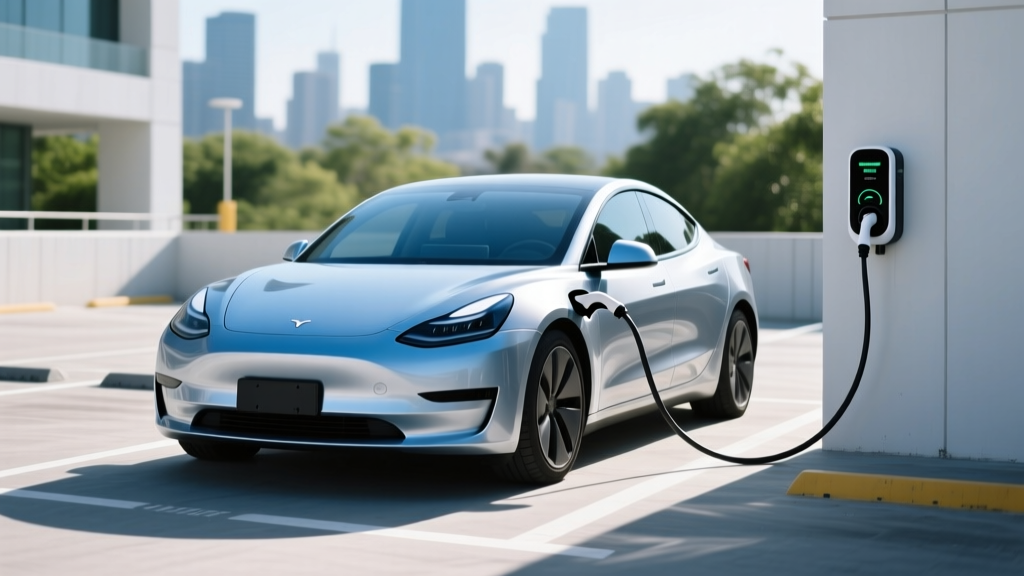
Home Level 2 charger installation typically costs $800-$2,500 (charger hardware: $300-$700; electrician labor and permitting: $500-$1,800). A 200-amp electrical panel is usually sufficient; older homes with 100-amp service may need a panel upgrade ($1,500-$3,500), which significantly affects the upfront equation.
Decision Framework: Does an EV Save You Money?
Choose an EV if:
- You can install a Level 2 charger at home (garage, driveway, or dedicated parking spot)
- You qualify for the full or partial §30D federal tax credit ($3,750-$7,500)
- Your state offers additional rebates or incentives
- You drive 10,000+ miles per year (higher mileage amplifies fuel savings)
- You plan to keep the vehicle 5+ years (amortizing the higher purchase price)
Stick with gas or hybrid if:
- You live in an apartment or condo without charging access and no workplace charging
- Your annual mileage is under 8,000 miles (fuel savings don't offset the price premium)
- You plan to sell within 3 years (depreciation will likely exceed fuel savings)
- You frequently tow heavy loads or drive in extreme cold (range and efficiency penalties compound)
- Your income exceeds §30D caps and no state incentives are available
Frequently Asked Questions
What is the average cost to charge an electric car at home per month?
For a driver covering 1,000 miles per month in an efficient EV (27-30 kWh/100 mi) at the US average residential electricity rate of $0.17/kWh, expect to pay approximately $46-$51 per month. With an off-peak time-of-use rate ($0.09/kWh), that drops to $24-$27 per month. Compare this to $141/month for a 28 MPG gas car at $3.30/gallon.
Do I qualify for the $7,500 federal EV tax credit?
Eligibility depends on three factors: your income (under $150k single / $300k joint), the vehicle's MSRP (under $55k for cars, $80k for SUVs/trucks), and the battery's critical-mineral and component sourcing. Many popular EVs qualify for only $3,750 (half credit) because they meet one sourcing requirement but not the other. Check the current eligible-vehicle list at fueleconomy.gov and verify with a tax professional before purchasing.
Are EVs really cheaper to maintain than gas cars?
Yes, by a significant margin. Consumer Reports estimates EV maintenance costs at $0.061 per mile versus $0.101 per mile for gas vehicles — a savings of roughly $1,800-$2,100 over 60,000 miles. The savings come from eliminated oil changes, reduced brake wear (regenerative braking handles most deceleration), and fewer mechanical systems that can fail. The main exception is tires, which wear faster on heavier EVs.
How much does public DC fast charging cost compared to gas?
At the 2026 national average of $0.48/kWh, DC fast charging costs roughly $0.13-$0.15 per mile for an efficient EV — comparable to or slightly less than a 28 MPG gas car at $3.30/gallon ($0.12/mile). In some regions with premium pricing ($0.60+/kWh at highway chargers), fast charging actually exceeds gas-car fuel cost per mile. This is why home charging access is the single biggest financial variable in EV ownership.
Will my EV battery need expensive replacement?
Modern EV batteries (NMC and LFP chemistries) are engineered for longevity. Real-world data from Tesla, Hyundai, and BMW fleets show 85-92% capacity retention at 100,000 miles. Federal law mandates a minimum 8-year/100,000-mile battery warranty (10 years/150,000 miles in California Air Resources Board states) covering defects and capacity loss below 70%. Full battery replacements cost $8,000-$18,000 depending on the vehicle but are rarely needed within the first 10 years of ownership.
Does charging to 80% instead of 100% save money?
It saves battery health, not money directly. Charging to 80% reduces stress on NMC battery cells and slows long-term degradation. For LFP batteries (used in Tesla Model 3/Y Standard Range, some BYD models), manufacturers actually recommend regular 100% charges for cell-balancing. Either way, the electricity cost difference between 80% and 100% is marginal — the benefit is preserving capacity over 8-10 years.