Quick Answer: The Audi TT Electric Car Status
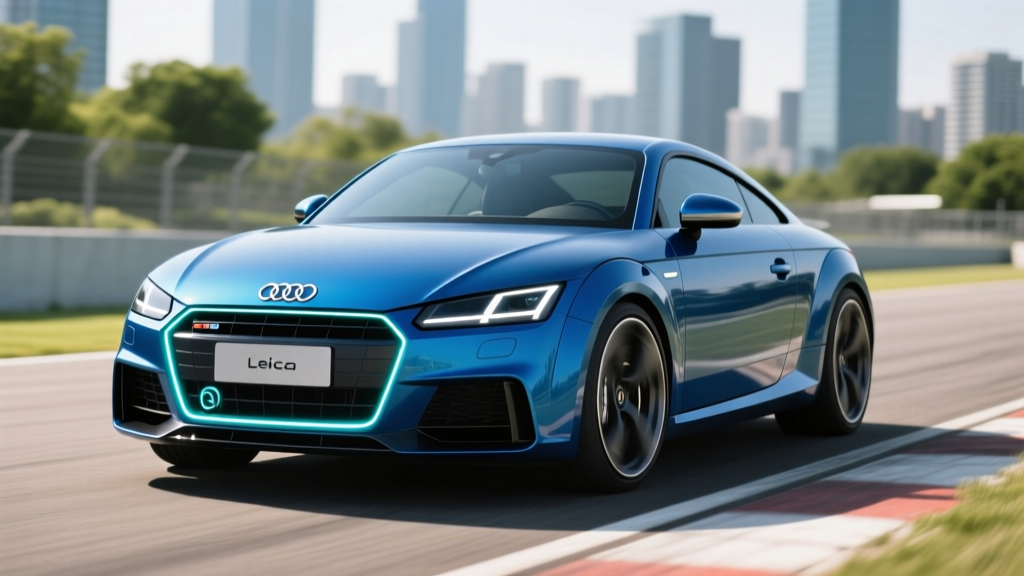
As of early 2026, there is no confirmed Audi TT electric car in production or officially announced for sale. Audi discontinued the TT after the 2023 model year and has not committed to a direct electric successor. However, Audi executives have publicly floated the idea of an electric sports coupe on the Volkswagen Group's PPE or SSP Sport platform, and industry reports suggest a decision is possible by late 2026 or 2027. If you're searching for an Audi TT electric car today, the closest available alternatives are the Audi e-tron GT (starting ~$107,000, EPA 238 mi) or the upcoming Porsche 718 Boxster/Cayman EV, which shares corporate DNA.
Why the Audi TT Was Discontinued — and Why an EV Revival Makes Sense
The Audi TT ended production in November 2023 after three generations and roughly 670,000 units sold worldwide. The reason was straightforward: declining sales in a market shifting toward SUVs, combined with the cost of re-engineering the aging MQB-based platform for stricter emissions standards. The final-generation TT RS produced 394 hp from a 2.5-liter five-cylinder — a beloved engine, but one that couldn't meet Euro 7 targets without expensive aftertreatment.
An electric successor solves several problems simultaneously. Electric motors eliminate tailpipe emissions entirely, deliver instant torque ideal for a lightweight sports coupe, and allow Audi to leverage shared battery and motor architecture from the Volkswagen Group's PPE (Premium Platform Electric) and upcoming SSP Sport platforms. The Porsche Macan EV and Audi Q6 e-tron already use PPE, proving its viability for performance applications.
Expected Specs: What an Audi TT Electric Car Could Look Like
No official specifications exist. The following projections are based on PPE and SSP Sport platform capabilities, Audi's current EV lineup, and statements from Audi design chief Marc Lichte (who confirmed in 2023 that the TT nameplate "could return" in electric form). Treat these as educated estimates, not confirmed figures.
| Attribute | Estimated Base | Estimated RS Variant |
|---|---|---|
| Platform | SSP Sport (next-gen) | SSP Sport (next-gen) |
| Battery (usable) | ~75 kWh (NMC) | ~90 kWh (NMC) |
| EPA Range (est.) | 220–260 mi | 200–240 mi |
| Drivetrain | RWD, single motor | AWD, dual motor |
| Horsepower | ~280 hp | ~500+ hp |
| 0–60 mph | ~5.5 sec | ~3.2 sec |
| Max DC Fast Charge | ~200 kW | ~270 kW |
| 10–80% DC Charge | ~22 min | ~18 min |
| Level 2 Charging | 11 kW (AC) | 11 kW (AC) |
| Starting MSRP (est.) | ~$55,000–$62,000 | ~$80,000–$90,000 |
A lightweight sports coupe with a ~75 kWh battery would likely weigh around 3,800–4,100 lbs — heavier than the last gas TT RS (3,373 lbs) but competitive with other electric performance cars. The smaller battery keeps weight down and preserves the nimble handling the TT was known for, at the cost of some range. Expect an EPA-estimated 220–260 miles for a base RWD model; real-world highway driving at 75+ mph could drop that to roughly 180–210 miles, and cold-weather (below 32°F) operation may reduce range by 15–25% due to battery heating demands and cabin HVAC load.
How an Electric TT Would Compare: EV vs Gas Sports Coupes
If Audi green-lights a TT EV, it would compete with both internal-combustion sports cars and emerging electric alternatives. Here's how the segment shapes up using current or recently available models:
| Model | Powertrain | HP | 0–60 | Range / MPG | MSRP |
|---|---|---|---|---|---|
| Audi TT EV (est.) | BEV (RWD) | ~280 | ~5.5s | ~240 mi EPA | ~$58,000 |
| Porsche 718 Cayman EV (announced) | BEV (RWD) | ~400 (est.) | ~4.0s (est.) | ~250 mi (est.) | ~$75,000 (est.) |
| Audi e-tron GT | BEV (AWD) | 469 | 3.9s | 238 mi EPA | $107,100 |
| Toyota GR86 / Subaru BRZ | Gas (RWD) | 228 | 6.1s | 25 MPG combined | $29,495 |
| BMW M2 | Gas (RWD) | 453 | 4.0s | 19 MPG combined | $64,900 |
| Lotus Emeya (China/Europe) | BEV (AWD) | 603 | 2.8s | ~305 mi (WLTP) | ~$95,000 (equiv.) |
The electric advantage is clear in torque delivery and acceleration per dollar. A ~280 hp electric TT with instant motor torque would feel significantly quicker in real-world driving than its horsepower figure suggests — electric motors deliver peak torque from 0 RPM, unlike gas engines that need to rev. The tradeoff is range on long drives, higher weight, and dependence on charging infrastructure for road trips.
Real Costs: Purchase, Charging, Maintenance, and Insurance
An electric sports coupe changes the ownership cost equation significantly compared to a gas TT. Here's a projected 5-year cost breakdown for an Audi TT EV (base, ~$58,000 MSRP) versus the last-generation Audi TT RS ($53,300 MSRP when new):
| Category | Audi TT EV (Projected) | Audi TT RS (Last Gen, Gas) |
|---|---|---|
| Purchase Price | $58,000 | $53,300 |
| Federal Tax Credit (§30D) | $0–$7,500* | $0 |
| Fuel / Electricity (75k mi) | $2,800–$4,200** | $8,500–$10,000 |
| Maintenance (5 yr) | $1,200–$1,800 | $3,500–$4,500 |
| Insurance (5 yr avg.) | $9,000–$12,000 | $8,500–$11,000 |
| Estimated Depreciation | $22,000–$28,000 | $18,000–$22,000 |
| Total (approx.) | $65,500–$82,500 | $78,300–$90,300 |
* Federal §30D credit eligibility for 2026 depends on MSRP caps ($55,000 for cars), buyer income limits ($150,000 single / $300,000 joint AGI), and battery critical-mineral sourcing requirements. A sports coupe above $55,000 MSRP would not qualify. Consult IRS §30D guidelines and a tax professional. Point-of-sale transfer is available for eligible vehicles.
** Electricity costs assume $0.16/kWh national average for home charging and $0.40/kWh for DC fast charging, with 70/30 home/public mix. Efficiency estimated at 3.0 mi/kWh. Gas costs assume $3.80/gal and 22 MPG combined. Source: fueleconomy.gov comparison tool.
Maintenance Reality
Electric vehicles eliminate oil changes, spark plugs, timing belts, and exhaust system repairs. Brake wear is dramatically reduced thanks to regenerative braking — many EV owners report original brake pads lasting 80,000+ miles. The main maintenance items for a TT EV would be tire rotation/replacement (EVs tend to wear tires faster due to instant torque and heavier weight), cabin air filter, brake fluid checks, and battery coolant service. Audi's EV battery warranty is typically 8 years / 100,000 miles with a minimum 70% capacity retention guarantee.
Real-World Ownership: What a First-Time EV Buyer Must Know
If an Audi TT EV arrives, prospective buyers need to plan for several practical realities that don't apply to the gas TT:
Home Charging Is Essential
Level 1 charging (120V household outlet) adds roughly 3–4 miles of range per hour — insufficient for daily driving if you cover more than 30 miles. A Level 2 home charger (240V, 11 kW) adds approximately 30–35 miles per hour, meaning a full overnight charge from 20% to 100% takes about 7–8 hours. Installation costs for a Level 2 circuit typically range from $800 to $2,500 depending on panel capacity, run length, and local permitting. If your home electrical panel is at capacity (common in older homes with 100A service), a panel upgrade to 200A can add $1,500–$3,000. Always get a quote from a licensed electrician before purchasing.
Public Charging for Road Trips
A sports coupe with ~240 miles of EPA range means road trips require planning. At a 200 kW DC fast charger, you'd go from 10% to 80% in roughly 22 minutes — but charging slows significantly above 80% to protect battery longevity. Expect 30–40 minute stops every 150–180 real-world highway miles. Audi's current EVs have access to the Electrify America network (included for a limited period) and, with the industry-wide shift to NACS connectors, newer Audis are expected to support Tesla Supercharger access via adapter or native NACS port.
Cold-Weather Range Loss
If you live where winters drop below freezing, plan for 15–25% range reduction. A 240-mile EPA TT EV might deliver only 180–200 miles in 20°F weather. Battery preconditioning (warming the pack before fast charging) and a heat pump (which Audi includes on most current EVs) mitigate this, but the physics of lithium-ion chemistry in cold temperatures are unavoidable. Garage parking and preconditioning while plugged in are the best strategies.
Insurance Premiums
EVs typically cost 10–20% more to insure than comparable gas vehicles due to higher repair costs (specialized bodywork, battery replacement risk, and limited collision-repair networks). For a ~$58,000 electric sports coupe, expect annual premiums of $1,800–$2,400 depending on your location, driving record, and coverage level. Shop quotes from EV-friendly insurers (Geico, Progressive, and State Farm all offer EV-specific policies) before committing.
Myths vs Facts: Common Misconceptions About Electric Sports Cars
| Myth | Fact |
|---|---|
| "EVs can't be fun to drive — they're too heavy and numb." | EVs deliver instant torque and a low center of gravity (battery pack in the floor). The Porsche Taycan and Tesla Model 3 Performance have proven electric sports sedans can be track-capable. Weight is a real tradeoff, but torque-vectoring and adaptive suspension compensate significantly. |
| "The battery will need replacing in 5 years." | Modern NMC and LFP batteries are designed for 200,000+ miles with less than 20% degradation. Audi warranties its EV batteries for 8 years / 100,000 miles at 70% minimum capacity. Real-world data from older EVs shows most batteries outlast the car. |
| "A sports coupe with 240 miles of range is unusable." | For 90%+ of daily driving (commutes, errands, local trips), home charging covers all needs. Range matters only on road trips, where a 20-minute fast-charge stop every 2.5 hours is a reasonable break cadence. The average American drives 37 miles/day (FHWA data). |
| "I'll get the full $7,500 federal tax credit." | The §30D credit has strict 2026 requirements: vehicle MSRP must be under $55,000 (cars), buyer AGI under $150K single / $300K joint, and battery materials must meet critical-mineral and domestic-sourcing thresholds. Many luxury and performance EVs exceed the MSRP cap. Always verify on fueleconomy.gov before purchasing. |
| "Electric sports cars are worse for the environment because of battery mining." | Over a full lifecycle, EVs produce fewer emissions than gas cars even accounting for battery manufacturing — typically breaking even within 1–2 years of driving, depending on your local grid mix. As grids decarbonize, the advantage grows. |
Decision Framework: Should You Wait for an Audi TT EV?
Choose to WAIT for an Audi TT Electric Car if:
- You want an Audi-branded electric sports coupe specifically and can wait 2–4 years for a possible announcement and subsequent launch.
- You have home charging (or can install it) and your daily driving is under 80 miles round-trip.
- You prioritize instant torque, low running costs, and modern tech over the sound and feel of a turbocharged gas engine.
- You're comfortable with ~220–260 miles of range and planning road trips around DC fast-charging stops.
Choose an ALTERNATIVE NOW if:
- You want a sports car this year — consider the Porsche Cayman (gas, ~$65K), BMW M2 (gas, ~$65K), or Audi e-tron GT (EV, ~$107K, EPA 238 mi).
- You lack reliable home charging access and can't install a Level 2 circuit. Public-only charging with a ~240-mile sports coupe is inconvenient.
- You frequently drive 300+ miles in a day through areas with sparse charging infrastructure (rural routes, certain mountain passes).
- You're emotionally attached to the gas TT's exhaust note, manual-like engagement, and lightweight feel (~3,100 lbs for early models). No EV will replicate that specific experience.
- Budget is a primary concern — the last-gen TT 2.0T started around $52,000 and a used TT is available for $25,000–$40,000. A new EV sports coupe will likely start above $55,000.
Frequently Asked Questions
Has Audi officially announced a TT electric car?
No. As of early 2026, Audi has not officially announced a TT EV. Former Audi design chief Marc Lichte stated in 2023 that the TT nameplate "could have a future" in the brand's electric lineup, and the model has internal support, but no production commitment or timeline has been confirmed. Watch Audi's annual press conference and major auto shows (Munich, Geneva) for updates.
What platform would an Audi TT EV use?
The most likely candidate is the Volkswagen Group's SSP Sport platform, the next-generation architecture expected to debut around 2027–2028. SSP Sport supports 800V electrical architecture (enabling ultra-fast DC charging), rear-wheel and all-wheel drive layouts, and scalable battery packs from roughly 60 to 100+ kWh. The current PPE platform (used by the Q6 e-tron and Porsche Macan EV) is another possibility but is optimized for larger vehicles.
Would a TT EV qualify for the $7,500 federal tax credit?
It depends. Under current IRS §30D rules, passenger cars must have an MSRP at or below $55,000 to qualify. If the base TT EV starts above $55,000 (likely, given Audi's positioning), it would not be eligible regardless of your income. Additionally, buyer AGI must not exceed $150,000 (single) or $300,000 (joint), and the battery must meet critical-mineral and domestic-content sourcing thresholds that tighten annually. Always check fueleconomy.gov for the latest eligible vehicle list before purchasing.
How would an electric TT handle compared to the gas version?
Differently, not necessarily worse. An EV would be 500–800 lbs heavier than the last gas TT, which affects turn-in sharpness and braking distances. However, the battery pack mounted low in the chassis gives a lower center of gravity, reducing body roll. Electric torque-vectoring (especially in a dual-motor AWD variant) can provide sharper cornering behavior than a mechanical AWD system. The steering feel will be more isolated — no engine vibration feedback — which some drivers find numb. Test-driving comparable EVs (Porsche Taycan, BMW i4 M50) is the best way to gauge whether the tradeoff works for you.
What's the closest thing to an Audi TT EV I can buy today?
The Audi e-tron GT (MSRP $107,100, EPA 238 mi, 469 hp, 0–60 in 3.9s) is Audi's current electric performance car, but it's a grand tourer, not a compact sports coupe. For a compact electric sports car experience, the Lotus Eletre (SUV, not a coupe) and upcoming Porsche 718 EV (announced, expected ~2027) are the closest segment matches. In the used market, a 2023 Audi TT RS (394 hp, 0–60 in 3.6s) remains a compelling gas alternative with no range limitations.