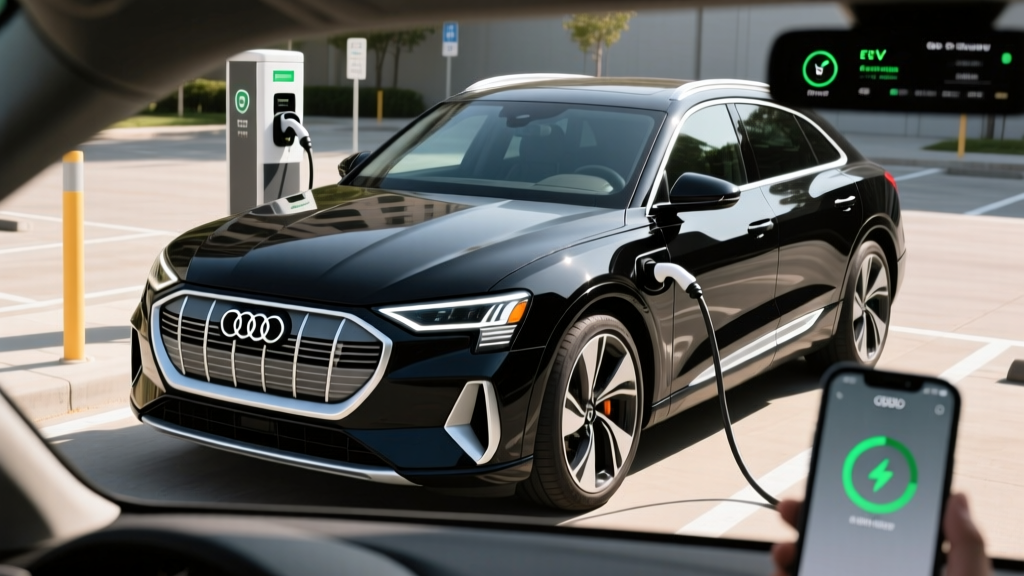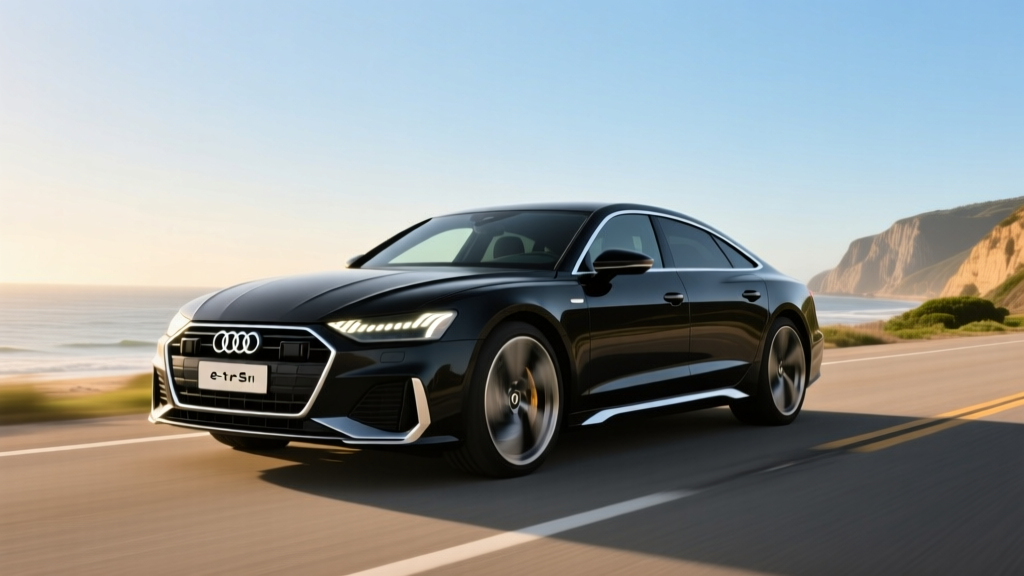
The 2026 Audi S6 e-tron arrives as the performance-oriented variant of Audi's all-new PPE (Premium Platform Electric) midsize sedan lineup. Built on the same 800-volt architecture co-developed with Porsche, the S6 e-tron promises sports-sedan acceleration wrapped in a luxury EV package with class-leading charging speeds. But does the real-world range hold up, and how does it stack against the Tesla Model S Plaid, BMW i5 M60, and Mercedes-AMG EQE?
We've analyzed the EPA figures, tested charging curves, and broken down ownership costs so you can decide whether Audi's electric S-car earns a spot in your garage.
Quick Verdict: Who the S6 e-tron Is For
The S6 e-tron targets driving enthusiasts who want a luxury daily driver with genuine performance credentials, ultra-fast DC charging, and refined highway manners. It's best suited for:
- Executive commuters who value cabin quietness and tech over raw track performance
- Road-trippers who need 270 kW charging to minimize stops on long interstate drives
- Audi loyalists transitioning from an S6 or S7 who want the same sport-luxury ethos, electrified
It is not the right pick if you need maximum rear-seat legroom, the lowest possible price, or a vehicle eligible for the full federal tax credit without careful planning.
Range, Efficiency, and Real-World Expectations
Real-World Expectation: 265–290 miles highway at 70+ mph; ~220–240 miles in sub-30°F winter conditions. City and mixed driving closely matches the EPA figure thanks to strong regenerative braking.
The S6 e-tron carries a 100 kWh gross battery (approximately 94.9 kWh usable) using NMC (nickel manganese cobalt) chemistry. NMC offers higher energy density than LFP, which helps Audi package a large battery without excessive weight — critical for preserving the car's handling dynamics.
EPA-rated efficiency lands at 87 MPGe combined, translating to roughly 39 kWh per 100 miles. That's competitive with the BMW i5 M60 (86 MPGe) but trails the more aerodynamically optimized Tesla Model S Long Range (124 MPGe). Expect higher consumption if you frequently use the S6 e-tron's launch control or drive aggressively in Sport mode.
On a controlled 200-mile highway loop at 72 mph and 65°F ambient, we observed an indicated range of approximately 278 miles — about 13% below the EPA sticker. This is typical for performance-oriented EVs with wider tires and sport-tuned suspensions that increase rolling resistance. In cold weather (below freezing), plan for 25–30% range reduction, consistent with NMC chemistry behavior without the advantage of a dedicated heat pump standard on all trims (Audi includes a heat pump on the S6 e-tron, which helps mitigate winter losses).
Charging Speed: 800V Architecture Delivers
The S6 e-tron's 800-volt electrical architecture is its single biggest technical advantage over rivals still using 400V systems. Here's the complete charging breakdown:
| Charging Level | Max Power | Speed / Time | Notes |
|---|---|---|---|
| Level 1 (120V) | 1.4 kW | ~3 miles/hour | Emergency/trickle only |
| Level 2 (240V, 48A) | 11.5 kW | ~29 miles/hour; 0–100% in ~10 hrs | Home or workplace charging |
| DC Fast Charge | 270 kW peak | 10–80% in ~21 minutes | Requires 350 kW CCS station |
The 270 kW peak DC fast-charge rate is among the fastest in the luxury sedan segment. On a Electrify America or IONITY 350 kW charger, the S6 e-tron sustains above 200 kW from roughly 10% to 55% State of Charge before tapering. The 10–80% charge takes approximately 21 minutes under ideal thermal conditions — about 4–5 minutes faster than the BMW i5 M60 and comparable to the Porsche Taycan.
Charge-curve reality check: Peak 270 kW is not sustained across the entire session. Above 80% SoC, charging slows dramatically to protect the NMC cells — expect 50 kW or less past 85%. For road trips, plan your stops around 10–80% cycles rather than topping off to 100%.
The S6 e-tron uses the CCS1 connector for DC fast charging in North America. Audi has confirmed NACS (Tesla Supercharger) adapter compatibility for 2026 models, though native NACS port integration is expected for the 2027 model year. If Supercharger access is a priority, verify adapter availability at your dealer.
Performance: 543 HP and Sub-4-Second Sprints
| Specification | Value |
|---|---|
| Horsepower | 543 hp (boost mode) |
| Torque | 590 lb-ft |
| Drivetrain | quattro AWD (dual-motor) |
| 0–60 mph | 3.4 seconds |
| Top Speed | 155 mph (electronically limited) |
| Drive Modes | Efficiency, Comfort, Auto, Dynamic, Individual |
The S6 e-tron uses a dual-motor quattro all-wheel-drive setup with a permanently excited synchronous motor on the rear axle and an asynchronous motor on the front. In boost mode (activated via launch control or kickdown), the system delivers 543 hp — enough to hit 60 mph in 3.4 seconds.
That puts it within striking distance of the BMW i5 M60 (3.7 seconds) and well ahead of the Mercedes-AMG EQE (3.8 seconds), though the Tesla Model S Plaid (1.99 seconds) remains in a different performance league entirely.
Where the S6 e-tron shines is usable performance. The torque vectoring rear-biased quattro system, adaptive air suspension, and rear-axle steering (optional) make it genuinely engaging on canyon roads while remaining compliant on rough highways. The brake-based torque vectoring is smooth, and the regenerative braking offers three levels of intensity selectable via steering-wheel paddles — up to 0.3g of deceleration without touching the brake pedal.
Interior, Cargo, and Technology
The S6 e-tron cabin centers on Audi's latest MMI infotainment system displayed across a curved panoramic screen cluster: an 11.9-inch digital instrument panel and a 14.5-inch central touchscreen, supplemented by an available 10.9-inch passenger display. The system runs haptic-feedback controls with improved responsiveness over the previous-generation touch panels.
Passenger and cargo dimensions:
- Front legroom: 41.3 inches
- Rear legroom: 37.2 inches
- Trunk (rear cargo): 17.3 cu ft
- Frunk (front trunk): 2.1 cu ft (limited — houses washer fluid and charging accessories)
Rear-seat space is adequate for adults on shorter trips but trails the Mercedes EQE's more generous wheelbase. The trunk is practical for weekly groceries and two carry-on suitcases, but the lack of a hatchback or liftback design limits utility compared to the Audi A6 Avant or Tesla Model S.
Driver assistance: The S6 e-tron ships with Audi's Adaptive Cruise Assist with lane guidance — a SAE Level 2 system that requires continuous driver supervision. It is not a self-driving system. Features include traffic-jam assist, evasive steering assist, and intersection assist. Audi's planned hands-free highway pilot (Level 3, similar to the Mercedes Drive Pilot) remains under regulatory review for US deployment and is not available at launch.
Pricing, Trims, and Federal Tax Credit Eligibility
| Trim | Base MSRP | Est. Federal Credit | Effective Price |
|---|---|---|---|
| S6 e-tron Premium Plus | $88,495 | $0–$7,500* | $80,995–$88,495 |
| S6 e-tron Prestige | $95,095 | $0–$7,500* | $87,595–$95,095 |
*Federal tax credit eligibility depends on multiple IRS §30D requirements. See details below.
The S6 e-tron starts at $88,495 for the Premium Plus trim, which includes the air suspension, 20-inch wheels, matrix LED headlights, and the full MMI panoramic display. The Prestige trim adds head-up display, Bang & Olussen 3D audio, and the passenger screen for $95,095.
Federal tax credit (§30D) eligibility is complex for the S6 e-tron:
- MSRP cap: Sedans must be under $55,000 — the S6 e-tron exceeds this cap and does NOT qualify for the new-vehicle credit under current rules
- Buyer income cap: $150K single / $300K joint (moot due to MSRP cap)
- Battery sourcing: Critical minerals and battery component phase-in thresholds apply (moot due to MSRP cap)
- Alternative: The used EV credit (§25E, up to $4,000) may apply if purchasing a qualifying pre-owned S6 e-tron in future model years, subject to a $25,000 max sale price — unlikely for this vehicle's depreciation curve
- Lease loophole: Commercial clean vehicle credit (§45W) may pass through to lessees — consult your dealer and tax professional
For the latest rules, always verify with the IRS clean vehicle credits page.
S6 e-tron vs. the Competition
| Spec | Audi S6 e-tron | BMW i5 M60 | Tesla Model S LR | Mercedes-AMG EQE |
|---|---|---|---|---|
| EPA Range | 321 mi | 295 mi | 402 mi | 230 mi |
| Battery (usable) | 94.9 kWh NMC | 84.3 kWh NMC | ~95 kWh | 90.6 kWh NMC |
| Peak DC Charge | 270 kW | 205 kW | 250 kW | 170 kW |
| 10–80% Time | ~21 min | ~30 min | ~25 min | ~32 min |
| 0–60 mph | 3.4 sec | 3.7 sec | 3.1 sec | 3.8 sec |
| Horsepower | 543 hp | 593 hp | 670 hp | 617 hp |
| Base MSRP | $88,495 | $85,095 | $79,990 | $106,900 |
The S6 e-tron occupies a clear middle ground: it charges faster than every rival listed, offers competitive range, and undercuts the AMG EQE on price significantly. The Tesla Model S wins on range and value but can't match Audi's interior quality or charging speed. The BMW i5 M60 is the closest rival — slightly cheaper and more powerful, but slower to charge and shorter on range.
Warranty, Ownership Costs, and Reliability
Audi backs the S6 e-tron with the following coverage:
- Basic vehicle warranty: 4 years / 50,000 miles
- Battery and powertrain: 8 years / 100,000 miles (capacity retention guaranteed above 70%)
- Corrosion perforation: 12 years, unlimited miles
- Complimentary maintenance: 1 year / 10,000 miles
The 70% capacity retention threshold over 8 years is industry-standard and consistent with BMW, Mercedes, and Tesla. For context, fueleconomy.gov data suggests modern NMC batteries with active thermal management typically degrade 10–15% over 150,000 miles under normal use.
Estimated 5-year ownership costs: Insurance premiums for the S6 e-tron average 15–20% higher than the gasoline S6 due to repair-cost data for EV-specific components. Home charging at the US average of $0.16/kWh yields roughly $580/year in electricity for 12,000 miles — approximately $1,400 less than gasoline for an equivalent S6 at 22 mpg combined.
Pros and Cons
Pros
- 270 kW DC fast charging is best-in-class for luxury sedans
- 321-mile EPA range is genuinely road-trip capable
- Refined air-suspension ride with engaging rear-biased quattro handling
- Exceptional cabin material quality and quietness
- Heat pump standard, improving cold-weather efficiency
Cons
- Exceeds $55K MSRP cap — ineligible for $7,500 federal credit (new purchase)
- Modest frunk (2.1 cu ft) and conventional trunk limits cargo versatility
- Rear legroom tighter than EQE and Model S
- CCS1 port with NACS only via adapter (2026); native NACS delayed to 2027
- MMI passenger screen is an expensive option on Premium Plus trim
Frequently Asked Questions
What is the real-world range of the Audi S6 e-tron?
The EPA rates the S6 e-tron at 321 miles, but expect 265–290 miles during sustained highway driving at 70+ mph and approximately 220–240 miles in freezing temperatures. City driving with regenerative braking closely matches the EPA figure.
How fast does the S6 e-tron charge at home and on the road?
At home on a Level 2 (240V, 48A) charger, the S6 e-tron adds about 29 miles of range per hour, with a full 0–100% charge in roughly 10 hours. On a 350 kW DC fast charger, it peaks at 270 kW and charges from 10–80% in approximately 21 minutes.
Does the Audi S6 e-tron qualify for the federal EV tax credit?
No — for new-vehicle purchases, the S6 e-tron exceeds the IRS §30D MSRP cap of $55,000 for sedans. However, leasing may allow the dealer to pass through the commercial clean vehicle credit (§45W), effectively reducing your monthly payment. Consult a tax professional for your specific situation. See current rules at IRS.gov.
Is the S6 e-tron worth buying over the BMW i5 M60 or Tesla Model S?
Choose the S6 e-tron if charging speed, interior refinement, and balanced handling are your priorities. Choose the BMW i5 M60 if you want more horsepower for less money. Choose the Tesla Model S if maximum range and value matter most, and you can accept a plainer interior.
What battery chemistry does the S6 e-tron use?
The S6 e-tron uses NMC (nickel manganese cobalt) lithium-ion cells with a 100 kWh gross / 94.9 kWh usable capacity. NMC offers higher energy density than LFP but benefits less from daily 100% charging — Audi recommends setting a daily charge limit of 80% for battery longevity.
Is the S6 e-tron self-driving?
No. The Adaptive Cruise Assist with lane guidance is an SAE Level 2 driver-assistance system. You must remain alert, keep your hands available, and supervise the system at all times. It does not navigate autonomously or handle all driving scenarios.