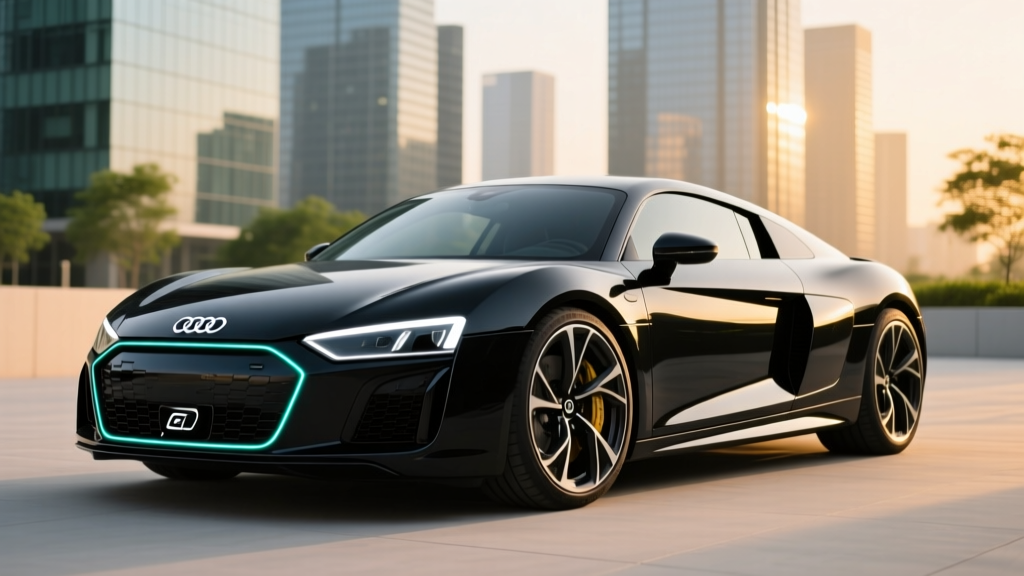
The Audi R8 e-tron occupies a strange, fascinating corner of the electric vehicle landscape — a low-volume, hand-built supercar that proved Audi could engineer a legitimate EV well before the brand's mainstream e-tron lineup existed. Originally produced in a limited run of fewer than 100 units between 2015 and 2016, the R8 e-tron was discontinued and never received a direct successor. As of 2026, Audi has not announced a second-generation R8 e-tron, and the R8 nameplate itself is expected to be retired or reimagined within Audi's broader EV strategy. This profile covers the R8 e-tron as a historical benchmark and collector-grade EV — what its specs reveal about early luxury electric engineering, what ownership actually looks like today, and whether the remaining examples on the secondary market are worth pursuing.
Quick Verdict: A Pioneer, Not a Daily Driver
The R8 e-tron delivers supercar acceleration (456 hp, 3.9-second 0-60) wrapped in a carbon-fiber shell, but its 150-mile EPA-estimated range and 2015-era charging hardware make it a collector's piece rather than a practical EV. Buyers in 2026 should treat it as an investment-grade electric supercar — comparable to a Ferrari LaFerrari or Porsche 918 Spyder in purpose — not as a competitor to the Porsche Taycan Turbo S or Tesla Model S Plaid that have since eclipsed it on every measurable metric.
EPA Range vs. Real-World Expectations
EPA-Estimated Range: 150 miles (241 km)
Real-World Range: Expect 110–130 miles on highway drives at 70+ mph. Cold-weather testing (below 40°F) can push range down to approximately 90–100 miles due to battery thermal demands and cabin heating loads. City driving with regenerative braking engaged may stretch range to 140–155 miles under ideal conditions.
The R8 e-tron's range was respectable for a 2015 supercar — the Tesla Model S 85 kWh offered 265 miles that same year, but it was a sedan, not a carbon-fiber two-seater. The rear-mounted 92 kWh battery pack (approximately 84 kWh usable, NMC chemistry) is paired with aggressive performance tuning that prioritizes power delivery over efficiency. Owners report energy consumption averaging 55–62 kWh/100 miles in mixed driving, which translates to roughly 54 MPGe combined per fueleconomy.gov methodology. For context, the 2026 Porsche Taycan Turbo S achieves approximately 68 MPGe combined.
Battery, Charging & Infrastructure Compatibility
| Parameter | Specification |
|---|---|
| Battery Capacity (Total / Usable) | 92 kWh / ~84 kWh |
| Chemistry | NMC (Nickel Manganese Cobalt) |
| Max DC Fast-Charge Rate | 50 kW (CCS1) |
| 10–80% DC Charge Time | ~60 minutes |
| Level 2 Home Charging (240V, 40A) | 9.6 kW (~15 miles/hr) |
| Level 1 Charging (120V) | 1.4 kW (~2 miles/hr) |
| Connector | CCS1 (J1772 Combo) |
The R8 e-tron's 50 kW peak DC charge rate is its most glaring limitation by 2026 standards. Modern luxury EVs like the Audi e-tron GT (270 kW peak) or Lucid Air (300+ kW peak) can add 150+ miles in 15 minutes; the R8 e-tron adds roughly 50 miles in the same window. The charge curve is relatively flat — the car sustains close to 50 kW through most of the session before tapering above 90% SoC — but the low ceiling means road-trip charging requires genuine planning. Plan on 45–60 minute stops at Electrify America or EVgo stations to move from 20% to 80%.
Home Level 2 charging is straightforward: a 9.6 kW wallbox (ChargePoint Home Flex, Emporia Vue, or similar) will replenish the battery from 10% to 100% in roughly 8–9 hours, making overnight charging practical. Installation costs for a dedicated 50A/240V circuit typically range from $800 to $2,500 depending on panel capacity and conduit runs — confirm with a licensed electrician whether your service panel supports the additional load.
Performance & Drivetrain
The R8 e-tron is rear-wheel drive — a deliberate engineering choice that distinguishes it from Audi's quattro-dominant lineup. Two rear-mounted permanent-magnet synchronous motors produce a combined 456 horsepower and 679 lb-ft of torque, delivered instantaneously from 0 rpm.
| Metric | Value |
|---|---|
| 0–60 mph | 3.9 seconds |
| Top Speed | 130 mph (electronically limited; 155 mph with limiter removed) |
| Horsepower | 456 hp |
| Torque | 679 lb-ft |
| Drivetrain | Rear-Wheel Drive (dual motor, rear axle) |
| Curb Weight | ~3,924 lbs (1,780 kg) |
The 3.9-second 0–60 time was formidable in 2015 but has been surpassed by numerous 2026 EVs: the Tesla Model S Plaid hits 60 in 1.99 seconds, and the Porsche Taycan Turbo GT does it in 2.1 seconds. Where the R8 e-tron retains value is in chassis balance, steering feel, and the analog satisfaction of a lightweight carbon-fiber structure — qualities that raw acceleration numbers cannot capture.
Pricing, Tax Credits & Ownership Economics
| Item | Amount |
|---|---|
| Original MSRP (2015–2016) | ~€1,000,000 / ~$1,100,000 USD |
| Current Secondary Market (2026) | $350,000–$600,000 (auction, private sale) |
| Federal §30D Tax Credit | Not eligible (used/collector vehicle, MSRP cap exceeded, pre-2023 sourcing rules) |
| Estimated Annual Insurance | $8,000–$15,000 (collector/specialty policies) |
| Annual Electricity Cost (5,000 mi/yr) | ~$550–$750 (at $0.15/kWh) |
The R8 e-tron was never a mass-market vehicle, and the original MSRP placed it firmly in hypercar territory. Current examples trade on the collector market — RM Sotheby's and Bring a Trailer have seen transactions in the $350,000–$600,000 range depending on mileage and provenance. Under current IRS §30D rules, the R8 e-tron does not qualify for the federal clean vehicle credit: the MSRP cap ($55,000 for sedans, $80,000 for SUVs/trucks/vans) is far exceeded, battery critical-mineral sourcing cannot be verified to 2026 standards, and most remaining examples are purchased as used collector vehicles (which fall under the separate §25E used-EV credit with its own $25,000 sale-price cap). Consult a tax professional for your specific situation.
Interior, Cargo & Practicality
The R8 e-tron is a strict two-seater with a stripped-down, driver-focused cabin. Audi fitted it with lightweight bucket seats, Alcantara and carbon-fiber trim, and the Virtual Cockpit digital instrument cluster that was cutting-edge in 2015. Infotainment is limited to MMI navigation, Bluetooth, and basic media — no wireless CarPlay, no over-the-air updates, and no advanced driver-assistance suite beyond standard ABS, stability control, and rear parking sensors.
- Seating: 2 passengers
- Cargo Volume: ~3.5 cu ft (front trunk/frunk only — rear space occupied by battery)
- Legroom (front): ~41.3 inches
- Ground Clearance: ~4.3 inches (sports-car low; speed bumps and steep driveways require care)
Practicality is minimal by design. The frunk accommodates a small duffel or laptop bag — this is a weekend track car or collection piece, not a daily commuter.
Warranty & Long-Term Battery Health
Audi originally provided an 8-year/100,000-mile battery and powertrain warranty on the R8 e-tron. Given that production ended in 2016, the factory battery warranty has expired for all examples as of 2024. This is a critical ownership consideration:
- Battery Replacement Cost (estimated): $25,000–$40,000 for a refurbished or new 92 kWh NMC pack, plus labor. Few shops have the tooling and certification to service R8 e-tron high-voltage systems.
- Degradation Expectations: NMC cells from this era typically exhibit 15–25% capacity loss over 8–10 years depending on thermal management history and charge habits. A 2016 example with 30,000 miles may retain 80–85% State of Health (SoH), translating to roughly 120–130 miles of real-world range.
- Pre-Purchase Inspection: Any prospective buyer should commission a high-voltage battery health report from an Audi-certified EV technician before purchase. Request SoH percentage, individual cell voltage variance, and charge/discharge cycle count.
Pros, Cons & Verdict
Pros
- Carbon-fiber monocoque — exceptionally light for an EV (3,924 lbs)
- RWD chassis balance and steering feel rival mid-engine supercars
- Rarity — fewer than 100 built; strong collector appreciation potential
- Instant 679 lb-ft torque with zero drivetrain lag
- Low running costs (electricity) relative to comparable ICE supercars
Cons
- 150-mile EPA range limits usability to local drives
- 50 kW DC charging is painfully slow by 2026 standards
- Expired battery warranty; replacement costs $25K–$40K
- No advanced ADAS, OTA updates, or modern infotainment
- Extremely limited service network; few qualified HV technicians
Who This EV Suits: The R8 e-tron is for collectors, automotive historians, and enthusiasts who value provenance and engineering significance over daily usability. It is not a commuter, not a road-trip car, and not a family vehicle. If you want a modern Audi electric performance car for daily driving, the Audi e-tron GT (238-mile EPA range, 270 kW charging, ~$108,000 MSRP) is the rational choice.
Frequently Asked Questions
What is the real-world range of the Audi R8 e-tron?
The EPA estimated 150 miles when new. In real-world 2026 use, expect 110–130 miles on highway drives and 90–100 miles in cold weather (below 40°F). Battery degradation in 8–10-year-old NMC cells will reduce range further depending on SoH.
How fast does the R8 e-tron charge?
DC fast charging peaks at 50 kW (CCS1 connector), taking approximately 60 minutes from 10% to 80%. Home Level 2 charging at 9.6 kW adds roughly 15 miles per hour, with a full charge taking 8–9 hours.
Does the R8 e-tron qualify for the federal EV tax credit?
No. Under current IRS §30D rules, the R8 e-tron exceeds the MSRP cap, cannot meet 2026 critical-mineral sourcing requirements, and most examples are purchased as used collector vehicles (subject to the separate §25E used-EV credit with a $25,000 sale-price cap that few examples meet). Verify with a tax professional.
Is the R8 e-tron worth buying vs. a Porsche Taycan or Audi e-tron GT?
Not as a daily driver or performance benchmark — both the Taycan Turbo S and e-tron GT surpass it in range, charging speed, technology, and warranty coverage. The R8 e-tron's value is as a rare collector item with historical significance as one of the first production electric supercars.
What are the biggest risks of owning an R8 e-tron in 2026?
Battery replacement cost ($25K–$40K) without warranty coverage, limited service infrastructure, and parts scarcity. Pre-purchase battery health inspection is non-negotiable.
Will Audi make a new R8 e-tron?
As of 2026, Audi has not announced a successor to the R8 e-tron or confirmed the future of the R8 nameplate. Audi's performance EV strategy currently centers on the e-tron GT and RS e-tron GT line.