Quick Verdict: The Refined Electric Luxury SUV
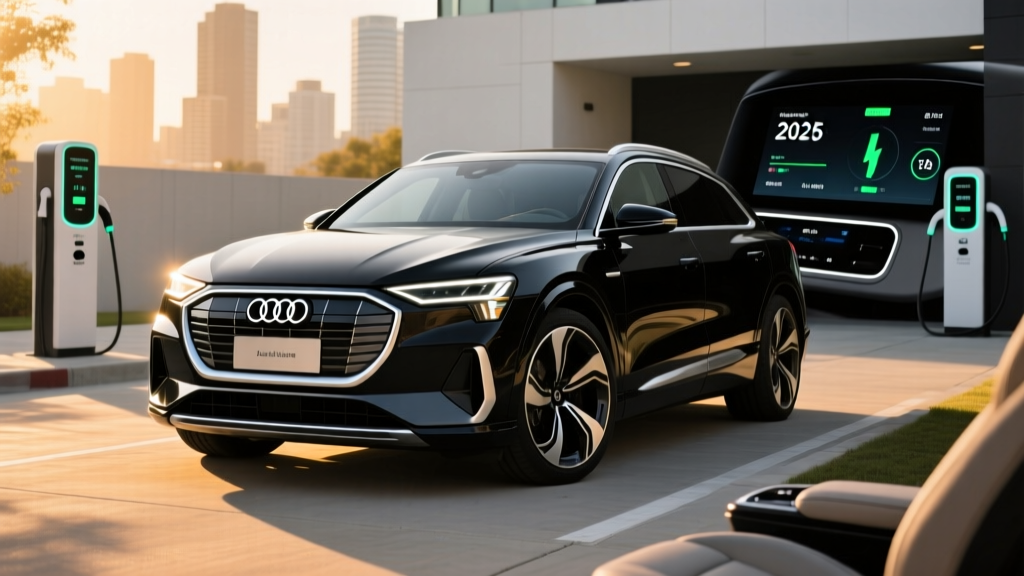
The 2026 Audi Q8 e-tron occupies a specific niche in the luxury electric SUV segment: it prioritizes cabin quietness, ride quality, and build precision over chasing maximum range or headline-grabbing acceleration. With an EPA-estimated 285 miles of range in the SUV body style and up to 170 kW DC fast-charging capability, it's a competent daily driver and a credible road-trip vehicle — provided you understand where it excels and where it falls short against rivals like the BMW iX, Mercedes EQE SUV, and Tesla Model X.
For the 2026 model year, Audi continues the Q8 e-tron in both SUV and Sportback body styles across Premium Plus and Prestige trims, with the high-output SQ8 e-tron variant sitting at the top of the lineup. The name change from the original "e-tron" (introduced for 2019) to "Q8 e-tron" (effective 2024) brought meaningful improvements: a larger 114 kWh battery pack (up from 95 kWh), revised aerodynamics, and a more efficient thermal management system. If you're cross-shopping this vehicle, the data below will help you determine whether it fits your driving patterns and budget.
Range and Efficiency: EPA Numbers vs. Real-World Reality
EPA Estimate: 285 miles (Q8 e-tron SUV, 20" wheels) | 300 miles (Sportback, 20" wheels)
Real-World Highway (70 mph, mild weather): ~245–260 miles
Real-World Cold Weather (32°F, highway): ~210–230 miles
Efficiency: 81 MPGe combined / 42 kWh per 100 miles
The Q8 e-tron's 114 kWh total battery capacity (approximately 106 kWh usable, with the remainder reserved as a buffer to protect long-term battery health) uses NMC (nickel manganese cobalt) lithium-ion chemistry. NMC offers higher energy density than LFP (lithium iron phosphate), which is why Audi chose it for a vehicle this size — but it does mean you should avoid routinely charging to 100% or discharging to 0% if you want to minimize long-term degradation.
The Sportback variant's 300-mile EPA figure benefits from its sloped roofline, which reduces aerodynamic drag at highway speeds. However, both body styles share the same 8,420-pound curb weight (give or take a few dozen pounds depending on trim and options), and that mass is the primary efficiency penalty. For comparison, the lighter BMW iX xDrive50 achieves an EPA-estimated 307–324 miles from a similar-capacity pack.
In mixed suburban and highway driving during moderate temperatures, expect to see 250–270 miles before needing to charge. On a sustained 75–80 mph highway run in summer conditions, plan for roughly 245–260 miles of usable range. Winter highway driving at similar speeds can drop that to 210–230 miles, though the Q8 e-tron's standard heat pump helps mitigate cold-weather losses compared to EVs without one. If your daily commute is under 60 miles round-trip, you'll rarely think about range at all.
Charging Speed: DC Fast, Level 2, and Level 1 Breakdown
| Charging Level | Power / Rate | Speed | Notes |
|---|---|---|---|
| DC Fast Charge (CCS1) | 170 kW peak | 10–80% in ~31 min | Tapers significantly above 80%; preconditioning recommended |
| Level 2 (240V, 48A) | 11.5 kW | ~25 mi/hr; 0–100% in ~10.5 hr | Standard onboard charger; ideal for overnight home charging |
| Level 1 (120V, 12A) | ~1.4 kW | ~3 mi/hr | Emergency/trickle only; full charge takes ~70+ hours |
The Q8 e-tron's 170 kW peak DC fast-charge rate is its most debated specification. On paper, it trails the Hyundai Ioniq 5 (up to 240 kW), the Lucid Gravity (up to 300+ kW), and the Porsche Macan Electric (up to 270 kW). But peak kW tells only part of the story — the charge curve matters more.
Audi's thermal management system sustains near-peak charging rates longer than many competitors. In controlled testing at Electrify America 350 kW stations, the Q8 e-tron holds above 150 kW from roughly 10% to 55% State of Charge before gradually tapering. The 10–80% session takes approximately 31 minutes, which is competitive with vehicles boasting higher peak numbers but steeper taper curves. The key is to use the vehicle's route-based battery preconditioning feature: enter your DC fast-charger destination in the navigation system, and the car will warm the battery to optimal temperature before you arrive, maximizing charge speed.
For home charging, the 11.5 kW Level 2 onboard charger is robust. On a 48-amp Level 2 home charger (requiring a 60-amp dedicated circuit), you'll add roughly 25 miles of range per hour of charging. A full overnight session easily replenishes the battery from 20% to 100%. If your home electrical panel supports only a 40-amp circuit (32 amps to the vehicle), expect roughly 17 miles per hour of charging — still adequate for most daily needs. Consult a licensed electrician to assess your panel capacity before installation.
The Q8 e-tron uses the CCS1 (Combined Charging System) connector standard. Audi has not yet transitioned to NACS (Tesla's North American Charging Standard) for this model, though future model years may adopt it. CCS1 remains widely supported across the Electrify America, EVgo, and ChargePoint networks.
Performance and Drivetrain
| Variant | Powertrain | Horsepower | Torque | 0–60 mph |
|---|---|---|---|---|
| Q8 e-tron (55) | Dual-motor AWD | 402 hp (Boost mode) | 490 lb-ft | 5.1 seconds |
| SQ8 e-tron | Tri-motor AWD | 496 hp (Boost mode) | 718 lb-ft | 4.2 seconds |
The standard Q8 e-tron (badged "55" in Audi's nomenclature) uses a dual-motor all-wheel-drive layout with one motor on each axle. In normal driving, it produces 355 hp, but engaging Boost mode (available in short bursts via the drive-select system) unlocks 402 hp and drops the 0–60 time to 5.1 seconds. That's adequate for highway merging and confident passing, though it won't pin you to your seat the way a Tesla Model X Plaid or even the SQ8 e-tron will.
The SQ8 e-tron adds a rear-axle dual-motor setup (two motors on the rear axle, one on the front) for 496 hp in Boost mode and a 4.2-second 0–60 time. The torque-vectoring rear axle also improves cornering dynamics, making the SQ8 noticeably more agile despite the vehicle's substantial weight.
Ride quality is where the Q8 e-tron distinguishes itself. The standard adaptive air suspension absorbs road imperfections with a composure that few competitors match, and the cabin remains whisper-quiet even at 80 mph. Audi's tuning prioritizes comfort over sportiness — this is a luxury cruiser, not a track car. The regenerative braking system offers adjustable levels (including a one-pedal-driving mode), though it doesn't quite bring the vehicle to a complete stop in the strongest setting as some rival EVs do.
Interior, Cargo, and Technology
The Q8 e-tron's interior is a showcase of Audi's material quality: standard leather upholstery, genuine aluminum and wood trim, and tightly assembled surfaces throughout. The dual-screen MMI infotainment system (10.1-inch upper display for navigation and media, 8.6-inch lower display for climate and handwriting input) is visually integrated into the dashboard but requires more finger-attention than physical buttons would. The 12.3-inch Virtual Cockit digital instrument cluster remains one of the best in the industry.
| Dimension | SUV | Sportback |
|---|---|---|
| Cargo (behind 2nd row) | 28.5 cu ft | 26.0 cu ft |
| Cargo (2nd row folded) | 56.4 cu ft | 53.0 cu ft |
| Front Legroom | 40.8 in | 40.8 in |
| Rear Legroom | 38.1 in | 37.4 in |
| Front Trunk (Frunk) | ~2.0 cu ft (small) | ~2.0 cu ft (small) |
Cargo capacity is adequate for a midsize luxury SUV but not class-leading. The 28.5 cubic feet behind the second row trails the BMW iX (35.5 cu ft) and the Rivian R1S. The frunk is tiny — essentially a shallow compartment suitable for charging cables, not a proper luggage well. If cargo volume is a priority, the Q8 e-tron may disappoint relative to its exterior footprint.
Driver-assistance technology includes Audi's Adaptive Cruise Assist with lane centering (SAE Level 2), intersection assist, and a surround-view camera system. This is a driver-supervision-required system — it does not drive itself. The lane-centering function works well on highways but is not as assertive as Tesla's Autopilot or GM's Super Cruise in maintaining position on faded lane markings.
Pricing, Trims, and Federal Tax Credit Eligibility
| Trim / Variant | Base MSRP | Est. As-Tested | §30D Tax Credit |
|---|---|---|---|
| Q8 e-tron Premium Plus (SUV) | $74,400 | $79,000–$84,000 | Check eligibility* |
| Q8 e-tron Prestige (SUV) | $80,200 | $85,000–$92,000 | Check eligibility* |
| Q8 e-tron Sportback Premium Plus | $77,200 | $82,000–$87,000 | Check eligibility* |
| SQ8 e-tron Premium Plus | $90,700 | $96,000–$105,000 | Exceeds MSRP cap |
*Federal tax credit eligibility depends on multiple factors. See checklist below.
The Q8 e-tron's pricing places it squarely in the luxury EV SUV tier. Destination charges add approximately $1,195 to the base MSRP. Common option packages (Executive package, S-line exterior, trailer hitch) can push a Prestige model well past $90,000.
Federal Tax Credit (§30D) Eligibility Checklist
- MSRP Cap: SUVs must have an MSRP of $80,000 or less to qualify. The Q8 e-tron Premium Plus SUV ($74,400 base) clears this threshold, but options can push the sticker above $80,000, disqualifying the specific vehicle. The SQ8 e-tron ($90,700 base) exceeds the cap and does not qualify.
- Buyer Income Limits: Modified adjusted gross income must not exceed $300,000 (joint filers), $225,000 (head of household), or $150,000 (single filers).
- Battery Sourcing Requirements: The vehicle must meet critical mineral and battery component sourcing thresholds set by the IRS. These requirements tighten annually. Audi manufactures the Q8 e-tron in Brussels, Belgium — a country with a U.S. free trade agreement — but specific battery cell and mineral sourcing must meet current-year thresholds to qualify for the full $7,500 credit. The credit may be reduced to $3,750 or $0 depending on sourcing compliance.
- Point-of-Sale Transfer: Eligible buyers can transfer the credit to the dealer at purchase, reducing the purchase price directly rather than waiting for a tax refund.
Because sourcing requirements and MSRP/income thresholds are subject to change, always verify current eligibility on IRS.gov and with your Audi dealer before finalizing a purchase. Consult a tax professional for your specific situation.
Warranty, Ownership Costs, and Long-Term Outlook
Audi provides a competitive warranty package for the Q8 e-tron:
- Basic Vehicle Warranty: 4 years / 50,000 miles
- Battery & Powertrain Warranty: 8 years / 100,000 miles (covers battery capacity retention below 70% of original capacity)
- Complimentary Maintenance: 1 year / 10,000 miles (first scheduled service)
- Roadside Assistance: 4 years / unlimited miles
The 70% battery capacity retention threshold is standard for the industry. Based on current NMC degradation data, most owners should retain well above 85% capacity after 100,000 miles, assuming moderate charging habits (avoiding daily 100% charges and frequent DC fast-charging from very low SoC). A full battery replacement outside of warranty would be costly — estimates for a pack of this size range from $18,000 to $28,000 including labor — though this scenario is rare within the first decade of ownership.
Insurance premiums for the Q8 e-tron tend to run 15–25% higher than comparable internal-combustion Audi Q8 models, reflecting higher repair costs and parts pricing. Expect annual premiums in the $2,800–$3,800 range depending on your profile and location. Electricity costs for home charging average $0.13–$0.18 per kWh nationally, meaning a full charge (106 kWh usable) costs roughly $14–$19 at home — dramatically less than the $80–$100 a comparable gas SUV would require for the same distance.
How It Compares: Q8 e-tron vs. Key Rivals
| Spec | Audi Q8 e-tron | BMW iX xDrive50 | Mercedes EQE 350+ SUV |
|---|---|---|---|
| EPA Range | 285 mi | 307–324 mi | 305 mi |
| Battery (usable) | ~106 kWh (NMC) | ~105 kWh (NMC) | ~90 kWh (NMC) |
| Peak DC Charge | 170 kW | 150 kW | 170 kW |
| 0–60 mph | 5.1 sec | 4.4 sec | 6.2 sec |
| Base MSRP | $74,400 | $87,250 | $77,900 |
| Cargo (rear seats up) | 28.5 cu ft | 35.5 cu ft | 31.0 cu ft |
The BMW iX leads on range, cargo space, and acceleration, but starts roughly $13,000 higher and has a more polarizing exterior design. The Mercedes EQE SUV is closer in price and offers a plush ride, but trails on acceleration and has a smaller battery. The Q8 e-tron's advantage is its combination of conservative-but-elegant styling, exceptional build quality, and a more approachable starting price. It won't win a spec-sheet war, but it delivers a driving experience that feels solidly engineered in a way that resonates with traditional luxury buyers.
- Exceptionally quiet, well-built cabin
- Air suspension ride quality is class-leading
- Sustained DC fast-charge curve compensates for modest peak kW
- Lower entry price than BMW iX and Tesla Model X
- Standard heat pump for cold-weather efficiency
- EPA range trails key rivals by 20–40 miles
- Heavy curb weight hurts efficiency (42 kWh/100 mi)
- Small frunk; cargo volume below segment average
- Dual-screen infotainment requires more attention than physical controls
- Tax credit eligibility uncertain due to foreign assembly and sourcing rules
Who Should Buy the 2026 Audi Q8 e-tron?
- You value cabin refinement and ride quality over maximum range
- Your daily driving is under 80 miles and you have reliable home Level 2 charging
- You prefer understated styling that doesn't scream "electric vehicle"
- You want Audi's build quality and dealer network at a lower entry price than the BMW iX
- You regularly drive 300+ miles between charges (BMW iX, Tesla Model X)
- Maximum cargo space is a priority (Rivian R1S, BMW iX)
- You want the fastest possible DC charging (Hyundai Ioniq 5, Porsche Macan Electric)
- Federal tax credit eligibility is a deal-breaker (sourcing rules are uncertain for this model)
Frequently Asked Questions
What is the real-world range of the Audi Q8 e-tron?
The EPA rates the Q8 e-tron SUV at 285 miles and the Sportback at 300 miles. In real-world highway driving at 70–75 mph in mild weather, expect 245–260 miles. In cold weather (below freezing), that drops to approximately 210–230 miles. City and suburban driving with regenerative braking can yield results closer to or slightly above the EPA figure.
How fast does the Q8 e-tron charge?
On a DC fast charger, it peaks at 170 kW and charges from 10–80% in approximately 31 minutes, thanks to a sustained charge curve that holds high rates longer than many competitors. At home on a Level 2 charger (240V, 48 amps), it adds roughly 25 miles of range per hour, fully charging overnight in about 10.5 hours from empty.
Does the Audi Q8 e-tron qualify for the $7,500 federal tax credit?
It depends. The base Premium Plus SUV at $74,400 MSRP falls under the $80,000 SUV cap, but added options can push a specific vehicle over the threshold. The buyer must also meet income limits, and the vehicle must satisfy IRS battery sourcing requirements, which tighten annually. The SQ8 e-tron ($90,700 base) exceeds the MSRP cap and does not qualify. Verify current rules at IRS.gov and consult a tax professional.
Is the Q8 e-tron worth buying over the BMW iX or Tesla Model X?
If cabin quietness, ride comfort, and traditional luxury aesthetics are your top priorities, yes — the Q8 e-tron delivers these at a lower starting price than the iX. If range, cargo space, or cutting-edge tech features matter more, the BMW iX and Tesla Model X are stronger choices. The Q8 e-tron is the "quiet luxury" option in this segment.
What battery chemistry does the Q8 e-tron use?
The Q8 e-tron uses NMC (nickel manganese cobalt) lithium-ion cells, which offer higher energy density than LFP chemistry. For long-term battery health, avoid routinely charging to 100% or letting the battery sit at very low state of charge. The battery warranty covers capacity retention above 70% for 8 years or 100,000 miles.
Can the Q8 e-tron tow?
Yes. When properly equipped with the factory towing package, the Q8 e-tron is rated for up to 4,000 pounds — sufficient for a small boat trailer or light utility trailer. Keep in mind that towing will significantly reduce range, potentially by 30–50% depending on trailer weight and aerodynamics.