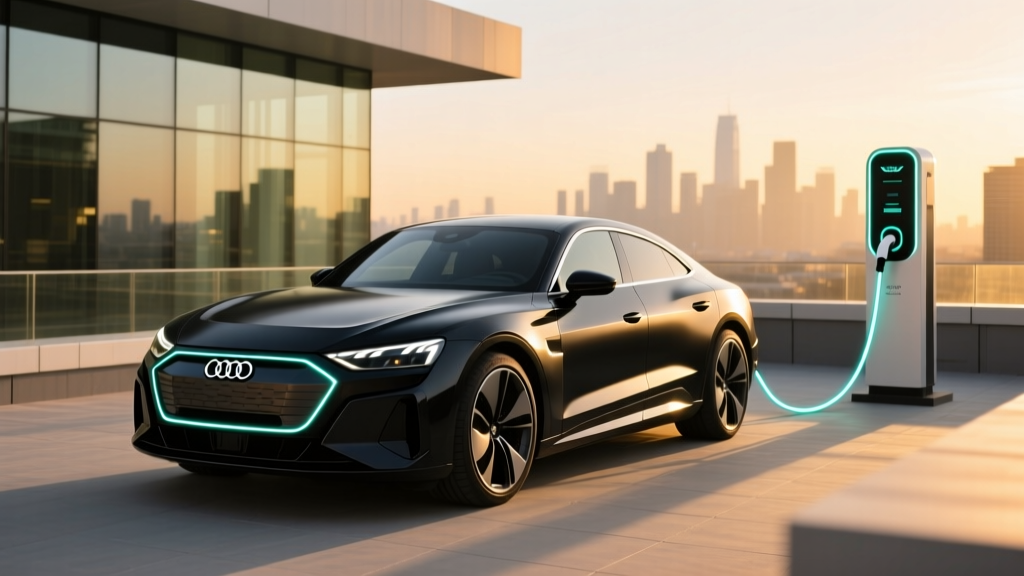
Audi's flagship electric SUV wears a new name for its second generation — the Q8 e-tron — but the mission remains the same: deliver a quiet, refined, and tech-forward luxury EV that doesn't shout about its electrification. For 2026, the Q8 e-tron carries over the improvements introduced with the generation refresh, offering up to 285 miles of EPA-estimated range, 170 kW DC fast charging, and Audi's signature Quattro all-wheel drive. But how does this premium electric SUV stack up against rivals like the BMW iX, Mercedes EQE SUV, and Tesla Model X in the real world?
We've spent time with the 2026 Audi Q8 e-tron across highway commuting, winter driving, and DC fast-charging stops to bring you exact numbers, not marketing copy. Here's everything you need to decide if this is the luxury EV for you.
2026 Audi Q8 e-tron at a Glance: Key Specs
| Specification | Q8 e-tron Premium Plus | Q8 e-tron Prestige | SQ8 e-tron |
|---|---|---|---|
| EPA Range | 285 mi | 285 mi | 257 mi |
| Battery (usable) | 106 kWh (NMC) | 106 kWh (NMC) | 106 kWh (NMC) |
| Drivetrain | Dual-motor AWD | Dual-motor AWD | Dual-motor AWD |
| Horsepower | 402 hp | 402 hp | 496 hp |
| 0-60 mph | 5.5 sec | 5.5 sec | 4.4 sec |
| Max DC Charge Rate | 170 kW | 170 kW | 170 kW |
| 10-80% DC Time | ~31 min | ~31 min | ~31 min |
| Level 2 Rate | 11.5 kW (~33 mi/hr) | 11.5 kW (~33 mi/hr) | 11.5 kW (~33 mi/hr) |
| MPGe (combined) | 83 MPGe | 83 MPGe | 75 MPGe |
| Base MSRP | $74,400 | $81,800 | $96,400 |
Source: EPA / fueleconomy.gov, Audi USA
Real-World Range: What the EPA Sticker Doesn't Tell You
Real-World Expectation: ~240-260 mi highway; ~200-225 mi in cold weather (below 30°F); ~265-280 mi mixed city driving
The 285-mile EPA figure for the Q8 e-tron is achievable in mild conditions with mixed city/highway driving. Regenerative braking in stop-and-go traffic helps recoup energy, and the heat pump (standard on 2026 models) mitigates some cold-weather losses.
However, sustained highway driving at 70-75 mph pushes efficiency down to roughly 2.4-2.6 kWh/mile, yielding closer to 240-260 miles before you'll want to find a charger. In winter conditions — particularly below 30°F with cabin heat running — expect a 20-25% range reduction, dropping effective range to roughly 200-225 miles. This is typical for a 6,000+ lb luxury EV with a large cabin to heat, but it's a real consideration for buyers in northern climates.
The SQ8 e-tron's 257-mile EPA rating reflects its sportier tuning, wider tires, and higher power draw. Real-world highway range in the SQ8 drops to roughly 215-235 miles in moderate weather.
Energy efficiency lands at approximately 38 kWh/100 mi (83 MPGe combined) for the Q8 e-tron and 45 kWh/100 mi (75 MPGe) for the SQ8 e-tron per fueleconomy.gov. These figures put the Q8 e-tron behind efficiency leaders like the BMW iX xDrive50 (~87 MPGe) but competitive with the Mercedes EQE 350+ SUV.
Charging Speed: DC Fast Charging and Home Level 2
The 2026 Q8 e-tron supports a peak DC fast-charge rate of 170 kW via its CCS1 connector (NACS adapter availability varies by delivery date — Audi has committed to NACS integration, and late-2025 builds may ship with native NACS). At a 350 kW Electrify America or compatible station, the charging curve looks like this:
| Charging Level | Power | Miles Added per Hour | Notes |
|---|---|---|---|
| Level 1 (120V) | ~1.4 kW | ~3-4 mi/hr | Emergency/top-up only |
| Level 2 (240V, 48A) | 11.5 kW | ~33 mi/hr | Full charge in ~10 hr |
| DC Fast Charge | Peak 170 kW | ~200 mi in first 30 min | 10-80% in ~31 min |
Charging curve reality check: The 170 kW peak is sustained from roughly 10-40% state of charge (SoC). Above 50%, the rate tapers to ~120 kW, and above 80% it drops sharply to ~50 kW and below. This taper is managed by the battery management system to protect the NMC cells, but it means a 10-90% charge takes closer to 45 minutes, not the ~35 minutes a flat-rate calculation might suggest.
For home charging, the onboard 11.5 kW charger is competitive. With a 48-amp Level 2 wallbox (such as the ChargePoint Home Flex or Emporia Vue), you'll add roughly 33 miles of range per hour, or fully replenish the 106 kWh usable battery in approximately 10 hours. Most owners charging overnight from 20% will wake up to a full battery.
Preconditioning matters: Use the Q8 e-tron's navigation to route to a DC fast charger, and the thermal management system will warm the battery to the optimal temperature before you arrive. In cold weather, this can shave 5-10 minutes off your 10-80% charge time and improve peak charge rate sustainment.
Performance and Driving Dynamics
The standard Q8 e-tron's dual-motor Quattro powertrain produces 402 horsepower and 490 lb-ft of torque, delivering a 5.5-second 0-60 mph time. That's brisk but not thrilling — this is a luxury cruiser, not a sports sedan. The SQ8 e-tron bumps output to 496 hp and 718 lb-ft (with boost mode engaged), dropping the 0-60 to 4.4 seconds.
Where the Q8 e-tron excels is ride refinement. Adaptive air suspension is standard, smoothing out highway imperfections and isolating the cabin from road noise. The steering is light but precise, and the regenerative braking system offers three levels of regen selectable via steering-wheel paddles — though true one-pedal driving (full stop without brake pedal) is not available. Audi's philosophy here favors a natural coasting feel over aggressive regen.
Towing capacity is rated at 4,000 lbs with the factory tow package, adequate for a small boat trailer or light camper but less than the Rivian R1S (7,700 lbs) or Tesla Model X (5,000 lbs).
Interior, Cargo, and Technology
The Q8 e-tron's cabin is where Audi's investment shows. Dual-touchscreen MMI infotainment (10.1" upper, 8.6" lower) handles navigation, climate, and media. The 12.3" Virtual Cockit Plus digital instrument cluster is standard, and a head-up display with augmented-reality navigation is included on Prestige trims.
Passenger space is generous for five adults:
- Front legroom: 41.6 inches
- Rear legroom: 38.2 inches
- Cargo behind rear seats: 28.5 cu ft
- Cargo with rear seats folded: 57.0 cu ft
- Frunk (front trunk): Not available — the space houses power electronics
The lack of a frunk is a notable omission in a segment where the Tesla Model X and Rivian R1S both offer front cargo space. The 28.5 cu ft rear cargo area is adequate for weekly groceries and a couple of suitcases but trails the BMW iX (35.5 cu ft) and Model X (37.1 cu ft behind the second row).
Driver-assistance technology includes Audi adaptive cruise assist with lane guidance (SAE Level 2), intersection assist, and park assist. This is a hands-on-wheel system — the driver must remain engaged at all times. It performs competently on highways but does not offer hands-free operation like GM's Super Cruise or Ford's BlueCruise.
Pricing, Trims, and Federal Tax Credit Eligibility
| Trim | Base MSRP | Destination | Total Before Incentives | Est. After §30D Credit* |
|---|---|---|---|---|
| Q8 e-tron Premium Plus | $74,400 | $1,195 | $75,595 | $68,095 |
| Q8 e-tron Prestige | $81,800 | $1,195 | $82,995 | $75,495 |
| SQ8 e-tron Premium Plus | $96,400 | $1,195 | $97,595 | $90,095 |
| SQ8 e-tron Prestige | $104,700 | $1,195 | $105,895 | $98,395 |
*Federal tax credit eligibility is NOT guaranteed. The §30D credit of up to $7,500 requires meeting all of the following conditions per IRS guidelines:
- MSRP cap: SUVs/vans/pickups must have MSRP ≤ $80,000. The Q8 e-tron Premium Plus ($74,400) qualifies; the Prestige ($81,800) and all SQ8 e-tron trims exceed the cap and are INELIGIBLE for the federal credit.
- Buyer income cap: AGI must not exceed $300,000 (married filing jointly), $225,000 (head of household), or $150,000 (single).
- Battery sourcing: Critical minerals and battery components must meet escalating percentage thresholds from designated trade partners. Audi's supply chain compliance for 2026 should be verified at point of sale with the dealer.
- Point-of-sale transfer: Eligible buyers can transfer the credit to the dealer for an immediate price reduction at purchase, rather than waiting to claim it on their tax return.
Key takeaway: Only the base Q8 e-tron Premium Plus at $74,400 MSRP falls under the $80,000 SUV cap. Buyers wanting the Prestige or SQ8 e-tron will pay full MSRP (minus any state/local incentives). Always confirm credit eligibility with your dealer and a tax professional before purchase, as IRS §30D rules are subject to change.
Battery, Warranty, and Long-Term Ownership
The Q8 e-tron uses a 114 kWh gross / 106 kWh usable lithium-ion battery pack with NMC (nickel manganese cobalt) chemistry. NMC offers higher energy density than LFP (lithium iron phosphate), which is why Audi selected it for this large, heavy SUV — but NMC cells are more sensitive to sustained high-SoC storage and extreme temperatures.
Battery care tips for NMC: For daily driving, set your charge limit to 80%. Reserve 100% charges for road trips. Avoid leaving the vehicle parked at 100% SoC for extended periods, especially in hot weather. The thermal management system will protect the pack, but habitual full charges accelerate long-term degradation.
Audi backs the battery with an 8-year/100,000-mile warranty covering defects and capacity loss below 70% of original capacity. The powertrain (motors, power electronics) carries the same 8-year/100,000-mile coverage. The basic vehicle warranty is 4 years/50,000 miles.
Based on industry data for similar NMC packs (including the original e-tron 55), expect approximately 10-15% degradation over the first 100,000 miles under normal use. That translates to the 285-mile range dropping to roughly 242-257 miles after a decade of ownership — still usable, but noticeable.
Q8 e-tron vs. the Competition: Is It Worth Buying?
| Metric | Audi Q8 e-tron | BMW iX xDrive50 | Mercedes EQE 350+ SUV | Tesla Model X LR |
|---|---|---|---|---|
| EPA Range | 285 mi | 324 mi | 279 mi | 335 mi |
| Battery (usable) | 106 kWh | 105.2 kWh | 90.6 kWh | ~100 kWh |
| Peak DC Charge | 170 kW | 200 kW | 170 kW | 250 kW |
| 10-80% Time | ~31 min | ~28 min | ~32 min | ~20 min |
| 0-60 mph | 5.5 sec | 4.4 sec | 6.4 sec | 3.8 sec |
| Cargo (rear seats up) | 28.5 cu ft | 35.5 cu ft | 14.0 cu ft | 37.1 cu ft |
| Base MSRP | $74,400 | $87,250 | $77,900 | $79,990 |
| §30D Eligible (base) | Yes | No (MSRP cap) | Yes | Yes |
Choose the BMW iX if: You want more range (324 mi), faster charging (200 kW), and more cargo room — and don't mind paying above the $80K MSRP cap (no federal credit).
Choose the Tesla Model X if: Range (335 mi), Supercharger access, and performance (3.8 sec 0-60) are your top priorities, and you can tolerate a more minimalist interior.
Choose the Mercedes EQE SUV if: You want a compact luxury EV SUV with a plush interior and don't need significant cargo space (only 14 cu ft).
Pros and Cons
Pros
- Quiet, refined ride quality with standard air suspension
- Base Premium Plus trim qualifies for §30D federal credit (under $80K MSRP cap)
- Strong 11.5 kW Level 2 onboard charger for overnight home charging
- Standard heat pump improves cold-weather efficiency
- 4,000-lb towing capacity with factory tow package
- High-quality interior materials and dual-screen MMI system
Cons
- 285-mile EPA range trails BMW iX (324 mi) and Tesla Model X (335 mi)
- No frunk — cargo space is limited to 28.5 cu ft rear only
- 170 kW peak DC charging is slower than segment leaders (Tesla 250 kW, BMW 200 kW)
- Prestige and SQ8 trims exceed $80K MSRP cap — ineligible for federal credit
- No true one-pedal driving mode
- Driver assist requires hands on wheel — no hands-free highway system
Who Should Buy the 2026 Audi Q8 e-tron?
The Q8 e-tron is best suited for luxury buyers who prioritize comfort, build quality, and brand prestige over maximum range or cutting-edge EV tech. It's an excellent daily commuter for those with home Level 2 charging and a round-trip commute under 150 miles. Families will appreciate the spacious rear seats and smooth ride, though the modest cargo area and lack of a frunk limit luggage capacity on long trips.
Road-trippers should weigh the 285-mile range carefully — with real-world highway driving yielding ~240-260 miles, you'll be stopping every 3.5-4 hours on long journeys. The 31-minute 10-80% DC charge time is acceptable but not class-leading. If you regularly drive 300+ miles between stops, the BMW iX or Tesla Model X will require fewer charging stops.
For buyers who can charge at home, live in moderate climates, and want a luxury SUV that feels traditionally premium rather than tech-startup minimalist, the Q8 e-tron Premium Plus at ~$68,000 after the federal credit is a compelling proposition.
Frequently Asked Questions
What is the real-world range of the 2026 Audi Q8 e-tron?
Expect 240-260 miles on the highway in mild weather, 265-280 miles in mixed city driving, and 200-225 miles in cold weather below 30°F. The EPA rates it at 285 miles, but sustained highway speeds and cold temperatures reduce range significantly.
How fast does the Q8 e-tron charge at home and on DC fast chargers?
On a Level 2 home charger (240V, 48A), the Q8 e-tron charges at 11.5 kW, adding roughly 33 miles of range per hour. A full charge from near-empty takes about 10 hours. On a DC fast charger, it peaks at 170 kW and charges from 10-80% in approximately 31 minutes, though the rate tapers significantly above 80% SoC.
Does the 2026 Audi Q8 e-tron qualify for the federal EV tax credit?
Only the base Q8 e-tron Premium Plus at $74,400 MSRP qualifies — it falls under the $80,000 MSRP cap for SUVs. The Prestige ($81,800) and all SQ8 e-tron trims ($96,400+) exceed the cap and are ineligible. Buyers must also meet IRS income limits ($150K single / $300K joint) and the vehicle must meet battery-sourcing requirements. Confirm eligibility at purchase per IRS §30D rules.
Is the Audi Q8 e-tron worth buying over the BMW iX or Tesla Model X?
It depends on your priorities. The Q8 e-tron wins on ride comfort, cabin quietness, and base-price tax-credit eligibility. The BMW iX offers more range (324 mi) and cargo space but costs more and misses the credit. The Tesla Model X leads in range (335 mi), charging speed (250 kW), and performance but has a sparser interior. If luxury and comfort matter most, the Q8 e-tron is the stronger pick.
What battery chemistry does the Q8 e-tron use, and how long will it last?
The Q8 e-tron uses NMC (nickel manganese cobalt) lithium-ion cells with 106 kWh usable capacity. NMC offers high energy density but benefits from daily charge limits of 80% to minimize degradation. Audi's battery warranty covers 8 years/100,000 miles with a 70% capacity retention threshold. Real-world data from first-generation e-trons suggests 10-15% degradation over 100,000 miles with normal use.
Does the Q8 e-tron have one-pedal driving?
No. The Q8 e-tron offers three levels of regenerative braking via steering-wheel paddles, but it does not bring the vehicle to a complete stop without using the brake pedal. Audi's philosophy favors a natural coasting feel over aggressive one-pedal regeneration.