Quick Verdict: Audi's Electric Luxury SUV, By the Numbers
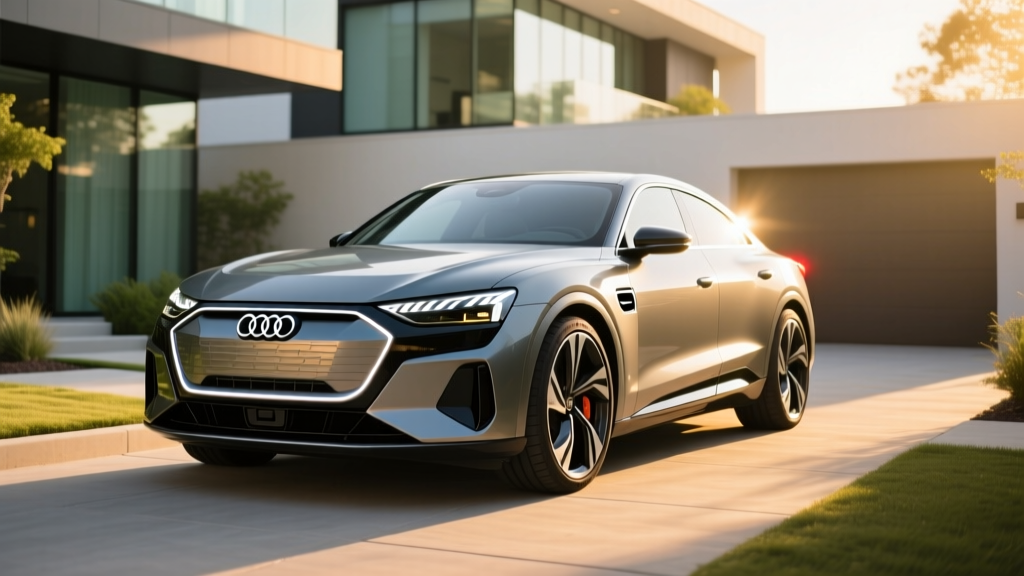
The 2026 Audi Q8 e-tron (the successor to the original e-tron, rebranded for the 2024 model year) occupies a specific niche: a premium midsize electric SUV that prioritizes refinement, build quality, and everyday comfort over headline-grabbing performance. If you've been searching for Audi e-tron horsepower figures and wondering how they translate to real-world driving, this review breaks down every spec that matters — from its dual-motor powertrain to the actual charging curve you'll experience on a road trip.
Audi positions the Q8 e-tron against the BMW iX, Mercedes EQE SUV, and Tesla Model X. It undercuts some rivals on price while delivering one of the quietest, most composed cabins in the segment. But with a 114.2 kWh gross battery (106 kWh usable) and a curb weight exceeding 5,700 pounds, efficiency is the trade-off you make for that solidity.
| Spec | Q8 e-tron Premium Plus | Q8 e-tron Prestige | SQ8 e-tron |
|---|---|---|---|
| Horsepower (Boost Mode) | 402 hp | 402 hp | 496 hp |
| Torque (Boost Mode) | 490 lb-ft | 490 lb-ft | 718 lb-ft |
| 0–60 mph | 5.1 sec | 5.1 sec | 4.4 sec |
| Drivetrain | Dual-motor AWD (quattro) | Dual-motor AWD (quattro) | Dual-motor AWD (quattro) |
| Battery (Gross / Usable) | 114.2 kWh / 106 kWh (NMC) | 114.2 kWh / 106 kWh (NMC) | 114.2 kWh / 106 kWh (NMC) |
| EPA Range | 285 mi | 285 mi | 257 mi |
| MPGe (Combined) | 81 MPGe | 81 MPGe | 75 MPGe |
| Max DC Fast Charge | 170 kW | 170 kW | 170 kW |
| 10–80% DC Charge Time | ~31 min | ~31 min | ~31 min |
| Level 2 Home Charge Rate | 11.5 kW (~24 mi/hr) | 11.5 kW (~24 mi/hr) | 11.5 kW (~24 mi/hr) |
| Base MSRP | $75,995 | $82,395 | $97,495 |
| Battery Warranty | 8 yr / 100,000 mi | 8 yr / 100,000 mi | 8 yr / 100,000 mi |
Sources: EPA fueleconomy.gov, Audi USA
Horsepower, Performance, and How the Dual-Motor Drivetrain Delivers
The standard 2026 Q8 e-tron produces 355 horsepower in normal driving and 402 horsepower in boost mode — a temporary overboost function activated by flooring the accelerator, available for roughly 60 seconds at a time. Torque peaks at 414 lb-ft normally and 490 lb-ft in boost. The SQ8 e-tron variant bumps those figures to 496 hp and a massive 718 lb-ft, dropping the 0–60 time to 4.4 seconds.
Both variants use Audi's electric quattro all-wheel-drive system with a motor on each axle. The rear motor handles most cruising loads for efficiency, while the front motor engages under hard acceleration or when traction demands it. There's no mechanical connection between the axles — torque distribution is managed entirely through software.
In practice, 402 hp in a 5,765-pound SUV means confident highway merging and passing rather than sports-car thrust. The SQ8 e-tron's 496 hp transforms the character considerably, but the standard car never feels underpowered. The single-speed transmission delivers seamless, interruption-free acceleration, and the regenerative braking system offers three levels of recuperation selectable via steering-wheel paddles — though it doesn't quite achieve true one-pedal driving at its maximum setting.
EPA Range vs. Real-World Efficiency: What to Actually Expect
EPA Estimated Range: 285 miles (Q8 e-tron) / 257 miles (SQ8 e-tron)
Real-World Expectation: Plan for 240–260 miles on a highway-heavy trip at 70–75 mph. In cold weather (below 30°F), expect 200–225 miles before needing a charge stop. City driving with regenerative braking can stretch closer to or slightly above the EPA figure.
The Q8 e-tron's efficiency rating of 81 MPGe combined (equivalent to about 41 kWh per 100 miles) places it behind lighter competitors like the BMW iX xDrive50 (86 MPGe combined, 324-mile range) and the Tesla Model X Long Range (102 MPGe, 335-mile range). The large 106 kWh usable battery compensates with raw capacity, but the SUV's weight and aerodynamic profile mean it consumes more energy per mile.
Audi's thermal management system includes a heat pump as standard equipment, which helps mitigate cold-weather range loss compared to resistive heating. In our experience, the heat pump recovers roughly 10–15% of range in freezing conditions versus an EV without one — but the physics of a 5,700-pound vehicle in winter still bite. Preconditioning the battery while plugged in is essential for both range preservation and charging speed.
Charging Speed: DC Fast Charging and Home Level 2
The Q8 e-tron accepts up to 170 kW on a DC fast charger via its CCS1 connector (NACS adapter availability may vary by model year and region — confirm with your dealer). Audi quotes a 10–80% charge time of approximately 31 minutes under ideal conditions.
| Charging Level | Power | Time / Rate | Notes |
|---|---|---|---|
| Level 1 (120V) | ~1.4 kW | ~3 mi/hr | Emergency/trickle only; full charge ~60+ hours |
| Level 2 (240V, 48A) | 11.5 kW | ~24 mi/hr; full charge ~10 hr | Standard home wall-box setup |
| DC Fast Charge | Peak 170 kW | 10–80% in ~31 min | Sustains ~150 kW to ~60% SoC, then tapers |
Charging curve reality: The 170 kW peak is achieved between roughly 10–30% state of charge. From 30–60%, the Q8 e-tron sustains a strong 140–150 kW. Above 60%, the curve tapers progressively — expect 80–100 kW from 60–70% and 50 kW or less above 80%. This taper behavior is normal for NMC chemistry, which the Q8 e-tron uses throughout the lineup. If you're road-tripping, plan your DC fast stops to arrive at low SoC and depart around 75–80% to stay in the fastest part of the curve.
For home charging, the 11.5 kW onboard charger is competitive. A full overnight charge from 10% takes roughly 10 hours on a 48-amp Level 2 station (such as a ChargePoint Home Flex or Tesla Wall Connector with J1772 adapter). Most owners who charge nightly from 60–80% SoC will see a full replenishment in 3–4 hours.
Interior Space, Cargo, and Daily Practicality
The Q8 e-tron is a midsize SUV with seating for five. Interior dimensions are generous:
- Front legroom: 41.3 inches
- Rear legroom: 38.1 inches
- Cargo behind rear seats: 28.5 cu ft
- Cargo with rear seats folded: 56.4 cu ft
- Frunk (front trunk): Not available — the space under the hood houses electronics and the HVAC system
The absence of a frunk is a missed opportunity for stowing charging cables or a small bag, but the rear cargo area is well-shaped and includes a reversible load floor. Rear-seat comfort is a strong point — the flat floor (no transmission tunnel hump) and wide bench accommodate three adults more credibly than many rivals.
Infotainment runs Audi's MMI touch response system with dual screens (10.1-inch upper, 8.6-inch lower) and a 12.3-inch Virtual Cockit digital instrument cluster. Wireless Apple CarPlay and Android Auto are standard. The available Bang & Olufsen 3D sound system (16 speakers, 705 watts on Prestige trim) is one of the best in the segment. Adaptive cruise control with lane guidance (Audi's Traffic Jam Assist) operates at SAE Level 2 — meaning the driver must remain attentive with hands on the wheel at all times.
Pricing, Trims, and Federal Tax Credit Eligibility
| Trim | Base MSRP | Est. As-Tested* | §30D Credit Eligibility |
|---|---|---|---|
| Premium Plus | $75,995 | $79,000–$83,000 | Up to $7,500 (see rules below) |
| Prestige | $82,395 | $86,000–$92,000 | Up to $7,500 (see rules below) |
| SQ8 e-tron Premium Plus | $97,495 | $101,000–$108,000 | Up to $7,500 (see rules below) |
*As-tested prices vary with options, destination charges, and dealer adjustments.
Federal tax credit rules (§30D) for 2026: The Audi Q8 e-tron may qualify for up to $7,500 in federal tax credits, but eligibility depends on several conditions that change periodically. Key requirements include:
- MSRP cap: The vehicle's MSRP must not exceed $80,000 for SUVs (the SQ8 e-tron trims may exceed this cap — verify with your dealer and the IRS).
- Buyer income cap: Modified adjusted gross income must not exceed $150,000 (single), $225,000 (head of household), or $300,000 (joint filers).
- Battery sourcing: A percentage of critical minerals and battery components must be sourced from the U.S. or free-trade-agreement countries. The exact dollar amount of the credit ($3,750 for minerals, $3,750 for components) depends on current-year sourcing thresholds.
- Point-of-sale transfer: As of 2024, buyers can transfer the credit to the dealer at purchase for an immediate price reduction, rather than waiting to claim it on their tax return.
Always verify current eligibility on IRS.gov and with your Audi dealer before purchase. Battery sourcing requirements tighten annually, and a vehicle that qualifies in January may have different eligibility by December.
Warranty Coverage and Long-Term Battery Outlook
Audi covers the Q8 e-tron's high-voltage battery and electric powertrain for 8 years or 100,000 miles, whichever comes first. The battery warranty guarantees that capacity will not fall below 70% of its original state of health during the coverage period. If it does, Audi will repair or replace modules to bring it above that threshold.
The NMC (nickel manganese cobalt) chemistry in the Q8 e-tron offers higher energy density than LFP (lithium iron phosphate) batteries found in some competitors, but NMC cells typically show slightly faster degradation over 10–15 years. Real-world data from earlier Audi e-tron models (2019–2023) suggests roughly 5–8% degradation over the first 100,000 miles — well within the warranty buffer. Audi's thermal management system, which actively cools and heats the pack, contributes to this respectable longevity.
The general vehicle warranty covers 4 years / 50,000 miles, which is standard for the luxury segment but shorter than Hyundai/Kia's 5-year / 60,000-mile coverage.
Pros, Cons, and Who Should Buy the Q8 e-tron
Pros
- Exceptionally quiet, well-insulated cabin at highway speed
- Standard heat pump improves cold-weather range and charging
- 170 kW DC fast charging with a flat, predictable curve
- Strong build quality and material choices throughout
- Comfortable ride with adaptive air suspension standard
- Generous rear-seat legroom for a midsize SUV
Cons
- 81 MPGe trails lighter competitors (BMW iX, Tesla Model X)
- No frunk for cable storage
- Heavy at 5,765 lbs — noticeable in cornering and braking distances
- Infotainment dual-screen layout can distract while driving
- SQ8 e-tron trims may exceed the $80,000 MSRP cap for §30D credit
- 402 hp (boost) is adequate, not thrilling, for the price point
Choose the Q8 e-tron if: You value cabin refinement, ride comfort, and understated design over outright performance or maximum range. It's an excellent luxury commuter and family hauler for buyers who charge at home and take occasional road trips of 250 miles or fewer between stops.
Look elsewhere if: Maximum range is your priority (consider the BMW iX xDrive50 at 324 mi or Tesla Model X at 335 mi), you want sports-SUV acceleration (the SQ8 e-tron or BMW iX M60 are better fits), or you need three-row seating.
Frequently Asked Questions
What is the real-world range of the 2026 Audi Q8 e-tron?
The EPA rates it at 285 miles, but expect 240–260 miles on a highway trip at 70+ mph and as low as 200–225 miles in freezing weather. The heat pump helps, but the 5,765-lb curb weight works against efficiency in all conditions.
How fast does the Q8 e-tron charge at home and on the road?
On a DC fast charger, it peaks at 170 kW and charges from 10–80% in approximately 31 minutes. At home on a Level 2 station (11.5 kW / 48A), it adds about 24 miles of range per hour, with a full charge taking roughly 10 hours.
How much horsepower does the Audi e-tron have?
The standard Q8 e-tron produces 355 hp in normal driving and 402 hp in boost mode. The SQ8 e-tron produces 496 hp in boost mode with 718 lb-ft of torque.
Does the 2026 Q8 e-tron qualify for the $7,500 federal EV tax credit?
It may, depending on your income, the specific trim's MSRP (must be under $80,000 for SUVs), and current battery-sourcing requirements. The SQ8 e-tron's higher MSRP may push it above the cap. Always verify on IRS.gov before purchasing.
Is the Q8 e-tron worth buying versus the BMW iX or Tesla Model X?
The Q8 e-tron wins on cabin quietness, ride comfort, and traditional luxury feel. The BMW iX offers more range (324 mi) and efficiency, while the Tesla Model X provides the longest range (335 mi), Supercharger network access, and available third-row seating. Your priority — comfort vs. range vs. tech ecosystem — should drive the decision.
What battery chemistry does the Q8 e-tron use?
It uses NMC (nickel manganese cobalt) lithium-ion cells with a gross capacity of 114.2 kWh and 106 kWh usable. NMC offers higher energy density than LFP but requires more careful charge management for long-term health — Audi recommends keeping daily charging between 20–80% and only charging to 100% before long trips.