The Audi Q7 e-tron: A PHEV Luxury SUV Out of Time
If you're searching for an Audi Q7 e-tron in 2026, you're likely encountering one of two scenarios: a compelling used luxury plug-in hybrid on the market, or confusion about whether Audi still sells this model new. The short answer is that the Q7 e-tron was discontinued after the 2019 model year in the United States, replaced first by the Q5 e-tron (an EV) and the Q5 TFSI e PHEV, and later by Audi's broader electrified SUV lineup including the Q8 e-tron (formerly e-tron) and the upcoming Q6 e-tron.
That said, the Q7 e-tron remains a notable vehicle in the used electrified market. It was Audi's first plug-in hybrid sold in North America, pairing a 3.0-liter TDI diesel V6 with an electric motor and a 17.3 kWh lithium-ion battery. For buyers considering a pre-owned Q7 e-tron, or those benchmarking Audi's PHEV evolution, this profile covers the specs, real-world ownership realities, and how it compares to current alternatives.
| Spec | Value |
|---|---|
| Powertrain | 3.0L TDI V6 + electric motor (PHEV) |
| Combined Horsepower | 373 hp |
| Combined Torque | 516 lb-ft |
| Drivetrain | quattro AWD |
| 0–60 mph | 6.0 seconds |
| Battery Capacity | 17.3 kWh (NMC lithium-ion) |
| EPA Electric-Only Range | 16 miles |
| EPA Combined MPGe (EV mode) | 65 MPGe |
| EPA Combined MPG (hybrid mode) | 27 MPG (diesel) |
| Max DC Fast Charge | 50 kW (CCS) |
| Level 2 Charge Rate | 7.2 kW (~2 hours full charge) |
| Cargo (behind 3rd row) | 14.8 cu ft |
| Cargo (all rows folded) | 71.6 cu ft |
| Original MSRP (2019) | $74,800 (Premium Plus) |
Real-World Range and Efficiency: What the EPA Sticker Doesn't Tell You
The EPA rated the Audi Q7 e-tron at 16 miles of electric-only range when new. In practice, owners report between 12 and 18 miles depending on conditions — and that narrow band is the first reality check for anyone shopping this PHEV today.
Real-World Expectation: 12–18 miles electric-only
Highway (70+ mph): ~10–12 miles before engine engages
Cold Weather (below 32°F): ~8–10 miles (battery preconditioning was not standard)
Hybrid Mode Total Range: ~400–430 miles combined (diesel tank + battery)
The Q7 e-tron's diesel-electric pairing was unusual — and effective for highway fuel economy. In hybrid mode, owners consistently report 26–30 MPG combined, which was exceptional for a 5,400-pound three-row SUV. The diesel engine's efficiency on the highway is where this vehicle shines: road trips yield 30+ MPG at 70 mph, something no current gasoline PHEV SUV of similar size matches.
However, the 17.3 kWh battery (with roughly 14 kWh usable) was modest even in 2017 when the Q7 e-tron launched. By 2026 standards, where competitors like the BMW X5 xDrive50e offer 38 miles of electric range from a 25.7 kWh pack, the Q7 e-tron's electric-only capability feels dated. If your commute is under 15 miles round-trip and you can charge at home, you'll run mostly electric. Anything longer, and the diesel engine is doing the heavy lifting.
Charging Speed: DC Fast and Level 2 at Home
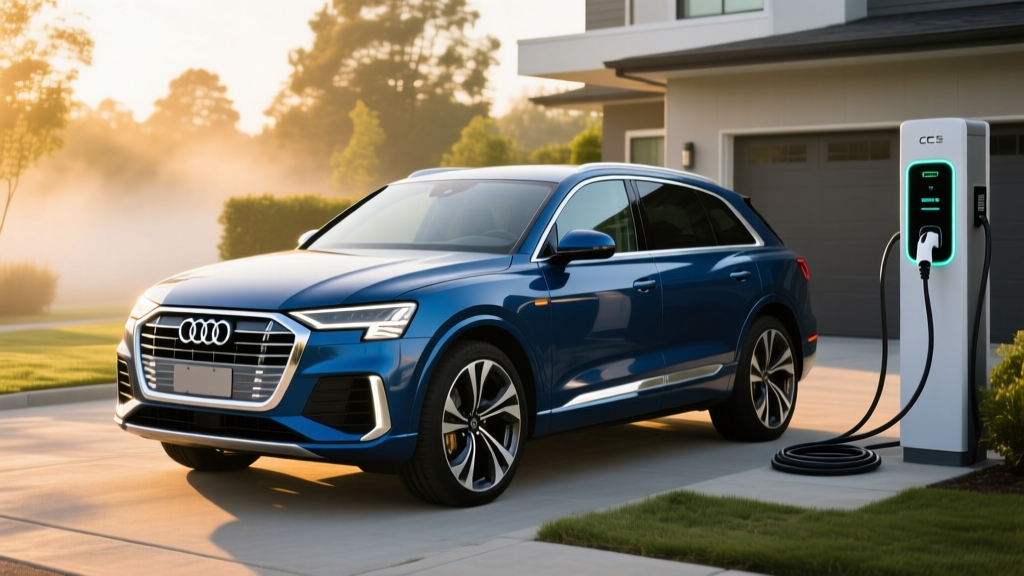
The Q7 e-tron supports 50 kW DC fast charging via a CCS1 connector — respectable for a 2017–2019 PHEV but slow by 2026 standards where many PHEVs don't offer DC charging at all, and full EVs charge at 150–350 kW.
| Charging Level | Power (kW) | Time / Notes |
|---|---|---|
| Level 1 (120V household) | 1.4 kW | ~10–12 hours (full charge) |
| Level 2 (240V home/public) | 7.2 kW | ~2.5 hours (full charge) |
| DC Fast Charge (CCS) | 50 kW peak | ~30 minutes (0–80%); ~45 min (0–100%) |
At home on a Level 2 charger (240V, 32A), expect a full charge in roughly 2.5 hours. That's fast enough to top off between errands or overnight without issue. The 7.2 kW onboard charger is a bright spot — many contemporary PHEVs limited Level 2 charging to 3.3 or 3.6 kW, making the Q7 e-tron's home charging notably quicker.
On a 50 kW DC fast charger, the small 17.3 kWh battery fills quickly in absolute terms — you'll reach 80% in about 30 minutes. The charge curve is relatively flat because the pack is small; there's less thermal management challenge than a 100 kWh EV battery. However, finding a 50 kW charger in 2026 is increasingly difficult as networks prioritize 150–350 kW stalls. The Q7 e-tron can physically connect to faster chargers, but it will only draw up to its 50 kW limit.
Performance and Driving Dynamics
The combined output of 373 horsepower and 516 lb-ft of torque gives the Q7 e-tron genuine urgency. The 0–60 mph time of 6.0 seconds is quick for a three-row diesel SUV, and the instant electric torque fills in the low-end lag typical of turbo-diesels. The result is a powertrain that feels more responsive than its diesel-only sibling.
The quattro all-wheel-drive system is standard, with the electric motor integrated into the 8-speed Tiptronic automatic transmission. This is a parallel hybrid architecture — both the engine and motor can drive the wheels, or either can operate independently. In EV mode, the Q7 e-tron is rear-biased through the electric motor, switching to full quattro when the diesel engages or when traction demands it.
Ride quality is firm but composed, typical of Audi's adaptive air suspension (standard on the e-tron trim). The ~5,400 lb curb weight is noticeable in corners, but the low center of gravity from the under-floor battery pack keeps body roll manageable. This is a grand-touring SUV, not a sport ute, and it's at its best on long highway stretches where the diesel's efficiency and the cabin's isolation excel.
Interior, Tech, and Cargo Space
The Q7 e-tron's cabin reflects Audi's 2017–2019 design language: the dual-screen MMI touch response system (upper 10.1-inch for infotainment, lower 8.6-inch for climate and handwriting recognition) was class-leading at launch. The Virtual Cockpit digital instrument cluster with its dedicated e-tron power flow and range displays remains one of the best-executed driver information systems in the luxury segment.
Standard tech includes Apple CarPlay and Android Auto (wired), navigation with predictive efficiency routing (the nav system pre-conditions the battery and manages regen based on your route's topography), and a 14-speaker Bang & Olufsen sound system. Driver assists include adaptive cruise control with stop-and-go, lane-keeping assist, and traffic sign recognition — SAE Level 2 functionality that holds up well today.
Cargo space is the Q7 e-tron's most significant compromise versus the standard Q7:
- Behind 3rd row: 14.8 cu ft (vs. 17.1 cu ft in standard Q7 — battery pack reduces this)
- Behind 2nd row (3rd row folded): 37.5 cu ft
- All rows folded: 71.6 cu ft
- 3rd-row legroom: 29.5 inches (tight for adults; best for children)
- 2nd-row legroom: 38.3 inches
The battery pack sits beneath the cargo floor, eliminating the spare tire and reducing under-floor storage. The third row is best suited for children — a common Q7 limitation that the e-tron variant doesn't improve.
Pricing, Used Market Value, and Tax Credit Reality
The 2019 Audi Q7 e-tron carried an original MSRP of $74,800 (Premium Plus trim, the only configuration offered). With destination and typical options, as-tested prices reached $78,000–$82,000.
| Item | Amount |
|---|---|
| Original MSRP (2019) | $74,800 |
| Typical Used Price (2026, 60k–80k mi) | $32,000–$42,000 |
| Federal Used EV Credit (§25E) | Up to $4,000 (30% of sale price, max $4,000) |
| Federal New EV Credit (§30D) | Not eligible (discontinued) |
Tax credit note: The Q7 e-tron is no longer available new, so the IRS §30D new clean vehicle credit does not apply. However, buyers purchasing from a dealer may qualify for the §25E previously owned clean vehicle credit, which provides 30% of the sale price up to $4,000. Eligibility requires the vehicle's sale price to be $25,000 or less (which some high-mileage Q7 e-trons may meet), buyer income under $75,000 (single) / $150,000 (married filing jointly), and purchase from a licensed dealer. Verify current rules at IRS.gov, as requirements can change.
Battery Longevity, Warranty, and Ownership Costs
Audi warranted the Q7 e-tron's high-voltage battery for 8 years or 100,000 miles against defects and capacity loss below a specified threshold (typically 70% state of health). For 2017–2018 models, that factory warranty has now expired. 2019 models may have remaining coverage through 2027 or 100,000 miles — verify with a VIN check at an Audi dealer.
The 17.3 kWh NMC (nickel-manganese-cobalt) battery pack is liquid-cooled, which aids longevity. Real-world degradation data from owners suggests 5–12% capacity loss at 60,000–80,000 miles, which is moderate. Because the pack is small, even 10% degradation means losing roughly 1.5 miles of electric range — noticeable but not catastrophic.
Battery replacement cost, should it be needed out of warranty, is estimated at $8,000–$14,000 (parts and labor) based on independent EV shop reports. This is a significant risk factor for used buyers. Request a battery state-of-health (SoH) report from an Audi dealer before purchasing.
Other ownership considerations:
- Diesel emissions fluid (AdBlue): Requires periodic refill (~every 10,000 miles); $50–$100 at a dealer
- Insurance: Typically 10–15% higher than a standard Q7 due to hybrid system complexity
- Maintenance: Diesel-specific service (fuel filter, glow plugs long-term) plus hybrid system checks
How the Q7 e-tron Compares to 2026 Alternatives
If you're cross-shopping the used Q7 e-tron against current or recent PHEV SUVs, here's how the landscape looks:
- BMW X5 xDrive50e (2024–2026): 38 miles electric range, 25.7 kWh battery, 483 hp, ~$67,000 new. Dramatically more electric range and modern tech. The Q7 e-tron's only advantage is diesel highway MPG.
- Mercedes GLE 350e (2024–2026): 45 miles electric range, 23.3 kWh battery, ~$63,000 new. Another range winner over the Audi.
- Volvo XC90 Recharge (2024–2026): 35 miles electric range, 18.8 kWh battery, 455 hp, three-row practicality, ~$72,000 new. Closest competitor in size and seating.
- Audi Q5 TFSI e (2022–2026): 23 miles electric range, smaller two-row SUV, ~$58,000 new. Audi's current PHEV option, but sacrifices the third row.
The Q7 e-tron's diesel-electric combination is unique — no current competitor offers a diesel PHEV in the US market. If highway fuel economy on long road trips is your priority and you accept the short electric range, it remains a compelling used option. But if daily electric commuting is the goal, newer PHEVs with 30+ miles of range make the Q7 e-tron feel a generation behind.
Pros
- Diesel highway efficiency (30+ MPG at 70 mph) unmatched by gas PHEVs
- 516 lb-ft torque with seamless electric assist
- 7.2 kW Level 2 charging (faster than many PHEV rivals)
- 50 kW DC fast charging (rare for PHEVs of this era)
- Premium cabin with Virtual Cockpit and dual-screen MMI
- Standard air suspension and quattro AWD
Cons
- Only 16 miles EPA electric range (outdated by 2026 standards)
- Battery warranty expiring or expired on most examples
- Reduced cargo space vs. standard Q7 (battery intrusion)
- Tight third row — children only
- Diesel maintenance adds complexity (AdBlue, fuel filters)
- No longer eligible for new-vehicle federal tax credits
- Battery replacement cost risk ($8K–$14K out of warranty)
Who Should Buy the Audi Q7 e-tron in 2026?
- You regularly drive long highway stretches where diesel efficiency matters
- Your daily commute is under 15 miles and you can charge at home nightly
- You need three rows occasionally but not for adults
- You find a well-maintained example with a battery SoH above 85%
- You value the unique diesel-electric combination no current PHEV offers
- You want 30+ miles of electric-only range for daily driving
- You need reliable third-row adult seating
- You want a current-model warranty and the latest ADAS features
- You can't absorb a potential $10K+ battery replacement cost
Frequently Asked Questions
What is the real-world electric range of the Audi Q7 e-tron?
The EPA rated it at 16 miles electric-only. Real-world driving yields 12–18 miles in mild conditions, dropping to 8–10 miles in freezing temperatures or sustained highway speeds above 70 mph. Battery age and degradation will further reduce this on used examples.
How fast does the Q7 e-tron charge at home and on DC fast chargers?
On a 240V Level 2 home charger at 7.2 kW, a full charge takes about 2.5 hours. On a 50 kW DC fast charger, 0–80% takes approximately 30 minutes. The small 17.3 kWh battery charges quickly in absolute terms but the 50 kW peak rate is slow by 2026 DC standards.
Does the Audi Q7 e-tron qualify for the federal EV tax credit?
Not as a new vehicle — it was discontinued after 2019. As a used purchase, it may qualify for the IRS §25E previously owned clean vehicle credit (up to $4,000) if the sale price is $25,000 or less, you buy from a dealer, and your income is under the cap ($75K single / $150K married). Confirm eligibility with a tax professional.
Is the Q7 e-tron worth buying vs. a newer PHEV SUV?
It depends on your priorities. If highway diesel economy and a premium three-row cabin at a used price ($32K–$42K) matter more than electric-only range, yes. If you want 30+ electric miles, current warranty coverage, and modern driver assists, newer options like the BMW X5 xDrive50e or Volvo XC90 Recharge are better choices — at significantly higher prices.
What are the biggest risks of buying a used Q7 e-tron?
The primary risk is battery replacement cost ($8,000–$14,000) if the high-voltage pack degrades significantly after the 8-year/100,000-mile warranty expires. Secondary concerns include diesel-specific maintenance (AdBlue, fuel filters, potential glow plug issues at higher mileage) and the complexity of a dual-powertrain vehicle. Always get a pre-purchase inspection including a battery SoH report.
What battery chemistry does the Q7 e-tron use?
The Q7 e-tron uses an NMC (nickel-manganese-cobalt) lithium-ion battery pack with a total capacity of 17.3 kWh (~14 kWh usable). NMC offers higher energy density than LFP but typically shows slightly more degradation over time. The pack is liquid-cooled, which helps preserve longevity.