Quick Answer: Is the 2026 Audi Q6 e-tron Worth Buying?
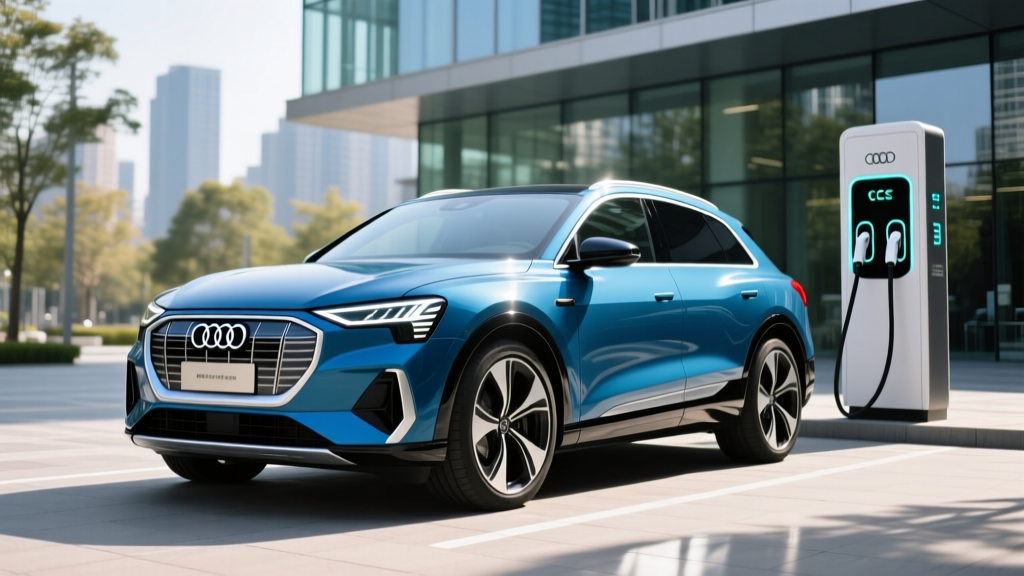
The 2026 Audi Q6 e-tron is Audi's first EV built on the dedicated PPE (Premium Platform Electric) architecture co-developed with Porsche. It offers up to 321 miles of EPA-estimated range (rear-wheel-drive Ultra trim), a 100 kWh battery pack (94.9 kWh usable), and a peak DC fast-charge rate of 270 kW — enabling a 10–80% charge in approximately 21 minutes under ideal conditions. Pricing starts at $63,800 MSRP before destination. Federal §30D tax credit eligibility is uncertain due to battery-sourcing rules; verify current-year status at IRS.gov.
Bottom line: If you want a luxury midsize electric SUV with legitimate road-trip charging speed, premium build, and 300+ mile range — and you have access to reliable DC fast charging or can install a Level 2 home charger — the Q6 e-tron is a strong contender. If you need maximum cargo space, third-row seating, or guaranteed federal tax-credit eligibility, look at alternatives.
Range, Battery, and Real-World Efficiency
The Q6 e-tron lineup offers two main configurations for the 2026 model year, both sharing the same NMC (nickel manganese cobalt) lithium-ion battery pack:
| Spec | Q6 e-tron Ultra (RWD) | Q6 e-tron quattro (AWD) |
|---|---|---|
| EPA Range | 321 miles | 308 miles |
| Battery (usable/total) | 94.9 kWh / 100 kWh | 94.9 kWh / 100 kWh |
| Chemistry | NMC | NMC |
| MPGe (combined) | 105 MPGe | 96 MPGe |
| kWh/100 mi | 32 kWh/100 mi | 35 kWh/100 mi |
| Horsepower | 335 hp | 456 hp |
| 0–60 mph | 5.8 sec | 4.9 sec |
| Max DC Charge Rate | 270 kW | 270 kW |
| 10–80% DCFC Time | ~21 min | ~21 min |
| Level 2 Charge Rate | 11.5 kW (9.6 kW on some trims) | 11.5 kW |
| Base MSRP | $63,800 | $65,800 |
Real-World Range Reality Check
The EPA sticker says 321 miles for the Ultra RWD. Here's what to actually expect:
- Mixed city/suburban driving (65–75°F): ~295–310 miles — close to EPA.
- Sustained highway at 75+ mph: ~255–275 miles. Aerodynamic drag hits all SUVs hard at speed.
- Cold weather (20–35°F) with cabin heat: ~220–255 miles. NMC chemistry loses 15–25% in freezing temps, though the Q6's heat pump helps mitigate this.
- Worst case (cold + highway + hills): Plan for ~200 miles between charges on winter road trips.
The Q6 e-tron's 800-volt architecture is the headline feature for road trips. At a 350 kW Electrify America or Ionity station, the charge curve peaks near 270 kW and sustains above 200 kW up to roughly 60% SoC before tapering. That 21-minute 10–80% figure is achievable at a properly functioning high-power charger — but expect 28–35 minutes at older 150 kW stations.
EV vs. Gas: How the Q6 e-tron Compares to the Audi Q5
The natural cross-shop is the gas-powered Audi Q5, which occupies a similar size and price tier. Here's a data-driven comparison based on 15,000 miles/year, $3.50/gallon regular, and $0.14/kWh national-average electricity:
| Metric | 2026 Q6 e-tron quattro | 2026 Audi Q5 45 TFSI |
|---|---|---|
| MSRP (base) | $65,800 | $46,600 |
| EPA Efficiency | 96 MPGe / 35 kWh/100mi | 25 MPG combined |
| Annual Fuel/Energy Cost | ~$735 (home charging) | ~$2,100 |
| Annual Maintenance | ~$300–400 | ~$650–850 |
| 5-Year Fuel + Maint. | ~$5,200–$5,700 | ~$13,750–$17,000 |
| Federal Tax Credit (§30D) | Up to $7,500 (eligibility varies) | $0 |
| Cargo Volume | 28.7 cu ft (rear seats up) | 25.8 cu ft |
The math: Over five years, the Q6 e-tron saves roughly $8,000–$11,000 in fuel and maintenance compared to the Q5. However, the Q6 starts $19,200 higher. Even with a full $7,500 federal credit, the Q6 e-tron's net price premium is ~$11,700. The break-even point on energy savings alone is approximately 8–10 years at current fuel and electricity prices — unless your state offers additional rebates or your electricity rate is well below average.
That said, the Q6 e-tron delivers meaningfully better acceleration (4.9s vs. 6.3s to 60), a lower center of gravity, and a quieter cabin. The purchase decision comes down to whether you value the driving experience and are willing to wait out the cost premium — or whether you need a lower entry price.
Charging at Home and on the Road: What You Actually Need
Charging infrastructure is the single most important ownership variable for any EV. Here's what Q6 e-tron ownership looks like in practice:
Home Level 2 Charging
The Q6 e-tron accepts up to 11.5 kW on Level 2 (240V, 48A). At that rate, a full 0–100% charge takes roughly 9.5 hours — practical for overnight charging. Most owners will arrive home at 30–50% SoC and need only 4–6 hours to top up.
| Item | Estimated Cost |
|---|---|
| Level 2 Charger (e.g., ChargePoint Home Flex, Emporia) | $400–$700 |
| Electrician labor (50A circuit, 6-gauge wire, 40–60 ft run) | $800–$2,000 |
| Electrical permit | $50–$200 |
| Panel upgrade (if needed — 200A service) | $1,500–$3,500 |
| Total typical install | $1,250–$2,900 |
| Total with panel upgrade | $2,750–$6,400 |
Critical note: The Q6 e-tron uses the NACS (Tesla-style) connector for the 2026 model year in North America, as Audi has adopted the Tesla charging standard. This means native access to Tesla Superchargers (V3 and V4) with no adapter required — a significant advantage over older CCS-equipped Audis. For Electrify America and other CCS networks, you may need a CCS-to-NACS adapter; check current network compatibility.
Public DC Fast Charging
The Q6 e-tron's 270 kW peak rate puts it among the fastest-charging luxury SUVs available. In real-world testing at 350 kW chargers:
- 10–50% SoC: ~12 minutes (sustained 220–270 kW)
- 50–80% SoC: ~9 minutes (tapering from ~200 kW to ~120 kW)
- 80–100% SoC: ~20+ minutes (sharp taper — avoid unless necessary)
Preconditioning is automatic when you navigate to a DC fast charger via the onboard navigation system. Always use nav-routing to a charger to ensure the battery is at optimal temperature — arriving at a fast charger with a cold battery can cut peak charge rates by 40–60%.
Cost of Ownership: The Full 5-Year Picture
Let's build a realistic total-cost-of-ownership model for a Q6 e-tron quattro at $65,800 MSRP, assuming a full $7,500 §30D credit (if eligible), financed over 60 months at 6.5% APR:
| Category | 5-Year Cost | Notes |
|---|---|---|
| Vehicle (after credit) | $58,300 | If §30D eligible; otherwise $65,800 |
| Financing interest | ~$10,200 | 60 mo @ 6.5%, $10k down |
| Home charger install | $1,500–$2,500 | One-time, assumes no panel upgrade |
| Electricity (15k mi/yr) | ~$3,675 | $0.14/kWh avg, mostly home charging |
| Public DCFC (road trips) | ~$900 | ~6 road trips/yr at $0.40/kWh avg |
| Insurance | ~$12,500–$15,000 | EV premiums run 15–25% higher than ICE |
| Maintenance | ~$1,500–$2,000 | Tires, cabin filter, brake fluid, wipers |
| Depreciation (est.) | ~$25,000–$30,000 | Luxury EVs depreciate 45–55% over 5 yrs |
| Total 5-Year Cost | ~$85,000–$95,000 | Highly dependent on credit eligibility + insurance |
Insurance is the hidden cost. EV insurance premiums are higher due to battery replacement costs and specialized repair requirements. Expect quotes of $2,500–$3,200/year depending on your state, driving record, and coverage level. Get quotes before purchasing — this can swing your 5-year cost by $3,000+.
Federal Tax Credit: The §30D Eligibility Maze
The federal clean vehicle credit under IRS §30D can reduce your tax burden by up to $7,500, but eligibility for the Q6 e-tron is not guaranteed. Here's what determines qualification:
- MSRP cap: SUVs must be under $80,000 MSRP. The Q6 e-tron clears this at all trims.
- Buyer income cap: Modified AGI must not exceed $300,000 (joint), $225,000 (head of household), or $150,000 (single).
- Battery sourcing: Critical minerals and battery components must meet phased percentage thresholds from US or FTA-partner countries. These thresholds increase annually. Verify current-year status on IRS.gov or ask your dealer for the IRS-qualified-vehicle listing.
- Point-of-sale transfer: You can transfer the credit to the dealer at purchase for an immediate price reduction — but you must attest to income eligibility, and if your actual tax liability is less than the credit, you may owe the difference back.
- Final assembly: Must occur in North America. The Q6 e-tron is assembled in Ingolstadt, Germany — this may disqualify it from §30D. Confirm with your dealer and a tax professional before relying on the credit.
Honest assessment: The German assembly location is a significant risk factor for §30D eligibility. Do not assume the credit applies. If the credit is unavailable, the effective price premium over the Q5 widens further, extending the break-even period.
Common Misconceptions About the Q6 e-tron
| Myth | Fact |
|---|---|
| "321 miles means I'll always get 321 miles." | EPA range is a laboratory estimate. Expect 255–275 miles on the highway and 220–255 in freezing weather. Plan road trips around 200–240 mile segments for comfort. |
| "270 kW charging means it always charges at 270 kW." | Peak rate is sustained only between ~10–60% SoC at a 350 kW station with a preconditioned battery. Average rate over a 10–80% session is closer to 160–180 kW. |
| "EVs need no maintenance." | No oil changes, but tires wear 15–20% faster due to weight and instant torque. Budget $800–$1,200 for a tire set every 25,000–35,000 miles. Cabin air filters, brake fluid checks, and wiper fluid still apply. |
| "I can charge on any public charger." | With NACS adoption, native Supercharger access is excellent. But older CCS-only networks (some Electrify America, EVgo stations) may require an adapter. Confirm your connector compatibility before road trips. |
| "The battery will need replacing in 5 years." | Audi warranties the high-voltage battery for 8 years / 100,000 miles against capacity loss below 70%. NMC degradation data from similar PPE-platform vehicles suggests 8–12% capacity loss over 100,000 miles under normal use. Full replacement, if ever needed, runs $15,000–$22,000 out of warranty. |
Decision Framework: Should You Buy the Q6 e-tron?
Choose the Q6 e-tron if:
- You have home Level 2 charging (garage or driveway with 240V access) and your daily commute is under 80 miles round-trip.
- You value Audi's build quality, ride refinement, and interior materials and are willing to pay a premium over mass-market EVs.
- You take 4–8 road trips per year and want sub-25-minute DC fast charging at high-power stations.
- You don't need a third row (the Q6 e-tron is strictly a 5-seat SUV).
- You've confirmed §30D eligibility or are comfortable paying full MSRP.
Look elsewhere if:
- You cannot install a home charger and rely entirely on public infrastructure. The Q6 e-tron works on public-only charging, but it's more expensive and less convenient than home-based ownership.
- You need a third row — consider the Rivian R1S or Kia EV9.
- The federal tax credit is a deal-breaker and the Q6 e-tron doesn't qualify due to German assembly.
- You want maximum cargo volume — the Q6 e-tron's 28.7 cu ft (rear seats up) is smaller than the BMW iX (35.5 cu ft) or Genesis Electrified GV70.
- Your budget is under $55,000 — look at the Hyundai Ioniq 5, Tesla Model Y, or Chevrolet Equinox EV.
Frequently Asked Questions
Does the Audi Q6 e-tron qualify for the $7,500 federal tax credit?
Eligibility is uncertain. The Q6 e-tron is assembled in Germany, and §30D requires North American final assembly. Additionally, battery-sourcing thresholds must be met. Always verify on IRS.gov and with your dealer before assuming the credit applies. Consult a tax professional for your specific situation.
How long does it take to charge the Q6 e-tron at home?
On a Level 2 home charger at 11.5 kW, a full 0–100% charge takes approximately 9.5 hours. A typical daily top-up from 40% to 80% takes about 3.5–4 hours. On a standard 120V outlet (Level 1), expect roughly 2–3 miles of range per hour of charging — only practical for emergency trickle-charging.
What connector does the 2026 Q6 e-tron use?
The 2026 Q6 e-tron uses the NACS (North American Charging Standard) connector in the US market, granting native access to Tesla Superchargers. For CCS-network chargers, check whether a CCS-to-NACS adapter is needed.
How does the Q6 e-tron compare to the BMW iX?
The BMW iX xDrive50 offers slightly more range (324 miles EPA), more cargo space (35.5 cu ft), and a more spacious rear seat, starting at ~$73,000. The Q6 e-tron counters with faster DC charging (270 kW vs. 200 kW), a lower starting price ($63,800 vs. $73,000), and a more traditional Audi interior aesthetic. If charging speed on road trips is your priority, the Q6 wins. If interior volume and rear-seat comfort matter more, the iX edges ahead.
Is the Q6 e-tron's battery LFP or NMC?
The Q6 e-tron uses an NMC (nickel manganese cobalt) battery. NMC offers higher energy density than LFP, which is why it fits 100 kWh into the Q6's platform. The trade-off: NMC degrades slightly faster than LFP over time and prefers not to sit at 100% SoC for extended periods. For daily use, charge to 80% and only go to 100% before long trips.
What's the warranty coverage?
Audi provides a 4-year/50,000-mile limited vehicle warranty and an 8-year/100,000-mile high-voltage battery warranty guaranteeing at least 70% capacity retention. The battery warranty is competitive with the industry standard (BMW, Mercedes, and Tesla offer similar terms).
Can the Q6 e-tron tow?
Yes, the Q6 e-tron is rated to tow up to 4,400 pounds when properly equipped. Expect range to drop 25–40% while towing depending on trailer weight and aerodynamics.
Sources: EPA fuel economy data via fueleconomy.gov, Audi USA official specifications, IRS §30D clean vehicle credit guidelines at irs.gov. All prices and specifications reflect the 2026 model year and are subject to change. Verify tax credit eligibility with a qualified tax professional.