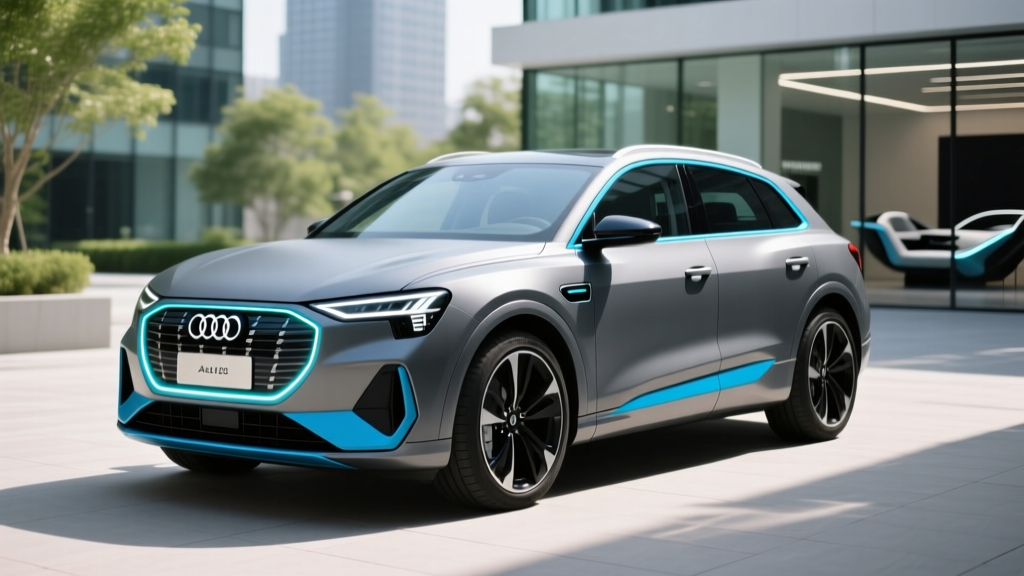
Quick Answer: There is no vehicle officially named the "Audi Q5 electric car." If you're searching for Audi's electric equivalent to the popular Q5 SUV, you're looking for the 2026 Audi Q6 e-tron — Audi's mid-size electric SUV built on the PPE (Premium Platform Electric) architecture co-developed with Porsche. It offers an EPA-estimated 308 miles of range (rear-wheel-drive), up to 270 kW DC fast charging (10–80% in roughly 21 minutes), and starts at $63,800 before incentives. If you want a plug-in hybrid Q5 instead, the Q5 TFSI e remains available with ~23 miles of electric-only range.
Why the Audi Q6 e-tron Is the "Electric Q5" Buyers Actually Want
The Audi Q5 has been the brand's volume-selling compact luxury SUV for over a decade. As Audi electrifies its lineup, the Q6 e-tron slots into the same buyer profile — premium mid-size SUV, all-day comfort, Quattro-available, tech-forward — but with a fully electric powertrain. Despite the "Q6" badge suggesting a larger vehicle, the Q6 e-tron's 185.0-inch length and 111.4-inch wheelbase place it squarely in Q5 territory, with notably more interior volume thanks to the flat-floor EV skateboard.
For the 2026 model year, Audi offers the Q6 e-tron in three main configurations:
- Q6 e-tron RWD — 308 miles EPA range, single motor, 422 hp
- Q6 e-tron quattro — 284 miles EPA range, dual motor AWD, 456 hp
- SQ6 e-tron — 280 miles EPA range, dual motor AWD, 509 hp (launch control)
| Spec | Q6 e-tron RWD | Q6 e-tron quattro | SQ6 e-tron |
|---|---|---|---|
| EPA Range | 308 mi | 284 mi | 280 mi |
| Battery (usable) | 94.4 kWh (NMC) | 94.4 kWh (NMC) | 94.4 kWh (NMC) |
| Horsepower | 422 hp | 456 hp | 509 hp |
| 0–60 mph | 5.8 sec | 5.0 sec | 4.3 sec |
| Peak DC Charge Rate | 270 kW | 270 kW | 270 kW |
| 10–80% DC Charge | ~21 min | ~21 min | ~21 min |
| Level 2 AC Charge | 11.5 kW (~9.5 hr) | 11.5 kW (~9.5 hr) | 11.5 kW (~9.5 hr) |
| Starting MSRP | $63,800 | $65,800 | $72,200 |
| Battery Warranty | 8 yr / 100,000 mi | 8 yr / 100,000 mi | 8 yr / 100,000 mi |
Real-World Range: What the EPA Number Doesn't Tell You
EPA Estimate: 308 miles (RWD) / 284 miles (quattro)
Real-World Expectation: 250–275 miles on the highway at 70–75 mph in moderate temperatures. In cold weather (below 30°F), expect a 20–30% reduction, bringing usable range to roughly 190–220 miles for the quattro variant.
The 94.4 kWh usable battery pack uses NMC (nickel manganese cobalt) chemistry, which offers strong energy density but is more temperature-sensitive than LFP alternatives. Audi's thermal management system with a heat pump helps mitigate cold-weather losses, but physics wins in sub-freezing conditions. On a 68°F day at mixed city/highway speeds, hitting 290+ miles is realistic for the RWD model.
The charge curve is worth understanding: the Q6 e-tron peaks at 270 kW only between roughly 10–25% state of charge. From 25–50%, it sustains around 200 kW, then tapers progressively. Above 80%, charging drops below 50 kW — which is why the 10–80% time of ~21 minutes is the relevant metric, not the peak number. On a road trip, plan your stops around the 10–80% window and skip the temptation to top off to 100% at a DC fast charger unless you need the final miles.
Cost Breakdown: Q6 e-tron vs. Gas Q5 Ownership
Let's compare five-year ownership costs for the electric Q6 e-tron quattro versus a comparably equipped 2026 Audi Q5 45 TFSI (gas). This assumes 12,000 miles per year, $0.14/kWh home electricity, $3.60/gallon premium fuel, and 80% home / 20% public charging.
| Category | Q6 e-tron quattro | Q5 45 TFSI (Gas) |
|---|---|---|
| Purchase Price (MSRP) | $65,800 | $52,300 |
| Federal Tax Credit (§30D) | Up to $7,500* | $0 |
| Effective Purchase Price | ~$58,300 | $52,300 |
| Energy/Fuel (5 years) | ~$3,900 | ~$9,200 |
| Maintenance (5 years) | ~$1,800 | ~$4,500 |
| Insurance (5-year avg) | ~$12,500 | ~$10,200 |
| Estimated Depreciation | ~$28,000 | ~$22,000 |
| 5-Year Total Cost | ~$104,500 | ~$98,200 |
*The §30D federal tax credit requires the buyer to meet income thresholds (AGI ≤ $150,000 single / $300,000 joint), the vehicle to be under the $80,000 MSRP cap for SUVs, and battery component/critical-mineral sourcing requirements to be satisfied. Credit can be transferred at point of sale as a purchase discount. Verify current eligibility at IRS.gov §30D or with a tax professional.
The Q6 e-tron commands a ~$13,500 premium at MSRP, but the tax credit narrows that gap substantially. Fuel and maintenance savings are significant — the Q6 e-tron has no oil changes, no spark plugs, no transmission fluid, and brake pad life is extended dramatically by regenerative braking. However, EV insurance premiums run 15–25% higher on average due to repair cost structures. Depreciation is the wild card: luxury EVs have seen steeper depreciation curves than gas counterparts in recent years, though the gap is narrowing as the market matures.
Charging at Home and on the Road: What You Actually Need
The Q6 e-tron comes with a NACS (North American Charging Standard) connector for the 2026 model year, giving you native access to Tesla Supercharger stations — the most reliable public DC fast-charging network in the U.S. For Level 2 home charging, the 11.5 kW onboard charger means a full 0–100% charge in roughly 9.5 hours on a 48-amp Level 2 station.
| Level | Power | Approx. Miles Added per Hour | Use Case |
|---|---|---|---|
| Level 1 (120V outlet) | ~1.4 kW | ~4–5 mi/hr | Emergency/trickle only |
| Level 2 (240V, 48A) | 11.5 kW | ~35–40 mi/hr | Daily home charging |
| DC Fast Charge | Up to 270 kW | ~250+ mi in 21 min (10–80%) | Road trips |
Home charging installation reality: A Level 2 home setup requires a dedicated 240V/60A circuit. If your electrical panel has capacity, expect $800–$1,800 for a hardwired Level 2 station (ChargePoint Home Flex, Emporia Level 2, or similar) plus electrician labor. If your panel needs a 200A upgrade — common in older homes — add $1,500–$3,500. Always get a licensed electrician's assessment before purchasing equipment.
Public charging costs vary widely. Electrify America and EVgo typically charge $0.40–$0.55/kWh for DC fast charging, which translates to roughly $42–$58 for a 10–80% session on the Q6 e-tron. Tesla Superchargers average $0.28–$0.36/kWh, making them the more economical road-trip option. Compare this to $55–$65 for a tank of premium gas in the Q5, and the per-fill savings are modest on the road — the real savings come from home charging at $0.10–$0.16/kWh, which costs roughly $9–$15 for a full charge.
Common Misconceptions About the Q6 e-tron — Fact-Checked
| Myth | Fact |
|---|---|
| "It's just an electric Q5." | The Q6 e-tron rides on the dedicated PPE platform, not a modified gas-car chassis. This gives it a flat floor, lower center of gravity, and more interior volume than a converted ICE vehicle. |
| "The battery will need replacing in 5 years." | Audi warranties the battery for 8 years / 100,000 miles against degradation below 70% capacity. Industry data from Geotab's fleet study shows modern NMC batteries lose roughly 1.8–2.3% capacity per year under normal use, suggesting 85%+ retention at 8 years. |
| "It qualifies for the full $7,500 tax credit." | Eligibility depends on battery-sourcing and critical-mineral requirements that change annually. Some trims may qualify for the full amount, partial credit, or none at all depending on current IRS rules. Always verify at fueleconomy.gov before purchasing. |
| "You can't tow with an electric Audi." | The Q6 e-tron is rated for up to 4,400 lbs of towing capacity (quattro). However, towing will reduce range by 30–50% depending on trailer weight and aerodynamics. |
| "Charging takes too long for road trips." | At 270 kW peak, a 10–80% charge takes ~21 minutes. On a 600-mile trip, you'd add roughly 40–45 minutes of total charging time vs. a gas Q5's 10 minutes of refueling — a meaningful but manageable difference, especially when combined with meal or rest stops. |
Q6 e-tron vs. Gas Q5 vs. Q5 PHEV: Which Powertrain Fits Your Life?
| Factor | Q6 e-tron quattro (BEV) | Q5 45 TFSI (Gas) | Q5 55 TFSI e (PHEV) |
|---|---|---|---|
| EPA Range / MPG | 284 mi / 95 MPGe | 25 MPG combined | ~23 mi electric + 25 MPG gas |
| Starting MSRP | $65,800 | $52,300 | $62,200 |
| Annual Fuel/Energy Cost | ~$780 (home charging) | ~$1,840 | ~$1,100 (mixed) |
| Home Charging Required? | Strongly recommended | No | Recommended for EV benefit |
| Maintenance Complexity | Low | Standard | Highest (two powertrains) |
| Best For | Home chargers, daily commuting, tech buyers | No home charging, frequent long trips | Short commutes + occasional long trips, no range anxiety |
The PHEV Q5 55 TFSI e is often the overlooked middle ground. With roughly 23 miles of electric-only range, it covers most daily commutes without burning fuel, then switches to hybrid mode for road trips. However, it carries the maintenance burden of both a combustion engine and an electric drivetrain, and its smaller battery means the electric range shrinks significantly in cold weather or at highway speeds.
First-Time EV Buyer Checklist: What to Know Before You Sign
If the Q6 e-tron is your first electric vehicle, these are the practical realities no brochure will emphasize:
- Home charging is non-negotiable for convenience. Relying solely on public charging is expensive ($0.40–$0.55/kWh vs. $0.14/kWh at home) and time-consuming. If you can't install a Level 2 charger at home or work, a PHEV or gas vehicle is a better fit.
- Precondition the battery before fast charging. The Q6 e-tron's navigation system will automatically precondition the battery when you route to a DC fast charger. This warms the pack to optimal temperature and can shave 5–10 minutes off your charge time. Always navigate to the charger rather than just driving there.
- Set your charge limit to 80% for daily use. NMC batteries last longest when kept between 20–80% state of charge for routine driving. Only charge to 100% when you need the full range for a long trip.
- Winter range loss is real. Plan for 20–30% less range in sustained cold. The heat pump helps, but cabin heating, battery warming, and denser air all consume energy. Keep a buffer.
- Insurance will cost more. Get quotes before purchasing. Luxury EV insurance premiums are typically 15–25% higher than gas equivalents. Shop around — some insurers offer EV-specific discounts.
- Verify the tax credit before committing. Battery-sourcing rules under §30D change, and a vehicle that qualifies in January might not in July. Confirm eligibility on IRS.gov or ask the dealer for the IRS-clean-vehicle-report for the specific VIN.
Decision Framework: Should You Buy the Q6 e-tron?
Choose the Q6 e-tron if: You have home Level 2 charging access, your daily driving is under 200 miles round-trip, you value low running costs and instant torque, and you want access to the Tesla Supercharger network via NACS.
Choose the Q5 PHEV if: You want electric commuting but can't commit to full EV due to frequent 400+ mile road trips, apartment living without charging, or towing-heavy use cases.
Choose the gas Q5 if: You have no home charging access, live in an area with sparse public charging infrastructure, or your budget is strictly under $50,000 and you don't qualify for the tax credit.
Frequently Asked Questions
Is there an Audi Q5 that's fully electric?
Not under the Q5 nameplate. Audi's fully electric mid-size SUV is the Q6 e-tron, which is similar in size to the Q5 but built on a dedicated EV platform. The Q5 is available as a conventional gas model (45 TFSI) or a plug-in hybrid (55 TFSI e).
How much does it cost to charge the Q6 e-tron at home?
At the U.S. average residential electricity rate of ~$0.14/kWh, a full charge of the 94.4 kWh battery costs roughly $13.20 and provides about 280 real-world miles. That's approximately $0.047 per mile — compared to $0.15–$0.18 per mile for premium gasoline in the Q5.
Does the Q6 e-tron use Tesla's Supercharger network?
Yes. For the 2026 model year, the Q6 e-tron is equipped with a native NACS connector, providing direct access to Tesla Superchargers without an adapter. It also works with Electrify America, EVgo, and other CCS networks via adapter if needed.
What happens if the battery degrades significantly?
Audi's battery warranty covers 8 years or 100,000 miles and guarantees the battery will retain at least 70% of its original capacity. If it falls below that threshold within the warranty period, Audi will repair or replace the battery at no cost. Out-of-warranty replacement costs for a pack this size currently range from $15,000–$22,000, though prices are declining as the supply chain matures.
Can the Q6 e-tron handle cold winters?
Yes, with planning. The standard heat pump efficiently warms the cabin and battery, but expect 20–30% range reduction in sustained sub-30°F temperatures. Preconditioning while plugged in (using grid power rather than battery) preserves range. Owners in northern climates report the Q6 e-tron's thermal management is competitive with the best in the segment.
Is the Q6 e-tron self-driving?
No. The Q6 e-tron offers Audi's adaptive cruise assist with lane guidance — a Level 2 driver-assistance system per SAE classification. You must remain engaged, hands on or near the wheel, and eyes on the road at all times. It is not autonomous or self-driving.