Quick Answer: Is the Audi Q5 Electric Worth It in 2026?
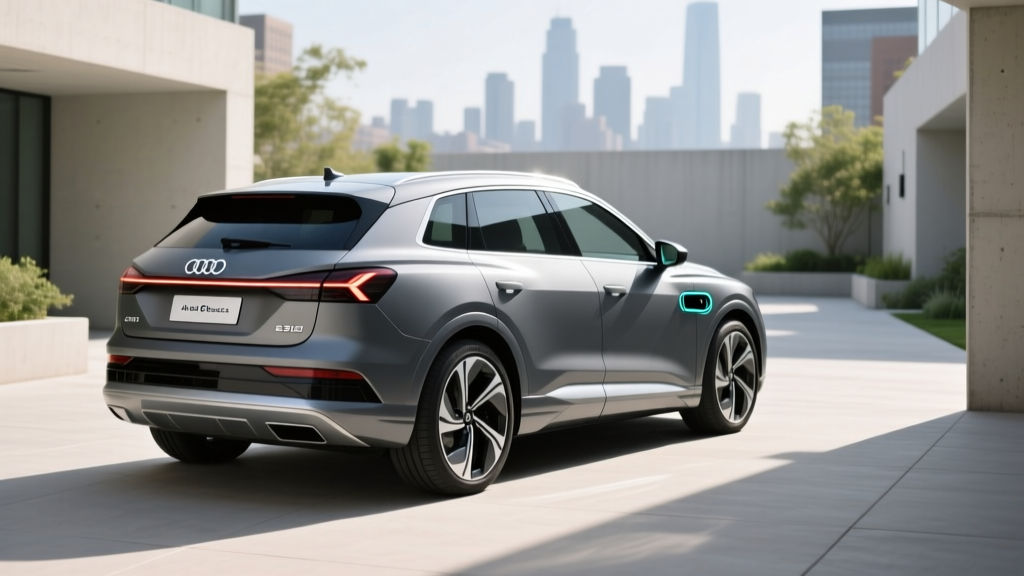
The Audi Q5 electric — officially the Audi Q5 e-tron in the U.S. — is a luxury compact electric SUV built on VW Group's MEB platform. For 2026, the Q5 e-tron offers an EPA-estimated 265 miles of range (RWD 40 variant) from a 91 kWh gross / 86 kWh usable NMC battery. DC fast charging peaks at 150 kW, delivering a 10–80% charge in approximately 30 minutes. Starting MSRP sits around $63,400 before incentives.
The bottom line: The Q5 e-tron is a strong pick if you want a refined, quiet luxury EV SUV with premium materials and Audi's virtual cockpit tech. However, its 150 kW peak charge rate and 265-mile EPA range trail competitors like the BMW iX, Genesis Electrified GV70, and Tesla Model Y. If you road-trip frequently or need maximum range per dollar, cross-shop carefully. If daily luxury commuting with home charging is your priority, it's a compelling choice.
Range, Battery, and Real-World Efficiency
The 2026 Audi Q5 e-tron comes in two main powertrain configurations: the Q5 e-tron 40 (rear-wheel drive, single motor, 201 hp) and the Q5 e-tron 50 quattro (dual-motor AWD, 295 hp). Range differs meaningfully between them.
| Trim | Drivetrain | Battery (usable) | Chemistry | EPA Range | MPGe (combined) | 0–60 mph |
|---|---|---|---|---|---|---|
| Q5 e-tron 40 | RWD | 86 kWh | NMC | 265 mi | 89 MPGe | 7.9 sec |
| Q5 e-tron 50 quattro | AWD | 86 kWh | NMC | 240 mi | 82 MPGe | 5.9 sec |
Real-World Range Expectations
EPA sticker: 265 mi (40 RWD) / 240 mi (50 quattro)
Expect ~220–240 miles in mixed highway driving at 70–75 mph in moderate temperatures. In cold weather (below 30°F), range can drop to ~180–200 miles due to cabin heating demands and increased battery resistance. The Q5 e-tron includes a heat pump on most trims, which helps mitigate cold-weather losses compared to resistance-based heating, but a 20–25% reduction in freezing conditions is typical for NMC packs of this size.
Source: EPA fueleconomy.gov
Efficiency lands at roughly 3.0–3.3 kWh/mile depending on trim. That's average for the luxury compact EV SUV segment — the Tesla Model Y Long Range achieves better efficiency at around 3.5 mi/kWh (roughly 28 kWh/100mi), but the Q5 e-tron prioritizes cabin insulation, ride comfort, and sound deadening over featherweight efficiency.
Charging Speed: Home and DC Fast Charging
Understanding the difference between kW (power, or how fast energy flows) and kWh (energy, or how much the battery stores) is essential. The Q5 e-tron's 86 kWh battery is the tank; the kW rating determines how quickly you refill it.
| Level | Power | Connector | Time / Rate | Best For |
|---|---|---|---|---|
| Level 1 (120V) | ~1.4 kW | J1772 / NACS adapter | ~3–4 mi/hr; 60+ hrs for full | Emergency top-up only |
| Level 2 (240V home) | 11.5 kW (max onboard) | J1772 / NACS | ~9 hrs 10–100%; ~30 mi/hr | Daily overnight charging |
| DC Fast Charge | 150 kW peak | CCS1 / NACS (via adapter) | 10–80% in ~30 min | Road trips |
The 150 kW peak DC fast charge rate is the Q5 e-tron's most debated spec. Competitors like the Hyundai Ioniq 5 and Kia EV6 peak at 240 kW on 800V architectures, delivering 10–80% in roughly 18 minutes. The Q5 e-tron's MEB platform uses a 400V architecture, capping charge speed lower. On a road trip, that 12-minute gap per stop adds up.
Additionally, the charge curve tapers noticeably above 80% SoC. Charging from 80–100% can take nearly as long as 10–80% due to cell-balancing and thermal management protocols. For battery longevity, Audi recommends daily charging to 80% and reserving 100% for longer trips.
For home Level 2 charging, you'll want a 48-amp hardwired Wallbox or ChargePoint unit on a 60-amp dedicated circuit. Expect $800–$2,000 for equipment plus $500–$2,500 for electrician labor, depending on panel proximity and local permit costs. If your home has a 100-amp electrical panel, a panel upgrade to 200 amps could add $1,500–$3,500.
Cost of Ownership: Q5 e-tron vs. Gas Q5
How does the electric Q5 stack up against its gasoline sibling, the conventional Audi Q5 45 TFSI quattro? Let's run a 5-year comparison assuming 12,000 miles/year, $3.80/gallon regular premium (Q5 gas requires premium), and $0.14/kWh average home electricity.
| Category | Q5 e-tron 50 quattro | Q5 45 TFSI quattro (gas) |
|---|---|---|
| Base MSRP | $66,900 | $47,800 |
| Est. federal tax credit (§30D) | Up to $7,500* | $0 |
| Effective purchase price | ~$59,400 | $47,800 |
| Fuel/energy (5 yrs, 60k mi) | ~$3,900 (home charging) | ~$9,200 (premium gas, 25 MPG combined) |
| Maintenance (5 yrs) | ~$1,200 (cabin filter, fluid checks, tires) | ~$3,500 (oil changes, brakes, belts) |
| Insurance (5 yrs est.) | ~$11,500 | ~$9,800 |
| Est. depreciation (5 yrs) | ~$28,000 | ~$22,000 |
| Total 5-yr cost (est.) | ~$104,000 | ~$92,300 |
*§30D tax credit eligibility depends on MSRP caps ($80,000 for SUVs), buyer income limits ($300k MFJ / $150k single), battery critical-mineral sourcing requirements, and point-of-sale transfer rules. Always verify current-year rules at IRS.gov and consult a tax professional.
The Q5 e-tron saves roughly $5,300 in fuel and $2,300 in maintenance over five years, but carries higher depreciation, insurance, and upfront costs. Total cost of ownership still favors the gas Q5 by approximately $11,700 over five years for most buyers. The EV makes financial sense if you plan to own it 8+ years, drive higher annual mileage, or have access to cheap solar electricity.
Pricing, Trims, and Tax Credit Eligibility
For 2026, the Audi Q5 e-tron lineup is structured as follows:
- Q5 e-tron 40 Premium (RWD): ~$63,400 MSRP
- Q5 e-tron 40 Premium Plus (RWD): ~$67,000 MSRP
- Q5 e-tron 50 Premium Plus quattro (AWD): ~$66,900 MSRP
- Q5 e-tron 50 Prestige quattro (AWD): ~$72,500 MSRP
§30D Federal Tax Credit Checklist (2026 Rules)
- ✅ MSRP cap: Vehicle must be under $80,000 (SUV classification) — all Q5 e-tron trims qualify on MSRP
- ⚠️ Buyer income cap: Modified AGI must not exceed $300,000 (married filing jointly) or $150,000 (single)
- ⚠️ Critical minerals & battery sourcing: Must meet phased-in percentages for North American-sourced minerals and battery component manufacturing — verify VIN-specific eligibility on fueleconomy.gov
- ✅ Point-of-sale transfer: You can transfer the credit to the dealer at purchase to reduce the sale price directly
- ⚠️ One credit per buyer per year: Limited to one new clean vehicle credit annually
Because battery sourcing rules tighten annually, the Q5 e-tron's exact credit amount may be $3,750 or $7,500 depending on whether it meets both the critical-minerals and battery-component thresholds. Check the VIN in the IRS portal before committing.
Common Misconceptions About the Audi Q5 Electric
| Myth | Fact |
|---|---|
| "It's just an electric Q5." | The Q5 e-tron is built on VW's dedicated MEB EV platform, not a converted gas Q5 chassis. Interior dimensions, weight distribution, and packaging are EV-specific. It's closer to a VW ID.4 in architecture than to the ICE Q5. |
| "265 miles isn't enough range." | For the 87% of drivers who travel under 40 miles daily (FHWA data), 265 miles covers a full week of commuting. Range anxiety matters more for frequent road-trippers. |
| "Electric means no maintenance costs." | EVs skip oil changes and have less brake wear (regen braking), but tires wear faster due to higher vehicle weight and instant torque. Budget for tire replacement every 25,000–35,000 miles (~$1,200 for a set of four). |
| "The battery will need replacing soon." | Audi warranties the Q5 e-tron battery for 8 years / 100,000 miles against capacity loss below 70%. NMC batteries in liquid-cooled systems typically retain 85–90% capacity at 100,000 miles based on industry degradation data. |
| "I can charge anywhere in 15 minutes." | At 150 kW peak (and ~100 kW sustained average), 10–80% takes ~30 minutes, not 15. Plan road-trip stops accordingly, and precondition the battery via navigation routing for optimal charge speed. |
Real-World Ownership: What First-Time EV Buyers Need to Know
If you're transitioning from a gas Audi Q5 or any ICE vehicle to the Q5 e-tron, several practical factors shape daily ownership:
Home Charging Is Non-Negotiable for Most Owners
Public DC fast charging costs $0.35–$0.55/kWh on networks like Electrify America and EVgo — nearly as expensive as gasoline per mile. The financial case for EV ownership collapses without affordable home charging. If you live in an apartment or condo without charger access, a PHEV or hybrid may be a better fit.
Climate Matters More Than You Think
In Phoenix or Los Angeles, you'll see near-EPA range year-round. In Minneapolis or Chicago winters, expect 180–200 miles on a full charge. The Q5 e-tron's heat pump helps, but physics is physics: cold batteries resist charge acceptance and cabin heating draws 2–5 kW continuously.
Preconditioning Is Your Secret Weapon
Set a departure time in the myAudi app, and the Q5 e-tron will warm or cool the battery and cabin while still plugged in. This preserves range and ensures the battery is at optimal temperature for DC fast charging when you hit the road.
Insurance Costs Run 15–25% Higher
EV-specific insurance premiums reflect higher repair costs (battery protection, aluminum body panels, recalibration of ADAS sensors after collisions). Get quotes from Geico, Progressive, and EV-specialty insurers before purchasing.
Decision Framework: Should You Buy the Audi Q5 e-tron?
Choose the Audi Q5 e-tron If:
- You have reliable Level 2 home charging (garage or driveway with 240V access)
- Your daily commute is under 60 miles round-trip, with occasional 200-mile regional trips
- You value cabin quietness, ride refinement, and Audi's interior design over maximum range or fastest charging
- You qualify for the full or partial §30D federal tax credit, bringing the effective price closer to $56,000–$59,000
- You plan to own the vehicle 7+ years, maximizing fuel and maintenance savings
Look Elsewhere If:
- You frequently drive 300+ mile road trips and want 18-minute DC fast charging (consider Hyundai Ioniq 5, Kia EV6, or Tesla Model Y)
- You need 300+ miles of EPA range (consider BMW iX xDrive50 at 324 mi, or Tesla Model Y Long Range at 330 mi)
- You lack home charging access and rely on public infrastructure (a PHEV like the Audi Q5 TFSI e may be more practical)
- Minimizing 5-year total cost of ownership is your top priority (the gas Q5 45 TFSI still wins on pure economics over 5 years)
- You need third-row seating — the Q5 e-tron offers it in some markets, but cargo space is tighter than competitors
Battery Warranty, Degradation, and Longevity
Audi covers the Q5 e-tron's high-voltage battery with an 8-year / 100,000-mile warranty guaranteeing at least 70% capacity retention. The standard vehicle warranty is 4 years / 50,000 miles.
NMC (nickel manganese cobalt) chemistry, used in the Q5 e-tron, offers higher energy density than LFP (lithium iron phosphate) but is more sensitive to sustained high-SoC storage and extreme heat. Best practices for longevity:
- Set daily charge limit to 80% (configurable in myAudi app)
- Avoid leaving the car at 100% SoC for more than a few hours
- Use DC fast charging sparingly — rely on Level 2 for daily needs
- Precondition the battery before fast charging in cold weather
If the battery does need replacement out of warranty, industry estimates for MEB-platform 86 kWh packs range from $14,000–$20,000 including labor, though prices are expected to decline as the supply chain matures.
Frequently Asked Questions
Is the Audi Q5 e-tron the same size as the gas Q5?
Not exactly. The Q5 e-tron rides on the MEB platform and is slightly larger than the gas Q5 in wheelbase, offering comparable interior volume but a different exterior design language. It's closer in footprint to the Audi Q7 than the Q5 in some dimensions. If you're expecting a direct 1:1 electric clone of the Q5, the naming can be misleading.
Can the Q5 e-tron use Tesla Superchargers?
Audi has been transitioning to NACS (North American Charging Standard) compatibility. For 2026 models equipped with a NACS port, direct Supercharger access is available. For CCS-equipped models, Audi provides a NACS adapter. Always confirm your specific vehicle's connector before relying on the Supercharger network.
How much does it cost to charge the Q5 e-tron at home?
At $0.14/kWh (national average), a full 86 kWh charge costs roughly $12.04. For a typical daily commute of 30 miles consuming ~10 kWh, you're spending about $1.40/day on electricity — compared to roughly $4.50/day in premium gasoline for the same distance in a gas Q5.
Does the Q5 e-tron qualify for the $7,500 federal tax credit?
It may qualify for the full $7,500, a partial $3,750, or nothing — depending on whether its battery meets the 2026 critical-minerals and battery-component sourcing thresholds set by IRS §30D. The MSRP and buyer income must also fall within limits. Verify your specific VIN's eligibility before purchase.
Is the Q5 e-tron good in snow and ice?
The 50 quattro variant with dual-motor AWD performs well in winter conditions, with Audi's quattro system distributing torque between axles in milliseconds. Combined with winter tires, it's a capable snow vehicle. However, expect 20–25% range reduction in sub-freezing temperatures — plan accordingly.
What's the towing capacity?
The Q5 e-tron is rated to tow up to 2,600 pounds when properly equipped. That's sufficient for a small utility trailer or a pair of dirt bikes, but not enough for most campers or boats. Towing also reduces range significantly — expect a 30–40% reduction at highway speeds with a loaded trailer.