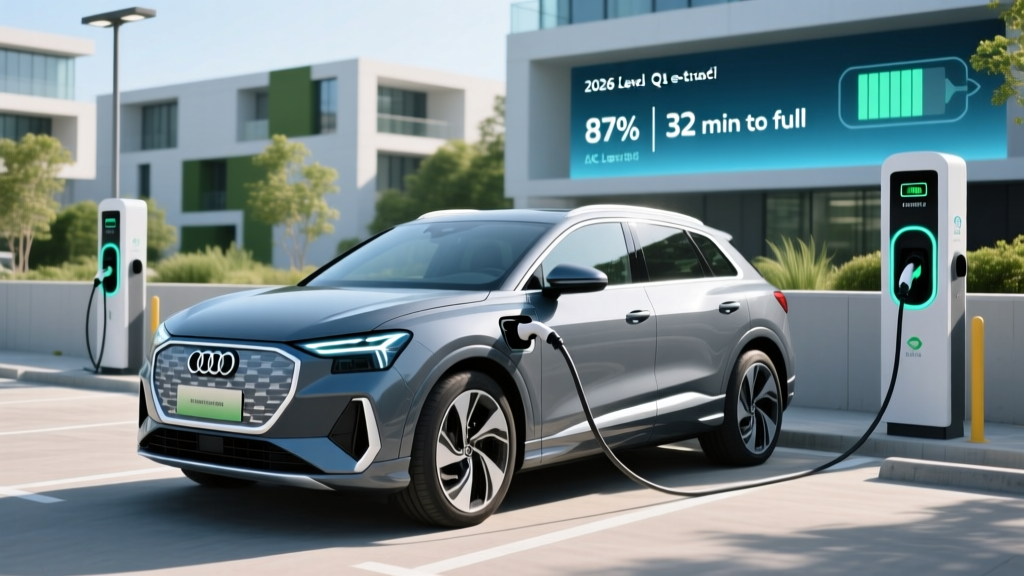
The Audi Q4 e-tron occupies a specific niche in the luxury compact EV SUV segment: premium build quality, a usable footprint, and a starting price that undercuts rivals like the BMW iX and Mercedes EQB. For 2026, the Q4 e-tron continues on Volkswagen Group's MEB platform with an 82 kWh (77 kWh usable) NMC lithium-ion battery, revised infotainment software, and a lineup that starts under $50,000. But the question that drives most buyer searches is straightforward: does the Audi Q4 e-tron qualify for the federal EV tax credit?
The short answer is complicated. Battery-sourcing requirements under IRS §30D have tightened significantly since 2024, and most Audi Q4 e-tron units sold in the U.S. do not currently meet the critical-minerals and battery-component thresholds required for the full $7,500 credit. However, point-of-sale lease incentives and state-level rebates can partially close the gap. Below, we break down exactly what you'll pay, what you'll drive, and whether the Q4 e-tron earns its spot in your garage.
Range, Efficiency & Real-World Expectations
The 2026 Audi Q4 e-tron 55 quattro (the volume seller with dual-motor AWD) carries an EPA-estimated range of 258 miles. The single-motor Q4 50 e-tron (RWD, now in limited availability) was previously rated at 265 miles. Efficiency lands at approximately 97 MPGe combined, or roughly 35 kWh per 100 miles — respectable for a 4,700-lb luxury crossover but trailing the more aerodynamic Hyundai Ioniq 5 (114 MPGe combined).
EPA sticker: 258 miles (Q4 55 quattro)
Real-world highway (70 mph, 65°F): ~220–235 miles
Cold weather (30°F, mixed driving): ~185–205 miles
City/regenerative driving (mild weather): ~250–260 miles
The Q4 e-tron's boxy SUV profile creates more aero drag at highway speeds than sleeker competitors. If your commute is primarily interstate driving, plan for 220 usable miles before seeking a charger. Audi's heat pump (standard on 2026 models) mitigates cold-weather cabin-heating losses but doesn't eliminate the 20–25% range reduction typical of NMC packs in freezing temperatures.
| Spec | Value |
|---|---|
| EPA Range | 258 miles |
| Battery (gross / usable) | 82 kWh / 77 kWh |
| Battery Chemistry | NMC (Nickel Manganese Cobalt) |
| Drivetrain | Dual-motor AWD (quattro) |
| Horsepower | 340 hp (combined) |
| 0–60 mph | 5.0 seconds |
| EPA Efficiency | 97 MPGe / 35 kWh/100 mi |
| Max DC Fast Charge | 175 kW (peak) |
| 10–80% DC Charge Time | ~28 minutes |
| Level 2 Home Charging | 11.5 kW (~30 mi/hr) |
| Cargo Volume (rear seats up / folded) | 24.8 / 53.1 cu ft |
| Rear Legroom | 38.5 inches |
| Battery Warranty | 8 years / 100,000 miles (70% capacity retention) |
| Base MSRP (Premium trim) | $49,800 |
Charging Speeds: DC Fast, Level 2 & Home Setup
The Q4 e-tron's MEB platform supports a peak DC fast-charge rate of 175 kW via CCS1 connector (NACS adapter available through Audi for Tesla Supercharger access). In real-world testing at a 350 kW Electrify America station, the Q4 55 e-tron peaks near 170 kW between 10–30% state of charge, then tapers progressively. The 10–80% session takes approximately 28 minutes — adequate for road-trip stops but slower than the Hyundai Ioniq 5 or Kia EV6, which sustain 230+ kW on 800V architectures and complete 10–80% in roughly 18 minutes.
| Charging Level | Power (kW) | Miles Added per Hour | Notes |
|---|---|---|---|
| Level 1 (120V household) | ~1.4 kW | ~3–4 mi/hr | Emergency/trickle only |
| Level 2 (240V, 48A home charger) | 11.5 kW | ~30 mi/hr | Full charge in ~7 hours |
| DC Fast Charge (peak) | 175 kW | ~200+ mi/hr (at peak) | 10–80% in ~28 min |
Home charging reality: A 77 kWh usable battery charging from 10% to full on an 11.5 kW Level 2 home charger takes roughly 7 hours. Most owners plugging in overnight will wake to a full battery. If your electrical panel supports a 60A circuit (required for a 48A continuous charger), installation with a hardwired Wallbox or ChargePoint Home Flex typically runs $800–$1,800 depending on panel proximity and local permit fees. Older homes with 100A service panels may require a $2,000–$4,000 panel upgrade — a cost buyers frequently underestimate.
Preconditioning tip: Always use the Q4 e-tron's navigation-based battery preconditioning when routing to a DC fast charger. The system warms the NMC pack to optimal temperature, which can shave 5–8 minutes off your charging session and improve peak kW acceptance — especially important in cooler weather when cold-soaked batteries accept charge far more slowly.
Performance, Ride & Daily Drivability
The Q4 55 e-tron's dual-motor quattro setup produces 340 horsepower and 402 lb-ft of torque, delivering a 5.0-second 0–60 mph time. That's brisk enough for confident highway merging but not sports-SUV territory — the Tesla Model Y Long Range AWD hits 60 in 4.8 seconds, and the Performance variant does it in 3.5 seconds. Where the Audi differentiates is ride quality: the adaptive damper suspension (optional on Premium Plus, standard on Prestige) delivers a composed, quiet, luxury-grade ride that the Model Y's firm setup cannot match.
Regenerative braking offers three levels selectable via steering-wheel paddles, plus an adaptive "B" mode that uses radar and navigation data to modulate regen based on traffic and terrain. It's not true one-pedal driving — the Q4 e-tron creeps at low speeds rather than holding to a full stop — but the system is smooth and predictable. Towing capacity is rated at 2,650 lbs with the factory hitch, adequate for a small utility trailer but not a camper.
Tax Credit Eligibility: Does the Q4 e-tron Qualify?
This is the section buyers need to read carefully. Under current IRS §30D rules, the federal EV tax credit of up to $7,500 requires a vehicle to meet two sourcing thresholds:
- Critical minerals requirement ($3,750): A specified percentage of critical minerals in the battery must be extracted or processed in the U.S. or a free-trade-agreement country.
- Battery components requirement ($3,750): A specified percentage of battery components must be manufactured or assembled in North America.
- MSRP cap: SUVs must have an MSRP at or below $80,000 (the Q4 e-tron qualifies easily).
- Buyer income cap: Adjusted gross income must not exceed $150,000 (single), $225,000 (head of household), or $300,000 (married filing jointly).
- Assembly: Final assembly must occur in North America — the Q4 e-tron is built in Zwickau, Germany, which disqualifies it from the §30D purchase credit entirely.
| Trim | MSRP | §30D Purchase Credit | Lease Loophole* | Effective Price |
|---|---|---|---|---|
| Premium (55 quattro) | $49,800 | $0 (foreign assembly) | Up to $7,500 passed through | ~$42,300 via lease |
| Premium Plus (55 quattro) | $54,300 | $0 | Up to $7,500 passed through | ~$46,800 via lease |
| Prestige (55 quattro) | $58,800 | $0 | Up to $7,500 passed through | ~$51,300 via lease |
*The "lease loophole" (IRC §45W commercial clean vehicle credit) allows the leasing company to claim the $7,500 credit and pass savings to the lessee as a capitalized-cost reduction, regardless of where the vehicle was assembled or the buyer's income. Most Audi dealers now advertise lease pricing that reflects this reduction. Confirm with your dealer that the credit is applied to your specific lease agreement.
Source: IRS.gov — Credits for New Clean Vehicles. Rules subject to change; consult a tax professional for your specific situation.
State incentives may help: States like California (CVRP, income-dependent), Colorado (up to $5,000 state credit for EVs under $80,000), and New York offer additional rebates that can stack with lease savings. Check your state's energy office or AFDC state incentive database for current programs.
Interior, Tech & Driver Assistance
The Q4 e-tron's cabin is where Audi's premium positioning shows. Materials are a step above the VW ID.4 (its platform sibling): soft-touch surfaces, available Nappa leather, a 10.1-inch touchscreen (11.6-inch on Premium Plus and above), and a 10.25-inch digital instrument cluster. The augmented-reality head-up display (standard on Prestige) overlays navigation arrows onto the road view — a genuinely useful feature that reduces eyes-off-road time.
Infotainment runs Audi's latest MMI software with wireless Apple CarPlay and Android Auto, natural-language voice commands, and over-the-air update capability. The system is responsive but still relies on touch-capacitive climate controls that lack tactile feedback — a common complaint across VW Group EVs.
Driver assistance includes Audi Adaptive Cruise Assist with lane-centering (SAE Level 2), intersection assist, and Park Assist Plus with remote parking via smartphone. This is not self-driving: the driver must keep hands on the wheel and eyes on the road at all times. Unlike GM's Super Cruise or Ford's BlueCruise, Audi does not currently offer a hands-free highway driving mode in the U.S.
This is an SAE Level 2 driver-assistance system. It does NOT make the Q4 e-tron autonomous. The driver is legally responsible for vehicle control at all times. The system may not detect stationary objects, construction zones, or stopped emergency vehicles reliably. Hands-off-wheel alerts trigger after approximately 15 seconds. Do not rely on this system in heavy rain, snow, or faded lane markings.
Pros, Cons & Competitor Comparison
- Quiet, composed ride quality that exceeds segment norms
- Premium interior materials and build quality
- Competitive cargo space (24.8 cu ft behind rear seats)
- Standard heat pump improves cold-weather efficiency
- Lease loophole can reduce effective price by $7,500
- Augmented-reality HUD is genuinely useful
- No §30D purchase credit due to German assembly
- DC fast charging peaks at 175 kW — slower than 800V rivals
- Real-world highway range falls ~15% below EPA estimate
- Touch-capacitive climate controls frustrate some drivers
- No hands-free driving mode (unlike Super Cruise/BlueCruise)
- Rear visibility limited by thick C-pillars
Key competitors: The BMW iX xDrive50 offers more range (324 mi EPA) and faster 200 kW charging but starts at $68,000+. The Genesis Electrified GV70 matches the Audi's luxury feel with 236 miles of range and 350 kW DC charging capability, starting at $66,000. The Tesla Model Y Long Range delivers 310 miles, access to the Supercharger network natively, and starts at $44,990 — but sacrifices ride comfort and interior refinement. For buyers prioritizing value over badge prestige, the Hyundai Ioniq 5 Limited AWD at $52,600 offers 290 miles of range, 230 kW charging (10–80% in 18 min), and qualifies for the full $7,500 purchase credit.
Who Should Buy the Q4 e-tron?
The 2026 Audi Q4 e-tron suits luxury-minded buyers who prioritize ride comfort, cabin quietness, and brand prestige over maximum range or fastest charging. It's a strong commuter and weekend-trip vehicle for households with reliable home charging and a daily drive under 60 miles round-trip. It's less ideal for frequent road-trippers (175 kW charging means longer stops), buyers who need the purchase tax credit (lease or look at U.S.-assembled alternatives), or those wanting hands-free highway driving.
- You value ride quality and cabin refinement over raw range
- You plan to lease (capturing the $7,500 commercial credit)
- Your daily commute is under 60 miles and you charge at home
- You want Audi's warranty and dealer network
- You need to purchase (not lease) and want the federal credit
- You road-trip frequently and need 300+ miles of range
- Fastest DC charging is a priority (consider Ioniq 5 or EV6)
- You want hands-free highway driving (consider Super Cruise vehicles)
FAQ
Does the 2026 Audi Q4 e-tron qualify for the $7,500 federal tax credit if I buy it?
No. Because the Q4 e-tron is assembled in Zwickau, Germany, it does not meet the North American final-assembly requirement under IRS §30D for a purchase credit. However, leasing the vehicle may allow the lessor to claim the commercial clean vehicle credit (§45W) and pass up to $7,500 in savings to you as a lease incentive. Confirm with your dealer.
What is the real-world highway range of the Q4 e-tron?
Expect approximately 220–235 miles at 70 mph in mild weather, dropping to 185–205 miles in freezing temperatures. The EPA estimate of 258 miles assumes a mix of city and highway driving; sustained highway speeds and cold weather reduce range by 10–25%.
How long does it take to charge the Q4 e-tron at home?
On an 11.5 kW Level 2 home charger (240V, 48A), a near-empty 77 kWh usable battery charges from 10% to 100% in approximately 7 hours. Most owners plugging in overnight will wake to a full charge.
Is the Audi Q4 e-tron the same as the Volkswagen ID.4?
They share the VW Group MEB platform, battery pack, and powertrain architecture, but the Q4 e-tron features a distinct exterior design, a more premium interior, different suspension tuning, and Audi-specific technology (augmented-reality HUD, MMI software). The ID.4 is less expensive and also assembled outside the U.S. (Emden, Germany for earlier models, now Chattanooga, TN for some trims — check current assembly location for credit eligibility).
What is the battery warranty on the Q4 e-tron?
Audi covers the high-voltage battery for 8 years or 100,000 miles (whichever comes first) against defects and capacity loss below 70% of original capacity. This is standard for the luxury EV segment and matches BMW, Mercedes, and Tesla warranty terms.
Can I charge the Q4 e-tron at Tesla Superchargers?
Yes. Audi provides a NACS adapter (or has integrated NACS access depending on build date) that enables Q4 e-tron owners to use Tesla's Supercharger network. Confirm adapter availability and any associated costs with your dealer at purchase.
Sources: EPA Fuel Economy — Audi Q4 e-tron, IRS §30D Clean Vehicle Credits, Audi USA — Q4 e-tron Specifications.