The Audi PB18 e-tron: Concept Car Reality Check
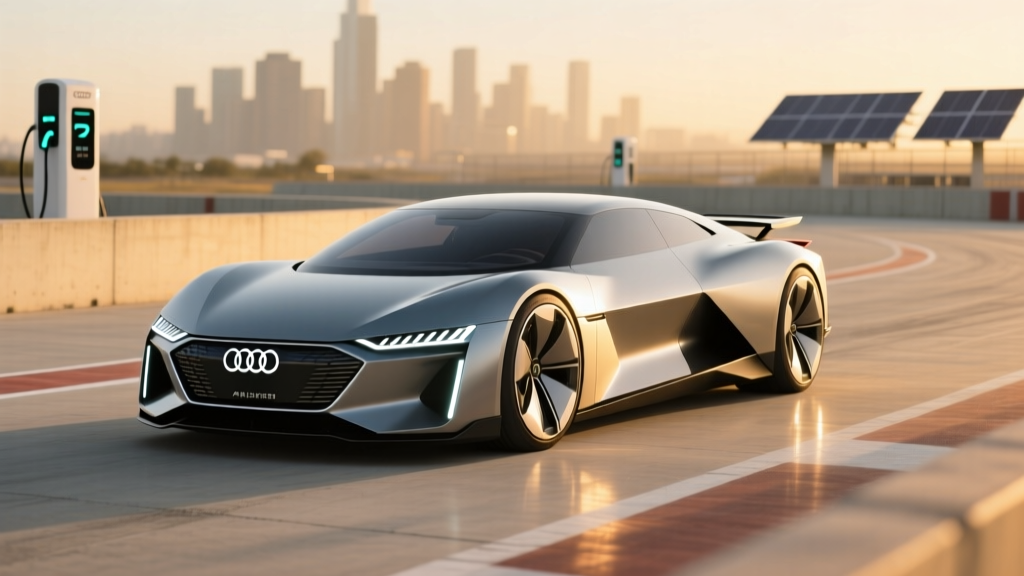
If you've been searching for the Audi PB18 e-tron, you're not alone — this radical electric shooting brake concept has generated sustained interest since its debut. But here's the essential fact every prospective buyer needs: the Audi PB18 e-tron was never approved for production. It remains a one-off concept vehicle, and as of 2026, Audi has not announced any plans to bring it to market.
This article breaks down exactly what the PB18 e-tron promised on paper, why it stayed a concept, and — most importantly — which production Audi EVs actually deliver on similar performance and design goals today.
PB18 e-tron Concept Specifications: What Audi Promised
Unveiled at Pebble Beach in August 2018 (hence "PB18"), this concept was Audi's vision of a driver-focused electric sports car with practical shooting-brake cargo versatility. Here are the manufacturer-published concept figures:
| Specification | Concept Figure |
|---|---|
| Battery Capacity | 95 kWh (usable, NMC chemistry assumed) |
| WLTP Range (European) | ~500 km (~310 miles) |
| EPA Range | Not certified — concept only |
| Powertrain | Tri-motor AWD (1 front, 2 rear) |
| Peak Output | 500 kW (671 hp); boost to 570 kW (764 hp) |
| Torque | 830 Nm (615 lb-ft) |
| 0-62 mph (0-100 km/h) | ~2.0 seconds (claimed) |
| 800V Architecture | Yes (concept) |
| Max DC Charge Rate | 150 kW (concept figure) |
| Body Style | 3-door shooting brake, single-seat cockpit (sliding) |
| Length / Width / Height | 178.5 in / 77.6 in / 48.2 in |
| Curb Weight | ~3,417 lbs (1,550 kg, claimed) |
Important context on range: The 500 km WLTP figure would likely translate to roughly 250-270 miles under the more stringent EPA testing cycle, which better reflects US driving conditions. WLTP typically overstates range by 10-20% compared to EPA methodology. Real-world highway driving at 70+ mph, or cold-weather operation below 40°F, could reduce that figure further to approximately 200-230 miles.
Why the PB18 e-tron Never Reached Production
Audi never greenlit the PB18 e-tron for series production. Several factors explain this decision:
- Low-volume economics: A three-door, two-seat (or effectively single-seat with sliding cockpit) shooting brake occupies a tiny market niche. Tooling costs for such limited production volumes are difficult to justify.
- Platform sharing priorities: Audi invested in the J1 Performance Platform (shared with Porsche Taycan) and later the PPE (Premium Platform Electric, co-developed with Porsche) for higher-volume performance EVs like the e-tron GT and Q6 e-tron.
- Regulatory complexity: The concept's radical single-seat sliding cockpit and minimal crash structure would require significant reengineering to meet US and European safety standards.
- Battery technology timing: The 2018 concept's claimed 1,550 kg curb weight with a 95 kWh battery was optimistic. Achieving that energy density at production cost remained challenging.
Audi has not issued any statement reviving the PB18 e-tron as of early 2026. The concept car itself has appeared at select automotive events but is not part of any announced production roadmap.
What Audi Offers Instead: Production EV Alternatives in 2026
If the PB18 e-tron's blend of performance, design, and electric powertrain appeals to you, here are the Audi production models that actually exist and can be purchased today:
Audi e-tron GT / RS e-tron GT (2025-2026 Model Years)
The closest production equivalent to the PB18's performance mission. Built on the J1 platform shared with the Porsche Taycan.
| Spec | e-tron GT quattro | RS e-tron GT |
|---|---|---|
| EPA Range | 238 miles | 232 miles |
| Battery | 93.4 kWh (83.7 usable), NMC | 93.4 kWh (83.7 usable), NMC |
| Horsepower | 522 hp (boost) | 637 hp (boost) |
| 0-60 mph | 3.9 sec | 3.1 sec |
| Max DC Charge | 270 kW (800V) | 270 kW (800V) |
| 10-80% DC Time | ~23 min | ~23 min |
| Base MSRP | ~$106,000 | ~$142,000 |
| Federal §30D Credit | Not eligible (MSRP exceeds $55,000 sedan cap) | Not eligible |
Audi Q6 e-tron (2025-2026 Model Year)
Audi's first PPE-platform SUV, offering more practicality and modern 800V charging. This is the volume-play electric Audi.
- EPA Range: Up to 321 miles (Q6 e-tron Ultra, RWD)
- Battery: 100 kWh gross (~94.9 usable), NMC
- Max DC Charge: 270 kW; 10-80% in ~21 minutes
- 0-60 mph: 4.9 sec (quattro); base MSRP ~$63,800
- Federal Credit: Check current IRS §30D eligibility — MSRP is under the $80,000 SUV cap, but buyer income limits ($150K single / $300K joint) and battery sourcing requirements apply
Audi SQ6 e-tron (Performance SUV Variant)
For buyers wanting PB18-style acceleration in a practical package:
- Horsepower: 509 hp (boost mode)
- 0-60 mph: 4.3 seconds
- EPA Range: ~294 miles
- Base MSRP: ~$74,000 (under $80K SUV cap for §30D)
Charging and Battery Technology: Concept vs. Reality
The PB18 e-tron concept cited 800-volt architecture and a 150 kW peak DC charge rate. For context, that figure was competitive in 2018 but falls behind current production standards:
| Model | Architecture | Peak DC kW | 10-80% Time | Level 2 Home Rate |
|---|---|---|---|---|
| PB18 e-tron (concept) | 800V | 150 kW | ~30 min (est.) | ~11 kW |
| e-tron GT / RS (production) | 800V (J1) | 270 kW | ~23 min | 11 kW (48A) |
| Q6 e-tron (production) | 800V (PPE) | 270 kW | ~21 min | 11 kW (48A) |
kW vs kWh reminder: Kilowatts (kW) measure charge power — how fast energy flows into the battery. Kilowatt-hours (kWh) measure battery capacity — how much total energy is stored. A 270 kW charge rate filling a 93.4 kWh battery is analogous to a high-flow pump filling a tank quickly.
Charge curve reality: No EV sustains its peak kW rate for the full session. The 270 kW figure on production Audis applies roughly from 10-55% state of charge (SoC). Above 80%, charging slows dramatically to protect battery health — expect the final 80-100% top-off to take as long as the 10-80% portion. This is why manufacturers quote 10-80% times rather than 0-100%.
Federal Tax Credit: What You Need to Know
Since the PB18 e-tron was never produced, tax credit eligibility is moot for that specific vehicle. For Audi's current production EVs, here's the 2026 §30D landscape:
- MSRP Caps: Sedans/wagons must be under $55,000; SUVs/pickups/vans under $80,000. The e-tron GT line exceeds the sedan cap and does not qualify.
- Buyer Income Limits: Modified AGI must not exceed $150,000 (single), $225,000 (head of household), or $300,000 (married filing jointly).
- Battery Sourcing: Critical minerals and battery components must meet escalating domestic-content and free-trade-agreement thresholds. These requirements tighten annually and may reduce the credit from $7,500 to $3,750 or zero for some models.
- Point-of-Sale Transfer: Eligible buyers can transfer the credit to the dealer at purchase, reducing the upfront cost rather than waiting for a tax refund.
The Q6 e-tron (MSRP ~$63,800) falls under the $80,000 SUV cap and may qualify for partial or full credit depending on current battery-sourcing compliance and your income. Always verify current eligibility on IRS.gov and consult a tax professional before relying on credit availability.
Should You Wait for a PB18 Successor?
There is no announced successor to the PB18 e-tron concept. Audi's product strategy has focused on:
- Scaling the PPE platform across SUVs (Q6 e-tron, future Q8 e-tron variants)
- Expanding the e-tron GT line with higher-performance derivatives
- Developing next-generation SSP (Scalable Systems Platform) vehicles for the late 2020s
If a low-slung, two-door electric shooting brake from Audi ever materializes, it would likely ride on SSP architecture with solid-state or advanced NMC batteries — technology not expected in production before 2028-2029 at the earliest.
Frequently Asked Questions
Can I buy the Audi PB18 e-tron?
No. The PB18 e-tron is a concept car that was never approved for production. It cannot be purchased, ordered, or leased. It exists as a single show vehicle.
What is the closest production Audi EV to the PB18 e-tron?
The Audi RS e-tron GT is the closest in spirit: a low-slung, high-performance electric four-door with ~637 hp, a 232-mile EPA range, and 270 kW DC fast charging. It starts around $142,000 and does not qualify for the federal tax credit due to its MSRP.
Does the Audi Q6 e-tron qualify for the $7,500 federal tax credit?
It may qualify for partial or full credit. The Q6 e-tron's MSRP is under the $80,000 SUV cap, but eligibility depends on your income (must be under $300K joint), the vehicle's battery component and critical-mineral sourcing compliance, and current-year IRS rules. Verify on fueleconomy.gov before purchasing.
How fast do current Audi EVs charge at home?
Both the e-tron GT and Q6 e-tron support Level 2 AC charging at up to 11 kW (48 amps on a 240V/60A circuit). This adds approximately 30-35 miles of range per hour of charging, or a full charge from empty in roughly 9-10 hours — suitable for overnight replenishment. A licensed electrician should evaluate your panel capacity before installing a Level 2 home charger.
What is the real-world range of the Audi RS e-tron GT?
The EPA rates it at 232 miles. In real-world 75 mph highway driving, expect approximately 200-215 miles. In cold weather (below 30°F), range can drop to 170-190 miles due to battery chemistry limitations and cabin heating demands. Preconditioning the battery while plugged in mitigates some cold-weather loss.
Will Audi ever build a production version of the PB18?
As of 2026, Audi has made no announcement regarding a production PB18 or direct successor. The company's public roadmap focuses on PPE-platform SUVs and sedans, with next-generation SSP vehicles planned for the late 2020s.